Using Magnesium Glycinate to Reduce Nighttime Anxiety
You can use magnesium glycinate to help quiet nighttime anxiety by supporting your brain’s neurotransmitter balance and calming overactive nerve signals. Its glycine component promotes relaxation without next-day drowsiness. With better absorption than oxide or citrate forms, it’s gentle on the stomach and often shows results within a week. Take 100–200 mg about 30–60 minutes before bed, with or without food. Choosing a third-party tested product guarantees quality and purity-key details to evaluate as you weigh your options.
Notable Insights
- Magnesium glycinate helps regulate neurotransmitters to reduce nighttime anxiety and calm overactive nerve signals.
- The glycine in magnesium glycinate has natural calming effects that support relaxation before bedtime.
- It improves sleep quality by aiding both falling asleep and staying asleep without next-day drowsiness.
- Magnesium glycinate is better absorbed than other forms like oxide and causes less digestive upset than citrate.
- Take 100–200 mg 30–60 minutes before bed, preferably with a light snack for optimal absorption and tolerance.
How Magnesium Glycinate Eases Nighttime Anxiety

Why do you feel calmer after taking magnesium glycinate at night? It’s because this supplement supports your brain chemistry in ways that help your body unwind. Magnesium plays a key role in regulating neurotransmitter balance, influencing signals that control stress and relaxation. When you take magnesium glycinate, its highly absorbable form delivers magnesium directly where it’s needed-your nervous system. This helps quiet overactive nerve signals that often worsen nighttime anxiety. Unlike other forms, glycinate is gentle on the stomach and less likely to cause loose stools. You’re not just masking symptoms; you’re supporting a biological process. Think of it as a tool to help your body recalibrate when stress disrupts your wind-down routine. Results vary, but many notice a difference within a week. If anxiety persists, consult a healthcare provider to explore underlying causes alongside supplement use. Among the best options for promoting relaxation and sleep are magnesium supplements for anxiety and sleep.
How Magnesium Glycinate Improves Sleep Quality
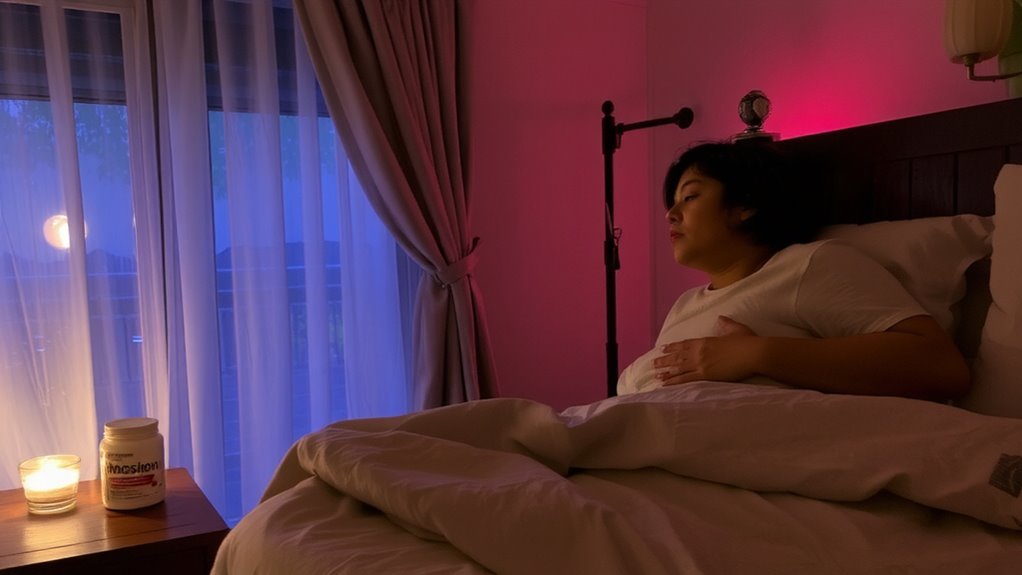
You likely notice that once your nighttime anxiety starts to settle, falling asleep feels more natural-and that’s where magnesium glycinate continues to play a role. It supports smoother shifts into restful sleep by helping regulate brain waves linked to relaxation. Your body also relies on magnesium to maintain healthy melatonin production, the hormone that signals it’s time to sleep. With consistent use, you may find it easier to fall asleep and stay asleep, especially if stress or mild sleep disruptions are concerns. Unlike some sleep aids, it doesn’t cause drowsiness the next day when taken at recommended levels. Most supplements offer 100–200 mg per dose, often in two tablets for better absorption. Check labels for third-party testing to verify quality. While results vary, many report better sleep within a few weeks. Always consider how it fits with your current routine and consult a healthcare provider if you have underlying conditions. For those also seeking cardiovascular support, Best Magnesium Taurate Supplements may offer complementary benefits.
Magnesium Glycinate vs. Other Types: What’s the Difference?

How do different forms of magnesium stack up when it comes to calming nighttime anxiety and supporting restful sleep? Magnesium glycinate stands out due to its superior bioavailability comparison and absorption efficiency. Bound to glycine, an amino acid with calming properties, it’s gentle on the stomach and less likely to cause discomfort. Other forms, like magnesium oxide, have lower absorption efficiency, meaning your body uses less of the dose. Magnesium citrate is better absorbed but may have a laxative effect. Magnesium threonate crosses the blood-brain barrier well, yet evidence is still emerging. If you’re choosing based on proven absorption and nighttime support, glycinate may offer the most balanced profile. Consider your sensitivity, goals, and how your body responds when deciding. Trying different types with clear labeling and reputable sourcing helps you make informed choices over time.
Low Magnesium Symptoms: Are You Deficient?
Could something as simple as a mineral shortage be standing between you and a calm, restful night? Magnesium deficiency causes can quietly disrupt your sleep and mood. Stress, poor diet, and certain medications contribute to low levels. Often, hidden magnesium symptoms go unnoticed-until they affect your nights. Muscle twitches, nighttime restlessness, irritability, or frequent waking could be signs. Here’s how common symptoms align with possible causes:
| Symptom | Linked Cause |
|---|---|
| Nighttime cramps | Low magnesium in muscles |
| Anxiety before bed | Nervous system imbalance |
| Trouble falling asleep | Poor GABA regulation |
| Morning fatigue | Disrupted sleep cycles |
| Sensitivity to stress | Reduced stress response support |
Recognizing these clues helps you decide if trying a targeted solution like magnesium glycinate makes sense. It’s gentle, well-absorbed, and often used when sleep and calm are priorities. Best supplements for deep sleep include magnesium glycinate due to its calming effects on the brain and body.
When Should You Take Magnesium Glycinate for Sleep?
Timing plays a key role in how well magnesium glycinate supports sleep and nighttime calm. The best time to take it is typically 30 to 60 minutes before bed, giving your body enough time to absorb it and start feeling its calming effects. This dosage timing helps signal to your brain that it’s time to wind down, which may improve sleep onset and quality. Since magnesium glycinate is gentle on the stomach, you can take it with or without food, but pairing it with a light snack might support better absorption for some people. If you’re using it to ease nighttime anxiety, consistent evening use is more effective than occasional dosing. While individual responses vary, sticking to a routine enhances results. Always check with your healthcare provider to align the timing with your personal health needs and other medications.
How to Choose Quality Magnesium Glycinate
While not all supplements deliver as promised, choosing a quality magnesium glycinate starts with checking the label for clear, transparent details. You’ll want to see magnesium bound specifically to glycinate, as this form supports better bioavailability factors-meaning your body can absorb and use it more efficiently. Look for brands that disclose their ingredient sourcing; reputable companies often use mineral-stable sources and avoid fillers or artificial additives. Third-party testing and certifications, like NSF or USP, add confidence in purity and potency. Consider the dosage, too-most adults benefit from 200–400 mg of elemental magnesium daily, but start lower if you’re new. Smaller, sustained-release capsules may improve tolerance and absorption overnight. Avoid vague claims or proprietary blends that hide exact amounts. A trustworthy product often offers a satisfaction guarantee, so you can try it risk-free. This careful selection supports consistent results when managing nighttime anxiety.
Magnesium Glycinate Side Effects and How to Avoid Them
Most people tolerate magnesium glycinate well, but a few may experience mild side effects, especially when starting or taking too much. You might notice stomach upset or loose stools, often tied to dosage risks or poor timing. These usually fade as your body adjusts. Magnesium glycinate is less likely to cause digestive discomfort than other forms because it’s easier on the gut and has better absorption issues due to its amino acid binding. Still, taking it with food can improve tolerance and support steady absorption. Start with a low dose-like 100–200 mg-and gradually increase to assess your response. Avoid taking more than the recommended daily amount unless directed. If you have kidney problems, talk to a healthcare provider first. Monitoring how your body reacts helps balance benefits like improved sleep onset and reduced nighttime anxiety with minimal side effects.
On a final note
You might find magnesium glycinate helpful if nighttime anxiety or restless sleep is a concern. It supports calmness and sleep regulation without heavy sedation. Compared to other forms, it’s gentle on the stomach and well-absorbed. Taking it 30–60 minutes before bed aligns with natural sleep rhythms. Start with a low dose to assess tolerance, choose third-party tested brands for quality, and consult a doctor if you have health conditions or take other medications.