How Artificial Light Exposure Affects Sleep Quality in Urban Living Environments
You’re exposed to blue-rich light from streetlights, screens, and signs in cities, and it suppresses melatonin, delaying sleep onset and reducing sleep quality. Even dim room lighting intensifies this effect, especially within an hour of bedtime. Light pollution disrupts your circadian rhythm by mimicking daylight, making it harder to fall and stay asleep. Blackout curtains with OEKO-TEX certification block up to 99% of light, and proper installation seals gaps for full darkness-many offer trial periods so you can test what works best for your space.
Notable Insights
- Blue light from screens and LEDs suppresses melatonin, delaying sleep onset and reducing sleep quality in urban settings.
- Urban environments amplify light exposure through streetlights, billboards, and building glare that disrupt natural darkness.
- Indoor screen use in dim rooms intensifies blue light effects, further inhibiting melatonin production before bedtime.
- Light trespass through windows from streetlights or neighboring buildings interferes with sleep continuity and circadian rhythm alignment.
- Using blackout curtains and night modes can mitigate artificial light impact and improve sleep quality in cities.
How Blue Light Suppresses Melatonin
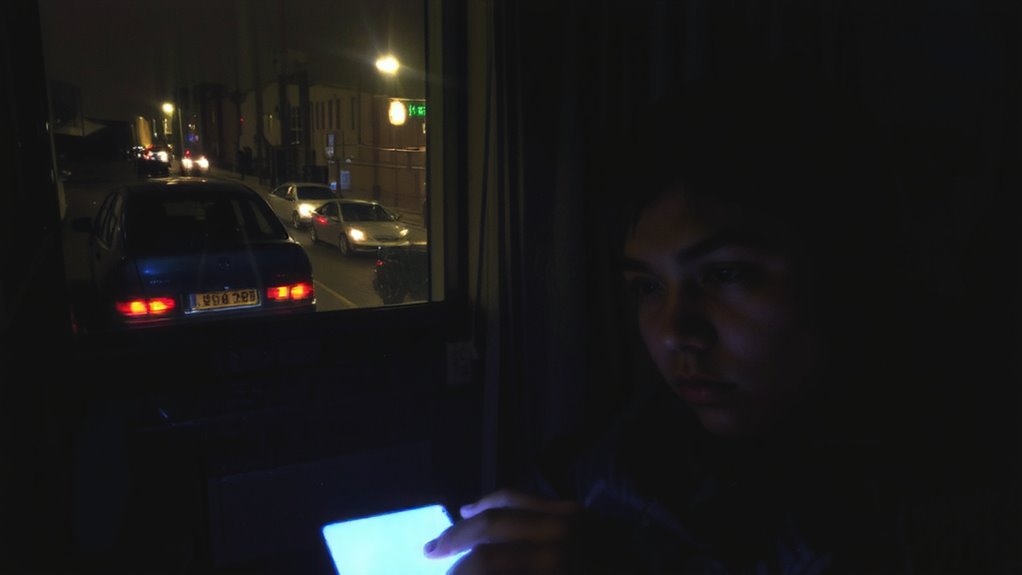
While your body relies on natural light cues to regulate sleep, exposure to blue light from screens and LED bulbs at night can interfere with that process. This type of light suppresses melatonin, the hormone that signals it’s time to sleep, and disrupts your circadian rhythm. Digital devices like phones, tablets, and computers emit strong blue light, especially in dim rooms where exposure feels more intense. Even short use before bed can delay sleep onset and reduce sleep quality. Using these devices within an hour of bedtime may worsen insomnia or worsen existing sleep disorders. To minimize disruption, consider enabling built-in night modes, which reduce blue light emission. Some sleep aids, such as blue-light-blocking glasses, offer a trial period and may help if used consistently. Though results vary, trying them for a week or two can show if they improve your sleep pattern.
Streetlights, Screens, and Signs: Top Light Sources in Cities
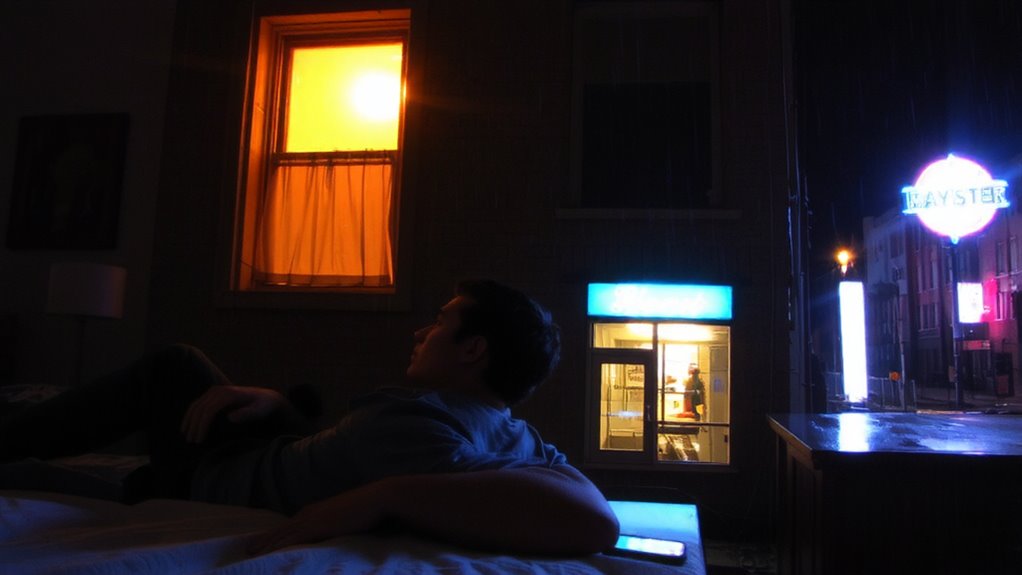
You’re likely already aware that the light from your phone or tablet can keep you awake at night, but those aren’t the only sources of disruptive light in urban environments. Streetlights flood sidewalks and rooms with cool-white LED glare, contributing to urban glare that strains your eyes and disrupts natural darkness. Bright digital billboards and storefront signs emit intense blue-rich light long into the night, worsening light trespass through thin curtains or unshielded windows. Even indoor screens add to the cumulative exposure, especially when used in dim rooms. These sources combine to confuse your internal clock, making it harder to fall asleep or stay asleep. Choosing blackout curtains, using dim red nightlights, and shielding windows can reduce exposure. Simple changes like these help maintain sleep quality without drastic lifestyle shifts, supporting better long-term rest in bright city settings. Incorporating a high-quality sleep therapy light into your nightly routine can further support circadian regulation and improve overall sleep quality.
Why City Life Disrupts Sleep With Light
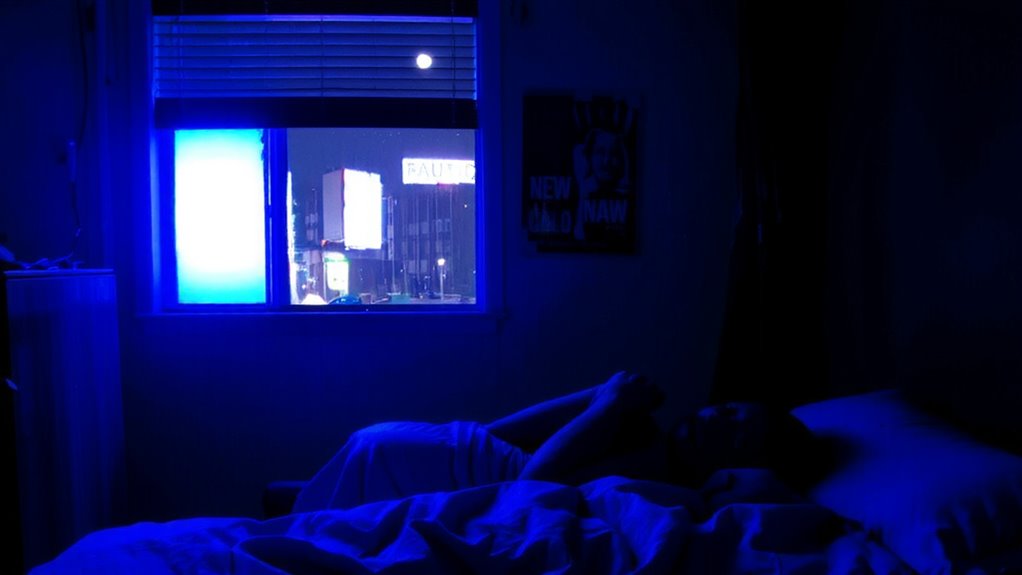
Because city life surrounds you with constant artificial light, your body’s natural sleep-wake cycle often gets thrown off without you even realizing it. Urban density means buildings stand close, trapping light from streets, offices, and screens, so darkness rarely reaches your room. This persistent artificial glow tricks your brain into thinking it’s still daytime, slowing melatonin release needed for sleep. Even small amounts leaking through windows or from devices can delay how fast you fall asleep. You might not notice the impact right away, but over time, sleep quality dips. Choosing blackout curtains, sleep masks, or low-blue-light bulbs helps reduce light exposure. Some find sleep trackers useful for spotting patterns. Look for products with trial periods so you can test what works without risk. Upgrading to the best blackout curtains can significantly improve bedroom darkness and support deeper, more restful sleep.
How Light Pollution Wrecks Sleep Quality
Even if you’re not fully aware of it, the glow from streetlights, neon signs, and nearby buildings seeps into your bedroom and interferes with your body’s ability to enter deep, restorative sleep. This constant exposure to urban glare disrupts melatonin production, a hormone essential for sleep onset and quality. When your brain can’t distinguish night from day, it leads to circadian misalignment, making it harder to fall asleep, stay asleep, or feel refreshed in the morning. Over time, this imbalance increases the risk of sleep disorders like insomnia or fragmented sleep. You might find yourself relying on sleep aids, though they don’t address the root cause. Choosing blackout curtains or sleep masks can help limit exposure. Prioritizing a dark sleeping environment supports natural sleep cycles and improves long-term sleep performance without medication dependency. Upgrading to high-quality best blackout curtains can significantly enhance light blockage and sleep quality.
Science-Backed Ways to Cut City Light at Night
Start by upgrading your windows with blackout curtains made from densely woven, light-absorbing materials-these block up to 99% of incoming streetlight and are often backed by a thin thermal layer for added insulation. You’ll find these blackout solutions work best when they extend beyond the window frame, sealing out light gaps. If you prefer some natural dimming without total darkness, consider light filtering shades made of layered fabrics that reduce glare while maintaining privacy. Look for products with certifications like OEKO-TEX to guarantee safe, chemical-free materials. Many brands offer trial periods, so test what suits your sleep routine. Pair these window upgrades with consistent bedtime habits, and you may notice fewer disturbances. Over time, reducing nighttime light exposure can support deeper sleep cycles and help manage sleep disorders without relying on sleep aids.
How to Create a Sleep-Friendly City Bedroom
What if your bedroom could help you sleep better simply by keeping the city at bay? Start with blackout curtains-they block streetlights and early morning glare, creating total darkness even in bright neighborhoods. Look for tightly woven, opaque fabric with a rubberized backing for best results; many come with warranties against fading or warping. Pair them with smart lighting that mimics natural circadian rhythms-dimming in the evening, emitting warmer tones at night. You can program these systems to turn off automatically, reducing nighttime disruptions. Position lights low and indirect to minimize glare. While blackout curtains need proper installation to seal edges, smart lighting offers remote control and scheduling, helping maintain consistency. Try different setups over a week to see what improves your sleep onset and continuity. Small changes in light control can make a measurable difference.
On a final note
You can improve sleep by reducing artificial light at night. Blue light from screens and streetlights suppresses melatonin, so use blackout curtains or wear an eye mask. Consider warm-colored bulbs and limit screen time before bed. Some find relief with sleep aids, but check with a doctor first. Choose products with trial periods to test comfort. Small changes in lighting and habits support better rest over time.