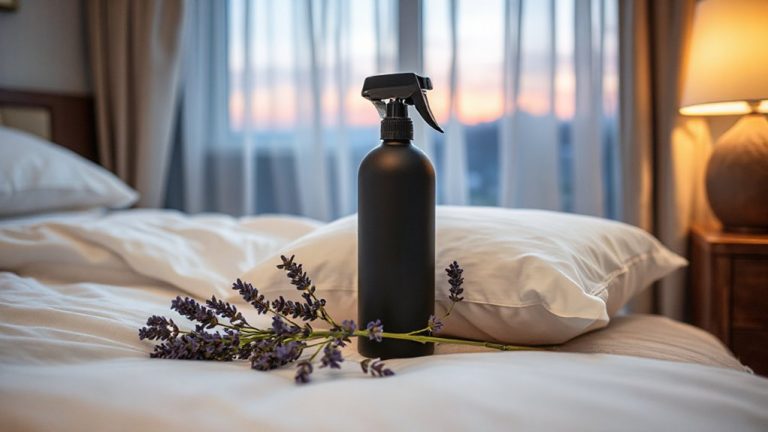
Jet Lag Solutions: Adjust Sleep 15-30 Min/Day Before You Fly
You can reduce jet lag by shifting your sleep schedule a few days before travel-go to bed earlier when heading east, later when going west. Use morning light at your destination to adjust faster, especially with outdoor exposure. During flights, stay hydrated, wear compression socks, and use eye masks or noise-canceling headphones to improve rest. Align meals and naps with destination time, keeping them short and early. Try melatonin only if you’ve tested it before. Smart timing and preparation make a noticeable difference.
Notable Insights
- Gradually adjust your sleep schedule by 15–30 minutes daily before travel to align with the destination’s time zone.
- Use morning light exposure at your destination to help reset your circadian rhythm when traveling east.
- Delay bedtime and seek evening light to ease westward travel and align with the new time zone.
- Stay hydrated, avoid alcohol, and use supportive travel gear to improve sleep quality during flights.
- Schedule meals and short naps according to local time to accelerate adaptation and maintain energy.
Understand How Jet Lag Disrupts Your Body Clock

While your body runs on a natural 24-hour cycle known as the circadian rhythm, flying across time zones throws that internal clock off because light exposure-the main cue for wakefulness-suddenly shifts. Your biological clock relies on regular light cues to time sleep, hormones, and body temperature, but rapid travel confuses this system. As a result, you might feel alert when you should be tired or drowsy during daytime hours. This misalignment between your circadian rhythm and local time causes jet lag symptoms like fatigue, poor concentration, and disrupted sleep. Understanding this helps you choose sleep strategies wisely. Instead of relying on sleep aids immediately, consider how light exposure and meal timing affect your biological clock. Recognizing these patterns allows you to make informed choices about rest, sleep schedules, and possible short-term aids-all while respecting your body’s natural timing system.
Adjust Your Sleep Schedule Before You Fly
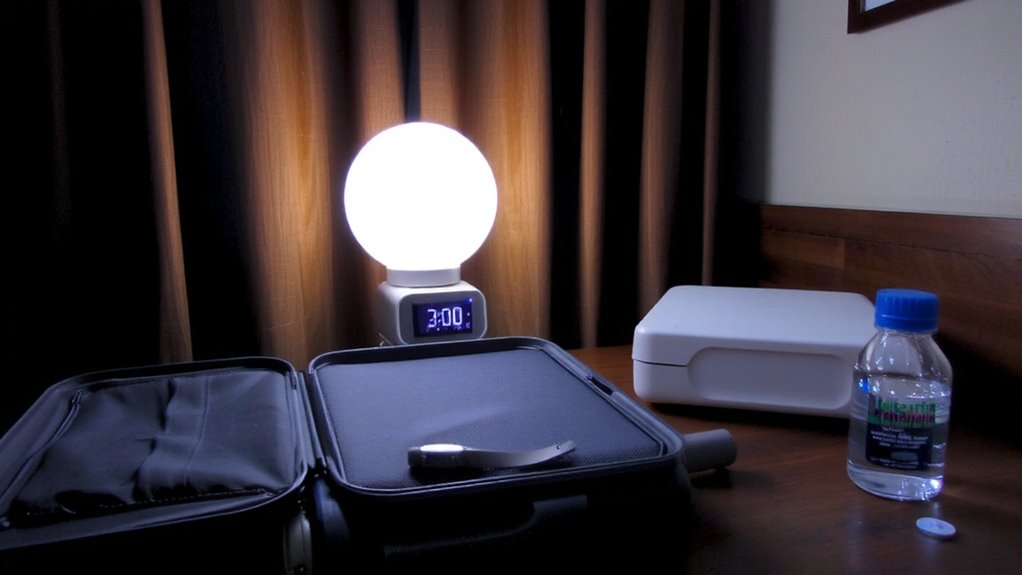
A few days before your flight, you can start shifting your sleep schedule to better match your destination’s time zone. This pre flight preparation helps reduce jet lag by aligning your body clock gradually. If you’re traveling east, go to bed 15–30 minutes earlier each night; if heading west, delay sleep by the same amount. This gradual adjustment supports your circadian rhythm without forcing drastic changes. You might feel slightly off at first, but most people adapt within a couple of days. Avoid relying on sleep aids during this phase unless you’ve used them before and know how your body reacts. Instead, focus on consistent bedtimes and wake times. Consider tracking your progress with a sleep journal or app to assess what works. This methodical approach increases your chances of arriving well-rested and ready to function.
Use Light to Reset Your Clock Faster
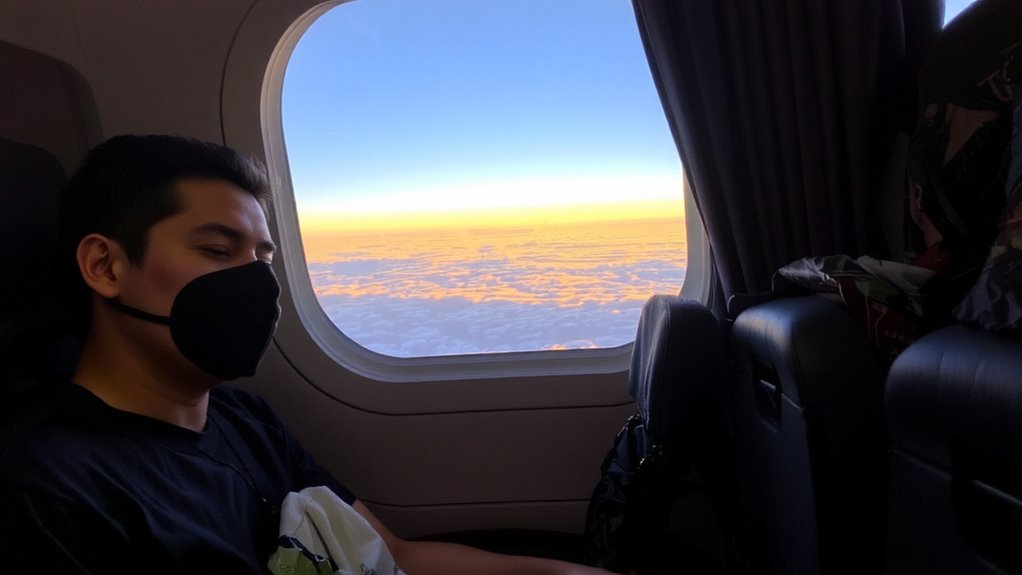
Why does stepping into sunlight at the right time help you adjust faster? Because light directly influences your internal body clock. When you’re heading east, seek morning sunlight at your destination-it signals your brain that it’s time to start the day, helping you shift forward. Traveling west? Avoid evening darkness too soon; instead, stay active in natural light later to delay your cycle. Exposure to morning sunlight resets your rhythm by suppressing melatonin, making you more alert. Evening darkness, in contrast, promotes melatonin release, preparing you for sleep. By timing your light exposure, you align your biological clock with local time more efficiently. Use open blinds, outdoor walks, or light therapy lamps when natural light isn’t available. Your body responds best when light cues are consistent, so plan ahead. This method doesn’t need supplements or devices-just smart use of light and dark. For optimal results, consider using a best sleep therapy light designed to support circadian regulation.
Rest Better During Your Flight
Getting real rest on a flight starts with choices you make before boarding and sticks with you through takeoff. Wear compression socks to help circulation during long sits-they’re snug but comfortable and reduce leg swelling. The low cabin humidity can dry out your skin and throat, so drink water often and avoid alcohol, which worsens dehydration and disrupts sleep. Choose a window seat if you can; it offers better head support and fewer disruptions. Use a neck pillow with memory foam for firm, lasting shape. Pack an eye mask and noise-canceling headphones to block light and sound, helping you fall asleep faster. If you consider sleep aids, try melatonin-it’s mild and often helps reset your rhythm. Always test such aids at home first. Rest isn’t perfect on planes, but smart prep makes it better. For light sleepers, consider using best noise masking solutions to drown out disruptive cabin sounds.
Sync Your Meals to the Destination Time Zone
Once you’ve settled in and taken steps to rest better during your flight, start thinking about when and what you eat based on your destination’s clock, not your departure point. Adjusting your meal timing helps reset your internal body clock more smoothly. If it’s nighttime at your destination, avoid heavy meals and opt for lighter food choices like yogurt, soup, or fruit. When it’s morning there, eat a protein-rich breakfast even if it feels odd. Choosing meals aligned with local time supports circadian rhythm shifts better than eating on your home schedule. This doesn’t mean skipping meals entirely, but planning them mindfully speeds adjustment. Food choices matter, too-limit caffeine and large, rich meals close to bedtime. Adjusting meal timing isn’t a fix-all, but paired with smart rest habits, it’s a practical tool. Try it on your next trip and see how your body responds.
Nap Smarter to Recharge Faster
How do you nap without disrupting your night sleep? Time it right. Power naps, lasting 10 to 20 minutes, align with the lightest part of your sleep cycles, helping you recharge without grogginess. These brief rests boost alertness and focus, especially when you’re adjusting to a new time zone. Avoid napping past 30 minutes-that’s when deep sleep stages begin, and waking mid-cycle can leave you disoriented. Aim to nap before 3 p.m. local time so you don’t interfere with nighttime sleep. Keep your environment dim and quiet to signal rest. If you’re sensitive to light or noise, use a sleep mask or earplugs. Monitor how you feel afterward-refreshed means it worked, sluggish means you may need to shorten the nap. Using power naps wisely supports natural sleep cycles without overriding them.
Use Jet Lag Supplements That Actually Work
While adjusting your sleep schedule helps, adding the right supplements can support your body’s shift across time zones more smoothly. Melatonin benefits include helping regulate your sleep-wake cycle, making it easier to adapt to a new time zone. Taking melatonin at the right time-usually around bedtime at your destination-can improve sleep onset and reduce jet lag symptoms. But supplement timing is key: take it too early or too late, and it might delay adjustment instead. Most travelers see benefits with low doses (0.5–3 mg) taken consistently. Other supplements like magnesium or herbal blends may promote relaxation, but research is less clear. Always check with a healthcare provider before starting any supplement, especially if you have sleep disorders or take other medications. Try options in low-stress settings before relying on them during critical trips. For targeted relief, consider the best melatonin supplements based on efficacy and user experience.
On a final note
You can reduce jet lag by shifting your sleep schedule before travel and using light exposure wisely. Align meals and rest with your destination’s time zone, even in flight. Short, timed naps help without disrupting nighttime sleep. Melatonin may support adjustment when used briefly. Choose strategies based on trip length, direction, and your personal rhythm-what works for one person might not work for another. Always consult a health provider if sleep problems persist.