Step-by-Step Guide to Making a Magnesium-Infused Lotion for Sleep
You can make a magnesium lotion for better sleep by mixing magnesium chloride flakes with a carrier oil like coconut or jojoba until smooth. Add a few drops of lavender essential oil for calming aromatherapy, if desired. Blend for 3–5 minutes with a hand mixer to guarantee even consistency. Apply a thin layer to clean skin 30 to 60 minutes before bed for steady absorption. Adjust oil or beeswax to fix texture issues. There’s no curing time, so you can try it right away and see how your body responds over the next few nights.
Notable Insights
- Use magnesium chloride flakes for better skin absorption and sleep support.
- Mix with a carrier oil like coconut or jojoba for a smooth, nourishing base.
- Add calming essential oils such as lavender to enhance relaxation and sleep quality.
- Blend until creamy without heating, creating a ready-to-use lotion in minutes.
- Apply 30–60 minutes before bed to clean skin for optimal absorption and results.
Make Magnesium Lotion for Better Sleep
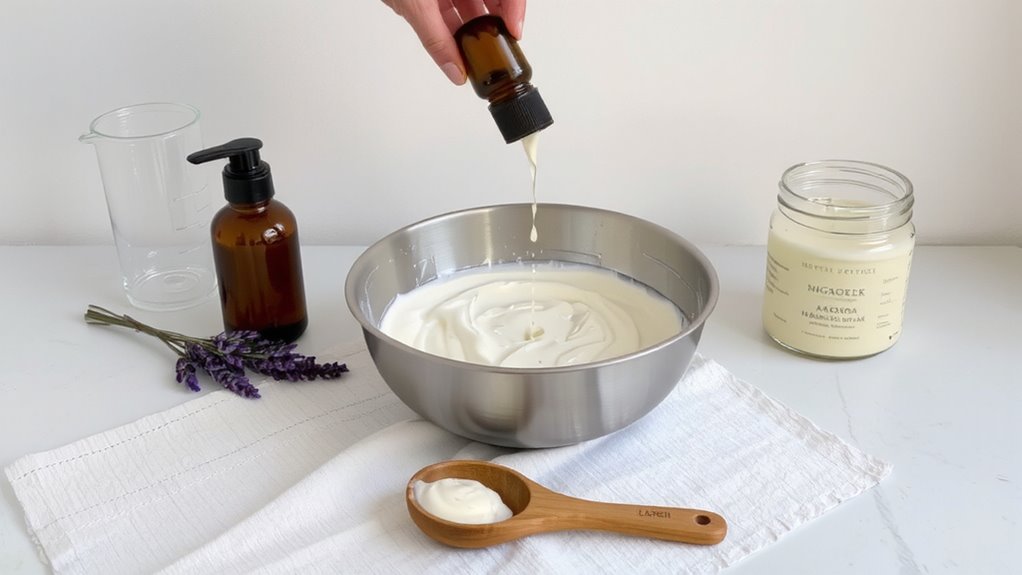
Why not try making your own magnesium lotion at home to support better sleep? You can apply it topically before bed, letting magnesium absorb through your skin to help relax muscles and calm your nervous system. This method offers a non-invasive option if you’re exploring alternatives to oral supplements. When you include essential oils, you also gain aromatherapy benefits that may enhance relaxation. Combining oils like lavender and chamomile creates an essential oil synergy that could improve effectiveness. You’re in control of the formula, so you can adjust concentrations based on how your body responds. It’s a gentle, customizable approach worth considering if you struggle with occasional sleeplessness. While results vary, many find topical magnesium soothing as part of a consistent nighttime routine. Give it a try and see how your sleep patterns adjust over a few weeks. For guidance on choosing effective products, consider reviewing the best magnesium lotions for better sleep.
Gather Your Ingredients
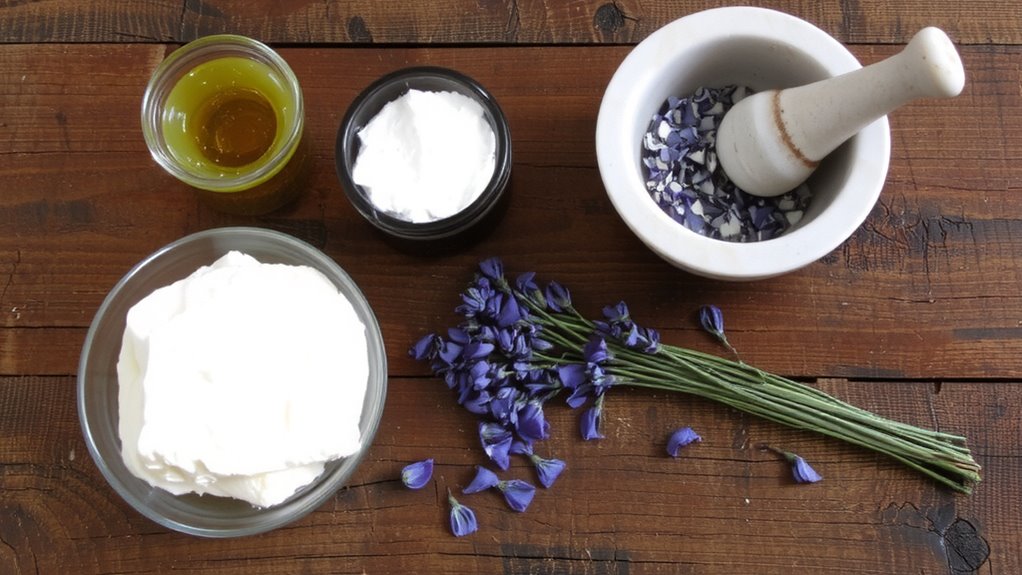
While you can buy magnesium lotions online or in stores, gathering your own ingredients lets you control what goes on your skin and tailor the formula to your needs. Choose magnesium chloride flakes or oil, known for better absorption and skin tolerance. Opt for organic sourcing when possible-especially with carrier oils like coconut, jojoba, or shea butter-to reduce exposure to pesticides and additives. Include a natural emulsifier like beeswax if blending oil and water-based components. Add a few drops of calming essential oils such as lavender, but only if you don’t have sensitivities. Keep ingredient labels on hand to check purity and expiration dates. For best results, follow storage tips: use dark glass containers to limit light exposure and store in a cool, dry place. This helps preserve potency and prevents bacterial growth. Proper storage extends shelf life and maintains effectiveness over time, supporting consistent use as part of your nightly routine. For targeted application and fast absorption, consider the benefits of a magnesium spray.
Mix the Lotion in 5 Minutes
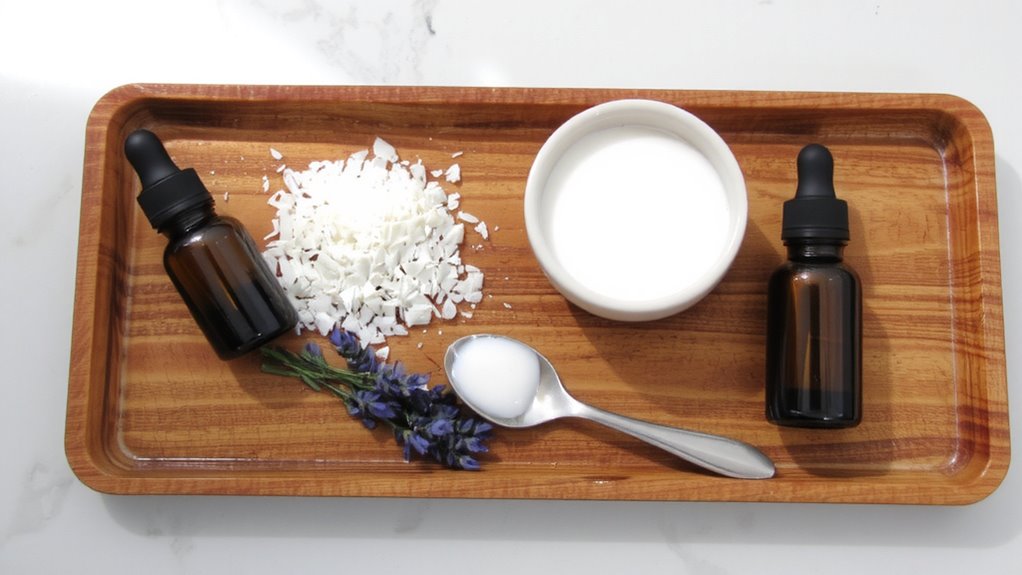
Now that you’ve gathered your ingredients, it’s time to bring them together into a soothing magnesium-infused lotion. This step features quick preparation and easy blending, making it ideal for nightly use. Simply combine your magnesium flakes, carrier oil, and optional essential oils in a bowl. Use a hand mixer or whisk to blend for 3–5 minutes until smooth and creamy. Consistency should be light but spreadable-adjust with more oil if needed. There’s no heating or lengthy curing required, so you can make it fresh as needed. For those interested in comparing effectiveness, consider that topical magnesium spray options vary in absorption and concentration.
Apply for Best Sleep Results
You’ll get the most benefit by applying the lotion 30 to 60 minutes before bed, focusing on areas like your arms, legs, or feet where absorption is steady. This timing supports ideal skin absorption, allowing magnesium to enter your system just as your body begins winding down. Incorporating the lotion into your bedtime routine can signal to your body that it’s time to rest, gently reinforcing healthy sleep patterns. Massage a thin layer into clean, dry skin for even distribution and best results. Regular use may support relaxation, especially if you struggle with occasional sleeplessness. While not a cure for sleep disorders, consistent use may complement other sleep aids or behavioral changes. Track your response over a few nights to assess effectiveness. Results vary, but many notice improved ease in falling or staying asleep. Always patch-test first and discontinue if irritation occurs. With steady use, your routine becomes a practical, soothing step toward better rest.
Fix Common Texture and Skin Issues
A well-formulated magnesium-infused lotion should feel smooth and absorb cleanly, but if you’re dealing with stickiness, grittiness, or dryness, a few tweaks can improve the experience. If you notice a greasy residue, reduce the oil content or switch to a lighter carrier like grapeseed or jojoba. For grittiness, guarantee your magnesium flakes are fully dissolved in warm water before mixing with oils. Creams with uneven absorption may need better emulsification-try blending longer or using a handheld mixer. Adding a small amount of beeswax or shea butter can improve texture without clogging pores. Test the lotion on a small skin patch first to assess comfort and absorption. Adjust ratios gradually, keeping notes so you can replicate successes. A balanced formula absorbs quickly, supports relaxation, and complements a consistent sleep routine without irritating sensitive skin.
On a final note
You’ve made a simple, effective lotion to support restful sleep. Magnesium absorbs through the skin, possibly easing tension and improving sleep quality. This DIY option gives you control over ingredients, avoiding additives found in some store versions. It’s affordable, easy to adjust, and gentle for nightly use. Results vary, so consistent application over a few weeks helps gauge effectiveness. If sleep issues persist, consult a healthcare provider to explore underlying causes and safe, evidence-backed solutions.