How to Create a Sleep Sanctuary Free From Electromagnetic Fields and Noise Pollution
Turn off your Wi-Fi router at night and unplug wireless devices to cut down on electromagnetic fields while you sleep. Keep your bed away from walls with wiring and use shielded wiring or EMF-blocking materials if needed. Swap digital clocks for battery-powered ones, and reduce noise with heavy curtains, door sweeps, or a white noise machine. Start a digital sunset an hour before bed to support natural melatonin. You’ll find even small changes can add up-there’s more to discover about fine-tuning your space.
Notable Insights
- Turn off Wi-Fi and wireless devices at night to minimize EMF exposure during sleep.
- Position your bed away from electrical wiring, outlets, and circuit breaker panels to reduce electromagnetic field exposure.
- Use EMF-blocking paint, fabric, or a shielding canopy to limit electromagnetic radiation in your sleeping area.
- Install heavy curtains, seal windows, and use door sweeps to block outside noise pollution.
- Replace digital clocks with battery-powered analog models and consider shielded wiring to lower bedside EMFs.
Ditch Wi-Fi and Wireless Devices at Night
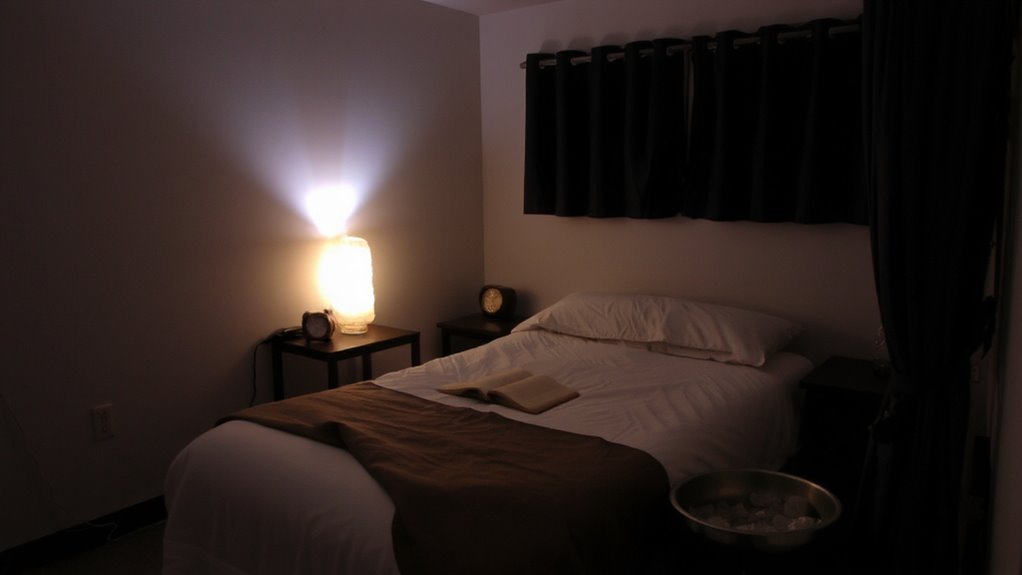
While you might not think about it every night, turning off your Wi-Fi and wireless devices can make a noticeable difference in how well you sleep. Wireless signals emit electromagnetic fields (EMFs), which some studies suggest may disrupt melatonin production and sleep cycles. You don’t have to give up connectivity entirely-opt for wired connections during evening hours. Devices using Ethernet cables reduce EMF exposure considerably compared to Wi-Fi. If your home network supports it, fiber optics offer high-speed performance without nearby radiation risks. Setup is simple: connect your computer or smart devices directly to the router using cables. Many modern routers even let you schedule automatic shutdowns. Try turning off wireless functions overnight for a week and observe changes in your rest. It’s a low-cost trial with a solid warranty of improved sleep hygiene.
Optimize Bed Placement and Materials for Lower EMF

Ever wonder why you still feel unrested, even after turning off your Wi-Fi? Your bed positioning might be the hidden culprit. Walls with wiring, nearby outlets, or circuit breaker panels can expose you to elevated EMF levels, especially if your head rests close to them. Move your bed away from these sources-ideally at least three feet-to reduce nighttime exposure. Consider using shielding materials like EMF-blocking paint or fabric behind the headboard for added protection. These materials are tested for conductivity and often come with warranty details confirming their performance. Some shielding bed canopies also allow airflow while reducing electromagnetic exposure. While research on long-term health effects is ongoing, adjusting bed positioning and testing shielding materials may support more restful sleep. Try small changes first, monitor how you feel, and choose solutions with transparent construction details and trial options.
Block Outside Noise to Create a Quiet Sleep Sanctuary
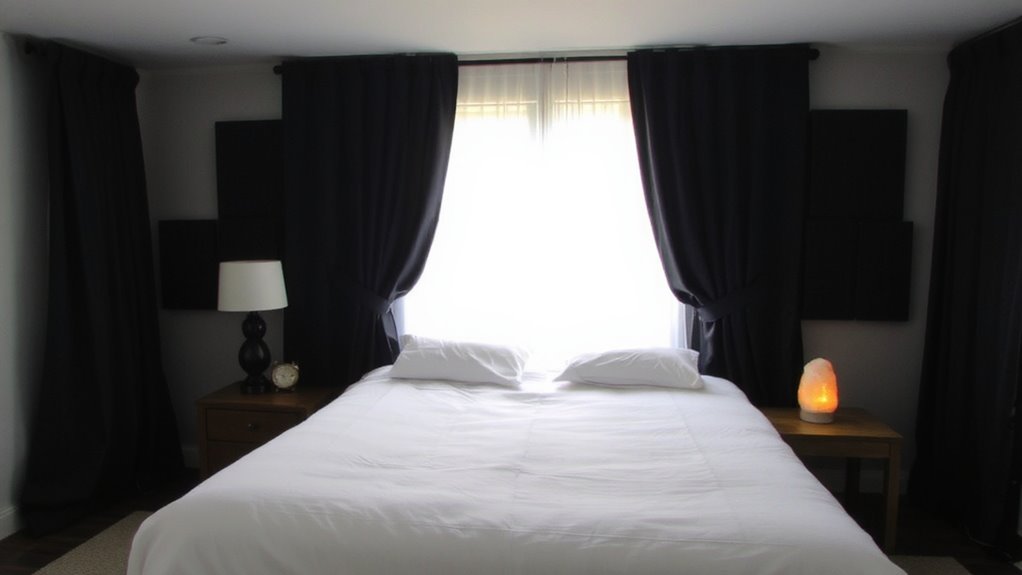
How well you sleep might depend more on what you’re blocking out than you think. Outside noise-traffic, neighbors, city sounds-can disrupt sleep cycles without you fully waking. To reduce this, consider soundproofing techniques like sealing window gaps, adding heavy curtains, or installing door sweeps. These small changes can considerably block noise at common entry points. For ongoing sounds you can’t eliminate, white noise machines help mask disruptions by filling your room with consistent background sound. Units with multiple settings let you choose between white, pink, or brown noise, depending on what works best for your sleep. Some even come with timers and long warranties, letting you test over time. While soundproofing reduces noise physically, white noise machines manage perception. Both approaches support deeper sleep by limiting auditory interruptions worth addressing. Try combining them for best results.
Switch to Battery Clocks and Bedside Shielded Wiring
If you’re sensitive to electromagnetic fields, switching to battery-powered clocks and using shielded wiring near your bed might make a subtle but meaningful difference in your sleep quality. Opt for analog alternatives like simple battery-operated clocks-they emit minimal EMF compared to digital plug-in models. For wired upgrades, consider shielded electrical wiring behind outlets and switches near your bed; these block electric fields effectively. Many shielding products come with warranties and are easy to install alongside existing circuits.
| Feature | Analog Alternatives | Wired Upgrades |
|---|---|---|
| EMF Output | Very low | Reduced by 80–95% |
| Installation | Plug-and-play | Professional recommended |
| Cost | $10–$30 | $200–$500 (whole room) |
| Trial Period | Often 30-day return | Varies by electrician |
| Longevity | 5+ years | 10+ years |
Start a Digital Sunset Routine for Deeper Sleep
Why do you feel more alert at night even when you’re tired? It’s likely due to screen time and the blue light emitted by phones, tablets, and computers. This blue light suppresses melatonin, the hormone that signals it’s time to sleep. To counter this, start a digital sunset routine-power down all devices at least one hour before bed. Replace scrolling with low-light activities like reading or journaling. Reducing screen time helps your brain shift into rest mode. Some people use blue light filters or wear amber-tinted glasses, but cutting device use entirely often works best. Try a two-week trial to see how it affects your sleep depth. Look for devices with built-in night modes, and if needed, consider sleep aids like white noise machines or EMF-reducing cases. Build consistency-your sleep environment and habits work better together when free from digital interference. A compact fan can also provide soothing background sound, and the best small fans for white noise offer effective sound masking in a space-saving design. best small fans for white noise
On a final note
You’ll sleep better in a space with less EMF and noise. Turn off Wi-Fi, use battery clocks, and choose shielded wiring near the bed. Place your bed away from outlets and walls with wiring, and use non-metallic frames. Block outside sound with heavy curtains or white noise. Try these changes for a week or two-many notice deeper rest. Most fixes are low-cost and reversible, so test what works without risk.