Using Evening Light Therapy to Delay Sleep Onset in Advanced Sleep Phase Disorder
You’re not lazy-your circadian rhythm is just running early. Evening light therapy uses bright, 10,000-lux light to delay melatonin release, helping you stay awake later. Start 1–3 hours before your current bedtime, ideally with a diffused, UV-free light box you use daily. Consistency strengthens results, often within a week or two. Pick an FDA-cleared model with a warranty to test what works. Choosing the right device and timing makes a noticeable difference over time.
Notable Insights
- Evening light therapy delays sleep onset by suppressing melatonin through exposure to bright light.
- Use a 10,000 lux lightbox 1–3 hours before current bedtime to effectively shift the circadian rhythm.
- Consistent daily timing, such as during dinner or reading, improves adherence and treatment outcomes.
- Begin sessions earlier in the evening, like 5:30–6:30 p.m., if feeling sleepy by 7:30 p.m.
- Most people notice a delayed sleep schedule within 1–2 weeks of regular therapy use.
Why You’re Always Tired by 7 P.M.?
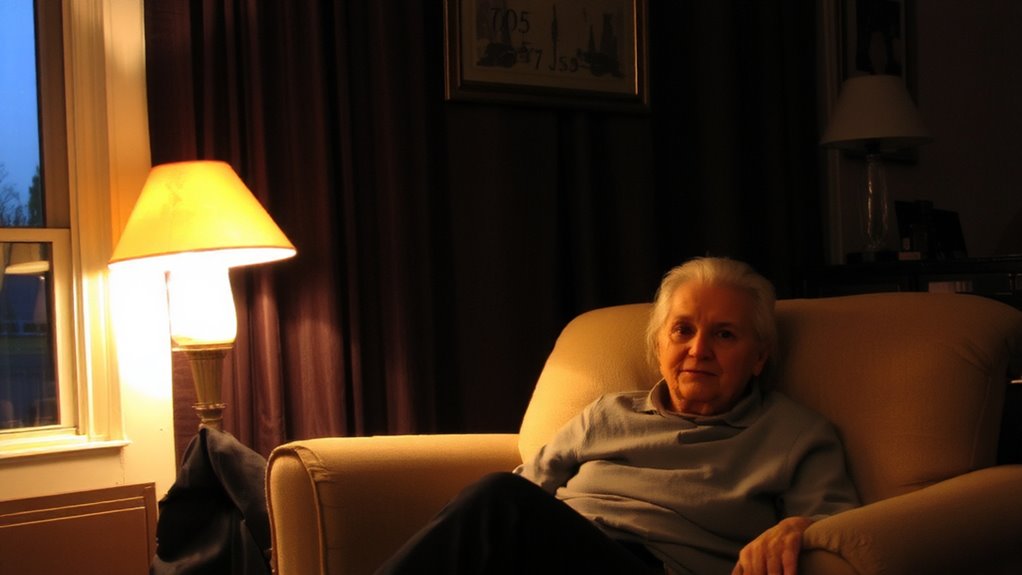
Why do you feel so exhausted by 7 p.m., when most people are just finishing dinner? You might be experiencing early exhaustion tied to Advanced Sleep Phase Disorder (ASPD). Your internal clock shifts forward, making you sleepy far earlier than desired. This isn’t just tiredness-it’s chronic fatigue that disrupts evenings and social routines. You’re not lazy; your body’s rhythm is misaligned. Symptoms often start in middle age and worsen without intervention. The result? Falling asleep by 8 p.m. and waking at 3 a.m., unable to stay asleep. This pattern affects mood, focus, and daily function. Identifying early exhaustion as a sign-rather than a habit-is key. Recognizing it helps you seek accurate solutions, not just quick fixes. Over-the-counter aids won’t correct the root cause. Instead, understanding your circadian shift guides smarter decisions about treatments that target timing, not just sleepiness. Using a cool mist humidifier can improve sleep comfort for those adjusting their sleep schedule, especially in dry environments where best humidifiers maintain optimal air moisture.
How Evening Light Therapy Resets Your Clock
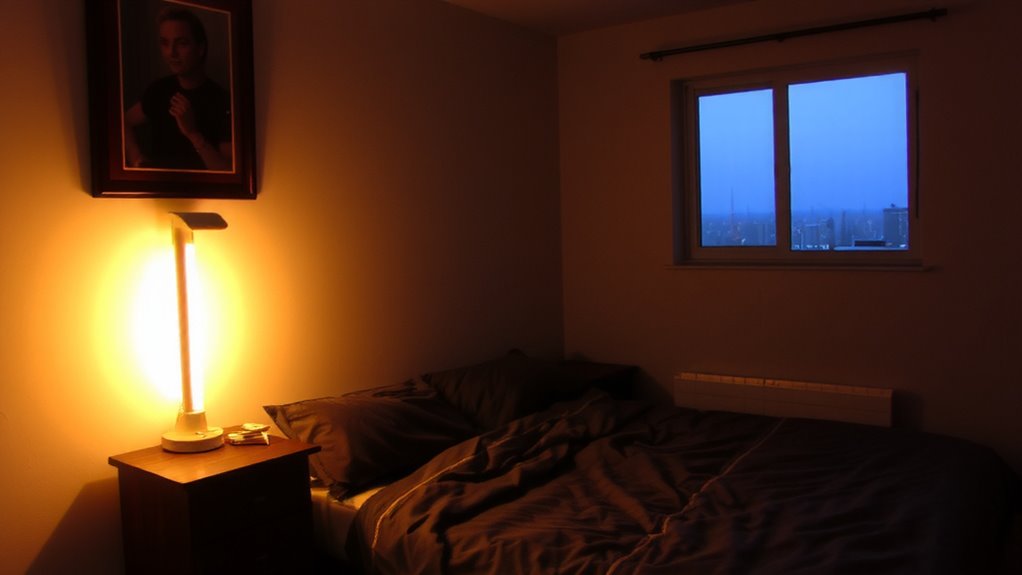
You’re not stuck with an early sleep schedule forever. Evening light therapy can help shift your internal clock by targeting your body’s photoreceptor sensitivity. When you’re exposed to bright light in the evening, specialized cells in your eyes signal the brain to suppress melatonin, delaying sleep onset. This adjustment counters circadian misalignment, the mismatch between your internal rhythm and desired sleep time. Lightboxes designed for therapy emit 10,000 lux, a level proven effective in resetting rhythms. Most people see results after consistent use for several days. Devices are portable, often with UV filters and adjustable brightness. Look for models with FDA clearance and at least a one-year warranty. Treatment length varies, but sessions typically last 30 to 60 minutes. Timing matters, but specifics are covered in the next section.
When to Use Light Therapy for ASPD
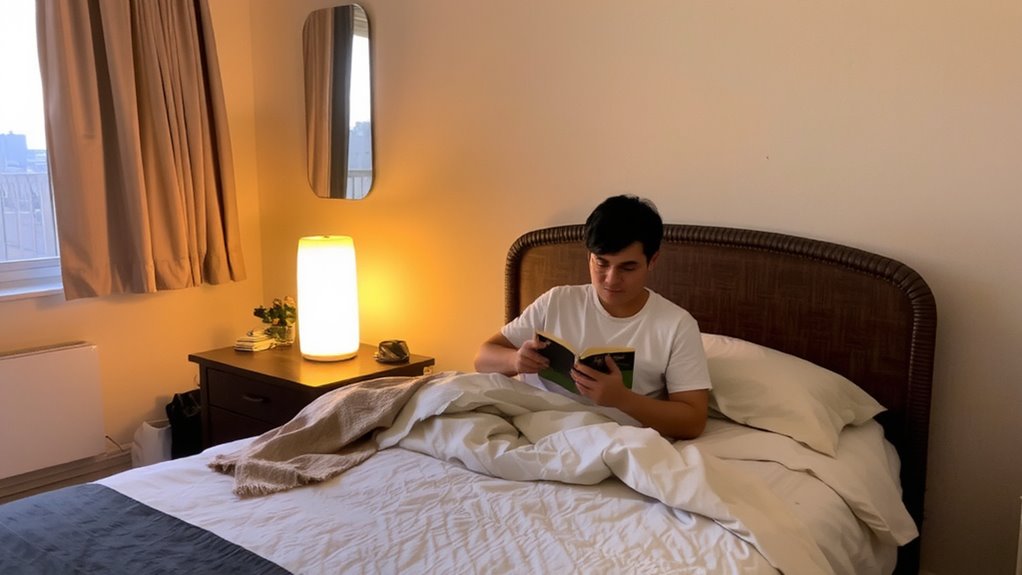
When should you start your light therapy sessions to best address advanced sleep phase disorder? Begin 1–3 hours before your current bedtime, typically in the early evening. This timing helps delay melatonin onset by promoting melatonin suppression, pushing your internal clock later. For example, if you usually feel sleepy at 7:30 p.m., start light exposure around 5:30 or 6:30 p.m. Consistent daily use supports stronger circadian alignment, gradually shifting your sleep window to a more typical schedule. Aim for 30–60 minutes per session, depending on light box intensity. Morning light exposure should be limited to avoid counterproductive shifts. The key is regularity-using the therapy at the same time each evening enhances results. Most people notice changes within 1–2 weeks. Proper timing turns evening light into a reliable tool to reset your rhythm without medication.
Choose the Right Light Box for Evening Use
A quality light box can make a meaningful difference in managing advanced sleep phase disorder, especially when used correctly in the evening. You’ll want a device that delivers at least 10,000 lux of light intensity, as this level is commonly used in clinical studies and helps stimulate the circadian system effectively. Look for a box with a diffused, glare-free surface to avoid eye strain during use. Since you’ll likely sit with it for 30–60 minutes, device portability matters-choose one that’s lightweight and easy to place on a table or carry to different rooms. Many models come with stands or tilt options for comfortable positioning. Check whether the unit emits minimal UV light, which helps protect your eyes over time. Some brands offer trial periods or warranties, so you can test effectiveness without full financial risk.
How to Make Light Therapy a Daily Habit
Picking the right light box sets the foundation for effective evening light therapy, but consistency turns it into a tool that truly supports your circadian rhythm. To build routine integration, use your light box at the same time each evening, ideally during a relaxing activity like dinner or reading. Pair it with a daily habit you already follow, making it easier to remember. Set a phone reminder or calendar alert as a backup. Track your progress with consistency tracking-use a simple journal or app to log each session and note changes in sleep timing. This helps you stay accountable and see patterns over time. Choose a device with a clear warranty and solid build so it lasts through daily use. Most people notice improvements in sleep onset after a few weeks of steady use. Trial different durations, but aim for 30–60 minutes, and adjust based on how you feel. For optimal relaxation and sleep support, consider incorporating a best sleep lamp into your evening routine.
On a final note
You might feel tired early due to advanced sleep phase disorder, but evening light therapy can help delay sleep onset. Using a bright, full-spectrum light box for 30–60 minutes in the early evening resets your internal clock. Choose a 10,000-lux device with UV filters and position it at eye level. Consistency matters-use it nightly, track changes, and consult a doctor if sleep doesn’t improve. Many quality boxes offer warranties, so trial one safely.