How Innerspring Mattress Coil Systems Affect Spinal Alignment
Your spine stays aligned when your mattress supports its natural curve, and innerspring coils play a key role. Pocketed coils adjust to your body, reducing pressure on hips and shoulders, while Bonnell coils offer firm, uniform support. A balanced firmness-often semi-firm-keeps your spine neutral. Coils made of tempered steel last longer and prevent sagging. Higher coil counts help only if the coils are well-spaced and durable. Choosing the right system for your sleep position improves long-term comfort and spinal health, and there’s more to evaluate about how design impacts performance.
Notable Insights
- Properly tensioned coils support natural spinal curvature by maintaining balanced, even support across the body.
- Pocketed coils enhance spinal alignment through targeted contouring and reduced motion transfer for pressure relief.
- Bonnell coils offer firm, uniform support ideal for back and stomach sleepers needing minimal sinkage.
- Coil quality, density, and arrangement matter more than count in ensuring long-term spinal support.
- Matching coil firmness and type to sleep position helps maintain neutral spine alignment and prevents pain.
How Innerspring Coils Impact Spinal Alignment
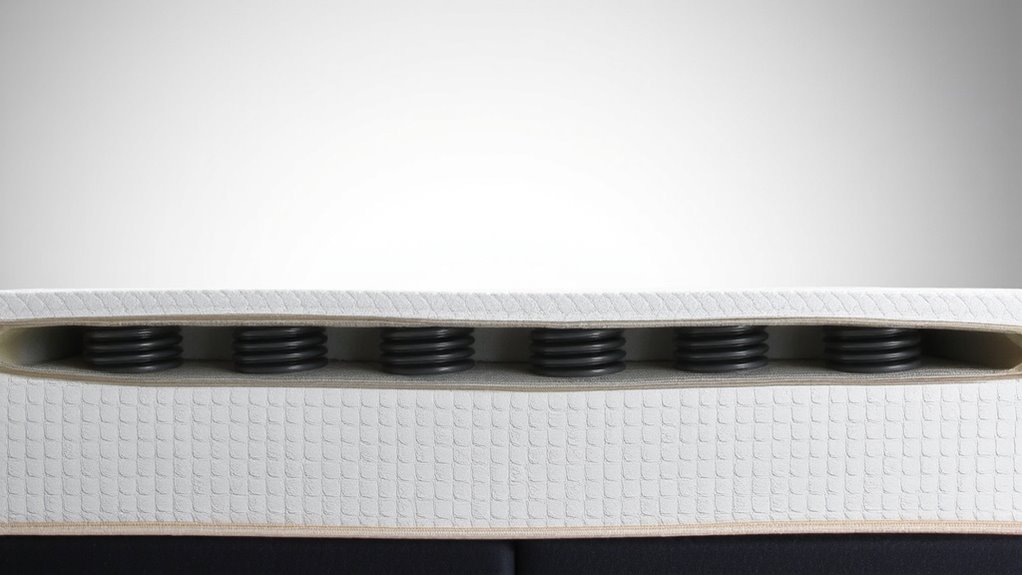
While your body’s natural curves matter most for spinal alignment, the innerspring coil system in your mattress plays a key role in supporting them. The right coil tension helps maintain proper spinal curvature by balancing support and responsiveness. Too soft, and your spine may sag; too firm, and pressure builds up. Coils with adjustable tension distribute weight evenly, keeping your spine neutrally aligned whether you sleep on your back, side, or stomach. Look for models that specify coil gauge and count-lower gauge means thicker coils and firmer support, while higher counts improve motion isolation. Many innerspring mattresses come with trial periods, so you can test alignment comfort risk-free. Paired with a responsive comfort layer, proper coil tension reduces strain and supports healthier sleep posture over time. Check warranty terms too-longer coverage often reflects build quality you can rely on.
Bonnell vs. Pocketed Coils: Which Supports Your Spine Better?
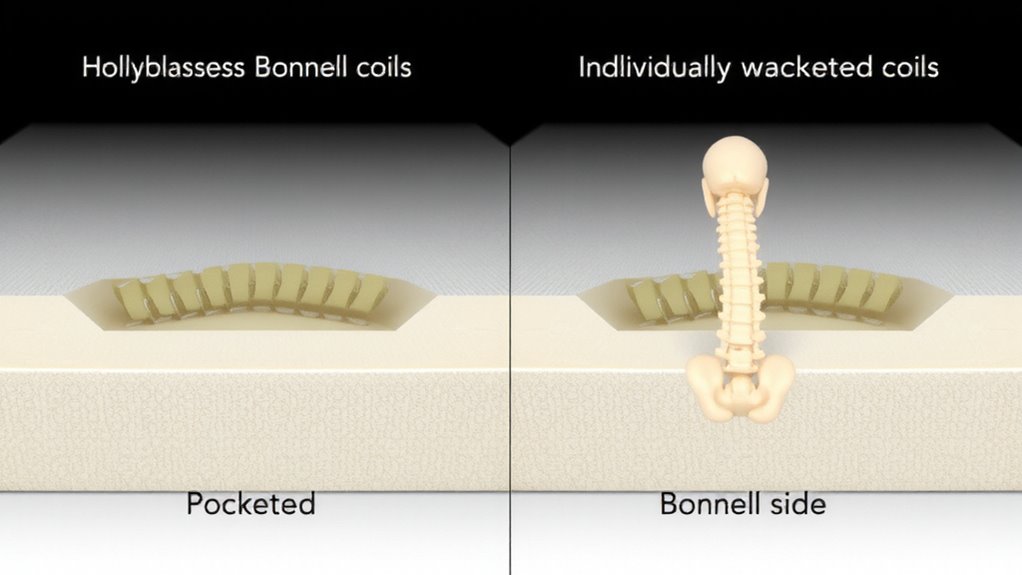
What kind of support do your spine and sleeping position really need-unified firmness or targeted contouring? If you sleep on your side or move at night, pocketed coils likely suit you better. Each coil works independently, contouring to your body’s curves and keeping your spine aligned. They reduce motion transfer and offer better pressure relief, especially for joint pain. Bonnell coils, linked in a continuous hourglass design, deliver firm, unified support-good for back or stomach sleepers who prefer less give. They often cost less but can lack targeted support. Pocketed coils usually have stronger coil durability over time and improved edge support, so you’re less likely to roll off or feel a “roll-off” effect when sitting. Both types vary by gauge and coil count, so check warranties and trial periods. Test firmness and responsiveness before deciding. For those seeking top-performing options, consider exploring the best pocket coil mattresses based on expert testing and user feedback.
Do More Coils Mean Better Spine Support?
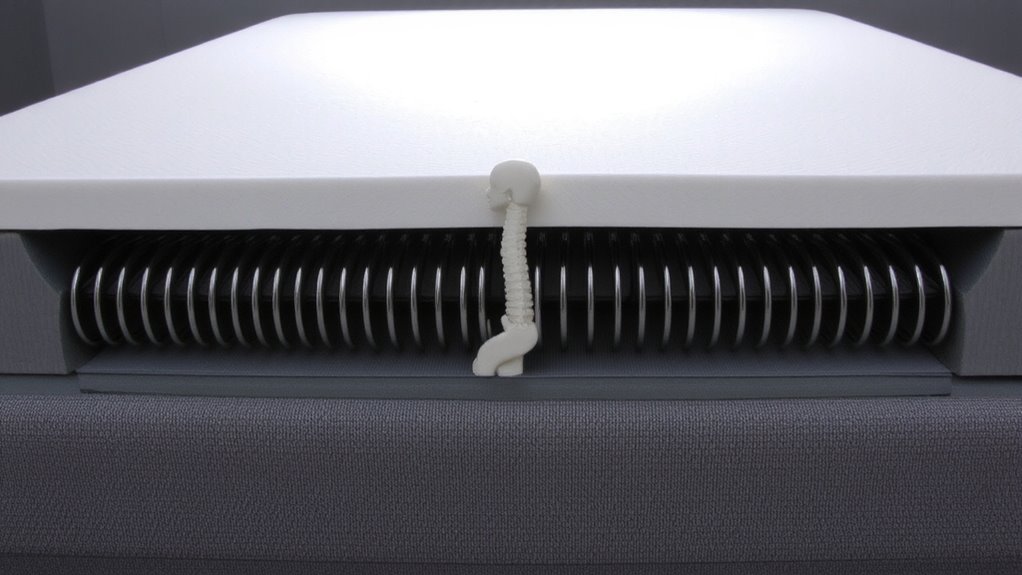
You’ve probably heard that more coils mean better support, but that’s not always the case when it comes to spinal alignment. What really matters is coil density and how well the coils work together to support your body’s natural curves. A mattress with many low-quality coils may sag over time, reducing spinal support. Higher material quality-like tempered steel-helps coils maintain their shape and responsiveness. Coil density affects how evenly your weight is distributed, especially at pressure points like hips and shoulders. Too few coils might not offer enough support, but too many poorly arranged ones can create uncomfortable firmness. Look for balanced design: consistent coil spacing, durable materials, and edge support. Many quality innerspring mattresses come with trial periods and warranties, so check those details. Making a smart choice means weighing construction details over coil count alone. Your spine benefits most from thoughtful engineering, not just numbers.
How Mattress Firmness Shapes Spinal Alignment
How firm should your mattress really be for proper spinal alignment? It depends on your body type and sleep habits. A mattress that’s too soft can let your spine sag, while one that’s too firm might create pressure points, especially at the hips and shoulders. The right firmness supports a neutral spine, and that balance often comes from the mattress depth and material layers. Deeper mattresses usually have more cushioning layers, allowing better contouring without sacrificing support. Thinner models may feel stiffer but offer less give. Material layers like memory foam or latex modify firmness, adding comfort over the innerspring base. You should feel cradled, not stuck or floating. Many brands offer sleep trials, so you can test firmness risk-free. Check warranties too-some adjust based on wear patterns. Firmness isn’t one-size-fits-all; it’s about matching structure to your body’s needs. A balanced option for many sleepers is a semi-firm mattress, which provides both support and pressure relief.
Match Your Sleep Position to the Right Innerspring Coils
Your sleep position plays a big role in how well an innerspring mattress supports your spine, building on the way firmness affects alignment. Matching your sleep posture to the right coil system helps maintain spinal balance and reduces pressure points. For example, side sleepers need targeted support at the shoulders and hips, so pocketed coils with zoned support work well. Back sleepers benefit from continuous coils that offer even support, while stomach sleepers need firmer, dense coils to prevent lower back sagging.
| Sleep Position | Best Coil Type | Pressure Point Focus |
|---|---|---|
| Side | Pocketed | Hips and shoulders |
| Back | Continuous | Lower back |
| Stomach | Tightly wound innerspring | Pelvis |
Consider coil count and gauge-higher counts with lower gauges offer durability and support. Test with a sleep trial to confirm alignment and comfort.
On a final note
Your spine stays better aligned when the innerspring mattress supports your body’s natural curves. Pocketed coils often help more than Bonnell coils by isolating motion and adapting to pressure points. More coils can improve support, but firmness and your sleep position matter just as much. Match the coil type and firmness to how you sleep-side, back, or stomach-for better comfort. Look for long trial periods and solid warranties when testing options.