Creating a Sleep-Inducing Evening Ritual With Three Herbal Elements
You can ease into sleep by steeping chamomile tea nightly, as its apigenin content supports drowsiness without grogginess. Add passionflower 30 minutes before bed to gently boost GABA and calm racing thoughts. Pair with valerian root-taken an hour prior-at 300–600 mg to help deepen sleep over consistent use. Together, these herbs work synergistically, offering a non-habit-forming option backed by decades of study. Adjust timing and form to fit your routine, and stick with it for at least two weeks to gauge results. There’s more to discover about fine-tuning your ideal combination.
Notable Insights
- Combine chamomile tea, passionflower, and valerian root an hour before bed to support relaxation and faster sleep onset.
- Steep one to two teaspoons of dried chamomile flowers in hot water for 5–10 minutes as a calming bedtime tea.
- Take 300–600 mg of valerian root extract or tea one hour before sleep to improve sleep quality with consistent use.
- Use passionflower as a tea, tincture, or capsule 30–60 minutes before bed to gently increase GABA and calm the nervous system.
- Enhance the ritual with lavender essential oil in a diffuser to ease tension and reinforce a restful sleep environment.
How Chamomile Helps You Fall Asleep Faster
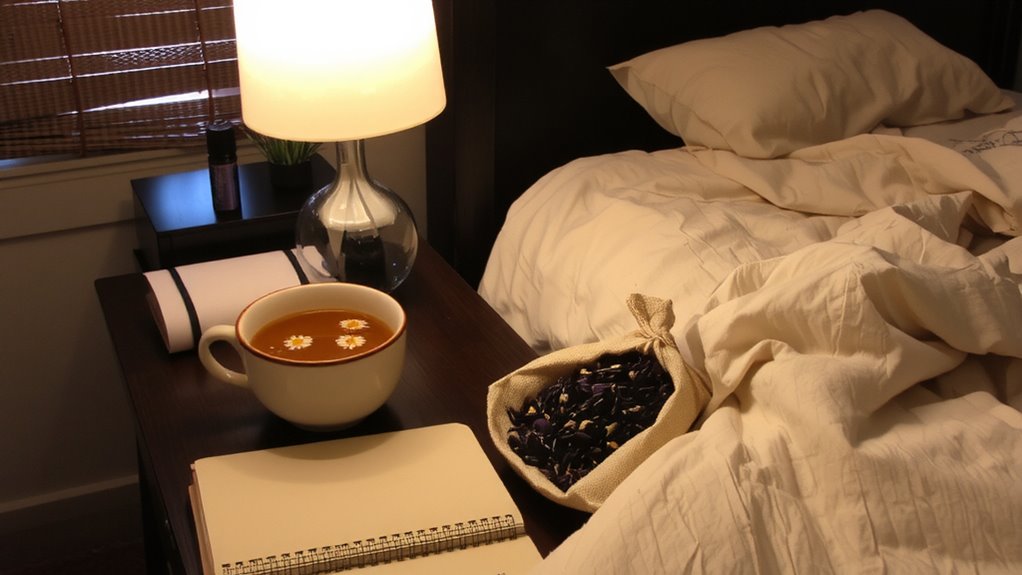
While you might reach for sleep aids when rest feels out of reach, a gentler option lies in chamomile, a herb long linked with relaxation. You’ve likely heard of chamomile benefits, especially its role in supporting easier shifts to sleep. Studies suggest it may improve sleep onset speed, helping you drift off more quickly than without it. Chamomile contains apigenin, an antioxidant that binds to brain receptors linked to drowsiness. Unlike stronger sleep aids, it doesn’t cause grogginess or dependency, making it suitable for regular use. For best results, steep one to two teaspoons of dried flower in hot water for 5–10 minutes before bed. While effects vary, consistent use over 2–4 weeks shows more noticeable results. It’s not a cure for sleep disorders, but it can be a practical addition to your routine, especially if you prefer plant-based support with minimal side effects. For a reliable experience, consider trying one of the best chamomile tea brands reviewed for quality and potency.
Why Passionflower Quiets Midnight Anxiety
You’ve probably found comfort in chamomile when winding down, but if racing thoughts or late-night worry keep pulling you back from rest, passionflower might be the next herb worth trying. This gentle herb supports balanced brain chemistry by encouraging the activity of gamma-aminobutyric acid (GABA), a neurotransmitter that helps calm nervous system activity. When your brain produces more GABA, it can temper the stress response that often flares up at night. Unlike stronger sedatives, passionflower works mildly, making it a practical choice if you’re wary of grogginess. You can try it as a tea, tincture, or capsule about 30–60 minutes before bed. Some find results within a few nights; others need up to two weeks to notice a difference. Look for standardized extracts to guarantee consistent potency. Always check with your healthcare provider if you take other medications. For a holistic approach to better sleep, consider pairing passionflower with other effective ingredients found in the best sleep tinctures for restful nights.
What the Science Says About Valerian for Sleep?
Valerian root has been studied for decades as a natural option to help improve sleep quality, and research suggests it may help you fall asleep faster and sleep more deeply. Studies on valerian efficacy show modest improvements in sleep onset and overall rest, especially when used consistently over a few weeks. It’s thought to increase GABA levels in the brain, which helps regulate nerve impulses involved in relaxation. Most trials use doses between 300 and 600 mg, taken about an hour before bed. While short-term use is generally well tolerated, evidence on long term safety remains limited-few studies track use beyond 28 days. Some report mild side effects like drowsiness or stomach upset. You may need to experiment with timing and dosage to see if it works for your sleep pattern. It’s not a quick fix, but it could be a helpful part of a broader sleep routine. For best results, consider trying one of the best valerian root supplements based on purity, potency, and third-party testing.
Which Herbal Teas Boost Sleep Quality
How can you unwind at night in a way that gently cues your body it’s time to sleep? Sipping a warm cup of herbal tea may help. Chamomile, known for its mild sedative properties, supports relaxation without drowsiness the next day. Valerian root, often used in sleep aids, works over time to improve sleep continuity. But don’t overlook the lavender benefits-its aroma and compounds can ease nervous tension, helping you fall asleep faster. Some blends include ingredients rich in magnesium effects, which support muscle relaxation and calm neural activity. These teas vary in strength and flavor, so trial periods help determine what suits your system. Look for organic, additive-free options to avoid irritants. While not a cure for serious sleep disorders, consistent use may improve sleep quality. Always consider how your body responds and consult a professional if problems persist.
How to Build Your Nightly Sleep Ritual
Warm herbal tea can set the stage for a restful night, but pairing it with a consistent evening routine strengthens your body’s natural sleep signals. Start by setting a fixed bedtime-this bedtime consistency helps regulate your internal clock over time. About an hour before sleep, dim the lights and begin winding down with calming activities like reading or gentle stretching. Use essential oils such as lavender or chamomile in a diffuser to enjoy aromatherapy benefits that may ease tension. Avoid screens to reduce blue light exposure, which can interfere with melatonin release. Keep the room cool and quiet. If you try sleep aids, choose ones backed by research and consult a healthcare provider, especially if you suspect a sleep disorder. Test routines for at least two weeks to assess effectiveness-small adjustments often improve results.
On a final note
You can improve sleep by trying chamomile, passionflower, and valerian as part of a quiet nightly routine. These herbs may reduce sleep onset time, ease nighttime anxiety, and support deeper rest, though effects vary. Steep in tea or take as supplements, following label dosing. Give each herb a few nights to assess results. Pair with consistent bedtime habits for best outcomes. Always check with a doctor if you have conditions or take medications.