How to Choose the Right Mattress For Optimal Comfort and Support During Sleep
Choose a mattress that matches your sleep position and body weight for proper spinal alignment. Side sleepers need cushioning for shoulders and hips, while back and stomach sleepers often do better with medium to firm support. Memory foam contours closely, but hybrids offer balanced comfort with better airflow. Look for cooling tech if you sleep hot, and consider edge support for stability. Test models during long sleep trials and check warranty terms-your best fit balances support, comfort, and durability over time.
Notable Insights
- Match mattress firmness to your sleep position and body weight for optimal spinal alignment and pressure relief.
- Choose memory foam for pressure relief, innerspring for bounce, or hybrid for balanced support and comfort.
- Prioritize cooling features like gel-infused foam or breathable coils if you sleep hot.
- Ensure adequate edge support for stability and to maximize usable sleep surface.
- Test the mattress with a lengthy sleep trial and check warranty coverage for long-term satisfaction.
Find the Best Mattress for Your Sleep Style
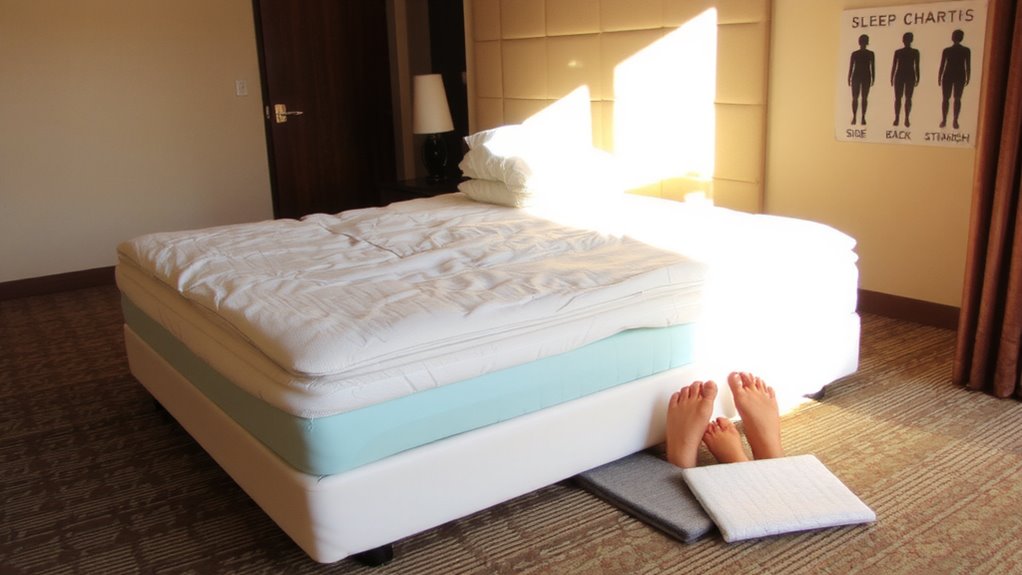
How you sleep each night shapes what kind of mattress will work best for you. Your sleep position-side, back, or stomach-affects spinal alignment and pressure points, directly impacting your sleep quality. Side sleepers often need more cushioning at the shoulders and hips, while back sleepers may prefer balanced support to keep the spine neutral. Stomach sleepers usually benefit from a firmer surface to prevent lower back strain. Your personal preference in firmness, material feel, and motion isolation also plays a key role. Memory foam contours closely, helping reduce pressure, while latex offers responsive support. Innerspring models improve airflow but may feel too firm. Many brands offer sleep trials and warranties, so you can test comfort risk-free. Consider these factors carefully to match your needs with the right balance of support, durability, and comfort for healthier, uninterrupted rest. Side sleepers with back pain may benefit from mattresses specifically designed for this combination, such as those featured in the best mattresses for side sleepers with back pain.
How Mattress Types Shape Comfort and Support
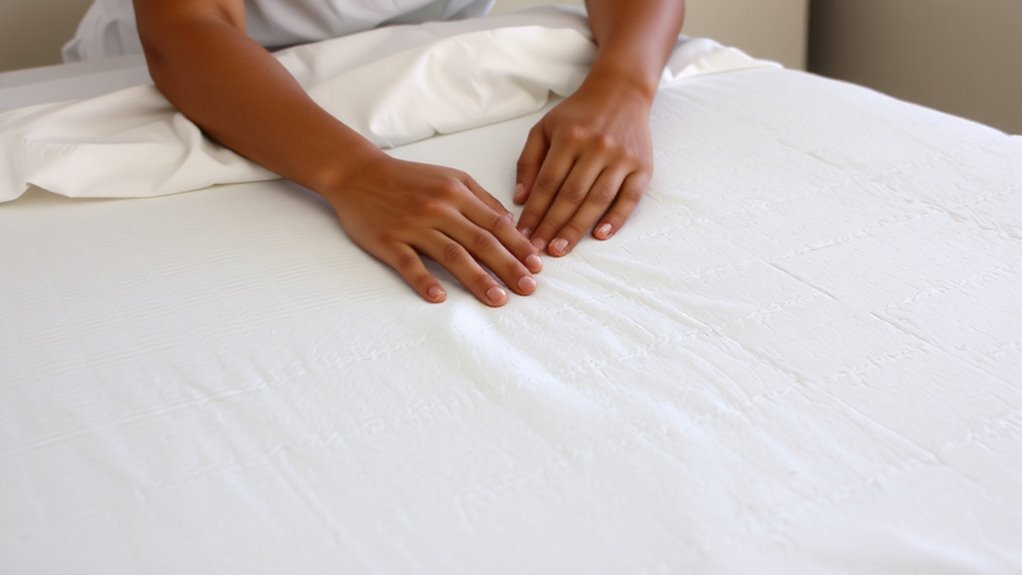
While each mattress type brings its own blend of support and comfort, knowing what’s inside helps you choose wisely. The core mattress materials shape how well it supports your spine and holds up over time. Innerspring offers bouncy ease but may sag; memory foam contours closely but retains heat. Latex is responsive and breathable, while hybrids aim to balance both. Durability factors like coil gauge, foam density, and edge support affect long-term performance. A top choice for balanced performance in 2025 is the Top Hybrid Mattresses recommended by experts. Below is how different types may make you feel:
| Feeling | Mattress Type |
|---|---|
| Cozy embrace | Memory Foam |
| Bouncy lift | Innerspring |
| Balanced feel | Hybrid |
| Natural bounce | Latex |
| Supportive hug | High-Density Foam |
Test trial periods and check warranties-these help protect your comfort and investment.
Pick Firmness Based on Your Weight and Position
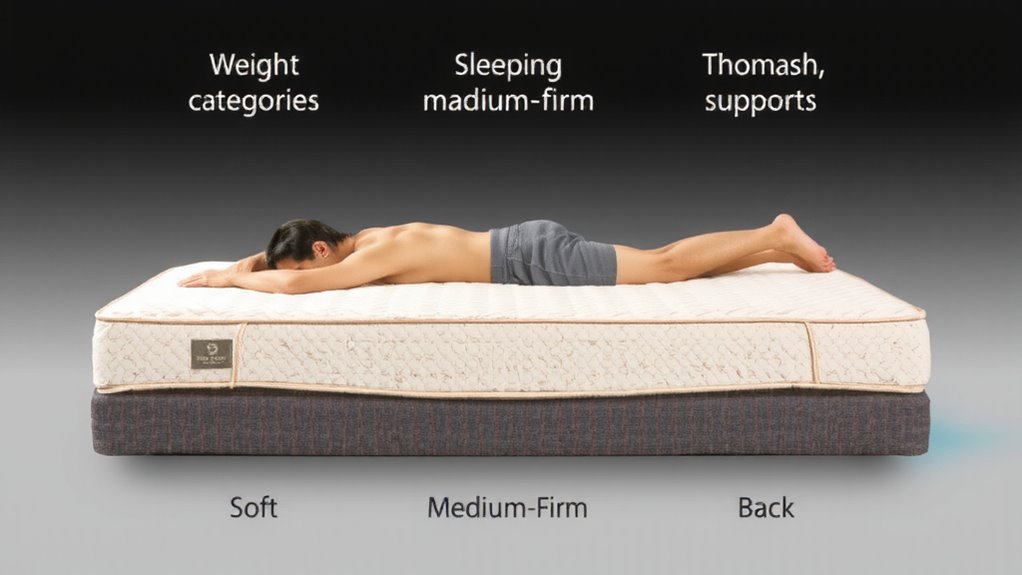
You’ll sleep better when your mattress firmness matches both your body weight and preferred sleeping position. If you’re a side sleeper, you need enough cushioning for proper side sleeper alignment and pressure point relief, especially at the shoulders and hips. Lighter folks under 130 pounds usually do best with softer mattresses, so they sink in slightly and maintain spinal balance. Those between 130 and 230 pounds often prefer medium to medium-firm options that support alignment without sacrificing comfort. Heavier individuals over 230 pounds typically need firmer surfaces to prevent excessive sagging and guarantee proper support. Mattresses with zoned support or adaptive foam layers can improve both pressure point relief and alignment. Always check the trial period and warranty-many brands offer 100+ nights to test comfort and 10-year coverage for durability concerns.
Stay Cool at Night With Breathable Mattress Tech
A supportive mattress sets the stage for rest, but staying cool through the night plays an equal role in quality sleep. If you tend to sleep hot, look for models with breathable materials that aid temperature regulation. Many modern mattresses include gel-infused foams, open-cell structures, or phase-change materials designed to dissipate heat. These features support airflow enhancement, allowing heat to escape instead of trapping it next to your body. Innerspring and hybrid designs naturally offer better ventilation due to their coil layers, while some memory foams now balance contouring with cooling tech. Check whether the mattress has certifications for low emissions, which often align with breathable, non-off-gassing materials. Most brands offer sleep trials-use them to test how well the mattress manages heat in your bedroom environment. A cooler sleep surface can make a real difference in uninterrupted rest.
Minimize Movement Disturbance With Strong Edge Support
Many people overlook edge support, but it plays a key role in how stable and usable your mattress feels, especially if you share the bed or sit on the side to put on shoes. A mattress with strong edge durability won’t sag over time, giving you more usable surface and making it easier to get in and out of bed. Reinforced edges often come from dense foam or coils along the perimeter, which also help with motion isolation. That means when your partner moves, you’re less likely to feel it-useful if you’re a light sleeper or dealing with disrupted rest. High edge durability supports better posture when sitting and prevents that “rolling off” feeling near the sides. When testing a mattress, check how firm the edges feel under pressure. Better edge support and motion isolation work together to improve sleep quality by increasing stability and reducing sleep interruptions. For those prioritizing undisturbed sleep, consider models highlighted for best mattresses for no motion transfer.
Shop With Confidence: Trials, Warranties, and Returns
What if your mattress didn’t work out as expected-could you return it without hassle? That’s where trial periods and return policies matter. Most brands offer sleep trials lasting 90 to 120 nights, giving you time to truly test comfort and support. During this window, you can assess how well the mattress aligns your spine and reduces pressure-key for preventing aches and improving sleep quality. Check whether the trial is risk-free and who covers return shipping costs. Warranties, usually 10 years or more, protect against structural defects like sagging or broken coils. Still, they won’t cover normal wear or improper foundation use. Always read return policies carefully-some require a 30-night minimum trial or deny refunds if the mattress is stained. Knowing these details helps you choose confidently, balancing comfort, cost, and long-term reliability without pressure.
On a final note
Choose a mattress that matches your sleep position and body weight to get proper spine alignment and pressure relief. Memory foam cradles curves, while coils offer breathability and support. Pick medium to firm options if you sleep on your back or stomach, softer ones for side sleeping. Look for cooling covers and edge support, especially in shared beds. Test with a sleep trial, check the warranty, and review return policies to make a confident, informed choice.