Using Actigraphy to Monitor Circadian Rhythms in Delayed Sleep Phase Disorder
You can use actigraphy to track your circadian rhythm by wearing a small wrist device that records movement over days or weeks. It detects patterns of inactivity linked to sleep, revealing delayed sleep onset typical in DSPD. Unlike sleep diaries, it’s objective and continuous, helping distinguish true delays from irregular habits. This data guides precise timing for light therapy and melatonin. Your results shape a tailored plan to gradually shift sleep earlier, with improvements often seen in a month. There’s more to discover about aligning treatment with your body’s natural signals.
Notable Insights
- Actigraphy uses wrist-worn motion sensors to objectively track sleep-wake patterns over days or weeks.
- It detects delayed sleep onset by identifying consistent, prolonged delays in inactivity periods.
- Actigraphy differentiates DSPD from insomnia by revealing stable but late circadian rhythms.
- Unlike sleep diaries, it provides continuous, unbiased data unaffected by memory or reporting errors.
- Clinicians use actigraphy data to time light therapy and melatonin for effective DSPD treatment.
What Is Delayed Sleep Phase Disorder (DSPD)?

You might’ve noticed that falling asleep at a “normal” time-like 10 or 11 p.m.-feels nearly impossible, and waking up early for work or school leaves you groggy and unrested. This pattern could be delayed sleep phase disorder (DSPD), a condition where your internal clock runs markedly later than typical. It’s not laziness-it’s often linked to genetic predisposition, meaning it can run in families. Hormonal fluctuations, especially in melatonin release, play a key role; your body may start producing it much later at night. People with DSPD naturally fall asleep late and wake up late, struggling with societal schedules. While not dangerous, it can affect performance and mood. Recognizing DSPD helps you consider appropriate options, like light therapy, melatonin supplements under guidance, or gradually adjusting sleep times. Accurate understanding supports better choices without relying on assumptions or ineffective sleep aids.
How Actigraphy Detects Sleep-Wake Cycles
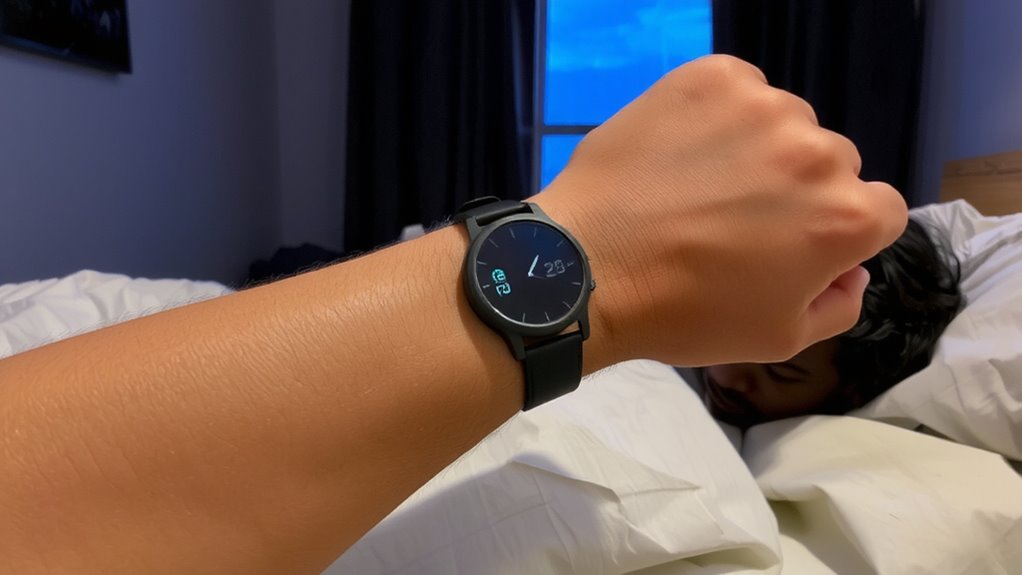
With the help of a small wearable device, actigraphy tracks your movement over days or weeks to estimate sleep-wake patterns with reasonable accuracy. You wear the device, usually on your wrist, where sensor placement matters-consistent positioning helps guarantee reliable readings. The unit uses a motion sensor to detect activity levels, recording data sampling at regular intervals, often every 30 to 90 seconds. When you’re still for extended periods, the device interprets that as possible sleep. Over time, patterns emerge, showing when you typically fall asleep and wake. This long-term monitoring captures your natural rhythms without disrupting your routine. Unlike brief observations, actigraphy provides a full picture of your behavior across nights, helping clinicians assess circadian timing. Results guide decisions about sleep strategies or treatments, offering objective support when diagnosing or adjusting care plans for sleep-wake concerns like DSPD. Many modern wearables used in actigraphy are considered among the best sleep trackers for monitoring rest and circadian rhythms.
Why Actigraphy Outperforms Sleep Diaries in DSPD
While sleep diaries can offer insight into your perceived sleep patterns, they often fall short when diagnosing and managing delayed sleep phase disorder (DSPD), where timing and consistency matter most. You might think you’re falling asleep earlier than you actually are, which hurts sleep accuracy. Actigraphy, on the other hand, objectively tracks your movement over days or weeks, giving a clearer picture of your real sleep-wake cycle. Unlike diaries, it doesn’t rely on memory or daily effort, boosting user compliance-especially when fatigue or irregular schedules make record-keeping hard. You’re more likely to skip entries or misreport times, but an actigraphy device keeps working without extra input. It captures data continuously, even when you’re unaware of your patterns. This persistent monitoring helps clinicians spot inconsistencies that diaries miss, making actigraphy a stronger tool for confirming DSPD and guiding treatment decisions.
Spotting DSPD Sleep Delays With Actigraphy Data
Because actigraphy records your movement day and night, it can clearly reveal the delayed sleep onset typical in DSPD, even when symptoms feel inconsistent. You might think you’re going to bed earlier, but the data shows your actual sleep timing is pushed later. The device tracks your activity patterns over days, highlighting when you’re truly inactive-likely asleep-versus still moving. This helps distinguish DSPD from insomnia or irregular habits. Your results will show a consistent delay in rest periods, often by hours past conventional bedtimes. Since sleep timing shifts are central to DSPD, spotting these trends early improves understanding of your rhythm. Activity patterns also reveal whether lifestyle factors, like evening screen use or late meals, affect your delays. The actigraph’s objective record gives you clearer insight than memory alone, supporting informed choices about bedtime routines or interventions without assuming cause. It’s a practical step toward managing your sleep better.
What Your Actigraphy Results Mean for Diagnosis?
How do your actigraphy results actually help in diagnosing a sleep disorder? They give doctors clear, real-world data on your sleep patterns over time. Unlike a single sleep study, actigraphy tracks your rest and activity cycles across days, revealing delays in your circadian rhythm typical of DSPD. The device detects when you fall asleep and wake up, offering insights into your natural sleep architecture. This long-term view also reflects underlying hormonal fluctuations tied to melatonin and cortisol, which influence sleep timing. When combined with sleep logs, the results help clinicians distinguish DSPD from insomnia or other disorders. You’ll see how consistent-or irregular-your rhythm is, supporting a more accurate diagnosis. These findings, grounded in weeks of data, build a solid case for targeted treatment without relying on guesswork.
How Data Guides Light and Melatonin for DSPD
If you’ve been tracking your sleep with actigraphy, that data can now guide when to use light exposure and melatonin to reset your delayed rhythm. Your actigraphy log shows your true sleep-wake pattern, helping pinpoint the ideal light timing for morning bright light therapy-usually shortly after your natural wake time. This boosts daytime alertness and gradually shifts your clock earlier. Likewise, melatonin dosing is most effective when taken about five to six hours before your current dim light melatonin onset, which actigraphy helps estimate. Taking melatonin too early or too late can worsen the delay, so timing matters. Combined, precise light timing and properly timed melatonin dosing work with your data to nudge your rhythm gradually. These adjustments support gradual, sustainable shifts without drastic changes, making them practical choices for managing DSPD over time.
Actigraphy-Driven Treatment Plans for DSPD
You’ve already seen how actigraphy data shapes the timing of light and melatonin for DSPD, offering a clear picture of your natural sleep-wake cycle. Now, that same data helps create a personalized treatment plan tailored to your daily routine. By tracking movement and rest patterns over days or weeks, actigraphy reveals trends in your sleep architecture, like when you actually fall asleep and wake up. This insight lets clinicians adjust interventions so they match your biology, improving treatment adherence. You’ll know exactly when to use light therapy or take melatonin, based on real evidence, not guesswork. The device is small, worn like a watch, and works reliably during normal activities. Most come with a 1-year warranty and easy-to-use software. Trials show improved sleep timing within 4–6 weeks when you follow data-guided plans consistently. It’s not a quick fix, but it’s a steady path toward better alignment.
On a final note
You can use actigraphy to better understand your sleep patterns if you suspect delayed sleep phase disorder. It tracks your activity over days, giving doctors accurate data on your circadian rhythm. Unlike sleep diaries, it’s less reliant on memory and more objective. Results help tailor treatments like light therapy or melatonin timing. Talk with your doctor about trying actigraphy-many devices offer easy wear and short trial periods-to make informed decisions about improving your sleep schedule.