How to Wash Down Comforters Without Damaging the Feathers
Check your comforter’s label first-some require dry cleaning, especially if they have delicate stitching or special coatings. If machine washable, use a front loader with cold water, a gentle cycle, and mild detergent, avoiding bleach or fabric softener. Wash alone to guarantee room for movement. Rinse thoroughly to remove all soap. Tumble dry on low with clean tennis balls to break up clumps and restore loft. Pause halfway to fluff and redistribute the fill, guaranteeing even drying. If your comforter is oversized, heavily soiled, or the label advises professional care, skip home washing-improper cleaning can damage feathers or void the warranty. Learning the full process helps protect your investment and sleep better with consistent warmth.
Notable Insights
- Check the care label to confirm if machine washing is safe or if dry cleaning is recommended.
- Use a mild detergent without bleach or fabric softener to protect down fibers during washing.
- Wash in a front-loading machine with cold water on a gentle cycle to minimize feather damage.
- Add clean tennis balls in the dryer to prevent clumping and restore loft during low-heat drying.
- Dry completely with multiple cycles and fluff occasionally to prevent mildew and maintain insulation.
Can You Wash Your Down Comforter? (Check the Label First)
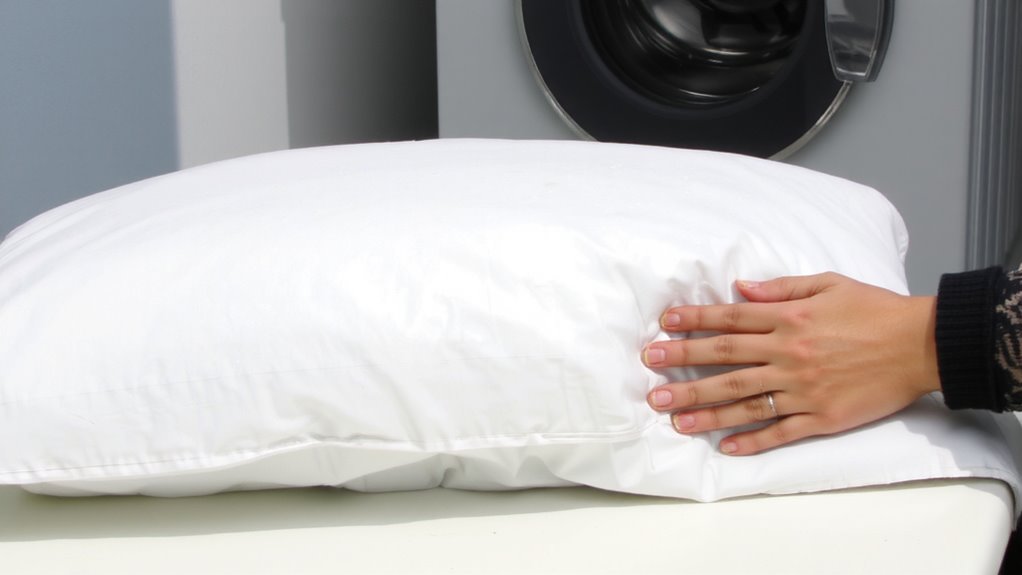
While you might be tempted to toss your down comforter into the washer without a second thought, it’s best to check the care label first-most manufacturers clearly state whether machine washing is safe. Label inspection isn’t just routine; it’s key to avoiding unintended damage. Some down fill comforters are constructed with delicate stitching or bonded baffles that can degrade if cleaned improperly. Others may have coatings or treatments that break down with water exposure. When in doubt, dry cleaning might be recommended, especially for high-loft, premium fills where feather preservation is critical. Ignoring the label could compress the down clusters, reducing insulation and breathability-both essential for regulating sleep temperature. A damaged comforter may also trigger discomfort for those with sleep sensitivities. If the label allows washing, proceed carefully. If not, respect the manufacturer’s guidance to maintain performance, warranty coverage, and long-term comfort. Label inspection protects your investment and supports restful sleep.
Use a Mild Detergent and Gentle Machine Cycle
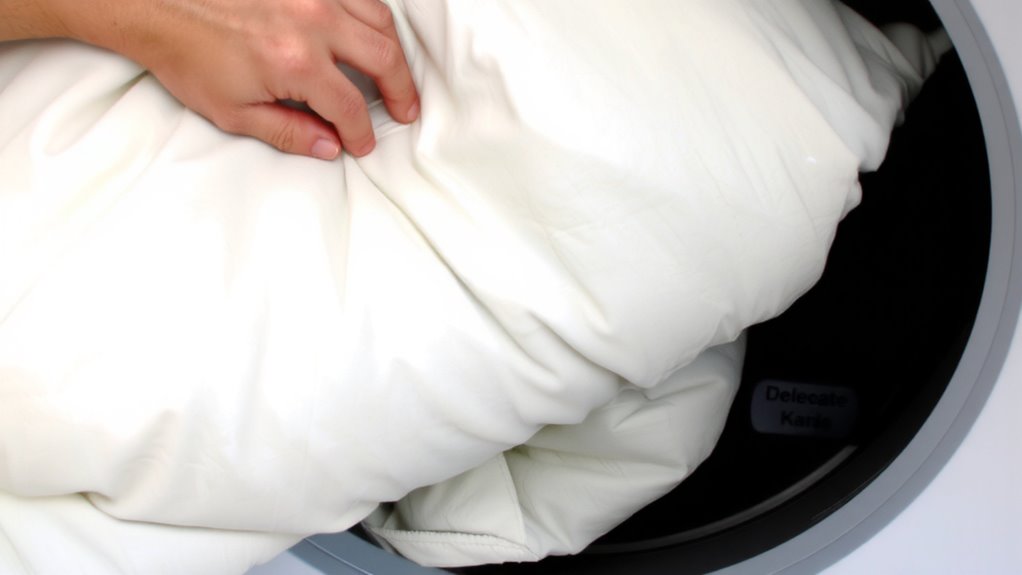
Since your down comforter is a long-term investment in restful sleep, treating it right during washing matters. Use a mild detergent-never bleach or fabric softener-as harsh chemicals weaken fibers and damage the down’s insulating ability. Your detergent selection should favor gentle, liquid formulas made for delicates or outdoor gear, since they rinse clean without residue. Front-loading machines work best, using cold water and a gentle cycle to protect the fill. Overloading strains stitching and causes uneven cleaning, so wash it alone. Your washing technique makes a difference: a slow spin minimizes stress, while multiple rinse cycles guarantee all soap is removed. This care helps maintain loft and warmth, supporting consistent sleep comfort. Always follow manufacturer instructions, as some brands recommend professional cleaning. Proper home washing, when allowed, preserves performance and extends warranty coverage through careful upkeep.
Dry With Tennis Balls to Prevent Clumping

Your down comforter’s loft depends on even drying, so toss in a couple of clean tennis grind during the cycle to keep the fill from clumping. The tennis ball benefits include gentle agitation that breaks up damp clusters, helping maintain consistent insulation. As they bounce, they also speed up drying by opening up compressed down pockets. Use low or medium dryer temperature control to protect delicate feathers-high heat can weaken fibers over time. A gentle heat setting guarantees thorough drying without damage. Run multiple cycles if needed, checking for complete dryness to prevent mildew. This method supports long-term comforter performance, preserving softness and thermal efficiency. Proper drying also contributes to better sleep hygiene by reducing allergens. You’ll notice improved breathability and comfort, which may help if you’re sensitive to heat or have mild sleep disturbances. Always follow care labels for best results. For those on a tight budget, consider investing in one of the best budget down comforters to ensure quality without overspending-options like best budget down comforters offer excellent value and performance.
Fluff Mid-Dry to Restore Down Loft
Tossing in tennis balls helps prevent clumping, but don’t stop there-check on your comforter halfway through drying and give it a good shake. This boosts air circulation, helping trapped moisture escape and shortening drying time. As you fluff, break up any damp pockets you feel; this guarantees the down dries evenly and regains its natural loft. Proper loft means better insulation and comfort, which supports consistent sleep temperature-key for uninterrupted rest. Running the dryer on low heat with good air circulation protects the feathers from damage while still effectively drying the fill. Skipping this mid-dry fluff can leave clumps, prolong drying time, and reduce long-term performance. Taking a few minutes to check in makes a noticeable difference in how the comforter feels and functions. It’s a small step that maintains structure and softness, helping you get the most from its design.
When to Skip Home Washing and See a Pro
While some down comforters can handle a home wash, others are better off in professional hands-especially if they’re heavily soiled, oversized, or made with delicate fabrics like silk or ultra-thin cotton. You risk uneven cleaning or fabric stress if you tackle these at home. Professional cleaning guarantees even dirt removal and moisture distribution, which supports long-term down health. It’s also a smart move for damage prevention, since experts use gentle methods tailored to the comforter’s construction. Machines at home might not fully rinse soap, leading to clumping or mildew. Plus, improper drying can ruin loft and insulation. If your comforter has a warranty, check whether DIY washing voids it-some brands require professional cleaning to keep coverage valid. When in doubt, going pro helps preserve performance and extends lifespan without guesswork. It’s a small cost for lasting comfort.
On a final note
You can wash your down comforter at home if the label allows, using a mild detergent and gentle cycle to protect the feathers. Tumble dry with tennis balls to prevent clumping and restore loft. Pause mid-cycle to fluff the filling evenly. For delicate constructions or stubborn odors, professional cleaning may be safer. Always make certain it’s fully dry to avoid mildew. A well-cared-for comforter supports better sleep by maintaining breathability and warmth over time.