Exploring The Benefits Of Yoga Techniques For Reducing Anxiety Before Bedtime
Yoga helps ease bedtime anxiety by calming your mind and relaxing your body through gentle movement and breath control. Practicing simple poses like child’s pose or legs-up-the-wall reduces physical tension while diaphragmatic breathing activates your rest-and-digest system. These techniques offer a low-risk, drug-free alternative to sleep aids, with no dependency concerns. You can start with just 10 minutes nightly, using dim lighting and consistent timing to improve results-there’s more to discover about refining your routine for better sleep.
Notable Insights
- Yoga reduces bedtime anxiety by calming the nervous system and shifting the body into rest-and-digest mode.
- Diaphragmatic breathing techniques like 4-7-8 pattern quickly activate relaxation without medication or side effects.
- Gentle poses such as Child’s Pose and Legs-Up-the-Wall release physical tension and quiet the mind.
- A consistent 10-minute bedtime yoga routine builds a mental cue for sleep and lowers anxiety over time.
- Combining yoga with sleep hygiene-like dim lighting and no screens-enhances melatonin and improves sleep quality.
Why Yoga Eases Bedtime Anxiety
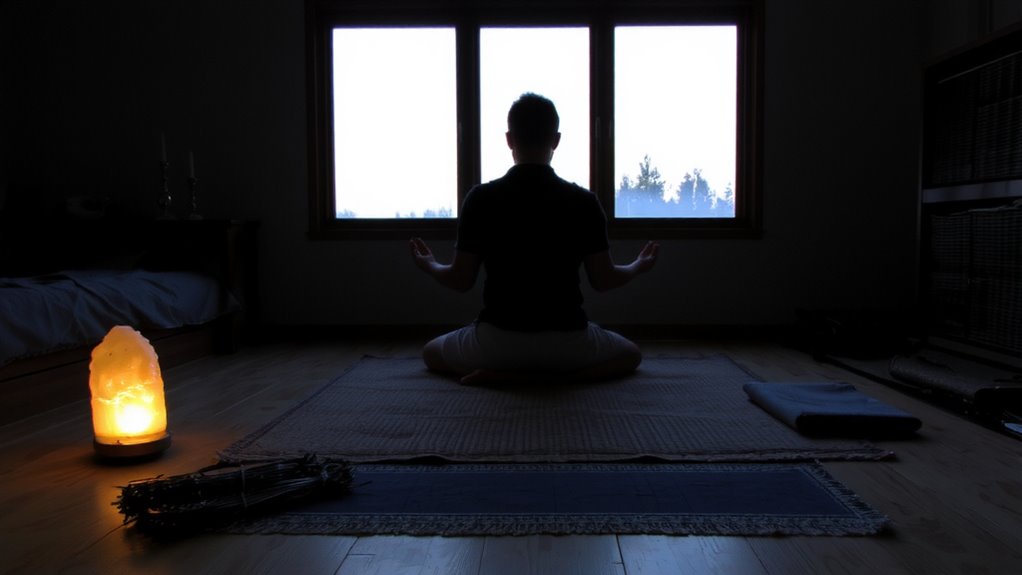
A sense of calm doesn’t just happen-it’s built through consistent, gentle practice, and that’s where yoga steps in. When you move into a simple stretch or hold a restorative pose before bed, you’re not just relaxing your muscles-you’re strengthening the mind body connection. This awareness helps your brain recognize when your body is tense, allowing you to respond before anxiety takes over. Over time, these small actions support nervous system regulation, shifting you from fight-or-flight mode into rest-and-digest mode. Unlike sleep aids, which may carry side effects or dependency risks, yoga works with your body’s natural rhythms. It doesn’t require special equipment or a prescription, just a few minutes and a willingness to try. Though results may vary, many find improvement within weeks. It’s a low-risk option worth considering if bedtime feels overwhelming.
How to Trigger Calm With Breathwork
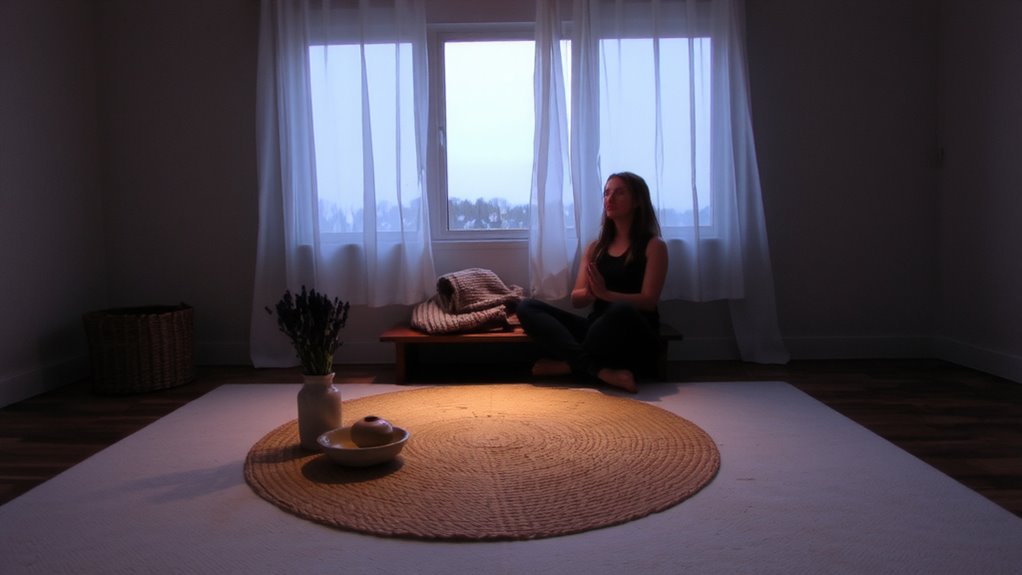
Since your breath is always with you, it’s one of the most accessible tools for calming your nervous system before bed. Try diaphragmatic breathing to activate relaxation: inhale deeply through your nose, letting your belly rise, then exhale slowly, engaging your core. Nasal breathing helps regulate airflow, warming and filtering air while boosting oxygen uptake. This rhythm signals your brain to shift from fight-or-flight to rest-and-digest mode. Aim for a 4-7-8 pattern-inhale for four counts, hold for seven, exhale for eight-repeating for several cycles. Consistent practice may improve sleep onset and reduce nighttime anxiety. Unlike sleep aids, breathwork carries no side effects or dependency risks. While results vary, most notice benefits within a few nights. It requires no equipment, has no trial period, and integrates easily into any routine. Consider it a low-risk, high-reward strategy when weighing options for better sleep.
Gentle Yoga Poses for Sleep and Stress Relief
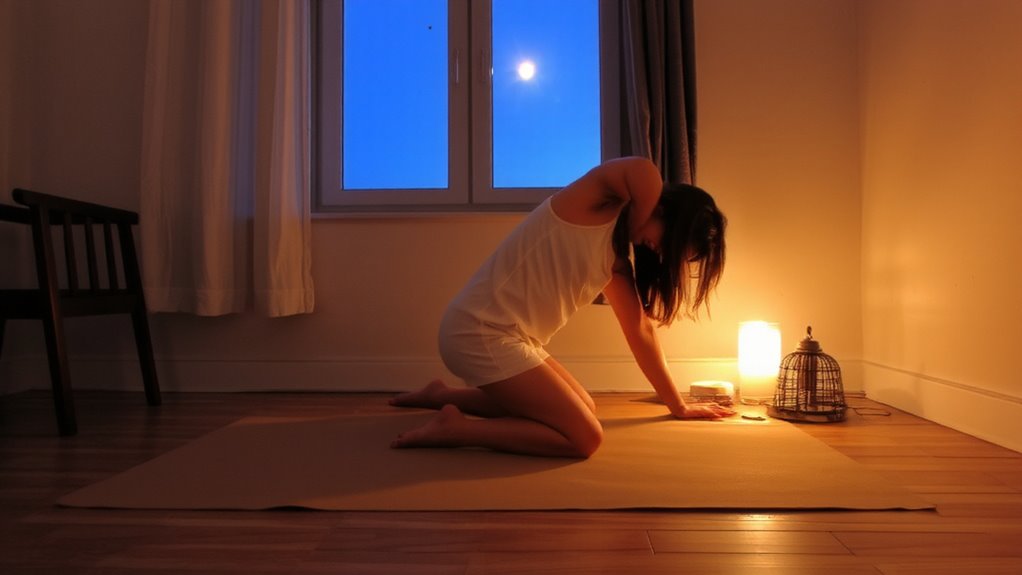
When you’re winding down at night, gentle yoga poses can quietly ease the body out of tension without the need for medication or devices. Practicing under moon lighting creates a soothing ambiance that supports relaxation and signals your body it’s time to rest. These stretches help prepare your nervous system for sleep, making space for calm breath and stillness. After your session, consider sleep journaling to track how your body responds over time.
| Pose | Focus Area | Benefit |
|---|---|---|
| Child’s Pose | Back, hips | Relieves spine tension |
| Legs-Up-the-Wall | Legs, lower back | Improves circulation, reduces anxiety |
| Cat-Cow | Spine, neck | Encourages mindful breathing |
| Seated Forward Bend | Hamstrings, back | Calms the mind, releases hips |
| Reclining Twist | Spine, abdomen | Eases digestive and back stress |
Build a 10-Minute Bedtime Yoga Routine
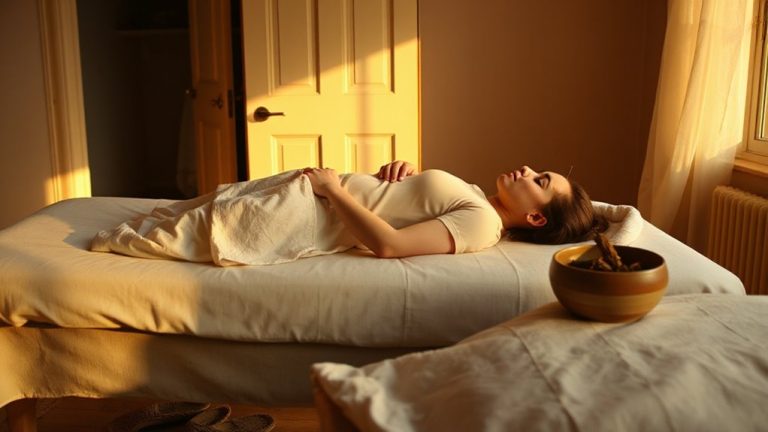
While your body unwinds, you can use a short, focused yoga routine to gently shift into rest mode without relying on sleep aids or supplements. Start in a quiet space with moon lighting-soft, blue-toned illumination that signals your brain it’s time to rest. Begin with three minutes of seated deep breathing, then move into gentle stretches: cat-cow, child’s pose, and legs-up-the-wall, holding each for one to two minutes. These poses ease tension and improve circulation. Finish with two minutes of lying spinal twists and savasana, focusing on slow, steady breaths. Doing this nightly creates a predictable rhythm your nervous system can trust. Afterward, try sleep journaling to note how you felt before and after-this helps track what works over time. This routine doesn’t cure sleep disorders but can reduce anxiety that interferes with rest, offering a drug-free option to test alongside other approaches.
Combine Yoga With Better Sleep Habits
Though yoga can ease nighttime anxiety, pairing it with consistent sleep habits makes your routine more effective over time. Improving your sleep environment and sticking to a consistent schedule help your body recognize when it’s time to wind down. A calm, dark, and cool room supports deeper rest, while going to bed and waking up at the same time-even on weekends-strengthens your natural rhythm. Incorporating best sleep comfort solutions can further enhance rest quality by aligning your bedding and room setup with your body’s needs.
Consider combining your yoga practice with these proven habits:
| Sleep Habit | Benefit | Tip |
|---|---|---|
| Dim lights at night | Signals your brain to produce melatonin | Use warm-toned lamps |
| Limit screen time | Reduces mental stimulation | Turn off devices 30–60 minutes before bed |
| Consistent schedule | Balances circadian rhythm | Choose a bedtime and stick to it |
| Optimize sleep environment | Enhances comfort and reduces disruptions | Use breathable bedding and block noise |
On a final note
You can use yoga to calm your mind before bed, easing anxiety and improving sleep quality. Simple breathwork and gentle poses help regulate your nervous system without medication. When combined with consistent sleep habits, this routine supports long-term rest. Trial a 10-minute practice nightly, tracking changes over a week. It’s free, low-risk, and adaptable-ideal for exploring alongside other sleep aids or professional guidance.