Engineering Asymmetric Pillow Profiles for Combination Sleepers
You shift positions at night, and a well-engineered asymmetric pillow adapts with you. It features zoned support-higher loft for side sleeping, medium for back, and low-profile for stomach-so your spine stays aligned. Gradual shifts between zones prevent neck strain, while memory foam or latex layers offer contouring and resilience. Cooling covers and washable materials improve comfort and durability. Most include trial periods, letting you test fit over several nights. You’ll find how tailored support aligns with your sleep patterns.
Notable Insights
- Asymmetric pillow profiles are engineered to support multiple sleep positions with varied loft zones.
- Graduated loft transitions help combination sleepers shift smoothly between back, side, and stomach positions.
- High-loft zones align side sleepers, while low-loft areas accommodate stomach sleepers comfortably.
- Layered foams or adjustable fills provide balanced support and pressure distribution across zones.
- Durable materials like high-density foam and breathable covers enhance comfort and longevity for combo sleepers.
Why Combo Sleepers Need Asymmetric Pillows
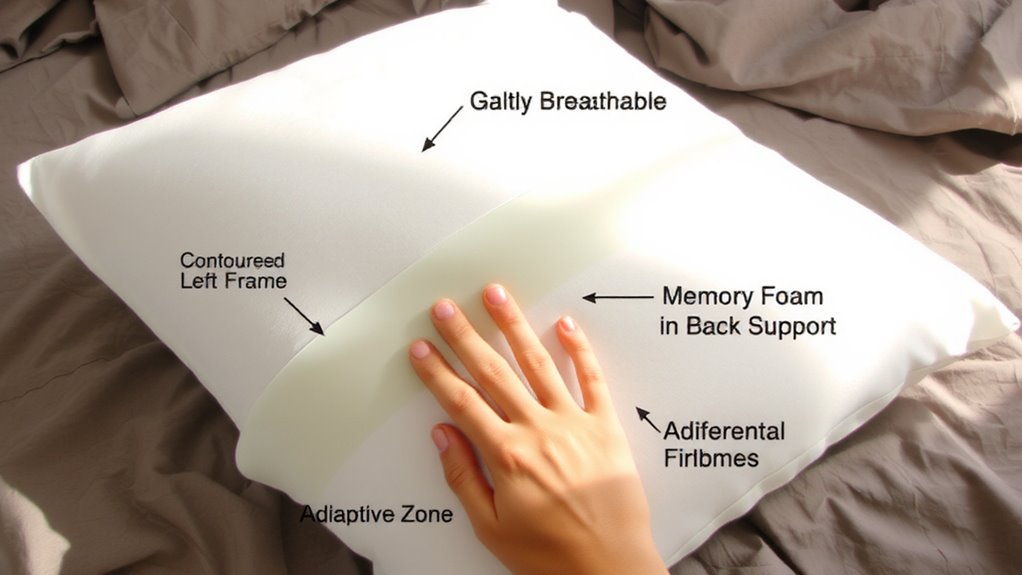
While you shift between back, side, and stomach sleeping throughout the night, your neck and spine lose consistent support on standard pillows, which are usually designed for a single position. This misalignment can disrupt pressure distribution, leading to stiffness and poor sleep quality. Asymmetric pillows are built with varying loft zones to adapt to your movements, helping maintain proper spinal alignment whether you’re on your side or back. The design supports your neck and head where you need it most, reducing strain. Unlike one-size-fits-all options, these pillows balance firmness and contouring, improving comfort across positions. Most feature breathable, hypoallergenic materials and come with trial periods, so you can test them risk-free. They’re not a cure, but they do address a core need: stable support through natural sleep changes. For combo sleepers, that balance is key to waking with less pain and more energy. Side sleepers often benefit from higher loft and firmer support, making best pillows for side sleepers a crucial reference when selecting the right asymmetric design.
How Asymmetric Loft Enables Smooth Sleep Transitions
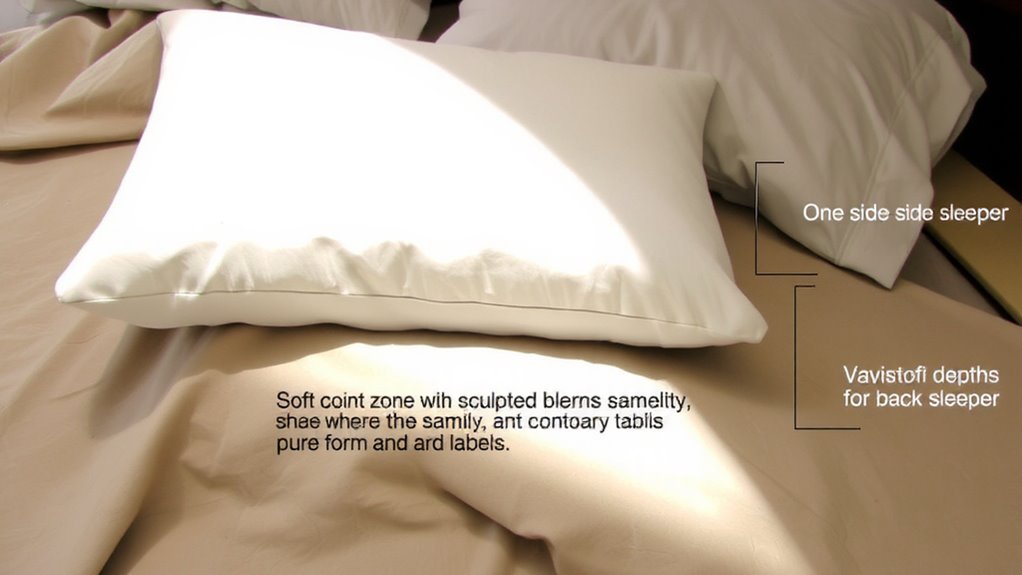
Because your sleep position shifts naturally through the night, an asymmetric loft helps ease those shifts by offering targeted support where it’s needed most. As you move between sleep posture changes, the varied height and firmness across the pillow maintain spinal alignment without requiring constant adjustment. This design improves pressure distribution, reducing strain on your neck and shoulders regardless of side, back, or stomach lying. The gradual shift between zones means your head and neck aren’t forced into awkward angles. Instead, support shifts smoothly with you, minimizing disruptions. Pillows with asymmetric lofts often use layered foams or adjustable fill to balance softness and resilience. Many models come with a trial period, so you can test comfort over time. Look for ones with removable covers and warranties for long-term value. This thoughtful construction supports better sleep hygiene without demanding habit changes. Stomach sleepers especially benefit from low-loft designs that prevent neck strain, and the best pillow for this position typically features a contoured or soft profile to maintain alignment. Best Pillows for Stomach Sleepers provide ideal support while accommodating natural movement during the night.
Which Pillow Zone Works for Side, Back, or Stomach Sleeping?
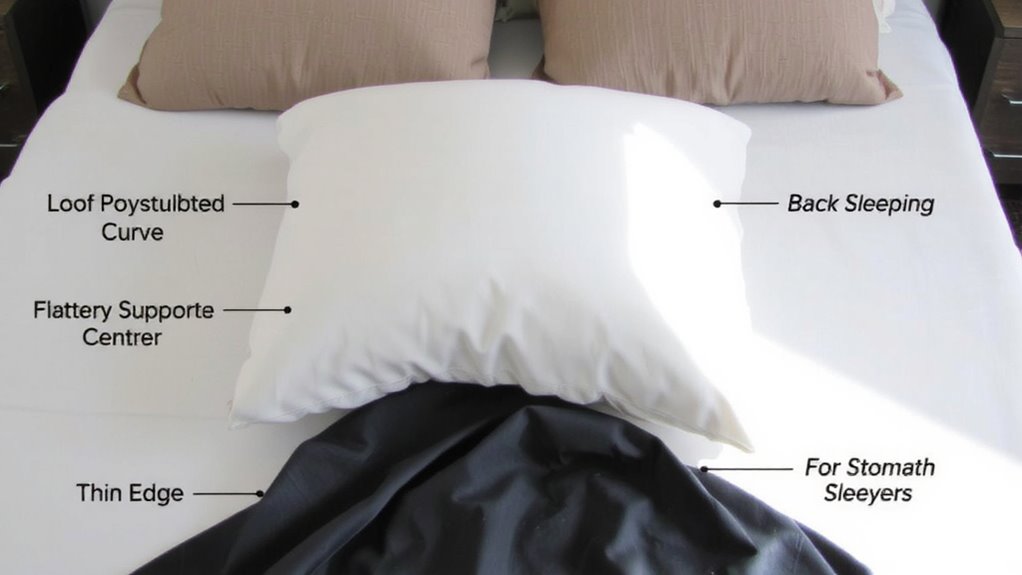
How do you know which pillow zone suits your sleep style? It depends on your preferred position and how well the pillow maintains spinal alignment. Side sleepers need higher loft for side alignment, while back sleepers benefit from moderate height that offers steady back support. Stomach sleepers do best with a low, soft profile to avoid neck strain. Asymmetric pillows divide these zones intentionally, letting you shift positions without losing support. A well-designed hugging pillow can provide comfort and stability for combination sleepers.
| Sleep Position | Pillow Zone Height | Key Benefit |
|---|---|---|
| Side | High | Promotes side alignment |
| Back | Medium | Guarantees back support |
| Stomach | Low | Reduces neck pressure |
| Side/Back | Medium-High | Balances both needs |
| Any Position | Graduated | Smooths shifts |
Best Foam, Latex, and Cooling Fabrics for Asymmetric Pillows
The right materials make all the difference in an asymmetric pillow’s ability to support changing sleep positions. You’ll want foam density between 3.5 and 5.0 pounds per cubic foot for balanced support and durability, especially in the side-sleeping zone. Memory foam molds to your neck, while latex offers responsive bounce and natural resilience. Latex also resists dust mites and mold, which can help if you have sensitivities. For fabric breathability, look for covers made of TENCEL, bamboo, or phase-change materials that wick moisture and regulate temperature. These fabrics improve airflow and reduce heat buildup, important when shifting positions. Many top pillows include removable, washable covers for easier maintenance. Check warranty terms-most quality brands offer at least a 5-year guarantee. Test the pillow for at least 30 nights, since your body needs time to adjust.
Contoured vs. Dual-Zone: Which Suits Combo Sleepers Best?
What if your pillow could keep up with every shift you make at night? For combo sleepers, contoured and dual-zone pillows each offer structure, but differ in design. Contoured pillows cradle your neck with a defined peak, supporting side sleeping while allowing stomach sleepers to sink in gently. They often use high-resilience foam for material durability, maintaining shape over time. Dual-zone models blend two firmness levels in one pillow-softer on one side, firmer on the other-giving you flexibility without flipping. Both types provide solid edge support, preventing collapse at the pillow’s outer edges during rotation. Contoured styles hold alignment well but may feel restrictive if you toss often. Dual-zone versions adapt more easily to unpredictable movement. Consider how much you shift and whether consistent support or repositioning ease matters more. Trial periods help determine long-term comfort.
How to Try an Asymmetric Pillow Like a Combo Sleeper
Why not test an asymmetric pillow the way your body actually sleeps? Use sleep tracking apps or wearable devices to record your positions over a few nights-you’ll see where support matters most. Then, try the pillow with your usual routine, whether you start on your back and roll to your side or shift often. Pay attention to how your neck and shoulders feel in the morning. Motion analysis from video recordings can reveal subtle misalignments the naked eye might miss. Spend at least three to five nights adjusting, since your body needs time to adapt. Look for models with trial periods and easy returns-many brands offer 30-day warranties. This approach helps you assess comfort, support, and alignment without pressure. You’re not guessing-you’re using real data to guide your choice. That way, you make smarter decisions about what truly works for your sleep pattern.
Key Features of Smart Combo Sleeper Pillows
Picture a pillow that adapts to your every move-side, back, or stomach-without losing support. Smart combo sleeper pillows use zoned contouring and responsive memory foam to keep your spine aligned, no matter how you shift. You’ll notice the thoughtful pillow aesthetics, which balance modern style with functional design, so it fits your bedroom while working hard for your sleep. Materials like cooling gel infusions and breathable covers help regulate temperature, reducing night sweats and discomfort. A strong brand reputation means the company stands by their product with trial periods, often 30 to 100 nights, and solid warranties. These pillows may cost more upfront, but the investment can reduce neck pain and improve sleep quality over time. Look for certifications and customer reviews to confirm durability and performance. Always test one under real sleeping conditions before deciding.
On a final note
You’ll find asymmetric pillows help combo sleepers shift seamlessly between positions. With varied loft zones, they support side, back, or stomach sleeping by aligning your spine. Dual-zone designs offer firm side support and softer zones for back or stomach use. Memory foam cradles, latex adds bounce, and cooling covers improve comfort. Many brands provide trial periods and warranties, so test one risk-free. Check return policies and sleep trial length to make a confident, informed choice.