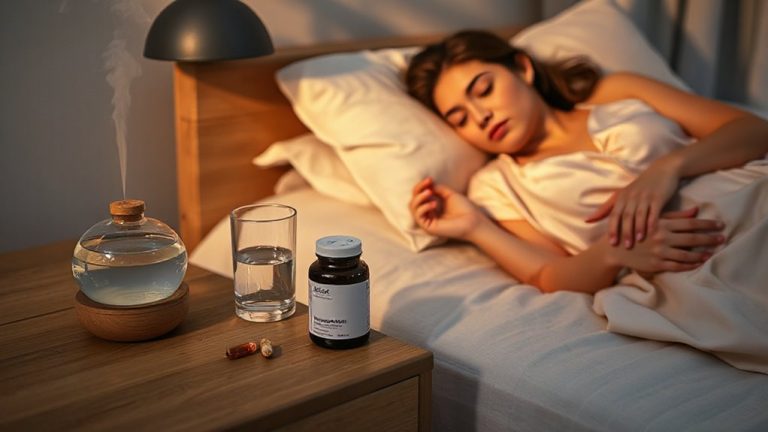
How to Combine Chamomile Tea With Breathwork for Faster Sleep
Drink chamomile tea 30 to 45 minutes before bed so your body can absorb its calming apigenin, then do 15 minutes of breathwork to ease your nervous system further. Choose a high-quality, organic tea from Egypt or Hungary for purity, and steep it in fresh, boiled water. Use diaphragmatic or box breathing to slow your heart rate. Time both practices to work together nightly, and adjust your routine if needed-small, consistent changes often lead to better sleep without side effects. There’s more to explore for refining your approach.
Notable Insights
- Drink chamomile tea 30 to 45 minutes before bed to allow absorption and maximize calming effects.
- Choose high-quality, organic chamomile tea with whole flower heads for optimal potency and purity.
- Begin slow breathwork 15 to 20 minutes before sleep to align with the tea’s peak relaxation effects.
- Use diaphragmatic or box breathing to activate the parasympathetic nervous system and deepen calm.
- Maintain consistent timing and sleep hygiene to enhance results without dependency or side effects.
Use Chamomile Tea to Fall Asleep Faster
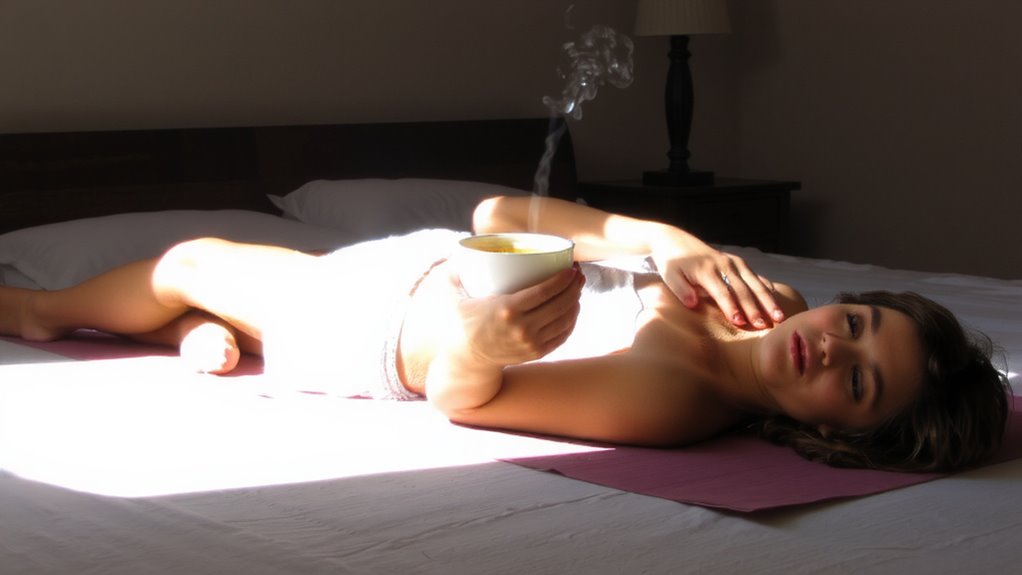
A warm cup of chamomile tea might be just what you need when sleep feels out of reach. You can use chamomile tea as a natural sleep aid because it contains apigenin, a compound that may help calm your nervous system. Drinking it 30 to 45 minutes before bed gives your body time to absorb its effects. Pairing chamomile tea with relaxing lavender scents can enhance your sleep environment, signaling your brain that it’s time to unwind. Choose a caffeine-free blend and steep it properly-5 to 10 minutes-for best results. Some people notice benefits within a few nights, while others may need to try it consistently over a week or two. If you have allergies, check the tea’s sourcing. It’s not a cure for sleep disorders, but it can be a gentle part of your nighttime routine. For optimal quality and potency, consider trying one of the best chamomile tea picks based on expert testing and consumer reviews.
Calm Your Body With Breathwork for Sleep
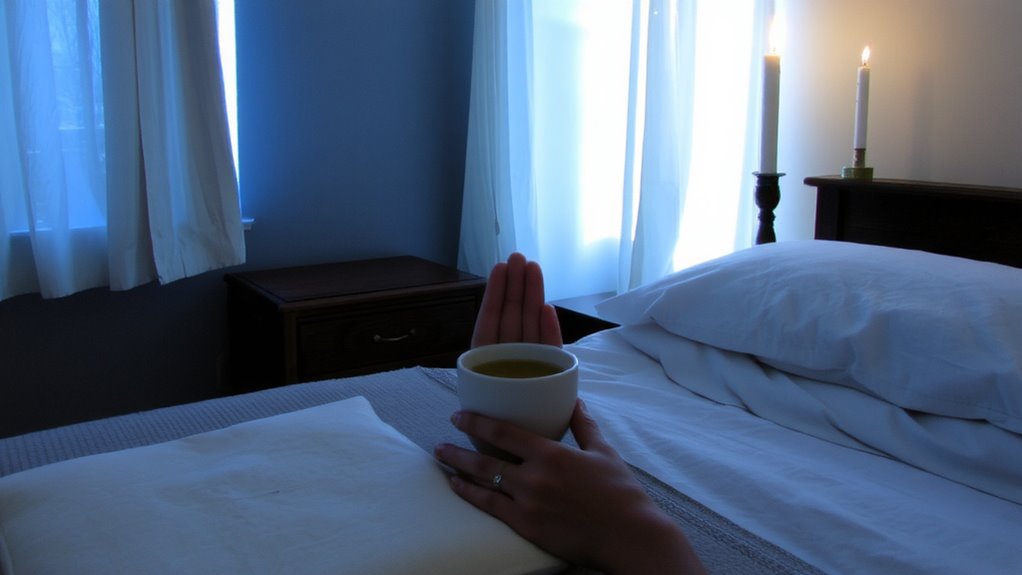
Once your tea is steeping and the evening calm begins to settle, you can add another layer of relaxation with breathwork-a simple, cost-free practice that helps signal your body it’s time for sleep. Try diaphragmatic breathing by placing one hand on your chest and the other on your belly, then inhale deeply through your nose so only the hand on your stomach rises. Exhale slowly through pursed lips. This technique supports steady oxygen flow and lowers heart rate, making it easier to relax. For more structure, use box breathing: inhale for four counts, hold for four, exhale for four, then pause again for four. Repeat for several minutes. Both methods are effective, with diaphragmatic breathing best for physical relaxation and box breathing offering mental focus. They’re safe for most people and can complement other sleep aids without side effects. With regular practice, you may notice improved sleep onset and reduced nighttime awakenings.
Pick a High-Quality Chamomile Tea

Quality matters when selecting chamomile tea for sleep support, and your best bet starts with whole, dried flower heads rather than powdered or blended versions. Higher tea quality often means more potent apigenin, the compound linked to relaxation. Look for transparent herbal sourcing-preferably organic, non-GMO, and sustainably grown-since chamomile absorbs environmental contaminants easily. Teas from Egypt, Hungary, or Croatia are often praised for potency and purity. Check labels for added fillers or artificial ingredients, which dilute effectiveness. Loose-leaf options typically offer better freshness and aroma than pre-packaged bags, though some high-end bags use oxygen-barrier materials to preserve compounds. Steep in fresh, just-boiled water for 5–10 minutes to extract full benefits. While taste varies, don’t assume milder means weaker-some batches are simply processed differently. Try a few brands to compare strength, scent, and how they affect your sleep routine.
Time Your Tea and Breathing Right
Though you might be keen to unwind the moment you get into bed, timing really does matter when pairing chamomile tea with breathwork for better sleep. Start tea steeping about 30 to 45 minutes before bedtime so your body absorbs the calming compounds when you need them most. Drinking it too late could mean extra trips to the bathroom overnight, disrupting your rest. Once you finish your tea, begin your breathwork routine with deliberate breath timing-this helps activate your parasympathetic nervous system just as the tea’s effects peak. Aim to start breathing exercises 15 to 20 minutes before sleep, allowing both the herbal support and controlled breath timing to work in sync. This sequence enhances relaxation without dependency risks. For best results, maintain consistency across nights, adjusting only if discomfort arises.
Try These 3 Breathwork Techniques Before Bed
How do you quiet a busy mind when it’s time to sleep? Try breathwork. First, practice box breathing: inhale for four counts, hold for four, exhale for four, then pause for four before the next breath. It’s simple, repeatable, and effective for calming your nervous system. Next, try the four seven eight method-breathe in for four counts, hold for seven, and release for eight. This one slows your heart rate and can reduce tension fast. Third, use diaphragmatic breathing: place a hand on your belly, inhale deeply through your nose, and feel it rise. Exhale slowly through pursed lips. Each technique requires only minutes and pairs well with chamomile tea. You can test them over a few nights to see which suits your body and sleep pattern best. Consistency matters more than perfection-try one at a time before mixing methods.
Fix What’s Not Working in Your Routine
Why does your sleep routine still leave you restless despite trying the right steps? You might have good intentions, but poor sleep hygiene could be undermining your efforts. Small habits-like using screens late or skipping a consistent bedtime-disrupt your body’s signals. Even chamomile tea and breathwork can’t fully compensate if mental clutter fills your mind at night. Take time to assess what’s working and what’s not. Are you rushing into bed stressed? Try journaling for 5 minutes to clear thoughts. Is your room too bright or noisy? Consider blackout curtains or a white noise machine. Replace ineffective aids with proven strategies. Test changes one at a time, giving each a week. Track your sleep patterns to see real progress. Adjust based on results, not guesses. A thoughtful, flexible routine builds over time, reducing resistance and supporting deeper rest.
On a final note
You can use chamomile tea and breathwork together to support faster, calmer sleep. Choose a high-quality, caffeine-free tea and drink it 30–45 minutes before bed. Pair it with slow, deep breathing to gently lower your heart rate. Try techniques like 4-7-8 or diaphragmatic breathing nightly. If sleep problems continue, consider tracking patterns or consulting a healthcare provider to review options safely.