Prioritizing Pillow Edge Support for Those Who Lean While Watching TV in Bed
Leaning on a regular pillow while watching TV in bed strains your neck by pushing your head forward. A pillow with strong edge support-like those made of high-density foam or baffled construction-holds its shape and aligns your head with your spine. These pillows resist collapse when you lean, reducing muscle tension. Firmer options provide better stability, and many come with trial periods so you can test comfort safely. You’ll find better posture support matters most the longer you watch. There’s more to evaluate when matching pillow features to your sleep position.
Notable Insights
- Pillows with reinforced edges prevent collapse when leaning, maintaining head and neck alignment during bed TV use.
- Medium-firm to firm pillows offer better resistance to compression, reducing strain from side or forward head tilting.
- High-density memory foam provides durable edge support and resists sagging over time for consistent spinal alignment.
- Baffled or gusseted pillow edges enhance structural stability, keeping the head supported even when resting near the pillow’s side.
- Contoured or ergonomic pillow designs help maintain neutral neck posture, especially when watching TV in bed for extended periods.
What Watching TV in Bed Does to Your Neck
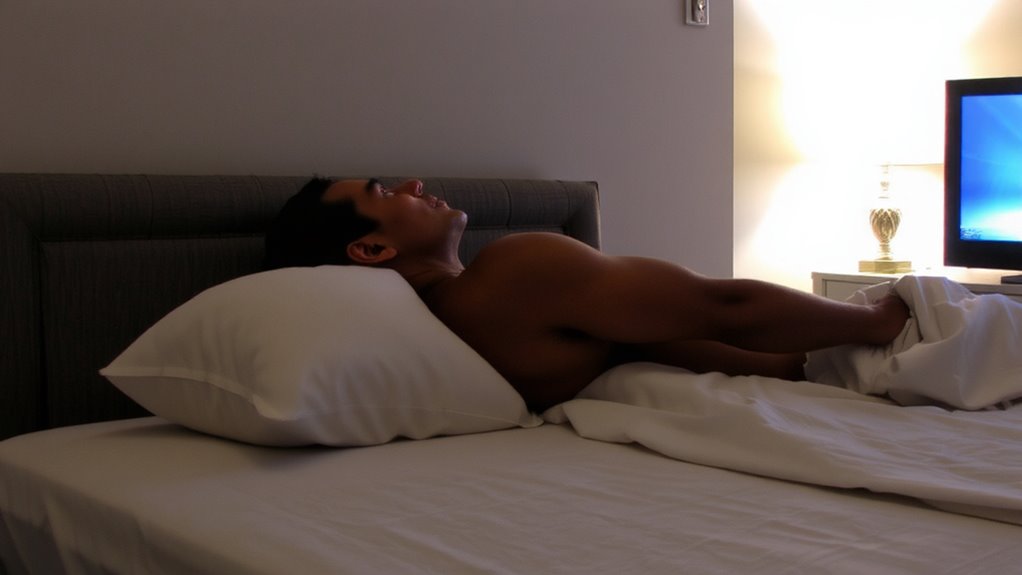
While you might think propping yourself up with regular pillows is fine for watching TV in bed, doing so often leads to neck strain over time. These pillows compress unevenly, failing to support your head and neck where you need it most. Without proper edge support, your head tilts forward or sideways, encouraging posture degradation that builds up over weeks. That slumped position stresses cervical muscles and may contribute to chronic discomfort. You might not notice it at first, but frequent leaning without stability affects both sleep quality and spinal alignment. Over time, poor posture during nightly viewing can worsen existing sleep issues or even lead to new ones. A well-constructed pillow with reinforced edges helps maintain alignment, reducing neck strain. Consider models designed to hold shape under pressure-many offer trial periods, so you can test long-term comfort without risk. For recliner users, best neck pillows for recliners provide targeted support that adapts to leaning positions.
Best Pillows for Edge Support When Leaning in Bed
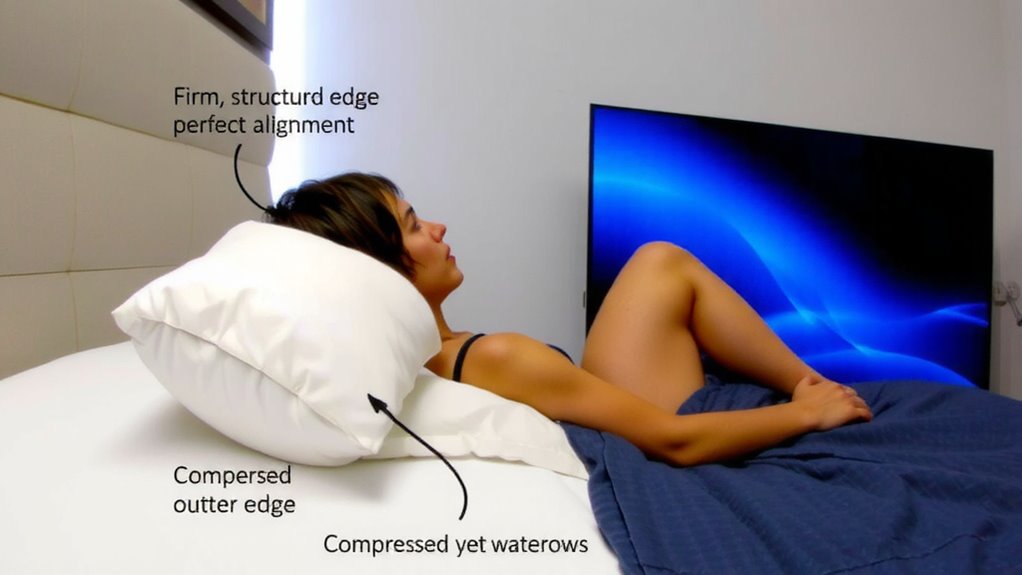
You’ll want a pillow that keeps its shape when you lean into it, especially if you spend evenings watching TV in bed. Look for models with strong edge contour-this feature supports your head and neck when positioned near the pillow’s side. Pillows with reinforced edges resist collapse, helping maintain alignment and reducing strain. Firmness plays a key role too; medium-firm to firm options typically offer better resistance to compression over time. Memory foam and hybrid designs often deliver both durability and contouring. Check product details for high-density foam layers or baffled edges, as these enhance structural support. Many top picks include trial periods, so you can test edge support in real use. A good warranty also signals long-term confidence in shape retention. Choose based on how well the pillow balances firmness and edge contour to suit your leaning position.
How Pillow Materials Affect Neck Alignment
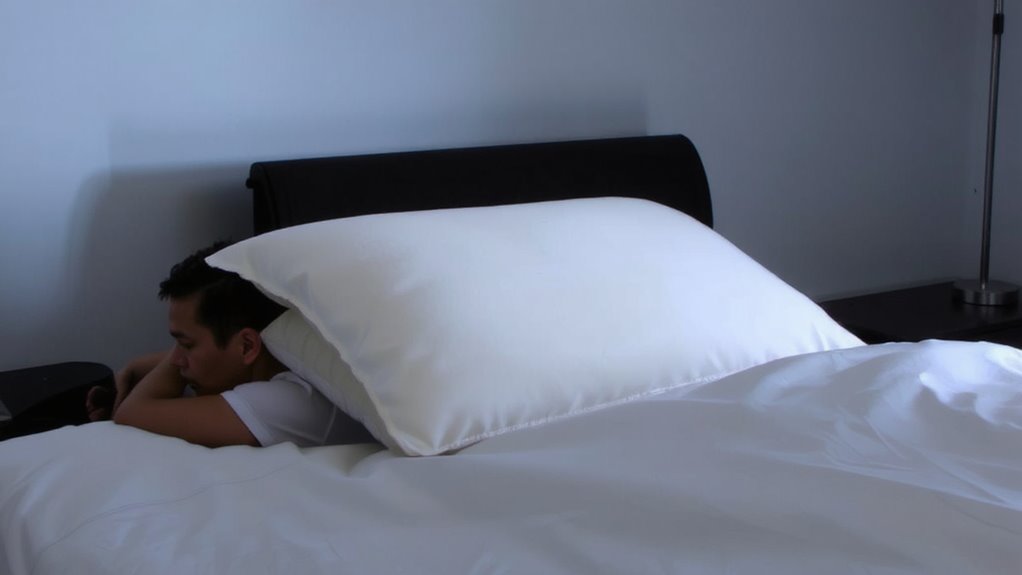
A pillow’s material plays a direct role in how well your neck stays aligned, especially when you’re leaning to the side or sitting up in bed. Memory foam density determines how firm or soft the pillow feels and how much it resists compression over time. Higher density supports your head and neck longer, reducing sag that can misalign your spine. A strong edge is essential when leaning, and materials like high-density memory foam help maintain structure. The pillow contour design also matters-curved shapes cradle your neck and keep your head from tilting too far forward or back. Combining proper contour with balanced foam density improves alignment and comfort during long TV sessions. Look for pillows that offer trial periods or warranties so you can test support and edge durability. These features help you make informed choices without pressure, ensuring better neck alignment over time. Buckwheat pillows provide excellent support and adaptability, making them a strong option for maintaining proper alignment, especially for those who shift positions frequently, with best buckwheat pillows offering targeted relief for neck pain.
Side-Sleeper? Keep Your Spine Neutral on the Couch
Why does your neck feel strained when watching TV as a side sleeper on the couch? Poor spine alignment and unrelieved pressure points are usually to blame. When you lean sideways, your neck bends unnaturally, misaligning your spine and increasing discomfort over time. A supportive pillow helps maintain neutral spine alignment and cushions key pressure points. Best Pillows for Side Sleepers can make a significant difference in providing the necessary support for both sleeping and lounging positions.
| Body Area | Couch Position Effect |
|---|---|
| Head | Tilted down or forward |
| Neck | Stretched, strained |
| Shoulders | Collapsed, tense |
| Spine | Curved out of alignment |
| Hips | Uneven, tilted |
Choose a firmer pillow with dense edge support to resist compression. Look for materials like memory foam or latex that stabilize your head and reduce strain. These retain shape well during long use. Check if the brand offers a trial period-testing it at home helps assess real-world comfort. A proper pillow shouldn’t fix posture alone but support your natural alignment while you relax.
Easy Ways to Watch TV Without Neck Pain
While lounging on the couch might seem like the perfect way to unwind with your favorite show, poor positioning can quickly turn relaxation into neck strain. You can avoid discomfort by adjusting screen positioning so the top of the TV aligns with your eye level when seated. This reduces downward gaze, which stresses your neck over time. Prop your head with a pillow that offers firm edge support, especially if leaning sideways. Use ergonomic lighting to minimize glare and eye fatigue-position lights behind or to the side of the screen, not in front. Avoid watching in total darkness, as it strains visual focus. Choose adjustable furniture or bed wedges that support neutral spine alignment. Test options with trial periods to assess comfort. A well-designed setup improves posture and sleep quality, possibly reducing reliance on sleep aids. Small changes in viewing habits support long-term neck health.
On a final note
You’ll want a pillow with strong edge support if you often lean to watch TV in bed. Look for high-density foam or shredded memory foam-these hold shape well and support your neck when tilted. A firmer pillow keeps your spine aligned, reducing strain over time. Many quality models come with trial periods, so test one at home. Check the warranty, too, since materials can compress with regular use. Choose durability and support to stay comfortable.