The Connection Between Sleep and Motor Skill Development in Infants
You help your baby’s motor skills develop every time you support consistent naps and nighttime sleep. During sleep, especially deep and REM stages, their brain strengthens neural connections from practice, like reaching or crawling. Poor or irregular sleep disrupts this process, potentially delaying milestones. A quiet, dark, cool environment with regular routines boosts sleep quality. Breathing issues or frequent wake-ups may need evaluation. Better sleep patterns mean more time for the brain to consolidate movement skills, and there’s more to discover about how each stage supports growth.
Notable Insights
- Naps strengthen neural connections formed during motor practice, supporting muscle memory and early skill development.
- Deep sleep consolidates motor learning by reinforcing neural pathways essential for crawling, reaching, and other movements.
- REM sleep aids motor development by sorting experiences and fine-tuning neural circuits through synaptic pruning.
- Sleep deprivation or fragmented sleep disrupts brain plasticity, delaying motor milestones like crawling and walking.
- Consistent nap and bedtime routines improve sleep quality, enhance circadian rhythms, and promote optimal motor skill progress.
How Naps Help Babies Learn Movements

While your baby is napping, their brain is actively processing the physical skills they practiced earlier in the day. Neural repetition strengthens connections formed during movement attempts, helping solidify early motor patterns. This behind-the-scenes activity supports muscle memory, allowing your baby to perform movements more smoothly over time. Naps aren’t just for rest-they’re essential for motor learning. When sleep is inconsistent or disrupted, this critical processing slows, potentially affecting how quickly new skills develop. If you notice frequent wakefulness or trouble settling, consider evaluating sleep environment factors like noise, light, or routine. Most wearable sleep aids lack strong evidence, and many pediatric experts recommend establishing natural sleep rhythms first. A consistent nap schedule can improve both sleep quality and motor progress. Always consult a provider before using any sleep aid, especially for infants under six months.
What Happens in Baby’s Brain During Deep and REM Sleep?
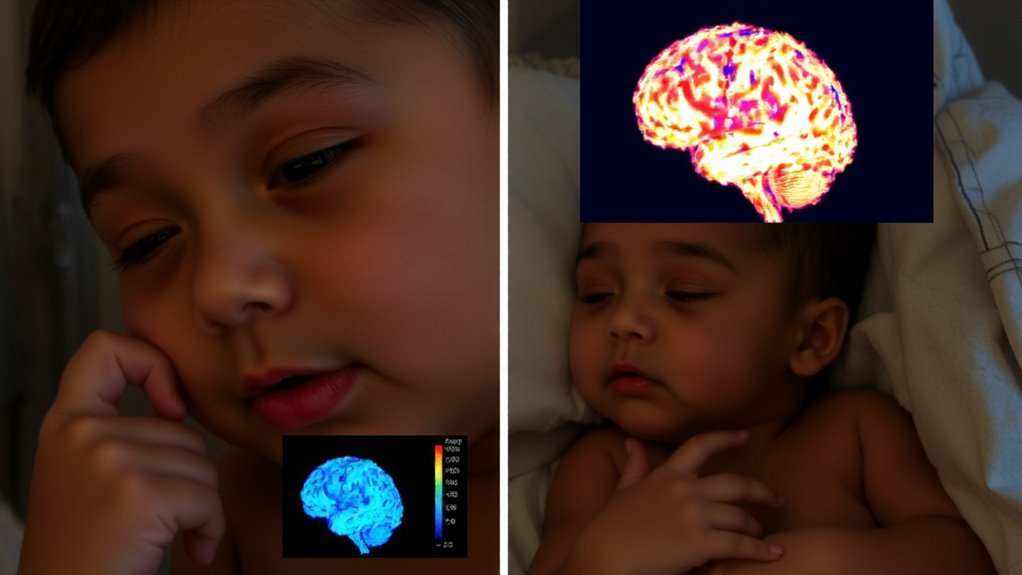
When your baby slips into deep sleep, their brain shifts into repair and reinforcement mode, strengthening neural pathways tied to motor development and memory. During this stage, brain plasticity allows circuits used in crawling or reaching to solidify, making skills more automatic. You’ll see this as smoother movements over time. Later, during REM sleep, the brain stays highly active, sorting through experiences and fine-tuning connections. Neural pruning happens too-extra or unused synapses are trimmed to boost efficiency. This balance of strengthening and streamlining supports long-term learning. These processes rely heavily on consistent, uninterrupted sleep cycles. Monitoring sleep patterns and adjusting routines can help guarantee your baby gets restorative deep and REM stages. If disruptions persist, consider consulting a pediatric sleep specialist. Reliable sleep trackers or journals may aid in identifying issues early, improving outcomes without invasive measures.
When Poor Sleep Delays Motor Milestones
A good night’s sleep isn’t just about growth and mood-it’s a critical building block for your baby’s physical development. When sleep deprivation occurs regularly, it can interfere with the brain’s ability to consolidate motor learning. You might notice signs like delayed crawling, as consistent rest is needed for muscle coordination and strength gains. Studies show infants with irregular sleep patterns are more likely to hit motor milestones later than peers. This isn’t about perfection, but about consistent, quality rest. Fragmented or short sleep cycles limit deep and REM phases, both linked to neural processing. You don’t need sleep aids unless advised by a pediatrician-most cases improve with routine. Watch for breathing issues or frequent waking, which may suggest a sleep disorder worth evaluating. Prioritizing stable sleep supports smoother progress in movement skills, helping your baby build confidence through predictable physical growth.
How to Support Sleep for Better Movement Development
Since better sleep supports stronger motor gains, setting up a consistent bedtime routine can make a real difference in your baby’s development. Aim to align your baby’s feeding routine with their natural sleep patterns-avoid large meals right before bed, but guarantee they’re not going down hungry. A well-timed feeding helps reduce nighttime waking and supports deeper sleep cycles. Your baby’s sleep environment should be quiet, dark, and comfortably cool, with minimal distractions like screens or excess noise. Use breathable bedding and a firm mattress to promote safety and comfort. Consider white noise machines or blackout curtains if outside disruptions are common-many come with warranties and trial periods to test effectiveness. Consistency across naps and bedtime strengthens circadian rhythms, which supports both sleep quality and movement progress. Small, practical adjustments often yield the most sustainable results over time.
Do Nighttime and Nap Sleep Work Differently for Motor Skills?
You’ve likely noticed how a solid bedtime routine sets the stage for smoother nights and more consistent naps, both of which play roles in your baby’s motor development. Nighttime sleep offers longer stretches of deep sleep, ideal for memory consolidation and motor integration, helping your infant refine skills like crawling or grasping. Naps, though shorter, support rapid processing of newly learned movements, especially when timed close to practice sessions. Sleep timing matters-aligning naps and bedtimes with natural circadian rhythms enhances sleep quality and skill retention. While both sleep types contribute, nighttime rest generally provides more uninterrupted cycles essential for physical growth and neural repair. Disruptions may delay motor milestones. If sleep issues persist, consider evaluating sleep environment, routines, or consult a pediatric specialist. Some families explore sleep aids, but always assess safety, materials, and clinical backing. Trial periods and warranties can help gauge effectiveness without long-term commitment.
On a final note
You help your baby’s motor learning every time you support consistent, quality sleep. Naps and nighttime rest reinforce brain changes needed for crawling, grasping, and walking. Deep sleep strengthens movement memories, while REM sleep integrates new skills. If sleep disruptions persist, consider patterns, environment, or possible sleep disorders-many respond to routine adjustments. Monitor changes, trial gentle interventions, and consult providers when delays appear. Reliable, restful sleep builds stronger foundations for development.