Strategies for Gradually Advancing Sleep Times in Delayed Sleep Phase Disorder
You can shift your sleep schedule earlier by waking up at the same time daily and catching morning sunlight within an hour of rising. This natural light helps reset your internal clock. Gradually move bedtime 15 minutes earlier every few days, stick to a consistent routine, and limit evening screen use. Avoid caffeine after 2 p.m. and dim lights at night to support melatonin release. With steady practice, your body adjusts-there’s more to learn about refining this process.
Notable Insights
- Gradually shift bedtime earlier by 15 to 30 minutes every few days to align with target sleep time.
- Maintain a consistent wake-up time daily, including weekends, to strengthen circadian rhythm entrainment.
- Expose yourself to bright morning light within one hour of waking to advance your internal clock.
- Dim lights and minimize blue light exposure in the evening to promote earlier melatonin release.
- Implement a nightly wind-down routine with calming activities to signal the body it’s time to sleep.
What Is Delayed Sleep Phase Disorder (DSPD)?
While you might think you’re simply a night owl, if you consistently struggle to fall asleep until very late-say, 2 a.m. or later-and have trouble waking up in time for work or school, you could be dealing with Delayed Sleep Phase Disorder, or DSPD. This isn’t just poor habits-it’s a real circadian misalignment, where your body’s internal clock runs markedly behind the typical sleep-wake cycle. Unlike chronic insomnia, where staying asleep is the main issue, DSPD means your brain naturally resists sleep until much later, even when you’re tired. You’re not lazy or undisciplined; your biology is shifted. This delay makes morning alarms painfully hard and daytime focus tough. Diagnosis often involves sleep logs or actigraphy to track patterns over time. While it mimics insomnia, the cause is physiological, not psychological. Recognizing DSPD helps you choose the right tools-light therapy, melatonin, or behavioral shifts-rather than defaulting to sleep aids that won’t fix the root issue.
Set a Better Sleep Schedule With DSPD
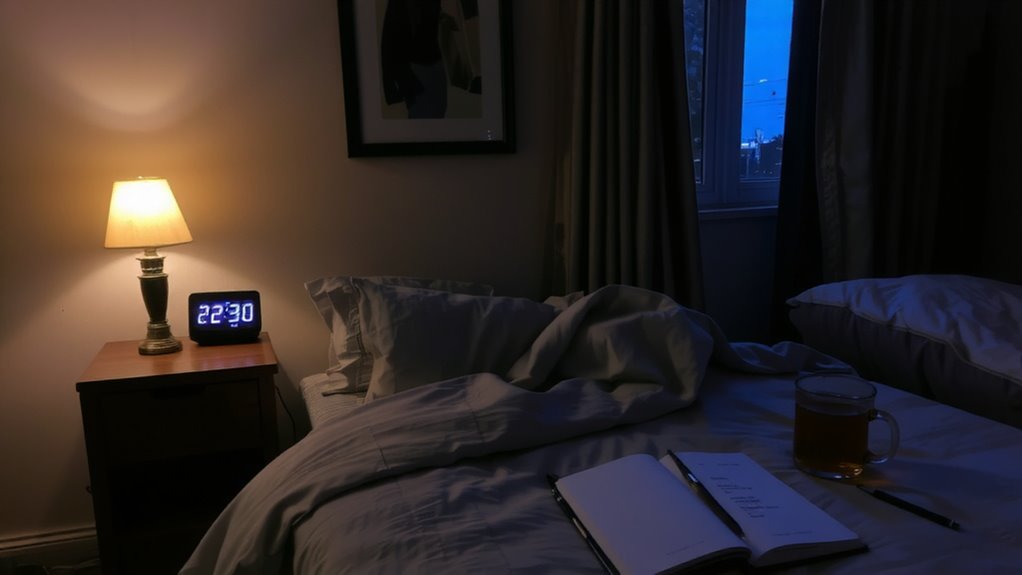
Since your body’s internal clock runs later than typical, shifting your sleep schedule with DSPD means working *with* your biology, not against it. Start by setting a consistent routine-even on weekends-to stabilize your rhythms over time. Gradually adjust your bedtime in 15-minute increments every few days, aligning it closer to your target. Pair this with strong sleep hygiene: keep your room cool, dark, and quiet, avoid screens an hour before bed, and limit caffeine after noon. A nightly wind-down routine, like reading or light stretching, signals your body it’s time to sleep. While sleep aids might seem helpful, they don’t reset your clock and can affect sleep quality. Focus instead on consistency and environment. Small, steady changes build a sustainable routine that supports long-term improvement without harsh trade-offs. Optimizing your bedroom with sleep-enhancing decor such as blackout curtains, calming colors, and smart lighting can significantly improve sleep quality by reinforcing a restful atmosphere-consider incorporating sleep-enhancing room decor for better results.
Catch Morning Sunlight to Reset Your Clock
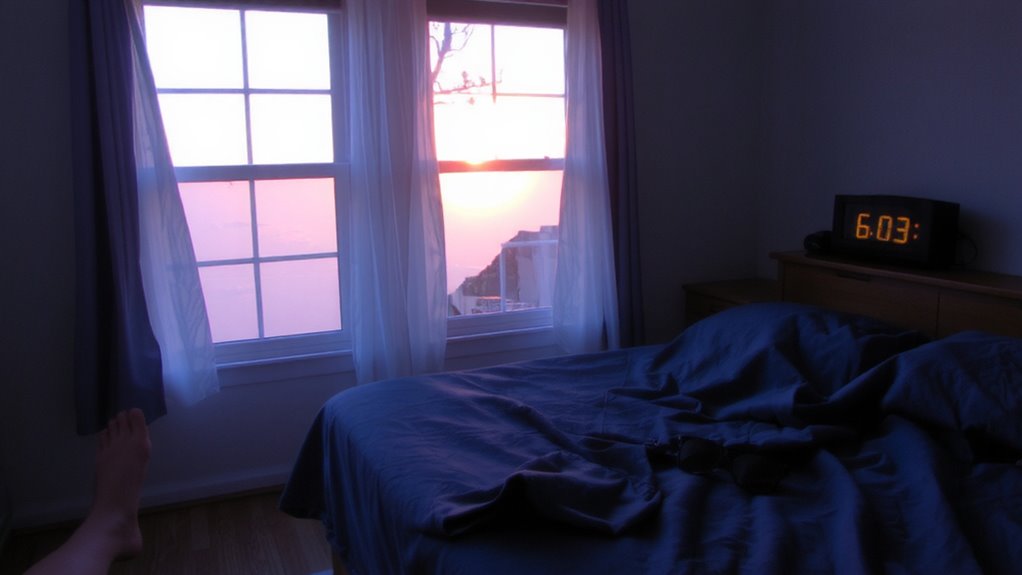
Getting your sleep schedule on track starts with consistency, but timing your light exposure can make a real difference in shifting your internal clock. You’ll want to get outside within an hour of waking each day, even if it’s just for 15 to 30 minutes. A morning walk is one of the most effective ways to receive bright natural light, which signals your brain to stop producing melatonin and boosts alertness. Aim for at least 10,000 lux of light exposure-cloudy days still provide enough. Consistent morning light helps anchor your circadian rhythm, making it easier to feel sleepy earlier later in the evening. Natural light penetrates the retina more effectively than indoor lighting, triggering a stronger biological response. Try to avoid wearing sunglasses during your walk if it’s safe and comfortable, since direct exposure enhances the effect. This simple habit, done daily, supports gradual, lasting shifts in your sleep-wake cycle.
Shift Bedtime Gradually for DSPD
Start by moving your bedtime earlier in 15- to 30-minute increments every few days, giving your body time to adjust without added stress. This method builds consistent sleep pressure, making it easier to fall asleep at the new time. Wait until you feel comfortable before shifting again-rushing can disrupt progress. Bedtime anchoring helps by linking your sleep schedule to a daily cue, like brushing your teeth or dimming lights, reinforcing the routine. Stick to the same wake-up time every day, even on weekends, to strengthen circadian signals. As you advance your bedtime, rising sleep pressure from longer wakefulness supports falling asleep earlier. This gradual pace allows your internal clock to shift naturally, improving sleep onset without relying on sleep aids. Consistency increases success, especially when paired with morning light exposure. Be patient-lasting change takes time, but steady effort improves alignment with healthy sleep patterns.
Limit Evening Light and Screen Time
Though it might seem minor, cutting back on evening light and screen time can make a noticeable difference in resetting your sleep schedule. Your body’s natural melatonin release is easily disrupted by bright lights, especially blue light from phones, tablets, and TVs. This type of light triggers melatonin suppression, making it harder to feel sleepy at bedtime. To reduce this effect, dim lights in your home two hours before bed and switch screens to night mode. Consider wearing blue light-blocking glasses if evening screen use is unavoidable. Creating a screen-free wind-down routine helps signal your brain that it’s time to sleep. These small changes support your body’s internal clock without requiring medication or drastic adjustments. Over time, less evening light exposure improves sleep onset and stabilizes your rhythm, especially when paired with gradual bedtime shifts. For optimal results, choose glasses with lenses that offer significant blue light filtration, such as those highlighted in the best blue light glasses guide.
Avoid Caffeine and Late Meals After 6 PM
Even a single late-afternoon coffee or heavy evening meal can delay your natural sleep onset by several hours, especially if you’re living with delayed sleep phase disorder. To support better rhythm regulation, stick to a consistent caffeine cutoff-ideally by 2 p.m.-since effects can linger up to 10 hours. Likewise, proper meal timing matters; eating late slows digestion and signals wakefulness. Aim to finish dinner at least three hours before desired sleep. These adjustments may feel restrictive at first, but they create internal conditions more aligned with earlier sleep. Consider tracking your habits to identify patterns. Below are common evening choices and their sleep impact:
| Habit | Sleep Impact |
|---|---|
| Coffee after 4 PM | Delays sleep onset |
| Caffeine cutoff by 2 PM | Reduces interference |
| Late, heavy meal | Disrupts sleep quality |
| Meal timing before 7 PM | Supports easier sleep onset |
On a final note
You can manage delayed sleep phase disorder by shifting bedtime in small steps, ideally 15 minutes earlier every few days. Morning sunlight helps reset your internal clock, while limiting evening screen time and caffeine after 6 PM supports better timing. These strategies work best when combined consistently. Results vary, so give each change a few days to assess. No quick fix exists, but gradual adjustments often lead to lasting improvement in sleep timing and quality.