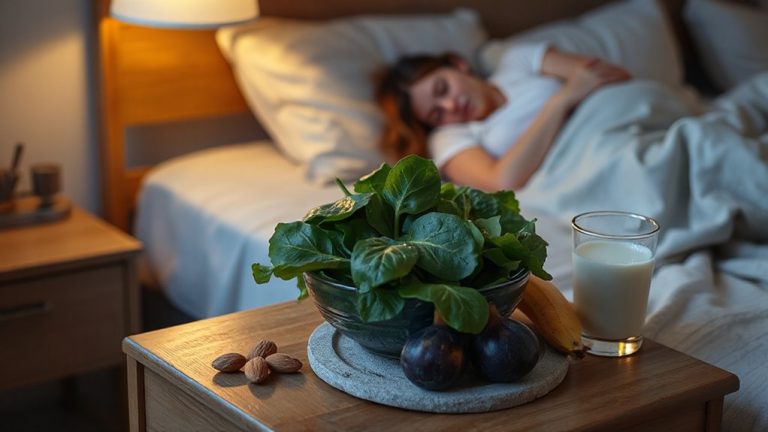
Step-by-Step Guide to Growing and Drying Chamomile for Sleep Tea
Start with German chamomile (Matricaria recutita) for its higher apigenin content, linked to relaxation and sleep support. Sow seeds indoors 6–8 weeks before the last frost or directly in soil at 60°F, pressing them lightly since they need light to germinate. Harvest fully open flowers in the morning after the dew dries to capture peak essential oils. Dry them upside down in bundles or on screens in a cool, dark place for 5–7 days to preserve potency. Use one tablespoon of dried chamomile per cup, steeping in just-boiled water for 5–10 minutes in a covered cup to retain calming compounds-this method delivers a gentle, effective infusion you can rely on nightly. There’s more to get right if you want the best results.
Notable Insights
- Sow chamomile seeds indoors 6–8 weeks before the last frost or directly outdoors when soil reaches 60°F (15°C).
- Press seeds lightly onto the soil surface since they require light to germinate and cover with 1/8 inch of soil.
- Harvest fully open chamomile flowers in the morning after the dew dries for maximum essential oil content.
- Dry chamomile flowers by hanging bundles upside down or spreading them on a mesh screen in a cool, dark place.
- Steep one tablespoon of dried chamomile in just-boiled water for 5–10 minutes, covered, to maximize sleep-supportive compounds.
Pick German Chamomile for the Best Sleep Tea
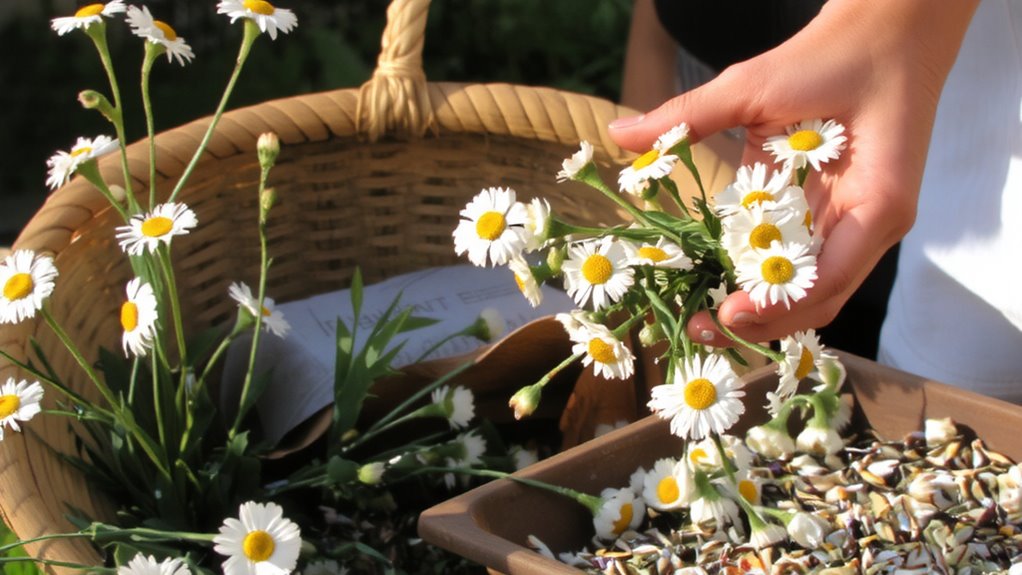
Chamomile’s reputation for supporting restful sleep starts with the right variety-German chamomile (Matricaria recutita). You’ll want this type because it’s known for its strong botanical benefits, especially in promoting relaxation and easing mild sleep disturbances. Compared to other varieties, German chamomile contains higher levels of apigenin, a compound linked to calming effects. When you’re exploring natural alternatives to over-the-counter sleep aids, this plant offers a gentle option backed by traditional use and some clinical support. It’s non-habit forming and typically well-tolerated, making it a practical choice for occasional or nightly routines. While results can vary, many people report improved sleep quality after regular use. If you’re managing minor sleep challenges, trying a tea made from German chamomile flowers could be a sensible first step. Just remember, consistency and proper preparation matter-use freshly dried blooms and steep them properly for best results. For optimal flavor and potency, choose best chamomile tea products when sourcing from commercial suppliers.
Sow Chamomile Seeds Indoors or Directly in Soil
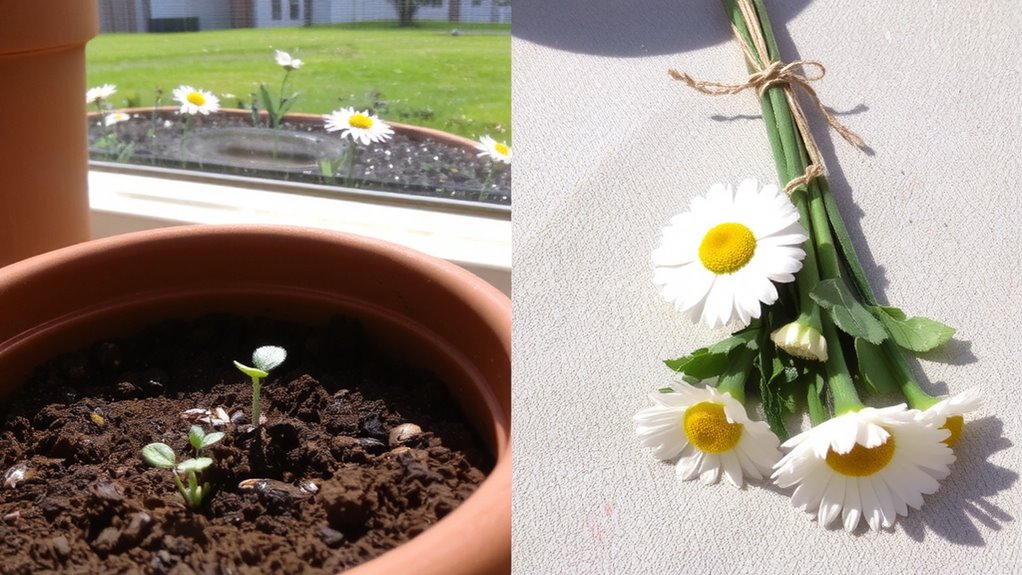
You’ve chosen German chamomile for its calming benefits, and now it’s time to get the plant growing. You can sow the seeds indoors 6–8 weeks before the last frost or directly in the garden once the soil temperature reaches at least 60°F (15°C). If starting indoors, use small pots with moist, well-draining soil and press the seeds lightly into the surface-don’t bury them too deep, as they need light to germinate. Outdoors, sprinkle seeds on loose soil and barely cover them, aiming for a seed depth of 1/8 inch. Keep soil consistently moist until germination, which usually takes 7–14 days. Growing indoors gives you a head start and more control, while direct sowing reduces transplant stress. Both methods work well, so pick based on your timeline and garden setup. Homegrown chamomile can be used to make your own soothing tea, and for guidance on selecting the finest store-bought options, check out the Best Chamomile Tea Picks.
Harvest Fully Open Flowers in the Morning

Why do the best tea growers always head out just after dawn? Because morning timing matters when harvesting chamomile for tea. The essential oils that support calm rest are at their peak right after the dew dries but before the sun gets strong. You want to pick only fully open flowers-this is key for effective flower selection. The wide, flat centers and perky, daisy-like petals tell you they’re ready. If the blooms are still closed or just starting to open, wait. Harvesting too early means fewer active compounds linked to relaxation. Use small scissors or pinch stems cleanly to avoid damaging the plant. Gather your blooms every few days during peak season to encourage more flowering. Stick to the morning timing rule, and you’ll get the most from your harvest. Your sleep tea’s effectiveness starts here-with careful flower selection and well-timed picking.
Air-Dry Chamomile to Preserve Calming Compounds
While the sun’s heat can degrade delicate oils, air-drying your chamomile in a cool, dark place helps lock in the compounds that support relaxation. You’ll want to avoid direct sunlight exposure, as UV rays can break down the plant’s beneficial properties. Instead, bundle stems together and hang them upside down in a dry room with good airflow circulation-this prevents mold and guarantees even drying. If hanging isn’t practical, lay flowers on a mesh screen or paper towel in a single layer, turning them occasionally. Ideal drying takes 5–7 days, depending on humidity. When crisp and fully dry, store your chamomile in an airtight container away from light and heat. Proper drying preserves apigenin and other calming compounds, which may support sleep quality. This method gives you control over purity and potency, making it a practical choice when considering natural sleep aids. Choosing high-quality herbal sleep teas can enhance your overall effectiveness when incorporating chamomile into your nighttime routine.
Brew a Soothing Cup With Fresh or Dried Chamomile
Once your chamomile is properly dried and stored, or if you’re using freshly picked blossoms, brewing a calming tea becomes a simple step toward supporting better sleep. Use about one tablespoon of dried flowers or two tablespoons of fresh blossoms per cup. Steeping techniques matter: place the chamomile in a tea infuser or directly in a mug, then pour just-boiled water over it. Covering the cup during steeping helps retain the essential oils, enhancing the tea’s calming effect. Let it sit for 5 to 10 minutes-this infusion duration is key to extracting full benefits without bitterness. Strain before drinking. For those exploring natural sleep aids, chamomile offers a mild, accessible option. Regular use, combined with good sleep hygiene, may support improved sleep patterns over time. It’s not a cure, but it’s a gentle choice worth trying.
On a final note
You’ve grown and dried chamomile to suit your sleep routine, and now it’s time to decide how it fits your broader sleep strategy. This natural option may support relaxation, but it’s not a replacement for medical treatment if you have a diagnosed sleep disorder. Consider pairing chamomile tea with consistent bedtime habits, and monitor how well you sleep over a few weeks. If issues persist, consult a healthcare provider to compare options. Give your body a few tries-steep each cup for 5–10 minutes to extract calming compounds fully.