Training Caregivers to Identify Sleep Postures That Compromise Ventilatory Accessory Muscle Use
You can train caregivers to spot sleep postures that hinder breathing by focusing on alignment and muscle strain. Slumped shoulders, a tucked chin, or twisted spine restrict chest movement and increase work for accessory muscles. Elevating the head slightly and using lateral positioning improves airflow and reduces strain. Proper pillows and bed angles support neutral spine alignment. Hands-on practice helps refine technique, and real-time adjustments boost confidence-there’s more to learn about optimizing each night’s rest safely.
Notable Insights
- Recognize slumped shoulders or chin-tucked postures that restrict airway patency and increase accessory muscle use.
- Identify supine positioning as a risk for airway collapse and reduced ventilatory efficiency.
- Detect excessive pillow height that causes forward head tilt and impairs diaphragm function.
- Monitor for arms pressing against the ribcage, limiting chest expansion and breathing effectiveness.
- Train in proper lateral or elevated positioning to support neutral spine and reduce respiratory effort.
Why Sleep Posture Affects Ventilator-Dependent Patients
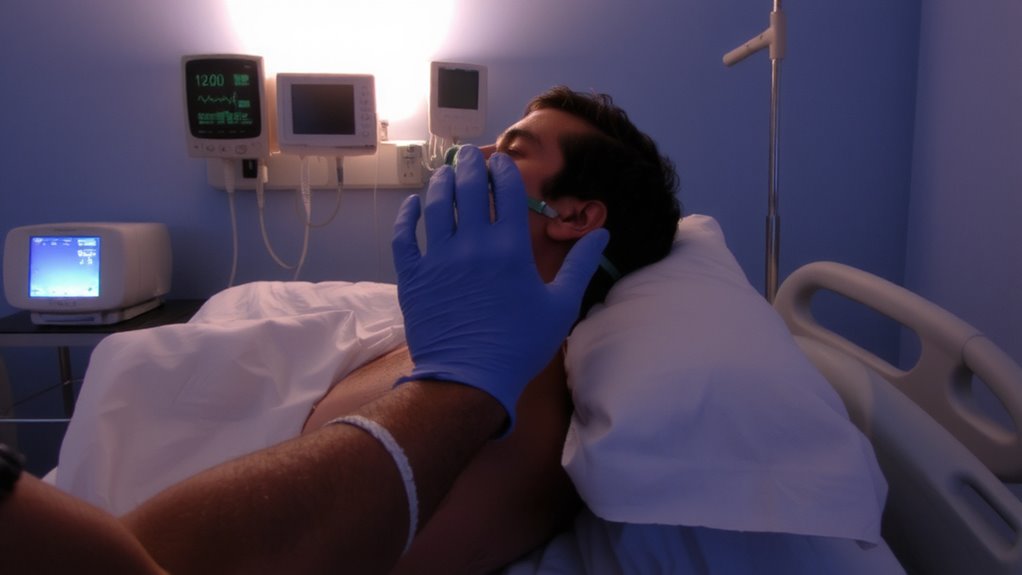
While your patient’s sleep posture might seem like a minor detail, it can substantially impact breathing efficiency when they rely on a ventilator. Poor alignment may restrict chest and diaphragm movement, increasing the risk of sleep apnea episodes and worsening respiratory fatigue over time. When the airway isn’t properly supported, pressure changes from the ventilator don’t transfer as effectively, making each breath harder. You’ll notice labored breathing or frequent desaturations during sleep, especially if the head or neck is misaligned. Proper positioning-like slight head elevation or neutral spine alignment-helps maintain open airways and reduces work for accessory muscles. Adjustable beds or contoured pillows can support this, often coming with trial periods to test comfort and effectiveness. Look for models with breathable materials and reliable warranties. Small adjustments can lead to measurable improvements in sleep quality and daytime energy. A side-by-side comparison of top-rated models, such as in the DreamCloud vs Best Rest pillow analysis, can guide decisions on optimal support for ventilator-dependent patients.
Risky Sleep Positions That Block Breathing Muscles
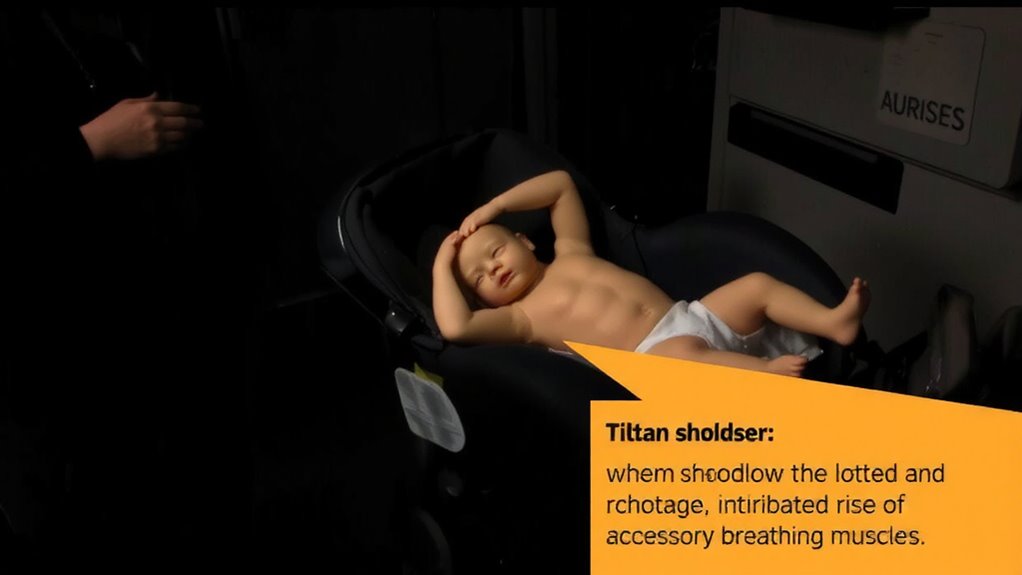
If you’re caring for someone who depends on a ventilator, recognizing risky sleep positions could prevent breathing complications. Lying flat on the back, for example, can worsen sleep apnea by letting the tongue and soft tissues collapse into the airway. This restricts airflow and forces accessory breathing muscles to work harder, leading to muscle fatigue over time. Stomach sleeping might seem helpful, but it can twist the neck and block the airway, especially with improper pillow support. Side sleeping with poor alignment also stresses respiratory muscles, reducing ventilatory efficiency. These positions may look comfortable but compromise breathing effort and endurance. Choosing the right sleep setup-like adjustable beds or contoured pillows-can maintain airway openness and ease muscle use. Always consider how position affects breathing performance and comfort. Small posture adjustments may reduce sleep apnea episodes and lower the risk of muscle fatigue, supporting more stable, restful sleep.
How to Spot Dangerous Postures at Night?
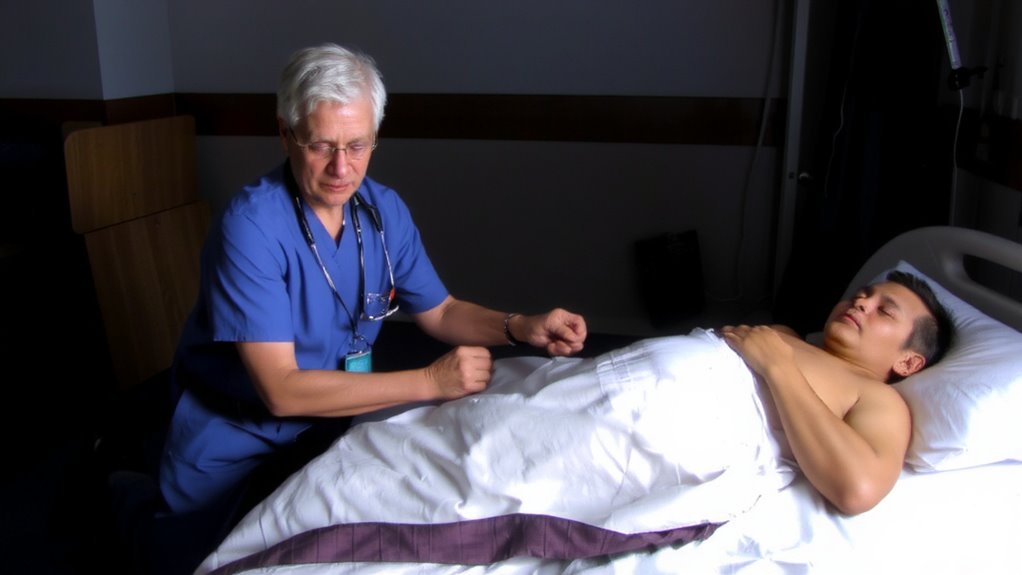
How can you tell if the person you’re caring for is in a risky position during the night? Watch for slumped shoulders, a chin tucked tightly to the chest, or arms pressing against the ribcage-all signs breathing effort may be restricted. Check pillow placement; too many pillows or ones that are too high can tilt the head forward, narrowing the airway. A flat or collapsed pillow offers little support and may worsen posture. Observe how the body aligns in bed-twisting or side-bending can impair muscle function. Simple bed adjustments, like raising the head of the bed slightly or using supportive cushions, help maintain open airflow. Look closely during routine checks, especially if breathing sounds strained. These subtle signs give you clear evidence to act. With consistent observation and smart adjustments, you’ll support safer, more effective breathing throughout the night.
Best Sleep Positions for Easier Breathing
Though lying flat on the back might seem comfortable, it often makes breathing harder, especially for those with respiratory concerns. You’ll want to try chest elevation, which helps open the airways by reducing pressure on the diaphragm. Using pillows or an adjustable bed can support this position easily. Lateral positioning-sleeping on the side-is another effective option, particularly for people who experience airway resistance when lying supine. This posture helps maintain airway patency and reduces strain on accessory muscles. You might find slight variations between left and right sides affect comfort differently. Trial periods with supportive cushions or positional aids can help determine what works best. Many sleep aids offer warranties, so test options with low risk. Focus on consistent, natural alignment-small adjustments can make breathing feel noticeably easier without dramatic changes. For caregivers, incorporating a best nighttime eye mask can further support sleep quality by minimizing light disruption during restorative sleep cycles.
Hands-On Training for Caregivers to Prevent Complications
Why do some caregivers feel unsure about adjusting a patient’s position during sleep, even when they know poor posture can lead to breathing issues or pressure sores? It often comes down to limited hands-on training and hesitation around equipment familiarity. When you practice real-time repositioning with guidance, you build confidence in your moves and understand how small shifts affect breathing. Training sessions that include feedback improve caregiver communication, helping you ask the right questions and respond quickly. You’ll learn how supportive surfaces work, how bed angles influence muscle use, and when to use positioning aids. Practicing under supervision lets you test techniques safely, so you’re prepared during overnight care. Knowing how equipment operates reduces mistakes. Programs that blend demonstration, trial periods, and follow-up support help you make informed choices about positioning strategies and sleep aids-without guesswork.
On a final note
You’ll help keep breathing steady by recognizing poor sleep postures that strain accessory muscles. Side-sleeping with support often eases strain, while slumped or twisted positions may hinder it. Watch for shoulder tension, neck tilt, or shallow breathing at night-subtle signs matter. Trained caregivers can guide safer positioning, improving comfort and function. Simple adjustments, practiced nightly, reduce risks and support long-term ventilator use.