Step-by-Step Guide to Making a DIY Herbal Sleep Syrup
You start by choosing calming, research-supported herbs like valerian root, passionflower, or chamomile, ideally organic or ethically sourced. Steep them in hot water just under boiling for 20–30 minutes, then strain. Mix in honey, maple syrup, or glycerin over low heat to preserve potency and achieve a smooth, spoon-coating consistency. Store in a clean glass bottle in the fridge for up to six weeks. Begin with ½ to 1 teaspoon as needed for temporary sleeplessness, adjusting based on your response-factors like scent tolerance and herb strength vary. See how combining ingredients affects results and explore safe patterns of use.
Notable Insights
- Choose calming, research-backed herbs like valerian root, passionflower, or chamomile, ensuring they are organic or ethically sourced.
- Steep dried herbs in hot water (around 200°F) for 20–30 minutes, covering to preserve volatile compounds.
- Strain the infusion thoroughly using cheesecloth or a fine mesh to remove plant material before syrup preparation.
- Sweeten with honey, maple syrup, or glycerin, gently heating to blend without degrading active ingredients.
- Store the cooled syrup in a labeled glass bottle in the refrigerator and use within six weeks.
Pick the Best Herbs for Sleep
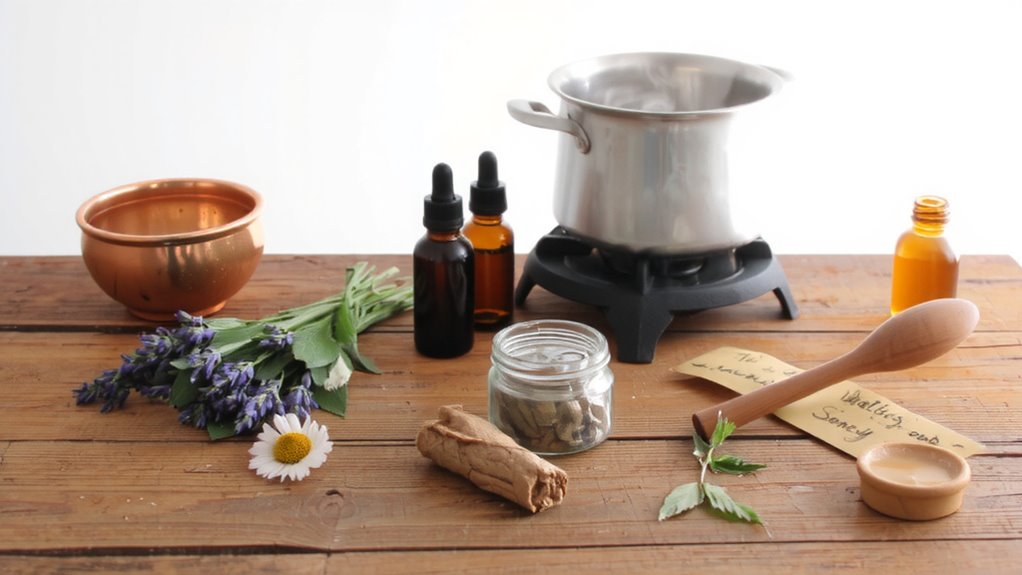
A good starting point for your herbal sleep syrup is choosing the right mix of herbs, since not all plants work the same way for every person. You’ll want to reflect on herbs like valerian root, passionflower, and chamomile, known for calming effects and backed by research. Think about herb sustainability-opt for organically grown or ethically wildcrafted sources to protect ecosystems and guarantee potency. Some herbs, like lavender, offer dual benefits through aroma therapy, helping ease your mind even before ingestion. Pay attention to scent and personal tolerance, as strong fragrances may affect you differently. While one blend may work for a friend, your body might respond better to another. Start with small combinations, noting effects over a few nights. There’s no warranty on results, but careful selection improves your odds. Trial and observation are key. Choose wisely, and let your experience guide adjustments. Consider pairing herbal ingredients with best GABA supplements for sleep to potentially enhance overall sleep support.
Make the Herbal Infusion Base
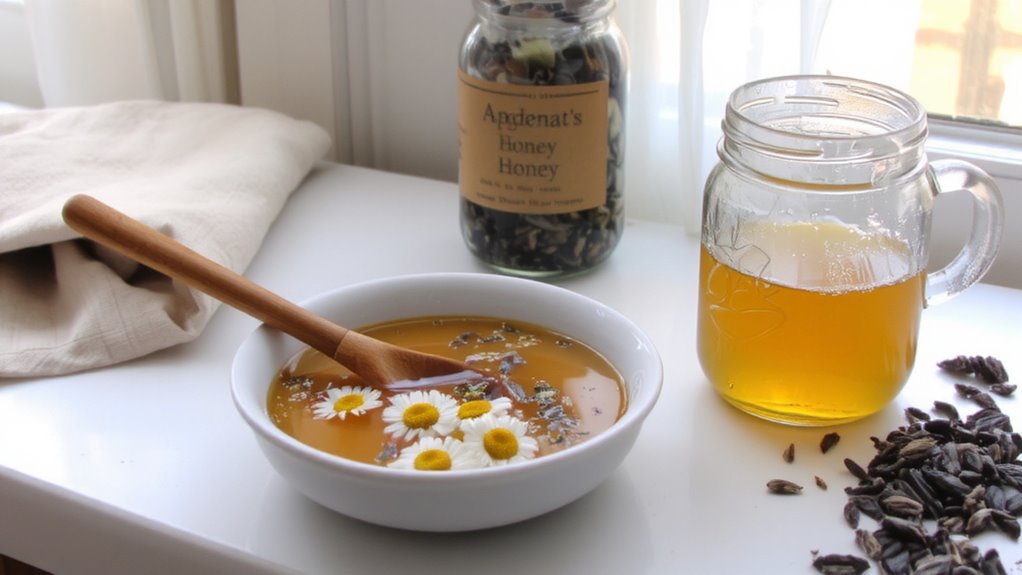
Now that you’ve chosen your herbs based on how they affect relaxation and sleep, it’s time to turn them into a usable form by making the infusion base. Start by placing your dried herbs in a heat-safe jar or container. Bring water to the proper infusion temperature-just off the boil, around 200°F (93°C)-to preserve delicate compounds. Pour the hot water over the herbs, making sure they’re fully submerged. Cover the container to prevent volatile oils from escaping. The steeping duration matters: 20 to 30 minutes is ideal for most herbs like chamomile or passionflower, while tougher roots may need longer. Avoid going past 45 minutes to limit unwanted tannin extraction. Strain the liquid through a fine mesh or cheesecloth. This concentrated infusion forms the foundation of your syrup, packed with active plant properties that support natural sleep regulation.
Sweeten and Thicken the Syrup
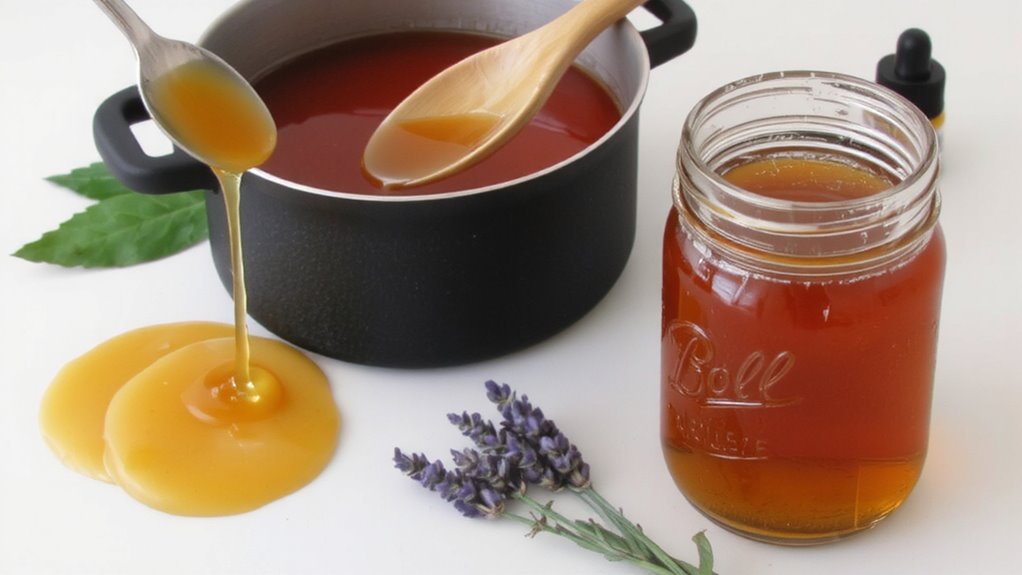
Each batch of herbal infusion you’ve prepared can be transformed into a smooth, palatable syrup by carefully balancing sweetness and consistency. Sweeteners do more than add flavor enhancement-they help preserve the syrup and smooth out bitter notes from herbs. For texture control, choose thickeners that suit your preferred viscosity and dietary needs.
| Option | Benefit |
|---|---|
| Honey | Natural, soothing, enhances flavor |
| Maple syrup | Rich taste, mild thickening power |
| Glycerin | Alcohol-free, consistent texture control |
Use honey if you want a traditional touch and added throat-soothing properties. Opt for glycer Newton’s solution for a longer shelf life and uniform consistency. Stir slowly over low heat to avoid breaking down active compounds while dissolving fully. The syrup should coat the spoon lightly-thick enough to linger, but not gummy.
Store Safely and Dose Correctly
Keep your herbal sleep syrup effective and safe by storing it properly-yes, even a small batch needs the right conditions to stay fresh. Store it in a clean, airtight glass bottle, away from heat and sunlight to preserve potency. Label clearly with the date and ingredients so you can track freshness and contents easily. This helps you make informed choices about use, especially if you’re managing sleep patterns or considering other sleep aids. Always use a clean spoon or dropper to avoid contamination, which could spoil the syrup or reduce effectiveness. Keep it refrigerated to extend shelf life, typically up to six weeks. Dose correctly by starting small-½ to 1 teaspoon-as effects can vary. Pay attention to how your body responds before adjusting. Safe storage and mindful dosing support consistent results and help you evaluate whether this natural option fits your sleep routine well.
When to Use (and Skip) This Sleep Syrup
You’ve stored your herbal sleep syrup the right way and know how to dose it safely, so now it’s time to contemplate when taking it makes the most sense. You’ll want to use this syrup when occasional sleeplessness strikes-like during times of stress or schedule changes-and when you prefer a natural aid over stronger medications. It’s meant for short-term support, not nightly reliance. Know when to skip it if you’re pregnant, on sedative meds, or managing a diagnosed sleep disorder without consulting a doctor. Also skip it if you feel drowsy the next day or notice any allergic reactions. This syrup works gently, so it may not help if your insomnia is severe or ongoing. Use it thoughtfully, track how you feel, and remember: it’s one tool among many for better rest. For more options, consider comparing this remedy to other best sleep supplements to find what works best for your needs.
How Valerian and Chamomile Help You Sleep
While you might not feel knocked out by a wave of drowsiness like with prescription sleep aids, valerian root and chamomile work more quietly to support your body’s natural sleep rhythms. Valerian has a long historical use in European herbal traditions, often taken before bed to ease restlessness. Scientific studies suggest it increases GABA levels in the brain, which helps calm nerve activity. Chamomile, used for centuries as a gentle bedtime tea, contains apigenin-a compound that binds to receptors involved in sleep regulation. Both herbs are mild, so they won’t override your schedule but may improve sleep quality over time. Scientific studies on chamomile show modest benefits for falling asleep faster and reducing nighttime awakenings. You can try them safely in syrup form, though results vary. If you have a sleep disorder, consider these herbs as supportive, not replacement, options. For best results, choose a high-quality valerian root supplement that has been standardized for active compounds.
On a final note
You now have a natural sleep syrup option using herbs like valerian and chamomile, known for supporting relaxation. This DIY version lets you control ingredients and sweetness, but results may vary. It’s not a substitute for medical treatment if you have a sleep disorder. Try it occasionally first, watch for side effects, and consult a doctor if you’re on other meds. Store it properly and use within a few weeks.