Why Sleepwalking Episodes Often Occur 90 Minutes After Falling Asleep
You start sleepwalking about 90 minutes after falling asleep because that’s when your brain enters deep non-REM sleep, the stage most linked to these episodes. Your body may move while your brain stays mostly offline, triggered by a partial arousal during this heavy sleep phase. Stress, genetics, illness, or poor sleep habits can raise your risk. If it happens often or feels unsafe, checking in with a specialist helps rule out underlying issues-there’s more to contemplate if this keeps up.
Notable Insights
- Sleepwalking typically occurs about 90 minutes after falling asleep during the deep non-REM (N3) sleep stage.
- This stage features slow brain waves and low responsiveness, making it a prime time for partial arousals.
- The first 90-minute sleep cycle has the deepest sleep, increasing the likelihood of sleepwalking episodes.
- Sleepwalking happens when the brain transitions unevenly from deep sleep back to lighter stages.
- Motor areas activate while awareness centers remain offline, leading to movement without conscious control.
Why Sleepwalking Happens 90 Minutes After Falling Asleep
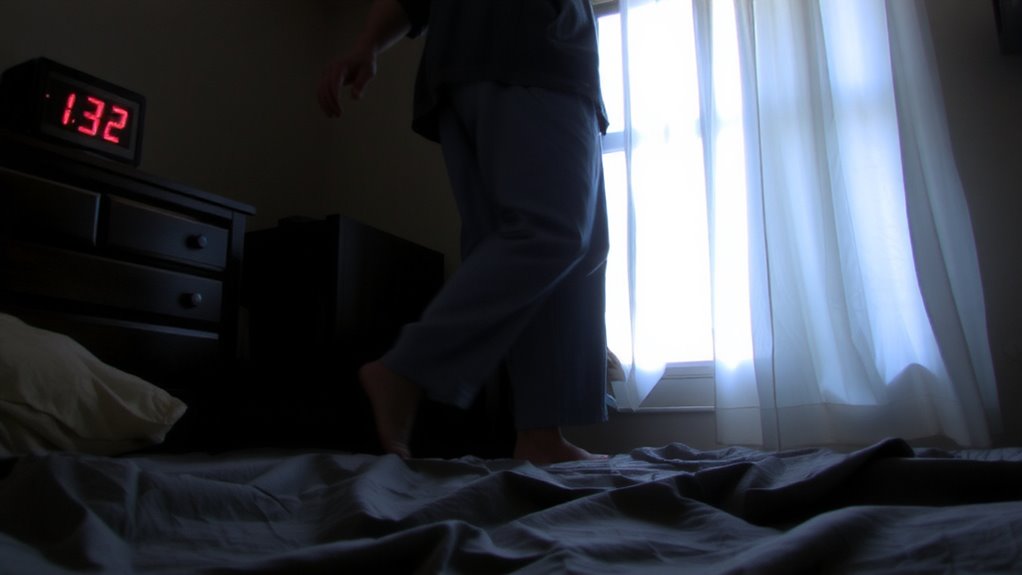
About 90 minutes after you fall asleep, your brain enters the deep non-REM (N3) stage of sleep, and it’s during this phase that sleepwalking most often occurs. You’re not acting out dreams-those happen later-so dream analysis won’t help explain these events. Instead, your body begins moving while your brain remains mostly offline. Curiously, some believe lunar phases influence sleep behaviors, but studies haven’t proven a clear link. Sleepwalking is more likely tied to genetics, stress, or disrupted sleep cycles than the moon. If you or a family member sleepwalks, consider improving sleep hygiene: keep a regular bedtime, reduce noise, and avoid stimulants. Devices like sleep trackers can monitor rest patterns, and some come with alerts or trial periods. Always consult a doctor before using sleep aids, as they may affect deep sleep architecture and worsen symptoms. For more details on monitoring sleep stages, check out the best sleep tracking devices.
How Deep Non-Rem Sleep Triggers Sleepwalking
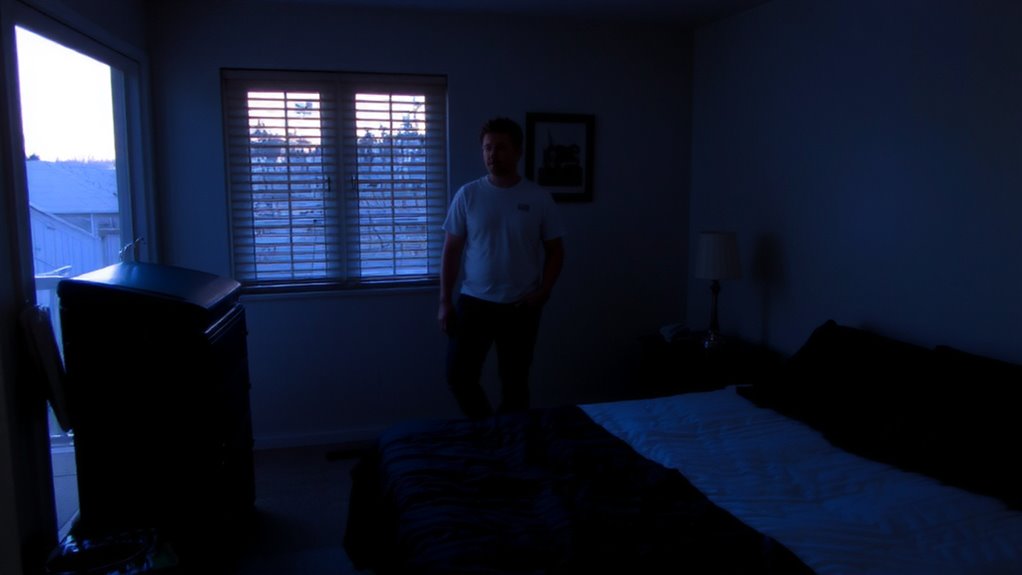
While your brain is deep in non-REM stage 3 sleep, a state marked by slow brain waves and minimal responsiveness, the shift from this heavy sleep back toward lighter stages can sometimes go slightly off track-and that’s when sleepwalking tends to start. Your brain waves begin to speed up unevenly, while muscle activity, which should stay low, starts to rise. This mismatch means parts of your brain are waking while others remain asleep. You’re not fully conscious, yet your body can move. This partial arousal often happens during the first 90-minute sleep cycle when deep sleep is strongest. It’s more common in people with genetic ties to sleepwalking or those whose sleep is disrupted. Checking sleep patterns with a doctor can help clarify risks. Some sleep aids may affect this cycle, so reviewing options with a professional supports safer, more restful sleep decisions.
What Your Brain Does During a Sleepwalking Episode
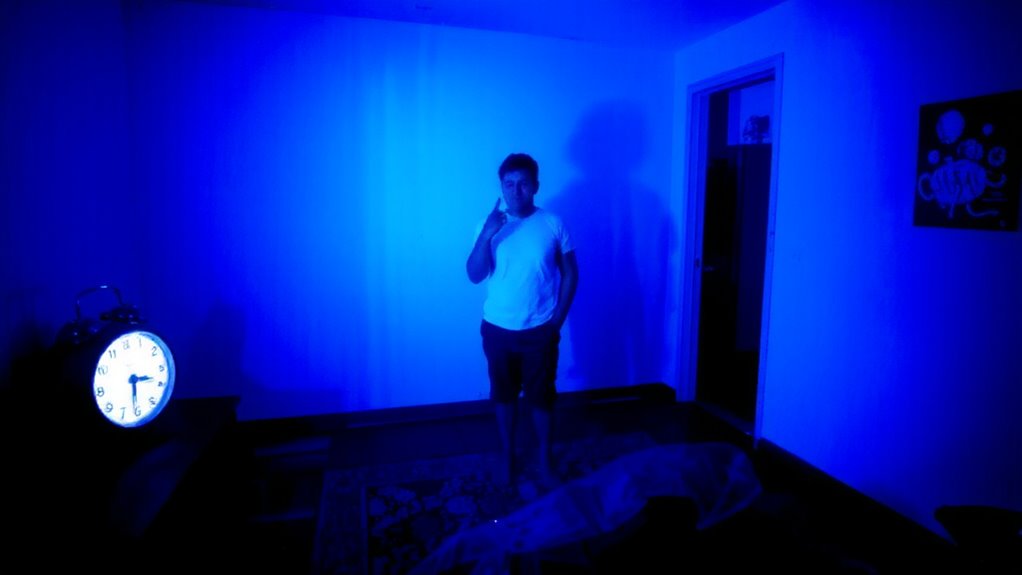
Though you’re moving around during a sleepwalking episode, your brain isn’t fully awake-it’s operating in a mixed state where some areas are active while others remain in deep sleep. Your brain activity shifts unevenly, with motor regions firing while awareness centers stay offline. This imbalance lets your body walk or perform tasks while your mind stays asleep. Neural pathways tied to movement and habit activate without conscious control, often leading to repetitive or simple actions. You might sit up, walk, or even speak-yet you won’t remember it later. During these episodes, your brain can’t process complex thoughts or form memories. Since parts of your brain are still in slow-wave sleep, your reaction to sound or touch is limited. While the episode seems alert, it’s a temporary disconnect-your brain is caught between two states. Understanding this helps clarify why sleepwalking isn’t intentional and why safety measures matter. Monitor patterns to inform conversations with sleep specialists.
Common Sleepwalking Triggers and Risk Factors
If you’ve ever found yourself walking around the house without remembering it, certain triggers and risk factors could be contributing to those episodes. High stress levels often disrupt your sleep cycle, making you more likely to sleepwalk, especially during the deep sleep phase about 90 minutes after dozing off. Genetics also play a role-if a close family member sleepwalks, you might too. Illnesses like fever, particularly in children, can set it off, as can lack of sleep or irregular sleep schedules. Medication effects from sedatives, hypnotics, or even some antidepressants may increase the chances of an episode. Alcohol use before bed can further interfere with normal sleep patterns. Keeping stress levels in check, maintaining a regular sleep routine, and reviewing medication effects with a healthcare provider are practical steps to reduce risks. While sleepwalking aids aren’t always needed, understanding these factors helps you make informed choices about sleep health.
When to See a Doctor for Frequent Sleepwalking
How often should sleepwalking happen before you consider reaching out to a doctor? If it occurs more than once a week, or even less if episodes are intense, it’s time to seek a medical evaluation. You might not realize how much sleepwalking affects your rest quality. Frequent episodes could signal underlying issues like sleep apnea or stress-related disruptions. More importantly, safety concerns increase with every episode-sleepwalkers can trip, fall, or even leave the house unknowingly. A doctor can review your sleep patterns, health history, and medications to pinpoint causes. They might suggest a sleep study to observe brain activity. Treatment options vary, from improving sleep hygiene to addressing medical conditions. Acting early helps reduce risks and improves overall well-being. You don’t have to manage it alone-a professional can guide you with practical, safe solutions.
On a final note
You’re more likely to sleepwalk about 90 minutes after falling asleep, during deep non-REM sleep, when your brain is less responsive but your body can still move. Episodes often stem from triggers like stress, fatigue, or genetics. If sleepwalking happens often or leads to injury, seeing a doctor helps rule out disorders. Good sleep habits and a safe environment reduce risks, and in some cases, medical guidance or treatment might be needed.