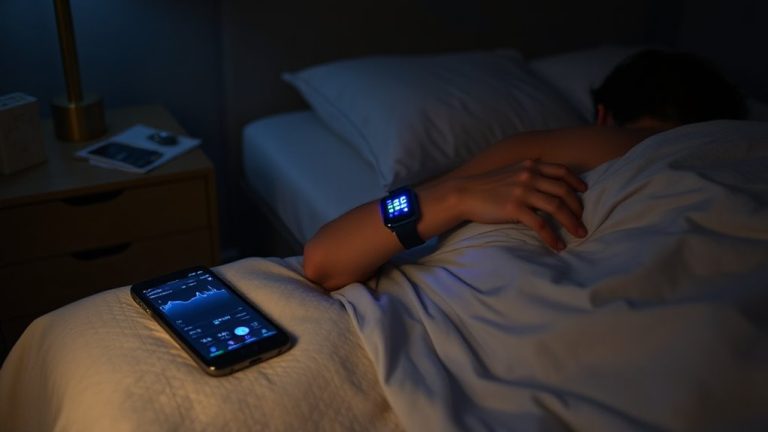
How Sleep Cycle Efficiency Predicts Recovery After Illness
Poor sleep cycle efficiency means you’re spending too much time awake in bed, which cuts the deep sleep your body needs to heal. When your sleep is fragmented, recovery slows because tissue repair and immune function happen during deep stages. Tracking your sleep helps spot disruptions so you can adjust habits or consider short-term sleep aids with clear dosing. High-efficiency sleep supports better healing-and you’ll find proven strategies to improve it just ahead.
Notable Insights
- High sleep cycle efficiency supports restorative rest, which is critical for immune function and tissue repair during illness recovery.
- Poor efficiency often reflects fragmented sleep, delaying recovery by reducing time spent in healing-focused deep sleep stages.
- Efficient sleep cycles maintain balanced REM and deep sleep, optimizing biomarkers like cortisol and inflammation levels.
- Tracking efficiency helps identify disruptions linked to insomnia or sleep apnea, which can impede post-illness recuperation.
- Improving efficiency through consistent routines and sleep hygiene enhances recovery speed and reduces risk of setbacks.
Why Illness Ruins Your Sleep (And How to Fix It)
While you’re sick, your body’s need for rest increases, but the quality of your sleep often drops because symptoms like congestion, cough changes, and fever disrupt your normal sleep cycle. Fever disruption makes it harder to stay in deep stages, waking you more often at night. You might also face medication side effects-some antihistamines or decongestants cause restlessness or frequent urination, which fragments sleep further. Consider liquid or time-released formulas if pills upset your stomach or wear off too quickly. Use a humidifier to ease breathing, and keep the room cool to counter overheating from fever. Sleep aids like melatonin may help, but check interactions with cold meds first. Opt for products with clear dosing guides and short half-lives to reduce morning grogginess. Trial periods on sleep trackers can show how illness alters your patterns, helping you adjust care. Read warranties on medical devices to guarantee coverage during prolonged recovery.
How Deep Sleep Helps You Recover Faster
You’re more than halfway to healing when you spend enough time in deep sleep, the stage where your body does its heaviest repair work. During this phase, your brain regeneration gets a boost, helping you think clearer and respond faster as you recover. It’s also when immune activation peaks, strengthening your defenses against lingering illness. Without enough deep sleep, your body struggles to fully repair tissues or fight off infection. You might feel sluggish, foggy, or more vulnerable to setbacks. Prioritizing sleep quality-like keeping a consistent bedtime and minimizing light and noise-supports longer deep sleep cycles. Some find limited benefit from sleep aids, but they should be used carefully and temporarily. Devices that track sleep stages can help you assess deep sleep patterns, though accuracy varies. Consider ones with trial periods to test performance. Deep sleep isn’t a luxury-it’s a critical part of your recovery toolkit.
What Sleep Cycle Efficiency Means for Healing
Sleep cycle efficiency-the amount of time you actually sleep compared to time spent in bed-matters because higher efficiency usually means more restorative rest. When your sleep architecture is stable, with balanced stages like deep sleep and REM, your body repairs tissues and strengthens immunity. That balance supports key recovery biomarkers, such as reduced inflammation and balanced cortisol. Poor efficiency often disrupts these cycles, slowing healing. If you struggle to stay asleep or fall asleep quickly, it may signal a sleep disorder like insomnia or sleep apnea. Treatments vary: cognitive behavioral therapy helps many, while others benefit from short-term sleep aids-look for ones with clear dosing, trial periods, and minimal next-day effects. Devices that monitor sleep stages can reveal patterns, but focus on consistent, deep rest rather than just time in bed. Small improvements in efficiency can meaningfully support healing without drastic changes. Tracking your progress with a best sleep quality monitor can provide actionable insights into your nightly rest.
Track Your Sleep to Speed Up Recovery
Getting clear data on your sleep patterns can help you make smarter choices about recovery, building on what you already know about sleep cycle efficiency. Sleep tracking gives you insight into how long you sleep, how often you wake, and how much time you spend in deep and REM stages. This information helps identify disruptions that might slow healing. With accurate sleep tracking, you can adjust habits or consider sleep aids backed by evidence, like white noise machines or clinically tested supplements. Many trackers offer performance data, trial periods, and warranties, letting you test devices risk-free. Use this feedback to support recovery optimization-matching your rest to your body’s healing needs. Simple changes, guided by data, can improve sleep quality without drastic measures. Make informed decisions about disorders or aids by reviewing your sleep patterns over time. Let the numbers guide your next step. A variety of best sleep trackers are available to suit different needs and budgets.
Daily Habits That Restore Restorative Sleep
A solid majority of people can regain restorative sleep by adjusting daily habits, starting with consistent wake and bed times-even on weekends. Good sleep hygiene means limiting screens before bed and avoiding caffeine after noon. Creating a calming bedtime routine-like reading or light stretching-signals your body it’s time to wind down. Your environment matters too: keep the room cool, dark, and quiet.
| Habit | Benefit | Trial Period |
|---|---|---|
| Fixed sleep schedule | Stabilizes circadian rhythm | 2 weeks |
| No screens 1 hour before bed | Reduces blue light disruption | 10 days |
| Bedtime routine (e.g., reading) | Enhances sleep onset | 7–14 days |
| Caffeine cutoff by 2 PM | Prevents sleep fragmentation | 1 week |
These steps improve sleep cycle efficiency naturally, supporting recovery without immediate need for sleep aids.
Signs Your Sleep Is Slowing Recovery
You might stick to a strict bedtime and skip evening coffee, but if you’re still waking up drained or noticing your workouts feel harder than before, your sleep could be letting you down even when it seems solid. Persistent insomnia symptoms-like trouble staying asleep or waking too early-can disrupt sleep cycle efficiency, reducing recovery quality. Elevated fatigue levels the next day are a clear signal, even if total sleep дней appears adequate. Your body may not be spending enough time in deep or REM stages, which are essential for healing. Poor sleep continuity or low efficiency affects immune function and muscle repair. Tracking sleep patterns helps identify disruptions. Some find relief with sleep aids, but short-term use is advised. Consider consulting a specialist if issues persist, especially when fatigue levels interfere with daily function. Treatments vary, so review options based on evidence and personal health needs.
Rebuild Strong Sleep After Illness
Though your body may feel ready to return to normal after an illness, your sleep routine might still be out of sync, making it harder to regain stamina and focus. Circadian disruption from bedrest or nighttime symptoms can distort your sleep architecture, reducing deep and REM sleep. To rebuild strong sleep, start by resetting your internal clock with consistent wake times. Gradually limit naps to 20 minutes and avoid screens before bed to support natural melatonin release. Consider sleep aids only if initial changes don’t help after two weeks.
| Factor | Recommendation |
|---|---|
| Light exposure | 15–30 min morning sunlight |
| Sleep schedule | Fixed wake time, ±30 min |
| Napping | One nap, before 3 PM |
| Sleep environment | Cool, dark, quiet |
| Sleep aids | Trial short-term, check with doctor |
Tracking improvements helps assess sleep cycle efficiency as your body recovers.
On a final note
You can improve recovery by tracking sleep cycle efficiency-aim for more deep sleep and fewer awakenings. Simple habits like consistent bedtimes, reduced screen time, and comfortable bedding help. Some find sleep aids useful short-term, but check with a doctor first. Devices that monitor sleep patterns offer feedback, often with trial periods or warranties. Better sleep doesn’t fix illness alone, but it supports healing when combined with medical care and healthy routines.