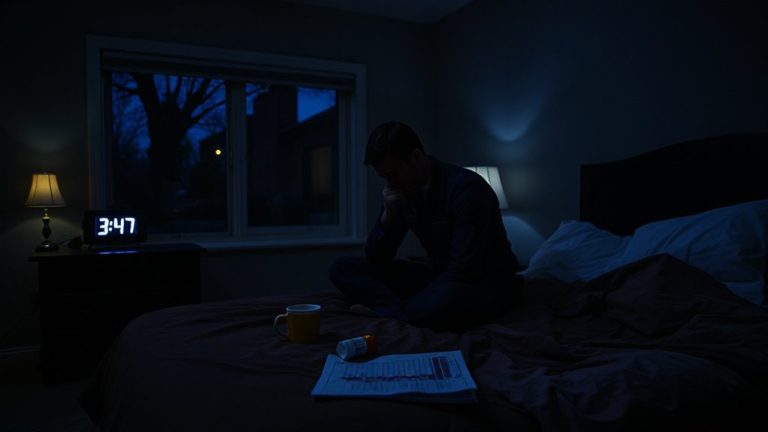
Managing Nighttime Sleep Disruption in Patients With Narcolepsy
You’re more likely to wake up often at night if you have narcolepsy, since REM cycles are irregular and deep sleep may be skipped. Keep a strict sleep schedule-same bedtime and wake time every day-to stabilize your sleep cycle. Create a cool, quiet bedroom with blackout curtains and white noise. Try high-thread-count sheets and a tested mattress for comfort. Sleep on your side to reduce paralysis. Medications and a calming pre-bed routine help-small changes can make a noticeable difference over time. There’s more to explore on how each element fits your routine.
Notable Insights
- Maintain a strict sleep schedule with consistent bedtime and wake time daily to stabilize the disrupted sleep-wake cycle.
- Optimize the sleep environment by minimizing light, noise, and distractions using blackout curtains and white noise machines.
- Avoid sleeping on the back to reduce the frequency of sleep paralysis episodes during REM transitions.
- Implement calming bedtime routines to decrease nocturnal hallucinations and promote smoother sleep onset.
- Address fragmented sleep with tailored medications, though complete normalization of sleep architecture may not be achievable.
Why Narcolepsy Wrecks Nighttime Sleep
Sleep fragmentation. You might feel exhausted even after a full night in bed, and here’s why. Narcolepsy disrupts your sleep architecture, causing abnormal REM cycles-you enter REM sleep too quickly, sometimes bypassing deep sleep entirely. This means your brain doesn’t follow the usual pattern of progressing through light, deep, and REM stages. Instead, you experience fragmented deep sleep, reducing the restorative quality of your rest. These disruptions lead to frequent awakenings, often without you realizing it. Over time, this weakens your body’s ability to maintain consistent, rejuvenating sleep. While medications and sleep aids may help regulate patterns, they don’t always restore normal cycling. Treatments vary in performance, with some offering short-term relief and others requiring long adjustment periods. Look for options with clear trial periods and provider support. Understanding your sleep structure helps you make informed choices about therapies and tools.
Stick to a Strict Sleep Schedule (Even on Weekends)
You’re not alone if you’ve tried different sleep aids or routines to fix restless nights, but consistency in timing might matter more than you think. For narcolepsy, sleep consistency is key-even a slight shift in bedtime can worsen symptoms. Your brain thrives on routine, and irregular sleep disrupts the fragile balance of your sleep-wake cycle. Maintaining strict bedtime discipline helps stabilize nighttime rest and improves daytime alertness. Aim to wake up and go to bed at the same time every day, including weekends. Resist the urge to sleep in or stay up late, even if you feel tired. Over time, this rhythm supports better sleep quality without relying solely on medications or devices. Sleep consistency isn’t about perfection, but steady effort. Think of it like setting a daily alarm for your body’s internal clock. With regular practice, bedtime discipline becomes automatic, making rest more predictable and restorative.
Design a Narcolepsy-Friendly Sleep Environment
While your bedroom may seem like just a place to lie down at night, its setup can substantially influence sleep quality if you’re managing narcolepsy. Proper bed positioning matters-place your bed away from windows and doors to minimize light and drafts, and orient it so outside noise doesn’t directly reach you. Noise control is essential; consider using a white noise machine or earplugs to block sudden sounds that might disrupt sleep. Choose blackout curtains and keep electronics off to reduce distractions. A cool, clutter-free room supports better rest, so aim for a simple layout with calming colors. Test different pillows or mattresses if discomfort affects your sleep, and check trial periods when buying. Over time, tweak the space based on what helps you wake refreshed, not groggy. Small changes in environment often lead to meaningful improvements. For consistent sound masking, consider one of the best sound machines recommended for improving sleep quality.
Reduce Nighttime Symptoms Like Sleep Paralysis
What if the moment you’re trying to fall asleep or wake up becomes a brief window where your body won’t move, despite your mind being fully aware? That’s sleep paralysis, and it’s common in narcolepsy. While unsettling, it usually passes in seconds to minutes. You might also experience nocturnal hallucinations-vivid, often strange sensations as you drift off or wake. These occur because your brain enters REM sleep too quickly. To reduce episodes, maintain consistent sleep times and a calming bedtime routine. Avoid sleeping on your back, as this position is linked to more frequent sleep paralysis. Limit screen use and stress before bed. Create a comfortable, dark, quiet space that supports uninterrupted rest. Upgrading your bedding with high-quality 1000 thread count sheets can further enhance sleep comfort and help minimize nighttime disturbances. Though brief, these events can affect confidence in sleep. Tracking episodes helps you and your doctor identify patterns. With adjustments, many find fewer disruptions over time.
Use Sleep-Stabilizing Medications (With Doctor Guidance)
Sleep paralysis and nighttime hallucinations can make rest feel unpredictable, but working with your doctor to contemplate certain medications may help stabilize your sleep patterns. Medications like low-dose antidepressants or melatonin agonists are often used to regulate nighttime sleep. Your doctor will help you find the right choice based on your symptoms and medical history. Staying consistent matters-medication timing and dosage consistency play key roles in how well treatment works. Taking your medication at the same time each night helps your body adjust and improves effectiveness. Never adjust your dose or schedule without talking to your doctor. Some medications take weeks to show benefits, so patience during the trial period is important. Most come with follow-up plans to monitor progress and side effects. With careful management, these treatments can support more restful nights.
Skip Late Caffeine, Alcohol, and Screens
How often does your evening routine include a cup of coffee, a nightcap, or scrolling through your phone before bed? These habits may seem harmless, but they can worsen nighttime sleep disruption in narcolepsy. Caffeine impact lasts longer than you think-even afternoon coffee can delay sleep onset and reduce sleep quality. Alcohol might make you feel drowsy at first, but it often fragments sleep later in the night. Screen exposure from phones, tablets, or TVs suppresses melatonin, making it harder to fall asleep. Blue light especially interferes with your natural sleep-wake cycle. To support stable rest, avoid caffeine after noon, skip alcohol within three hours of bed, and turn off screens at least an hour before sleep. Small changes like these can improve your nighttime continuity without extra medications.
Calm Your Mind With a Pre-Bed Routine
Ever wonder why your mind races when you’re trying to fall asleep? A consistent pre-bed routine can help guide your body and brain toward rest, especially when managing narcolepsy. Starting 30–60 minutes before sleep, focus on activities that support mind relaxation-like dimming lights, reading, or gentle stretching. One effective tool is bedtime journaling: writing down thoughts, worries, or a simple to-do list clears mental clutter and reduces nighttime rumination. Keep the journal by your bed and limit entries to 5–10 minutes to avoid overstimulation. Pair journaling with predictable cues-like brushing your teeth or putting on sleep clothes-to strengthen your brain’s association between routine and rest. While this won’t replace medical treatments, it complements other strategies by improving sleep onset and quality. Trial the routine nightly for at least two weeks to assess its impact on your rest. Incorporating evidence-based sleep routine aids can further enhance the effectiveness of your pre-sleep habits.
On a final note
You can manage nighttime sleep disruption by sticking to a consistent sleep schedule and shaping a calm, dark, cool bedroom environment. Limit caffeine, alcohol, and screens before bed, and consider a relaxing pre-sleep routine. Medications may help, but always follow your doctor’s advice. Track your sleep patterns to see what works, and allow time to adjust strategies with patience.