How Sleep Cycle Tracking Can Reveal Hidden Sleep Disorders
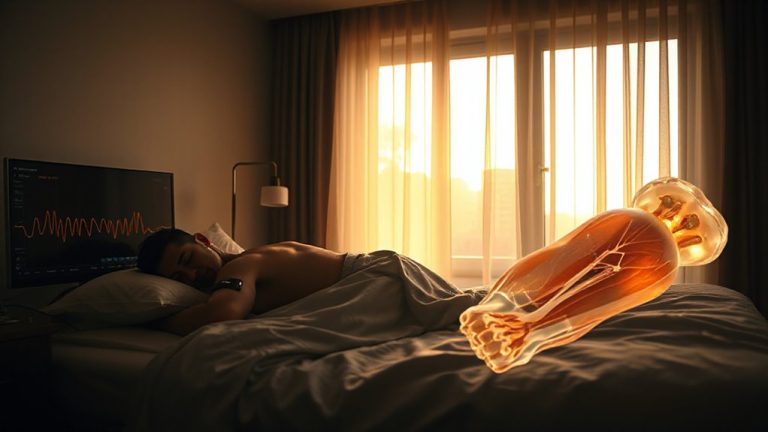
Your sleep tracker uses motion, heart rate, and breathing patterns to spot trends like long sleep onset or frequent night wakings, which may point to insomnia or sleep apnea. It can flag breathing pauses or leg movements linked to apnea or restless legs syndrome, though it’s not as accurate as a clinical study. For reliable insights, track your sleep over 2–3 weeks and pair the data with a sleep diary. If patterns concern you, talk to a doctor-they can help decide if a formal sleep study is needed. You’ll find clearer next steps with consistent monitoring and professional guidance.
Notable Insights
- Sleep trackers detect irregular breathing pauses and heart rate changes that may indicate sleep apnea over multiple nights.
- Delays in falling asleep or frequent nighttime awakenings can signal insomnia when tracked consistently.
- Restless leg movements during light sleep are captured by motion sensors, helping identify potential RLS.
- Reduced sleep efficiency below 85% over time highlights poor sleep quality linked to underlying disorders.
- Long-term trend analysis combined with sleep diaries can prompt clinical evaluation for accurate diagnosis.
How Sleep Trackers Monitor Your Sleep
Most modern sleep trackers use a combination of sensors to monitor your movement, heart rate, and breathing patterns throughout the night. These devices analyze your movement patterns and physiological data to estimate which sleep stages you’re in-light, deep, or REM. Motion sensors detect restlessness or stillness, while optical heart rate monitors track subtle changes in blood flow linked to sleep cycles. Though not medical-grade, the data helps you understand your sleep habits and identify possible disruptions. You can see trends over time, like how late meals or stress affect your sleep stages. Some trackers offer sleep scores or recommendations based on nightly performance. Many come with trial periods or warranties, letting you test comfort and accuracy. Read user manuals to understand sensor placement and limitations. Use this insight to decide whether lifestyle changes, sleep aids, or professional advice might help improve your rest. For those interested in optimizing their sleep, checking out the best sleep trackers can guide you to devices that match your needs and monitoring preferences.
Can Your Sleep Tracker Detect Sleep Apnea?
Could your sleep tracker actually flag something as serious as sleep apnea? Some advanced models now offer sleep apnea detection by monitoring your nocturnal breathing patterns. These trackers use sensors to spot pauses or irregularities in breathing, often pairing the data with heart rate changes. While they can’t replace a clinical sleep study, they may help you decide whether to see a doctor. Devices with this feature typically analyze trends over several nights, improving accuracy. Keep in mind, false positives or missed signals can happen-especially in basic models. For reliable results, choose trackers validated by sleep research or approved by health organizations. Most come with app-based feedback and sleep reports you can share with a provider. Many offer free trials or money-back guarantees, letting you test performance. It’s a practical step toward early insight-but never a full diagnosis. For a comprehensive overview, check the latest best sleep trackers based on expert testing and user experience.
Is Your Tracker Revealing Insomnia?
How well is your sleep tracker actually capturing your restless nights? If you’re lying awake frequently, your device may be recording key data patterns linked to insomnia. Look for consistent delays in falling asleep, frequent nighttime awakenings, or low sleep efficiency over several nights. These trends can signal poor sleep quality and may prompt a deeper evaluation.
| Metric | Insomnia Indicator |
|---|---|
| Sleep Onset | >30 minutes |
| Wake After Sleep | >20 minutes |
| Sleep Efficiency | <85% |
Not all trackers assess these the same way, so review your device’s accuracy claims and consider models with clinical validation. Some offer free trials, letting you test compatibility. Tracking over two weeks gives clearer data patterns. Poor sleep quality flagged over time could mean it’s time to consult a sleep specialist-don’t ignore what the numbers show.
How Wearables Identify Restless Legs Syndrome
Your sleep tracker might already be picking up signs of more than just insomnia-unusual leg movements during the night could point to restless legs syndrome (RLS). By analyzing movement patterns, wearables detect irregular shifts that typical sleepers don’t show. Advanced models use leg twitch detection to identify the repetitive, jerky motions common in RLS, especially during light sleep stages. These devices track frequency, duration, and intensity, sending data to apps that map trends over time. You can spot noticeable spikes when symptoms flare, helping guide discussions with a doctor. Not all trackers handle this equally-some require specific sensors near the calf for better accuracy. Look for models with validated RLS detection, long battery life, and easy data export. Most offer trial periods, so you can test performance before committing. Using this insight, you’re better prepared to explore next steps, whether it’s sleep aids, lifestyle changes, or professional evaluation. A top-tier option for accurate tracking without ongoing costs is a best sleep tracker without a subscription.
Are Frequent Night Wakings a Red Flag?
Why do you wake up multiple times each night, and should you be concerned? Frequent midnight awakenings or sleep interruptions can be normal occasionally, but when they happen regularly, they might signal an underlying issue. Sleep cycle tracking can help identify how often these disruptions occur and when they happen. While brief awakenings between cycles are typical, long or repeated sleep interruptions could point to stress, sleep apnea, or environmental factors like noise. If you’re consistently tired during the day, it’s worth reviewing your tracking data for patterns. Some wearable devices offer insights into restlessness or light sleep phases linked to waking. Monitoring for a few weeks gives a clearer picture. Consider adjusting your sleep environment or routine first. If problems persist, consult a healthcare provider to explore possible sleep disorders and appropriate next steps.
How Accurate Are Sleep Apps vs. Sleep Studies?
Tracking your sleep with a smartwatch or phone app has become a common way to spot patterns like nighttime awakenings, but it’s worth understanding how these tools stack up against clinical sleep studies. While apps use movement and sound to guess sleep stages, they lack the data reliability of medical-grade devices that measure brainwaves, breathing, and heart activity. Sleep studies, done in labs or at home with prescribed equipment, offer far more accurate results, especially for diagnosing disorders. Apps can still help you notice trends in user behavior, like late caffeine use or inconsistent bedtimes. They’re convenient but not definitive. If you’re concerned about your sleep quality, don’t rely solely on app data. Consider how patterns align with how you feel daily. For real answers, a healthcare provider may recommend a formal study.
What to Do If Your Sleep Tracker Flags a Problem
If your sleep tracker suggests a possible issue-like frequent awakenings, low sleep efficiency, or irregular cycles-take it as a starting point, not a diagnosis. Use this data to begin understanding your sleep patterns, but don’t rely on it alone. Start keeping a sleep diary to record bedtime, wake time, and habits, which adds context. Share both the tracker data and your sleep diary with a healthcare provider. A doctor consultation can help determine if further testing is needed. Below are steps to guide your next actions:
| Step | Action |
|---|---|
| 1 | Review tracker trends over 2–3 weeks |
| 2 | Begin a detailed sleep diary |
| 3 | Note caffeine, alcohol, and stress factors |
| 4 | Schedule a doctor consultation |
| 5 | Discuss need for clinical sleep study |
On a final note
Your sleep tracker gives clues about your sleep patterns, but it can’t replace a medical evaluation. If you notice repeated signs of apnea, insomnia, or restless legs, consult a doctor. Wearables help spot trends over time, especially when combined with how you feel daily. Some devices offer detailed reports and trials, letting you test their usefulness. Accuracy varies, so use the data as a starting point, not a final diagnosis.