Why Innerspring Mattresses Are Preferred for Adjustable Bed Bases
You’ll find innerspring mattresses work well on adjustable bases because their coils bend at hinge points without breaking, thanks to tempered steel and flexible designs. They let air move through easily, helping you stay cool. Compared to foam, they resist sagging longer and handle repeated motion better. Look for reinforced edges and pocketed coils for lasting support. Many come with strong warranties covering durability, so checking those details gives you a clearer picture of what to expect over time.
Notable Insights
- Innerspring mattresses feature flexible coil systems designed to bend at hinge points without damage.
- Tempered steel coils resist deformation from repeated adjustments on movable bases.
- Reinforced edges and pre-shaped hinge zones maintain support where the bed flexes.
- Open coil structures promote airflow, enhancing cooling during elevated sleeping positions.
- Innersprings resist sagging longer than foam at pivot points under nightly adjustments.
How Innerspring Coils Flex on Adjustable Bases
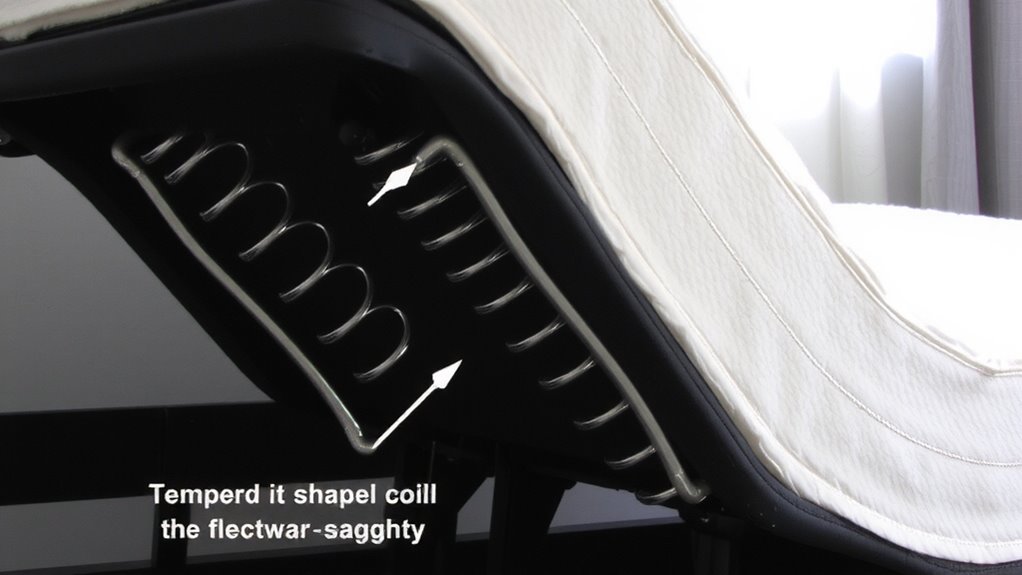
While most innerspring mattresses rely on interconnected coils for support, their ability to bend with an adjustable base depends largely on how the coils are engineered and whether the mattress includes a flexible hinge design. You’ll want to check the coil gauge flexibility-lower gauge numbers mean thicker, sturdier wires that resist sagging but may limit bend. Higher gauge coils are thinner and offer more give, helping the mattress conform smoothly to your base’s angles. Proper hinge point alignment guarantees the mattress folds precisely where the base lifts, preventing internal damage over time. Without it, pressure builds at stress points, shortening the mattress’s life. Look for models designed specifically for adjustable bases, as these often include reinforced edges and pre-shaped hinge zones. Most carry a 10-year warranty, with trial periods around 100 nights-enough time to assess comfort and mobility support for conditions like acid reflux or sleep apnea. For those seeking optimal flexibility and targeted support, consider pairing your base with one of the top-rated adjustable mattresses that are engineered to enhance spinal alignment and pressure relief.
How Coils Bend Without Breaking
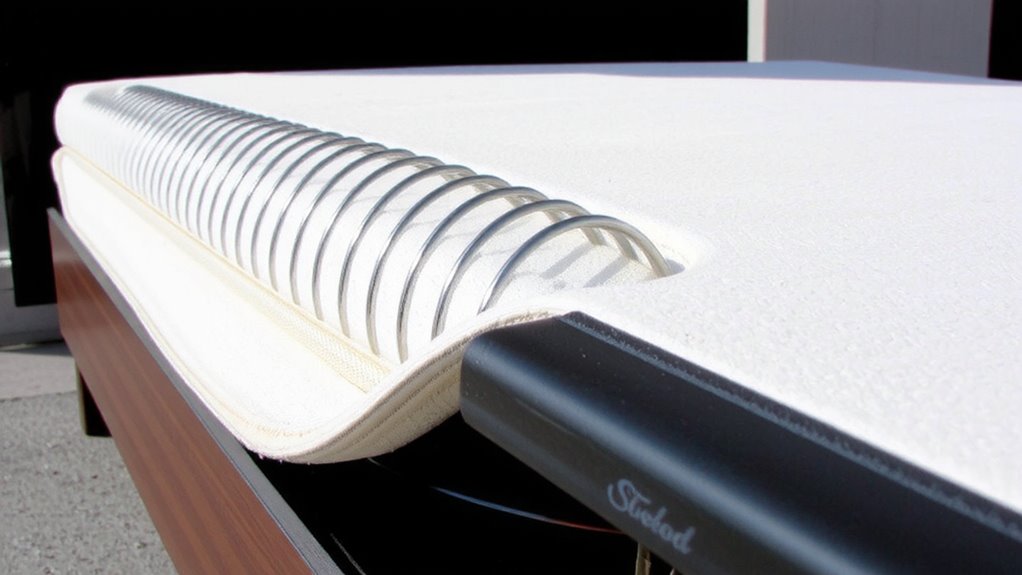
Since coil durability matters most when your bed adjusts throughout the night, you’ll want to know how manufacturers design innersprings to bend without snapping. Coil flexibility is built through tempered steel that resists deformation over time. Each coil is shaped and heat-treated to handle repeated bending at pivot points where the base moves. Proper stress distribution across the coil’s surface prevents weak spots from forming. You’ll find that continuous wire coils or pocketed designs spread pressure more evenly, reducing strain during movement. This means fewer breakdowns and longer performance, even with frequent adjustments. If you have mobility concerns or use your bed’s positions often, these features support consistent comfort. Look for models with solid warranties-many reliable brands offer 10+ years, covering sagging or coil failure. Testing the mattress in-store or through a sleep trial helps confirm it handles bending smoothly without noise or resistance.
Stay Cool: Airflow in Innerspring Mattresses
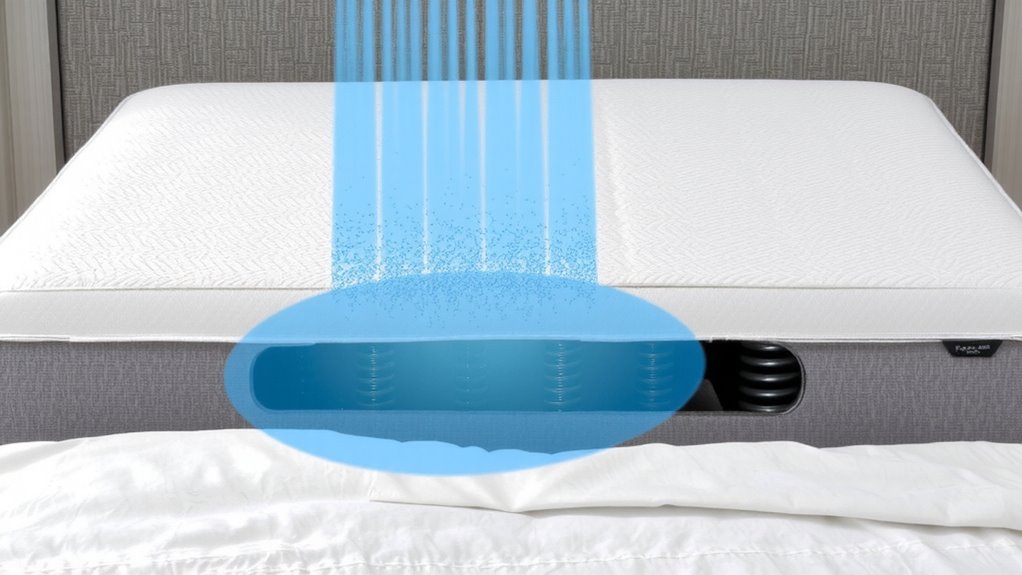
When you’re lying on an innerspring mattress, the open structure of the coil system works to your advantage by allowing air to move freely through the core. This natural airflow, combined with breathable materials in the cover and comfort layers, helps regulate your body temperature through the night. Many models now include advanced cooling technology, like gel-infused foams or moisture-wicking fabrics, to enhance comfort. If you tend to sleep hot or have issues like night sweats, these features can make a meaningful difference in sleep quality. Unlike denser foams, innersprings resist heat retention, promoting a cooler sleep environment. You’ll want to check if the mattress includes trial periods or warranties addressing comfort and performance. Choosing one with proven airflow and cooling technology supports better rest, especially if temperature regulation is a concern.
Innerspring vs. Foam: Durability on Adjustable Frames
Though they’re built differently, both innerspring and foam mattresses must withstand the bending and flexing of an adjustable frame, and how well they hold up over time depends on their materials and construction. Innerspring models often offer better edge support, helping you sit or sleep near the sides without sagging. Their coils respond quickly, minimizing motion transfer when you shift-useful if you share the bed. Foam mattresses conform closely, which feels supportive but may wear faster at hinge points from constant bending. Over time, some foams break down, leading to body impressions that affect comfort and alignment. Innersprings typically maintain shape longer under repeated movement. Look for models with reinforced edges and flexible coils designed for adjustability. Check warranty terms for bend-related coverage, since durability matters most when the base moves nightly. A solid trial period lets you test resilience in real use. Some advanced options now include temperature-controlled mattresses to enhance comfort during these adjustments.
Features That Prevent Sagging on Adjustable Bases
A well-built innerspring’s edge support and coil design do a lot to keep the mattress from sagging on an adjustable base. You’ll notice sturdier edges resist compression where you get in and out of bed, helping the surface stay even over time. Tightly wound coils, especially pocketed ones, maintain structure through repeated movement and positioning. These coils work independently, offering better motion isolation so your partner’s shifts won’t disturb your rest. Strong edge support also expands usable sleep space and improves durability when the bed adjusts. Since adjustable bases flex at joints, a reinforced perimeter helps the mattress adapt without dipping or wearing down prematurely. Over time, this support reduces the risk of sagging, especially in the midsection and along the sides. When testing models, pay attention to how firm the edges feel and whether movement transfers across the bed. Look for trial periods and warranties that cover sagging-many reputable brands offer at least 10 years of protection.
What to Look for in an Innerspring Mattress for Adjustable Bases
You’ve seen how strong edges and well-designed coils help prevent sagging on adjustable bases, and now it’s time to focus on what features actually matter when choosing an innerspring mattress for that kind of setup. Look for reinforced edge support-it keeps the mattress stable when you sit or sleep near the sides, which is key for getting in and out of bed comfortably. A solid edge also extends the usable surface and improves durability. You’ll want decent motion isolation too, especially if you share the bed; pocketed coils help by moving independently, so your partner’s shifts won’t disturb you. Opt for models with a comfort layer of foam or fiber-this adds softness and reduces bounce. Check the warranty for sagging coverage, ideally at 1.5 inches or less, and confirm it applies to adjustable bases. Test the mattress if possible, or choose one with a sleep trial, so you can assess firmness and support over time.
On a final note
You’ll find innerspring mattresses work well on adjustable bases because their coils bend smoothly without breaking. They let air circulate, helping you stay cool. Compared to foam, they often last longer when raised or lowered. Look for reinforced edges and flexible coils to prevent sagging. Choose models with solid warranties and trial periods so you can test comfort safely. These features support better sleep, especially if you need help adjusting your position.