Why You Feel Worse After a 30-Minute Nap: The Science of Sleep Inertia
You feel worse after a 30-minute nap because it often ends during deep sleep, when your brain waves slow and restoration is underway. Waking up mid-cycle interrupts this process, leaving you groggy and disoriented-a state called sleep inertia. Shorter 10–20 minute naps keep you in light sleep, making it easier to wake up alert. Sleep inertia from a 30-minute nap usually fades in 15–30 minutes. There’s more to learn about timing naps with your body clock.
Notable Insights
- A 30-minute nap often ends in deep sleep, causing grogginess due to disrupted restoration processes.
- Waking during stage 3 sleep triggers sleep inertia, impairing alertness and cognitive function.
- Deep sleep onset around 30 minutes makes arousal difficult and increases post-nap disorientation.
- Shorter 10–20 minute naps avoid deep sleep, reducing sleep inertia and boosting alertness.
- Sleep inertia after a 30-minute nap typically lasts 15–30 minutes, depending on individual sleep depth.
Why You Feel Groggy After a 30-Minute Nap
Some people wake from a 30-minute nap feeling more tired than when they lay down, and that groggy sensation has a clear cause: you’re likely waking in the middle of a deep sleep cycle. Your sleep cycles last about 90 minutes, moving from light to deep sleep and into REM. At 30 minutes, you’re probably deep into stage 3, where brain waves slow and brain chemistry shifts to promote physical restoration. Waking then disrupts this process, leaving you disoriented. This abrupt shift affects alertness and cognitive function temporarily, a state known as sleep inertia. Shorter naps-around 10 to 20 minutes-help you avoid deep sleep altogether, reducing grogginess. If you’re considering sleep aids or adjusting habits, understanding your personal sleep cycles can guide better choices. Tracking patterns with wearable devices may help pinpoint ideal nap lengths.
How Deep Sleep Causes Nap Grogginess
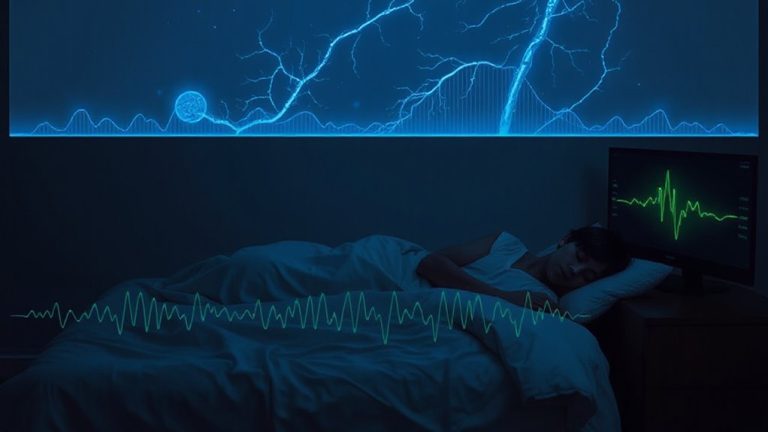
You wake up from a 30-minute nap feeling sluggish because you’ve likely been pulled out of deep sleep, and that grogginess isn’t just in your head-it’s a physical response to being interrupted during stage 3 sleep. At this point in the sleep stages, your brain waves slow markedly, entering delta waves that make arousal difficult. When your alarm pulls you out, your body and mind haven’t had time to shift back to full alertness. This mismatch between brain activity and wakefulness causes sleep inertia-impaired cognition, drowsiness, and slow reaction times. Unlike lighter sleep stages, stage 3 is restorative but hard to exit quickly. Your brain needs minutes, sometimes longer, to reset normal brain wave patterns. Understanding these sleep stages helps you interpret your napping experiences, recognize signs of disrupted cycles, and make informed choices about timing, sleep aids, or evaluating potential sleep disorders.
Nap for 10–20 Minutes to Avoid Sleep Inertia
A 10- to 20-minute nap can help you recharge without plunging into deep sleep, making it less likely you’ll wake up feeling groggy. This short window is your ideal timing to gain an alertness boost while avoiding sleep inertia. During the first 20 minutes, your body stays in light sleep, where brain activity remains high and waking up feels smoother. You’ll likely notice improved focus and energy without the heavy fog that follows longer naps. Setting an alarm guarantees you don’t slip into deeper stages. This approach works well if you’re dealing with daytime fatigue but don’t have sleep disorders requiring medical intervention. It’s a simple, effective strategy backed by sleep science. No special tools or sleep aids are needed-just good timing. Practicing this regularly can support better daily performance.
How Long Grogginess Lasts After a Nap
While you might expect a longer nap to leave you feeling refreshed, grogginess after waking often depends more on sleep depth than duration alone. If you nap during a circadian rhythm dip, like mid-afternoon, you’re more likely to enter deep sleep quickly, worsening sleep inertia. Grogginess can last from 5 to 30 minutes, sometimes longer if you’re sleep-deprived or your sleep quality is poor.
Here’s how grogginess duration varies by nap length and depth:
| Nap Length | Sleep Stage Reached | Typical Grogginess Duration |
|---|---|---|
| 10–20 min | Light sleep | 0–5 minutes |
| 30 min | Deep sleep onset | 15–30 minutes |
| 60+ min | Deep sleep | 20–60 minutes |
Understanding this helps you time naps to match your daily rhythm and maintain better sleep quality overall.
When a 30-Minute Nap Is Still Worth It
Why do some people still benefit from a 30-minute nap despite the grogginess? Because when you time it right, the sleep benefits can outweigh the brief inertia. If your schedule limits longer sleep, a 30-minute nap helps you catch rest without falling into deep sleep, reducing the risk of severe grogginess. The key is nap timing-aim for early to mid-afternoon, about 7 to 8 hours after waking, when circadian dip naturally occurs. That boosts alertness and mood without interfering with nighttime sleep. Though you may feel foggy for 10–15 minutes, this passes quickly. For those with irregular sleep or mild fatigue, this short rest supports cognitive function and reaction time. It’s not ideal every day, but when used strategically, a 30-minute nap becomes a practical tool, especially if sleep disorders aren’t present or you’re testing sleep aids under guidance.
On a final note
You might feel worse after a 30-minute nap because it pulls you into deep sleep, making waking up harder. This grogginess, called sleep inertia, can last 15 to 30 minutes. For a quicker refresh, try napping 10–20 minutes instead. Still, a 30-minute nap can help if you’re sleep-deprived. Time it earlier in the day, and give yourself space to wake up fully before tasks needing focus.