Optimizing Morning Light Exposure to Reset Delayed Sleep Phase Disorder
You can reset your delayed sleep phase by getting bright light within an hour of waking, when your body clock is most sensitive. Morning sunlight or a 10,000-lux light therapy lamp works best-use it for 20–30 minutes close to your face (16–24 inches) with eyes open but not staring. Consistency matters most: use it daily at the same time, ideally between 7:00 and 8:30 a.m., and pair it with stable sleep habits for lasting results. More details follow on fine-tuning timing and avoiding setbacks.
Notable Insights
- Expose yourself to bright light within 1 hour of waking to shift your delayed sleep phase earlier.
- Aim for natural sunlight or a 10,000 lux light therapy device for effective circadian entrainment.
- Position the light source 16–24 inches away, angled downward, with eyes open but not staring directly.
- Consistent daily exposure of 20–30 minutes strengthens rhythm resetting and improves sleep onset timing.
- Avoid late-day light exposure, as it can delay sleep and counteract morning light benefits.
What Is Delayed Sleep Phase Disorder?
Why does falling asleep feel so much harder at night, even when you’re tired? You might have delayed sleep phase disorder (DSPD), a condition where your internal clock runs late, making it tough to fall asleep and wake up at typical times. It’s not just poor habits-genetic predisposition plays a role, meaning it can run in families. Hormonal imbalances, especially in melatonin and cortisol timing, further shift your cycle. People with DSPD often feel most alert at night and groggy in the morning, even with enough sleep. Diagnosis usually involves tracking sleep patterns for days or using a sleep study. While melatonin supplements and light therapy can help, they work best when timed correctly. Treatment focuses on gradually shifting sleep times or aligning cues like light and meals. Knowing your options helps you decide whether to try aids or adjust routines based on your lifestyle and needs. Consistent use of a best light therapy device can significantly improve circadian alignment when used in the morning.
How Morning Light Fixes Your Body Clock
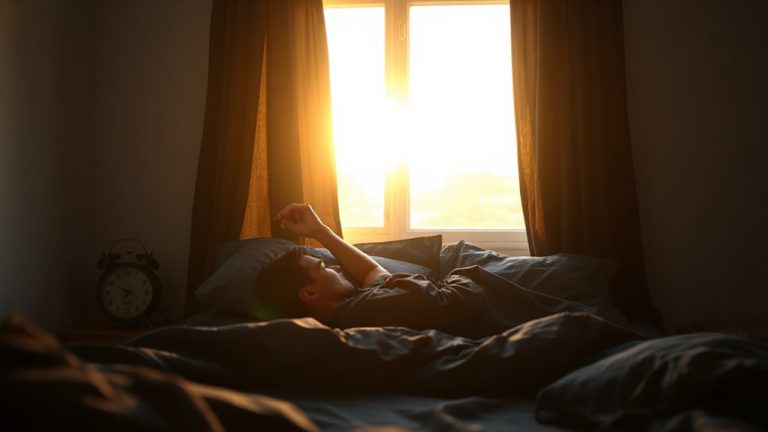
Morning light helps reset your body’s internal clock by signaling the brain to stop producing melatonin, the hormone that promotes sleep, and start increasing alertness. This natural process triggers melatonin suppression, which makes you feel more awake and focused in the morning. When you expose yourself to light early, especially sunlight, you support circadian entrainment-your body’s way of syncing its daily rhythm with the outside world. Over time, this steady signal strengthens your sleep-wake cycle, making it easier to fall asleep and wake up at consistent times. You don’t need special equipment; just being near a bright window or stepping outside helps. Consistency matters more than intensity. Doing this daily improves your body’s timing without pills or devices, offering a simple, drug-free way to address sleep timing issues.
When to Get Light for Faster Results
When should you step into the light to see changes in your sleep pattern? Right after waking is best-aim for 7:00 to 8:30 a.m. if you rise around 7. Time consistency matters; your body clock responds faster when you expose yourself daily at the same time. Pair that with intensity control: 10,000 lux for 20–30 minutes works well for most. Too early or too late delays progress. Using a sunrise alarm clock can help simulate natural morning light and support consistent daily exposure. Here’s how timing affects outcomes:
| Time of Exposure | Effect on Sleep Onset |
|---|---|
| Within 1 hour of waking | Shifts bedtime earlier |
| 2+ hours after waking | Minimal shift |
| Inconsistent times | Slows adjustment |
| Too late in day | May delay sleep |
| Same time daily | Builds rhythm fast |
Stick to time consistency and manage intensity control for best results.
Where to Get the Right Morning Light
You’ve got the timing down-hitting that window just after waking helps reset your rhythm with consistency and the right light intensity. Now, focus on where you get your light. Natural sunlight is the strongest, most effective light source, so open curtains or go outside if you can. If you use a light therapy device, choose one that delivers 10,000 lux and filters out harmful UV rays. Proper device placement matters-position it 16 to 24 inches from your face, angled slightly downward. Avoid staring directly at it, but keep your eyes open and engaged in routine activities like eating or reading. Different light sources vary in brightness and coverage, so test a few to see what fits your space and schedule. Most devices are built for daily use and come with long warranties, letting you try them with confidence.
How to Make a Daily Light Routine
How do you weave morning light into your day without disrupting your routine? Start at the same time every morning, aiming for 10–30 minutes of exposure shortly after waking. Consistency helps regulate your internal clock. Use natural sunlight near a window or a light therapy device if needed. Light intensity matters-aim for at least 10,000 lux for effective results. Exposure duration can vary, but 20–30 minutes at lower intensities may be necessary.
| Time of Day | Light Source | Exposure Duration |
|---|---|---|
| 7:00 AM | Window sunlight | 20–30 min |
| 7:30 AM | Light therapy box | 20 min |
| 8:00 AM | Outdoor walking | 30 min |
| 7:00 AM | Overhead room lamp | 60 min (lower lux) |
| 7:15 AM | Desk lamp (10k lux) | 15–20 min |
Choose options that match your schedule and light intensity needs.
Combine Light Therapy and Sleep Habits
Though light therapy plays a key role in resetting your circadian rhythm, pairing it with consistent sleep habits strengthens its effect and supports long-term improvement in sleep quality. Aim to use bright light exposure, especially blue light, shortly after waking to anchor your wake timing each day. This helps signal your body that the day has begun, making it easier to fall asleep earlier at night. At the same time, go to bed and wake up at the same time daily-even on weekends-to build a stable rhythm. Avoid screens emitting blue light in the evening, as they might delay sleep onset. Combining morning light therapy with steady sleep habits increases effectiveness. It’s not just about when you use the light, but how well your overall schedule supports it. This dual approach improves sleep quality more reliably than either method alone.
Fix Common Light Therapy Mistakes
What if the light box you’re using isn’t delivering the expected results-not because it’s ineffective, but because of how or when you’re using it? Common mistakes reduce effectiveness. Using it too late in the day can trigger blue light sensitivity, pushing your cycle later instead of resetting it. For best results, aim for 20–30 minutes immediately after waking.
| Mistake | Fix |
|---|---|
| Using at 10 a.m. | Use within 30 min of waking |
| Sitting too far | Stay 16–24 inches away |
| Skipping days | Pair with consistent artificial dawn |
Consistency enhances response. Some devices offer adjustable brightness or built-in artificial dawn features, easing the shift. Look for units filtering UV rays and offering a solid warranty. Trial periods help gauge performance without risk. Small adjustments can make a meaningful difference over time.
On a final note
You can reset your sleep schedule by using morning light consistently. Aim for bright, natural light or a light therapy lamp within an hour of waking. Position the light source at eye level, but avoid staring directly at it. Use it for 20–30 minutes daily, ideally combined with a consistent bedtime routine. Avoid evening screen light. Results often appear in 1–2 weeks. If symptoms continue, consider consulting a sleep specialist.