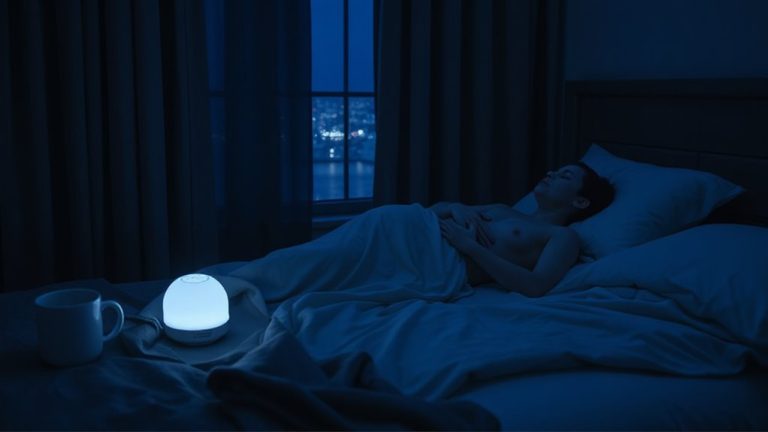
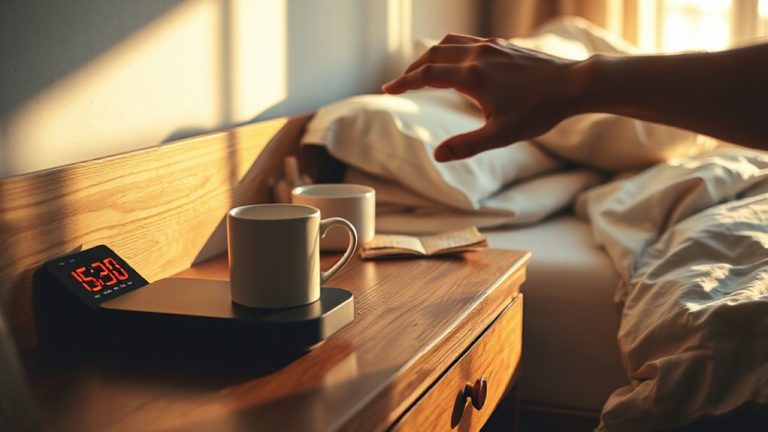
The Role of Light Therapy Beyond Melatonin Supplements in Syncing Circadian Rhythms Naturally
You reset your body’s clock more effectively with morning light therapy than melatonin alone because it directly suppresses sleep hormones and boosts cortisol, aligning your rhythm with natural daylight. Exposure to 10,000 lux bright white light for 15–30 minutes at wake-up strengthens circadian timing without relying on supplements. Use a UV-filtered, FDA-cleared device for safety and consistency. If light isn’t enough, add low-dose melatonin later. Avoid evening light to prevent delays. More details follow on how to use timing to your advantage.
Notable Insights
- Morning light exposure resets the circadian clock more effectively than melatonin by directly influencing the brain’s master pacemaker.
- Natural light upon waking suppresses melatonin and boosts cortisol, promoting alertness and reinforcing daily rhythm alignment.
- Consistent timing of light exposure strengthens circadian entrainment, reducing reliance on supplements for sleep regulation.
- Light therapy acts faster than melatonin in adjusting sleep-wake cycles, especially for jet lag or delayed sleep phase disorder.
- Properly timed morning light avoids the risk of phase delays associated with evening melatonin or light exposure.
Use Morning Light to Reset Your Circadian Rhythm
Why does waking up with sunlight feel so much easier than an alarm in the dark? It’s because morning light supports circadian entrainment, helping your body clock align with the natural day-night cycle. When you expose yourself to sunlight soon after waking, you strengthen natural synchronization, which stabilizes sleep timing and improves daytime alertness. This practice is especially helpful if you struggle with delayed sleep phase or jet lag. Even on cloudy days, outdoor light provides enough intensity to signal your brain. Consistency matters-aim for 15 to 30 minutes daily, ideally within an hour of waking. Light boxes can help if sunlight isn’t available, offering timed, consistent exposure. Look for devices with 10,000 lux output, FDA-cleared status, and a warranty of at least one year. Used correctly, morning light is a reliable, non-invasive tool supporting long-term sleep health. For those seeking effective options, consider exploring the top light therapy lamps based on expert recommendations.
How Light Suppresses Melatonin and Boosts Alertness
You feel more awake the moment sunlight hits your eyes, and that’s no accident-light directly influences key brain functions tied to sleep and alertness. Specialized cells in your eyes detect blue light, especially in the morning, and send signals to your brain’s master clock. This suppresses melatonin production fast, helping you feel alert. At the same time, exposure to bright light triggers a cortisol spike, part of your natural wake-up process. This hormone sharpens focus and energy, aligning with your circadian rhythm. Using light-rich environments early in the day supports this system, making it easier to stay awake and fall asleep later. It’s not about eliminating melatonin, but timing it right. Regular light exposure helps maintain this balance, reducing reliance on sleep aids. For those with irregular schedules, consistent light cues offer a practical way to manage sleep health. Incorporating a best sleep therapy light can enhance this daily routine by providing controlled, timed light exposure.
When to Use Light Therapy (And When to Avoid It)
How can you tell when light therapy might help-or when it’s better to wait? You’re likely a good candidate if you struggle with morning alertness or seasonal sleep shifts. But timing matters: morning use aligns your rhythm, while evening exposure can delay sleep onset. If you have high blue light sensitivity, shorter sessions or filtered light may help. Avoid light therapy if you’re already overstimulated or have certain eye conditions unless approved by a doctor.
| Use Light Therapy When: | Avoid Light Therapy When: |
|---|---|
| Feeling sluggish in the AM | Experiencing insomnia from evening exposure |
| Adjusting to a new time zone | Sensitive to blue light without protection |
| Treating seasonal patterns | Using photosensitizing medications |
| Following a consistent sleep schedule | Recovering from eye surgery |
| Needing non-chemical alertness | Already overstimulated or anxious |
Pick a Light Box With 10,000 Lux and White Light
A light box delivering 10,000 lux of bright white light is the standard for effective daily use, especially if you’ve already considered timing and personal sensitivity from earlier guidance. This level of light intensity guarantees your body gets enough stimulation to reset circadian rhythms without needing extended exposure. Choose a box labeled 10,000 lux-you’ll usually sit about 16 to 24 inches away for 20 to 30 minutes each morning. Models with a broad white spectrum mimic natural sunlight best, supporting alertness and mood without harsh blue peaks. Look for filters that block UV rays to protect your eyes and skin. Well-built units distribute light evenly and stay cool during use. Many come with tilt stands and portable designs for convenience. Test models with at least a 30-day warranty to guarantee comfort and performance. A reliable light box balances strong light intensity with a safe, balanced white spectrum for daily results.
Add Melatonin Only If Light Isn’t Enough
While light therapy often helps reset your internal clock, melatonin might be a useful addition if your sleep schedule still isn’t shifting as needed. Think of melatonin as a backup, not the first step. When used together, light exposure and melatonin can create supplement synergy, enhancing your body’s natural rhythm more effectively than either alone. But success depends heavily on dosage timing-taking melatonin too early or too late can shift your clock in the wrong direction. A low dose, typically 0.5 to 3 mg, taken 1–2 hours before bedtime, usually works best. Always start with the smallest effective dose to limit side effects. Pair this with consistent morning light exposure for improved alignment. If sleep issues continue, consult a healthcare provider to adjust timing or rule out other conditions.
Why Morning Light Works Better Than Supplements
Why do so many people find it easier to wake up feeling alert when they use a light box each morning instead of reaching for a supplement? It’s because morning light directly activates neural pathways that signal your brain to stop producing melatonin and boost alertness. Unlike supplements, which circulate through your bloodstream, light works through your eyes to influence your internal clock instantly. Chronobiology research shows this method aligns your rhythms more naturally, supporting long-term consistency. Your brain responds within minutes, helping regulate sleep timing and mood. Light therapy mimics sunrise, guiding your body using cues it evolved to trust. While melatonin can assist, it doesn’t engage the same biological systems. Using light each morning offers a consistent, evidence-based strategy with no chemical residue. Many devices come with adjustable brightness and timers, making them reliable tools when used properly. Try light first-you might find supplements aren’t even needed.
Avoid These 5 Light Therapy Timing Errors
Timing matters just as much as brightness when using light therapy-get it wrong, and you might delay your progress or worsen sleep issues. You’ll want to avoid evening exposure, as it can suppress melatonin and shift your rhythm later, making it harder to fall asleep. Morning use, ideally within an hour of waking, aligns best with circadian biology. An incorrect duration-either too short or too long-can reduce effectiveness; most people benefit from 20 to 30 minutes, but your needs may vary. Don’t rely solely on device defaults; adjust based on your response. Consistency matters more than perfection. If you’re traveling or adjusting shifts, plan sessions ahead to stay on track. Watch for signs like irritability or insomnia, which suggest poor timing. Trial periods let you test adjustments safely, and some devices offer guidance features to support accurate use.
On a final note
You can reset your circadian rhythm effectively by using morning light therapy, especially with a 10,000-lux white light box. It suppresses melatonin naturally and boosts alertness without supplements. Try light first, consistently at the same time daily, to avoid common timing mistakes. Add melatonin only if needed after a few weeks. This method supports long-term rhythm stability, offering a balanced, evidence-based approach to improving sleep onset and daytime energy.