How to Mix Vintage Pillows With Modern Duvets for Eclectic Charm
Start with a neutral modern duvet in breathable cotton or bamboo, reinforced with double stitching for durability and even fill. Choose vintage pillows from the 1950s or earlier for natural down or kapok fills, checking for intact seams and clean linings. Pair bold 1960s prints with solid duvet tones, layering silk-trimmed accents over brushed fabric. Use varied pillow sizes-euro, queen, standard-for depth and support, aligning firmness with your sleep needs. Stick to a three-color palette, repeating one hue across pillows and duvet for cohesion. Quality blends tradition and function, and the right balance makes all the difference.
Notable Insights
- Choose a neutral modern duvet to balance bold vintage pillows and create a cohesive, adaptable base.
- Pair vintage pillows with solid-colored duvets to prevent visual overload and highlight unique print details.
- Use layered pillow sizes and symmetrical placement for depth while maintaining an organized, curated look.
- Match one dominant color across the duvet and vintage pillows to unify disparate patterns and eras.
- Combine breathable natural fills and covers to ensure comfort, longevity, and proper airflow in mixed ensembles.
Start With a Neutral Modern Duvet
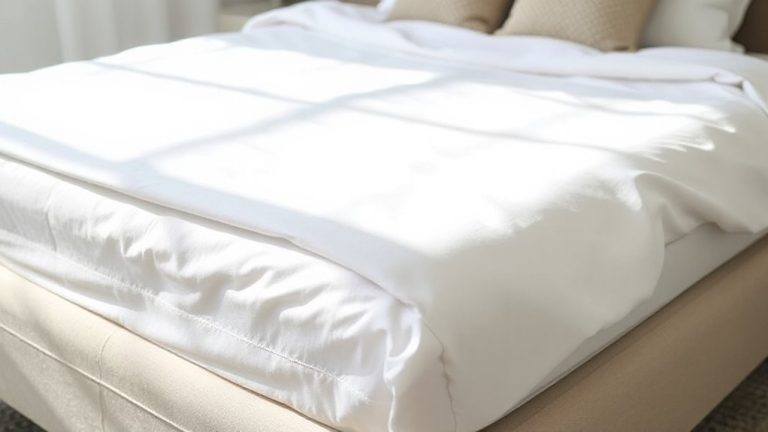
A neutral modern duvet sets the foundation for a balanced, adaptable bedroom aesthetic while supporting restful sleep. You’ll want one made with high fabric integrity, so it withstands nightly use without pilling or thinning over time. Look for reinforced stitching techniques-double or box-stitching-that keep the filling evenly distributed and prevent cold spots. These details matter if you move often during sleep or experience temperature sensitivity. Many quality duvets offer breathable cotton or bamboo covers, helping regulate body heat for those with mild sleep disruptions. Check if the brand provides a trial period or warranty, so you can assess comfort without risk. A well-constructed duvet supports both durability and sleep quality, giving you a reliable base. When fabric integrity and stitching techniques are sound, your sleep environment stays stable, night after night, creating space to thoughtfully add vintage pillows without compromising comfort.
Choose Vintage Pillows by Era and Quality
Think of each vintage pillow as a quiet storyteller, carrying clues about its time through materials and stitching. When choosing by era, consider that mid-century pillows often use synthetic fills, which may not suit sensitive sleepers, while older, pre-1950s versions typically have natural kapok or down-better for breathability and comfort. Check the pillow provenance when possible; knowing its origin helps assess longevity and cleanliness. Material authenticity matters-genuine down labels should specify fill power, and cotton covers should feel soft yet durable. Avoid pillows with stained linings or brittle seams, as these suggest poor storage or allergen buildup. Test firmness gently; older pillows may have compressed fills that offer less support. If you have allergies or sleep issues, prioritize ones with washable covers or ask about restoration. Many vintage sellers offer short trial periods-use them to verify comfort and safety before fully committing.
Pair Prints and Textures Thoughtfully
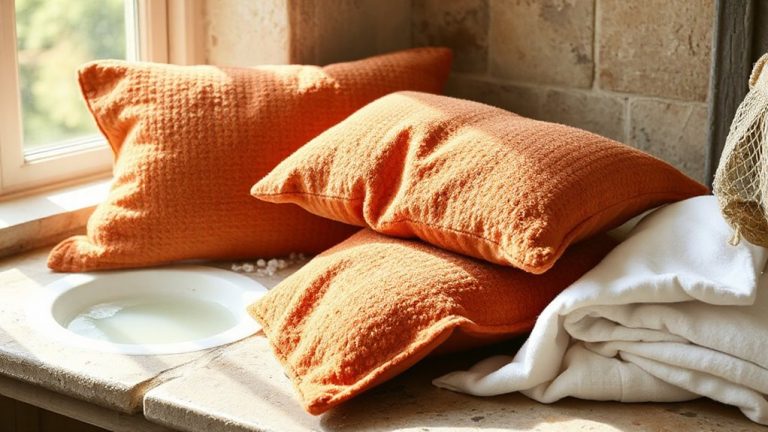
While combining vintage pillows with a modern duvet, how you pair prints and textures can affect both comfort and airflow, so choose with care. Aim for pattern contrast that doesn’t overwhelm-pair a bold 1960s geometric pillow with a soft, solid microfiber duvet to balance visual weight. Fabric harmony matters just as much; a silk-trimmed vintage piece works well with a brushed cotton duvet, blending breathability and softness. Avoid clashing textures like rough burlap next to slick satin unless separated by neutral layers.
| Pillow Texture | Duvet Fabric | Effect on Airflow & Comfort |
|---|---|---|
| Embroidered cotton | Linen blend | Moderate breathability, gentle on skin |
| Velvet (vintage) | Brushed cotton | Lower airflow, cozy in cool rooms |
| Eyelet lace | Microfiber | Minimal breathability, best in dry climates |
Test combinations for a few nights to assess sleep comfort and adjust as needed.
Vary Pillow Sizes for Depth
Layering different pillow sizes brings dimension to your bed without compromising sleep quality. Pillow layering with a mix of standard, queen, and euro shams adds depth while supporting your preferred sleeping position. Larger pillows at the back provide structure, while smaller ones in front allow easy access for nightly use. You can maintain accent symmetry by pairing identical vintage pillows on either side, balancing visual weight without sacrificing comfort. Choose fill materials like down-alternative or memory foam based on firmness needs, and check removable covers for easy cleaning. Testing different arrangements helps identify what supports both style and rest. Many brands offer trial periods, so you can assess comfort over time. Proper sizing guarantees the look stays cohesive and functional. This approach blends aesthetics and ergonomics, letting your sleep environment work for you. For optimal support and fluffiness, consider investing in high-quality Best Euro Pillow Inserts that hold their shape over time.
Unify With a Shared Color Story
A cohesive color story ties vintage pillows and modern duvets together, turning mismatched pieces into a balanced sleep space. You’ll achieve color harmony by selecting hues that appear in both the duvet and at least one element of each pillow’s design. This link creates visual flow, even when patterns vary widely. For pattern cohesion, repeat a dominant or accent shade across different textures and scales-say, a soft sage from your duvet appearing in a floral vintage pillow. Stick to three core colors to avoid clutter. Test your palette in natural and evening light to guarantee it supports relaxation. A unified scheme doesn’t require perfect matching; slight variations in tone add depth. This subtle coordination promotes calm, which may help ease restlessness. When colors align, the bed feels intentional, making it easier to unwind. Consistency in color harmony supports a restful environment, beneficial if you’re sensitive to visual noise.
On a final note
Choose a neutral modern duvet to anchor your bed, then layer in vintage pillows with care. Mix eras and textures thoughtfully, using size variation and shared colors to create balance. Prioritize quality fabrics for durability and comfort. Test pillow firmness and materials to support your sleep preferences. A cohesive blend enhances both style and rest, letting your bedding reflect personality while staying functional.