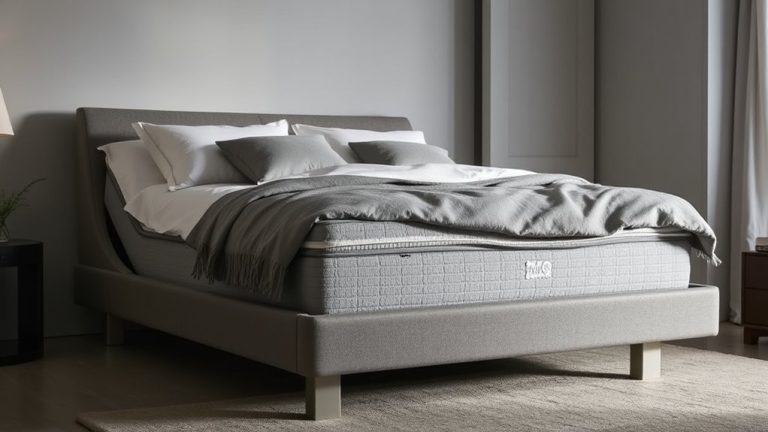
Layering Multiple Thin Covers Instead of One Heavy Blanket to Permit Microadjustments Without Disturbance
You might wake too warm or stiff with just one heavy blanket, but layering thin covers lets you adjust quietly without fully waking. Use breathable cotton or bamboo as a base to wick moisture, then add flannel or fleece for warmth you can shed if you overheat. Wool or quilted layers offer insulation you can remove as needed. Each layer gives you more control over temperature and pressure, especially during shifting sleep cycles or seasonal changes. Machine-washable fabrics and flexible setups make switching simple-especially with options that come with trial periods for testing comfort. Better balance starts at the base, and your ideal mix is easier to find than you think.
Notable Insights
- Layering thin covers allows microadjustments to temperature without fully disrupting sleep.
- Multiple lightweight layers provide customizable warmth, preventing overheating or chills.
- Using breathable fabrics like bamboo and cotton enhances moisture wicking and comfort.
- Easy removal or addition of layers supports adaptation to seasonal and circadian shifts.
- A 4-layer system with washable, hypoallergenic materials ensures durability and hygiene.
Why One Heavy Blanket Isn’t Enough
While a single heavy blanket might seem like a simple solution for better sleep, it often falls short when it comes to adapting to changing conditions throughout the night or across seasons. You can’t easily adjust its heat retention when you’re too warm or too cool, leading to restless shifts. A heavy blanket also limits control over weight distribution, which may create pressure points instead of the even, gentle pressure many find soothing. Layering thinner covers lets you respond quickly-adding or removing one without fully disrupting your setup. This approach supports consistent comfort, especially if you experience temperature fluctuations due to sleep cycles or health factors. Lightweight layers combine warmth and breathability, balancing performance where a single blanket can’t. Most quality sleep systems with modular covers include trial periods, so you can test combinations risk-free. For those seeking plush warmth, the best thick quilts for cozy comfort offer a solid starting layer in a smart bedding system.
How Bed Layering Controls Your Sleep Temperature
Because your body temperature shifts naturally throughout the night, having the ability to make small adjustments to your bedding can keep you comfortable longer. As you move through sleep cycles, your body heat rises and falls-especially during REM and deep sleep phases. Layering lets you respond without fully waking. If you’re too warm, simply kick off the top layer; if you’re cool, pull one back on. Unlike a single heavy blanket, which traps heat unevenly, multiple lighter covers let you fine-tune warmth step by step. This prevents overheating or chills that disrupt rest. The system works with your body’s natural rhythms, supporting more stable core temperatures across the night. It’s especially helpful if you experience night sweats or fluctuating comfort needs. With responsive layering, you stay aligned with your sleep cycles, minimizing disturbances and supporting uninterrupted, restorative rest.
Best Fabrics for Each Layer (And When to Use Them)
When choosing fabrics for each layer of your bedding, it’s helpful to match material properties with your body’s temperature patterns and sleep environment. Start with a moisture wicking bamboo sheet-it draws sweat away and keeps your skin dry, ideal if you tend to overheat. For mid-layers, breathable cotton offers softness and airflow, balancing warmth without trapping excess heat. Its natural fibers let your skin breathe, which can reduce discomfort during temperature shifts at night. If you live in a humid climate or experience night sweats, bamboo’s antimicrobial traits add extra benefit. In cooler rooms, pair breathable cotton with a slightly heavier top layer, but keep the outermost fabric lightweight for easy adjustments. Both materials are machine washable and hold up well over time, with many brands offering trial periods. Test each fabric in your usual sleep setting to see how your body responds. For those seeking enhanced comfort and temperature regulation, consider the best bamboo sheets based on performance and user ratings.
Build a 4-Layer Bed in Minutes
Four layers are all you need to create a flexible, responsive bed setup that adapts to your sleep needs. Start with a fitted sheet, add a lightweight blanket, a mid-weight throw, and finish with a breathable top layer. This system supports microadjustments without full disruption. Bed frame compatibility guarantees smooth tucking and prevents slipping, especially with raised or slatted bases. Your pillow arrangement should remain consistent to maintain neck alignment, regardless of layer changes. For those seeking optimal warmth and comfort, choosing the best blankets can significantly enhance each layer’s performance. Below is a quick guide:
| Layer | Material Suggestion | Purpose |
|---|---|---|
| 1st | Cotton or linen | Smooth base, wicks moisture |
| 2nd | Fleece or flannel | Light warmth, easy removal |
| 3rd | Wool or quilted cotton | Adjustable insulation |
| 4th | Bamboo or cotton blend | Breathable, hypoallergenic finish |
Adjust layers based on comfort, not habit.
Swap Layers for Seasons and Night Shifts
How do your sleep needs change when the seasons shift or your work schedule flips? During seasonal changes, you might find yourself too hot or too cold with the same bedding setup. Layering lets you swap out individual covers-like switching a flannel top sheet in winter for a lightweight cotton one in summer. For shift work adaptation, when you’re sleeping during daylight hours or adjusting to night shifts, your thermal needs can reverse. Lightweight, breathable layers give you control without overhauling your entire bed. Choose moisture-wicking fabrics for warmer months and insulating, low-tog throws for cooler periods. Most quality layers are machine-washable and designed for frequent changes. Try different combinations over a week to see what supports consistent rest. Some brands even offer 30-night trials, so testing is risk-free. Adjust gradually, monitor comfort, and let your body guide the choices.
On a final note
You can adjust your sleep warmth more precisely by layering light covers than relying on one heavy blanket. Multiple layers let you add or remove fabric as temperatures shift, helping maintain comfort through the night. Choose breathable materials like cotton or moisture-wicking blends for better airflow and temperature control. Many brands offer trial periods, so test options to see what suits your sleep habits. Small changes can improve rest without drastic measures.