Improving Diaphragmatic Breathing Capacity During Sleep to Relieve Upper Trapezius Guarding
You’re likely overusing neck and shoulder muscles to breathe at night, which fuels morning trapezius tension. Poor sleep posture or nasal congestion can worsen this by limiting diaphragm movement. Try side or back sleeping with proper support to align your spine and ease breathing. Practice slow nasal breathing during the day to train your diaphragm. Using a humidifier or nasal strip may also reduce strain. Devices like CPAP or positional aids improve airflow and decrease muscle guarding-many come with a 30-night trial, no cost, full refund if it’s not right for you, so you can test what works.
Notable Insights
- Strengthen diaphragmatic function to reduce overuse of neck and shoulder muscles during sleep.
- Use CPAP or positional therapy to support natural breathing and decrease upper trapezius guarding.
- Sleep on your back with knees elevated to optimize diaphragm movement and spinal alignment.
- Practice daily diaphragmatic breathing exercises to condition the primary respiratory muscle.
- Treat nasal congestion with humidifiers or nasal strips to promote nasal breathing and reduce muscle strain.
Why Your Sleep Breathing Causes Neck and Shoulder Pain
Ever wonder why you wake up with tight shoulders or a stiff neck? You might be relying too much on neck and shoulder muscles to breathe while you sleep, especially if diaphragmatic function is weak. When this happens, muscle fatigue sets in overnight, leading to chronic tension and discomfort. Conditions like sleep apnea can worsen this pattern, forcing your body to use accessory muscles just to draw breath. Over time, the upper trapezius and scalene muscles stay overly active, guarding against perceived weakness. This guarding limits restful recovery and may reduce sleep quality. Using sleep aids such as positional therapy devices or CPAP machines can ease breathing demands, letting your diaphragm work more efficiently. These tools are built to support airflow and reduce strain, often coming with adjustable settings and trial periods. Check warranty options and user reviews to compare performance before deciding. For those using CPAP therapy, choosing the right mask can make a significant difference in comfort and effectiveness, especially if dry mouth is a concern, with the best CPAP masks for dry mouth offering solutions that maintain humidity and improve seal integrity.
Are You Breathing Wrong While You Sleep?
Could your breathing pattern at night be working against you? You might not realize it, but poor sleep posture often disrupts natural diaphragmatic movement, leading to inefficient breathing. When your spine isn’t aligned-whether you’re on your back, side, or stomach-your lungs can’t expand fully, forcing your chest and shoulders to take over. This shallow pattern keeps your nervous system on high alert, reducing restorative sleep. Over time, this stress response may worsen muscle tension without you noticing. Adjusting your sleep posture with supportive pillows or adjustable beds can improve airflow and signal safety to your nervous system. Some sleep aids, like positional therapy devices, offer trial periods and warranties, letting you test what works. Paying attention to how your body responds over a few nights helps you make informed choices-without guesswork-about what supports healthier breathing while you sleep. Wearing orange light-blocking glasses in the evening may also support better sleep onset by enhancing melatonin production.
How Shallow Sleep Breathing Tightens Your Neck
Shallow breathing during sleep doesn’t just limit oxygen flow-it also shifts the work of breathing to muscles not meant for long-term use, especially in your neck and upper chest. When nasal congestion blocks easy airflow, you’re more likely to mouth-breathe and rely on neck muscles, leading to muscle fatigue by morning. Over time, this strain keeps your upper trapezius tense, even at rest.
| Cause | Effect |
|---|---|
| Nasal congestion | Forces mouth-breathing and upper chest reliance |
| Shallow breaths | Increase neck muscle use during sleep |
| Prolonged strain | Leads to muscle fatigue and tightness |
You might not notice it nightly, but recurring tightness is a sign your breathing pattern needs attention. Simple interventions like nasal strips or humidifiers can reduce congestion. Using a best humidifier for snoring can significantly improve air moisture levels, supporting clearer nasal passages and reducing reliance on neck muscles during sleep. Watch how your body responds-trial adjustments and track changes over a few weeks.
Best Sleep Positions for Diaphragmatic Breathing
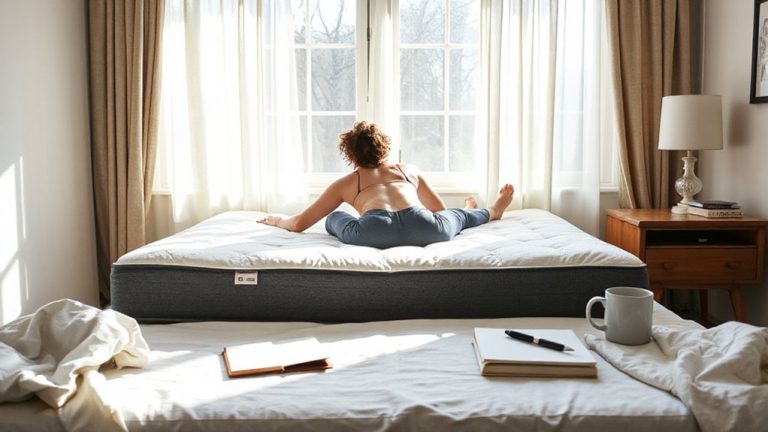
Why do some sleep positions help you breathe more deeply than others? Because they support better sleep posture and natural rib alignment, allowing your diaphragm to move freely. If you sleep on your back with a pillow under your knees, you keep your spine neutral, giving your ribs room to expand evenly. Side sleeping works too-if your spine stays straight and you use a supportive pillow under your head, your rib cage won’t twist, improving breath depth. Avoid stomach sleeping; it often forces your neck to turn and compresses your ribs, limiting diaphragmatic movement. A firm mattress helps maintain alignment, while memory foam can cradle pressure points without sagging. Try each position for a few nights and note how you feel in the morning. Good sleep posture isn’t one-size-fits-all, but proper rib alignment is always key.
Daytime Breathing Drills for Better Sleep
How often do you pause during the day to check in with your breath? You can strengthen nighttime diaphragmatic breathing by practicing simple drills when awake. Try placing one hand on your chest and the other on your abdomen, breathing so only the stomach rises-this promotes proper diaphragm engagement. Aim for slow, deep inhalations through the nose, letting the diaphragm fully descend, then exhale steadily through pursed lips. This builds respiratory pacing, training your body to maintain rhythm even during sleep. Practice for five minutes, two to three times daily-consistent timing improves effectiveness. Over time, this conditioning supports smoother airflow, potentially reducing the need for external sleep aids. Some wearables offer biofeedback to monitor progress, often backed by 30-day trials. Though results vary, early users report feeling calmer and sleeping more soundly. Consider these drills a low-risk way to address mild breathing irregularities linked to muscle tension.
Evening Habits That Relax Neck Muscles Naturally
While tension in your neck can quietly disrupt sleep quality, simple evening habits may help ease tight muscles without relying on devices or supplements. Taking a warm shower before bed relaxes stiff tissues-heat boosts blood flow and soothes the upper trapezius, reducing the guarding that can restrict diaphragmatic movement. Spend 10 to 15 minutes in warm water, letting the stream target your neck and shoulders. Follow it with gentle stretches, like chin tucks or neck side bends, to release residual tension. Sipping caffeine-free herbal teas, such as chamomile or passionflower, may also support relaxation. These teas don’t directly loosen muscles but can ease mental tension linked to physical tightness. Combined, warm showers and calming herbal teas create a routine that supports natural muscle relaxation. Consistency matters-repeating these habits signals your body it’s time to wind down, potentially improving breathing mechanics through the night.
Breath-Training Tools to Use Overnight
If you’re looking to support deeper, more efficient breathing while you sleep, breath-training tools designed for overnight use can offer structured guidance without disrupting rest. Devices using respiratory biofeedback help you maintain diaphragmatic patterns by gently monitoring breath rate and providing subtle cues. Nasal dilators can also improve airflow, reducing reliance on mouth breathing. Below are common overnight tools with key features to evaluate:
| Tool Type | Features and Considerations |
|---|---|
| Respiratory biofeedback monitors | Track breathing patterns, offer real-time alerts, require chest strap or sensor, compatible with apps |
| Nasal dilators | Fit inside nostrils or across bridge, reduce snoring, adjustable fit, disposable or reusable |
| Wearable breath trainers | Promote resistance training, lightweight, may take time to adjust, use during sleep or rest |
| Inflatable pillows with breath cues | Pair with apps, provide gentle vibration prompts, machine-washable covers, 30-night trial available |
On a final note
You’re more rested when your breathing supports muscle relaxation through the night. Diaphragmatic breathing reduces upper trapezius strain, especially in side or back sleep positions. Simple daytime drills and evening wind-down routines can make a difference over time. Breath-training tools may help, but start with what’s comfortable and adjustable. Try methods for at least two weeks to judge effectiveness. Look for products with trial periods so you can test without risk.