Progressive Muscle Relaxation for Jaw Pain & Bruxism: 5-Step Routine
You can reduce nocturnal bruxism and jaw pain by practicing progressive muscle relaxation (PMR) before bed. Tense your jaw gently for 5 seconds, then release, focusing on the shift from tightness to calm. Repeat 3–5 times, pairing each cycle with slow breaths. Include neck and facial muscles to ease tension linked to grinding. Do this daily in a quiet spot, ideally 15–30 minutes before sleep. With consistent practice, you may notice less morning discomfort and fewer grinding episodes over time-there’s more to explore about fine-tuning the method for your routine.
Notable Insights
- Practice progressive muscle relaxation (PMR) 15–30 minutes before bed in a quiet, consistent location to signal your body it’s time to wind down.
- Focus on jaw and neck muscles by gently clenching the jaw, then releasing to neutral, repeating 3–5 times with slow, steady breaths.
- Avoid over-tightening muscles during PMR to prevent worsening jaw tension; emphasize gradual release and relaxation.
- Combine PMR with a warm compress on the jaw or a night guard if pain persists, enhancing muscle relief and dental protection.
- Perform short 5–10 minute PMR sessions nightly, tracking symptoms weekly to monitor reductions in grinding and morning jaw pain.
What Is Nocturnal Bruxism and How PMR Stops Teeth Grinding

While you’re asleep, your jaw muscles may tighten without you realizing it, leading to nocturnal bruxism-a condition where you grind or clench your teeth during sleep. The *causes of bruxism* include stress, misaligned teeth, and abnormal *brainwave patterns* during sleep shifts. These patterns can trigger involuntary muscle activity, especially in the jaw. Over time, this habit may lead to worn enamel, jaw pain, or headaches. You might not know you have it unless someone hears the grinding or you notice morning discomfort. Though mouthguards and dental appliances offer protection, they don’t address muscle tension at its source. Progressive muscle relaxation (PMR) helps by reducing overall neuromuscular arousal before bed. By systematically tensing and relaxing muscle groups, PMR promotes calmer *brainwave patterns*, lowering the likelihood of nighttime clenching. It’s non-invasive, requires no equipment, and can be paired with other sleep aids. Trying PMR consistently for a few weeks may help you assess its effectiveness alongside other approaches.
How to Do Progressive Muscle Relaxation Before Bed

How do you begin unwinding your muscles in a way that truly sets the stage for restful sleep? Start by lying down in a quiet space, turning off screens, and settling into a comfortable position. Begin with slow breathing techniques-inhale through your nose for four counts, hold for four, then exhale through your mouth. This calms your nervous system and prepares your body for relaxation. Pair this with mindfulness meditation by focusing on the present moment, noticing tension without judgment. Gradually tense and release muscle groups from your feet upward, spending 15–20 seconds on each. Use controlled breaths during each contraction and release. Doing this nightly helps signal your brain that it’s time to rest. It doesn’t require tools or apps, just consistency. Over time, this routine may reduce nighttime grinding and improve sleep quality.
Jaw and Neck PMR Exercises to Stop Grinding
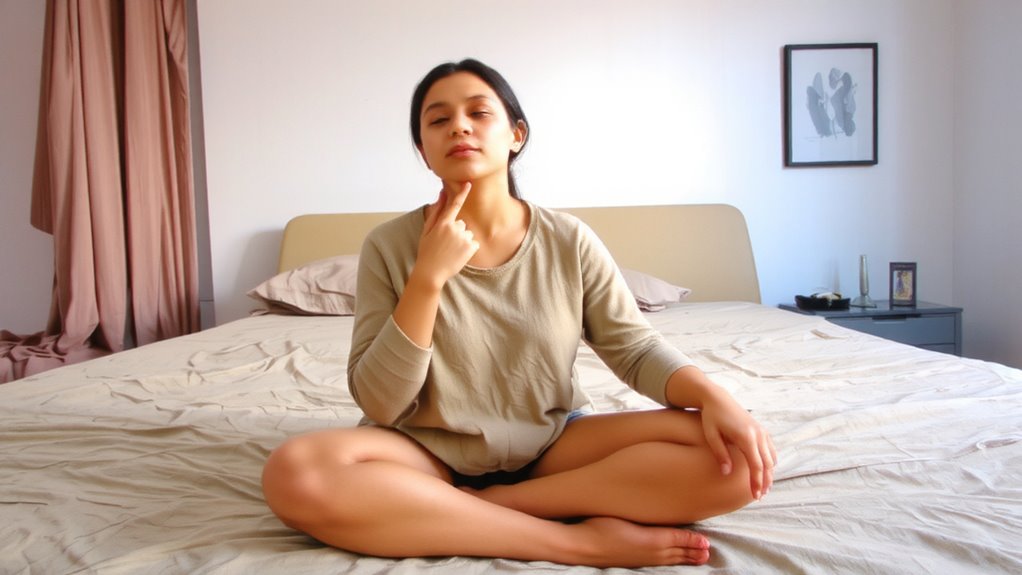
Since your jaw and neck muscles often carry tension that leads to nighttime grinding, focusing on these areas during progressive muscle relaxation can make a meaningful difference in reducing bruxism. Start by gently clenching your jaw-notice the tension-then release, allowing your teeth to separate and your jaw alignment to return to neutral. Repeat slowly, avoiding over-tightening. For your neck, tilt your head forward slightly, creating tension along the back, then let go, relaxing into natural neck posture. Perform each cycle 3–5 times, breathing steadily. These exercises help reduce muscular strain linked to grinding, supporting better jaw function and comfort. You’ll likely notice less morning soreness over time. Consistent practice conditions your body to let go of tension before sleep, which may lower bruxism frequency. This method requires no tools, has no side effects, and can complement other treatments like mouthguards or physical therapy. A well-fitted night guard can further protect your teeth during sleep, and considering a custom night guard may offer superior comfort and effectiveness.
Best Time and Place to Practice PMR for Sleep
You’ve already learned how targeting your jaw and neck with PMR can ease tension linked to bruxism, and now it’s time to think about when and where to make this practice work best in your nightly routine. The ideal timing is 15 to 30 minutes before bed, giving your body time to shift into rest. Practicing PMR too early might disconnect the relaxation from sleep onset, while doing it in bed too late could keep you awake. Choose a quiet environment free from distractions like phones, bright lights, or background noise. This consistency helps signal to your brain that it’s time to wind down. Use the same spot each night-a comfortable chair or your bed-to build a mental association with relaxation. Over time, this routine supports deeper muscle release and may reduce nighttime jaw clenching. The key is regular, mindful practice in a space that supports calm. A supportive sleep surface enhances comfort during relaxation techniques, and choosing the right best single beds can make a difference in your nightly routine.
Why PMR Might Not Work (And How to Fix It)
Why isn’t PMR easing your jaw tension, even after several tries? You might be facing an expectation mismatch-relief often takes consistent practice, not instant results. If you’re clenching too hard during exercises, muscle overexertion could worsen jaw tightness instead of reducing it. Remember, PMR works best with gentle, controlled contractions, not force. Try shortening your sessions to 5–10 minutes and focus only on the jaw and facial muscles at first. Practice in a quiet, distraction-free space right before bed to link the routine with sleep. If discomfort persists, consider combining PMR with a warm compress or consult a dentist about a night guard. Tracking symptoms weekly helps assess real progress and guides smarter choices about sleep aids or professional support. A well-fitted best night guards can significantly reduce tooth damage and muscle strain during sleep.
On a final note
You can try progressive muscle relaxation (PMR) tonight to ease jaw tension and reduce nighttime teeth grinding. It’s simple, drug-free, and works best when practiced consistently before bed. If PMR alone doesn’t help, consider combining it with a mouthguard or stress management strategies. Give it a few weeks to assess results, and consult a healthcare provider if jaw pain or sleep disruption continues.