Using Progressive Relaxation Techniques For Reducing Anxiety Before Bedtime
You can reduce bedtime anxiety by using progressive relaxation-tensing and gently releasing muscles from your toes to your forehead. This five-minute practice calms your nervous system and pairs well with deep breathing, like box breathing, to deepen relaxation. Avoid over-tensing or rushing through steps to keep it effective. Doing it nightly builds a strong sleep habit. With consistent use, many notice better sleep without relying on sleep aids, and there’s more to discover about fine-tuning the method for your routine.
Notable Insights
- Progressive relaxation reduces bedtime anxiety by systematically tensing and releasing muscle groups from toes to forehead.
- Practicing for five minutes before bed signals safety to the nervous system, easing physical and mental tension.
- Combining muscle relaxation with deep breathing slows heart rate and enhances calmness.
- Avoid over-tensing or rushing; hold each contraction 5–7 seconds and fully release before progressing.
- Regular nightly practice builds a strong sleep cue and decreases reliance on medication over time.
How Progressive Relaxation Quiets Anxiety and Prepares You for Sleep
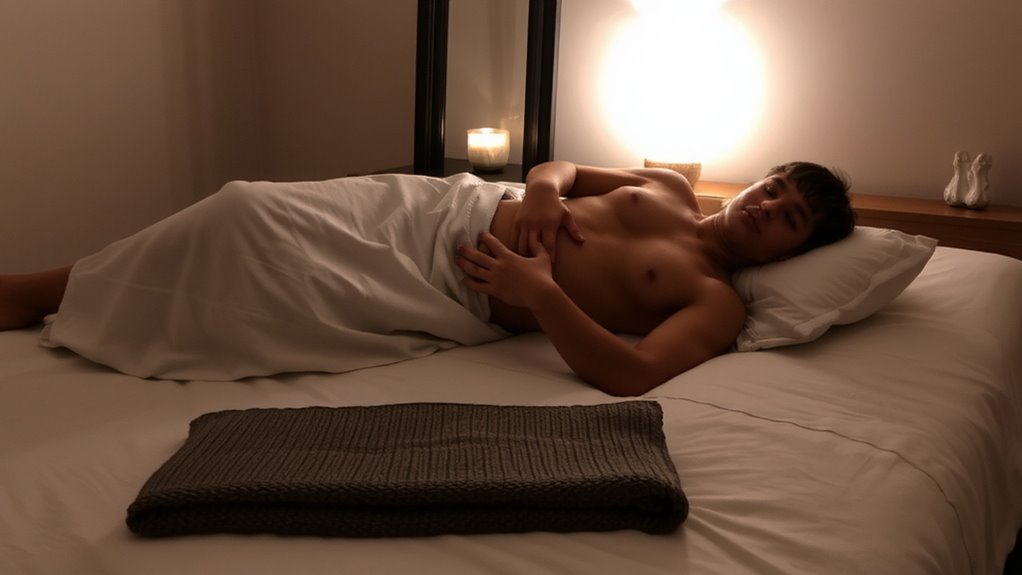
Why does it feel so hard to quiet your mind at bedtime? Because anxiety keeps your body alert, often showing up as muscle tension and racing thoughts. Progressive relaxation helps by guiding you to notice and release tightness in specific muscle groups, calming both body and mind. When you slowly tense and relax muscles-from toes to forehead-you signal safety to your nervous system. This shift makes it easier to use mental imagery, like picturing a quiet beach or gentle waves, to further ease anxiety. These techniques don’t require pills or devices, just practice. They’re effective for people dealing with stress-related sleep trouble and can reduce reliance on sleep aids. While results vary, most notice improvements within a few nights. No warranty covers inner calm, but consistent use builds skill. Consider trying it before turning to stronger interventions.
Practice Bedtime Muscle Relaxation in 5 Minutes
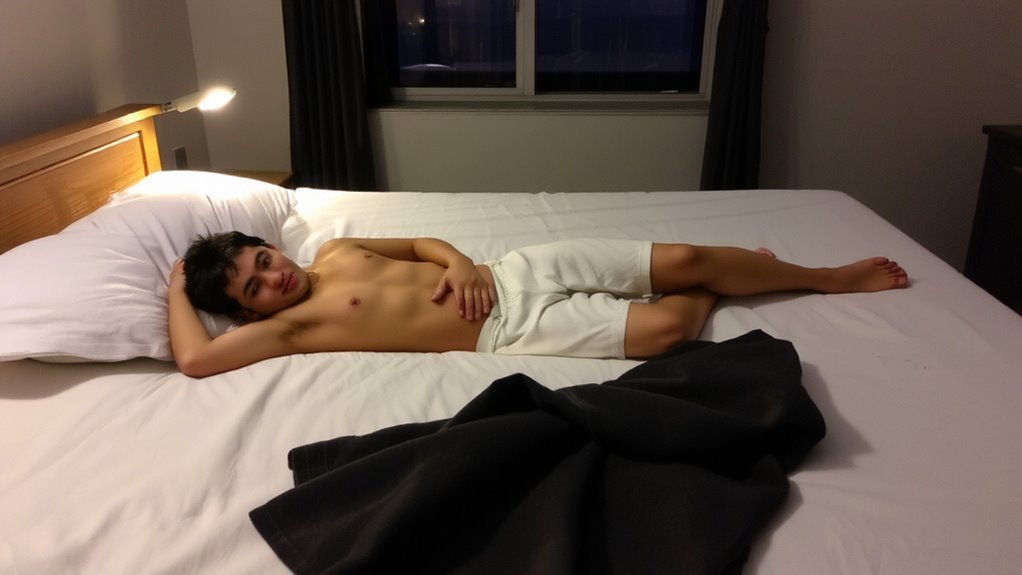
While your body unwinds, your mind often follows, so taking just five minutes before bed to practice muscle relaxation can make a noticeable difference in how easily you drift off. Start by lying down in your sleep environment, allowing your body to settle. Tense each muscle group-from your feet to your face-for five seconds, then release. Focus on the contrast between tension and relaxation. If helpful, pair this with guided visualization, imagining a wave of calm moving through your body. This brief practice fits easily into most routines and supports better sleep onset without reliance on sleep aids. No equipment or cost is involved, and regular use may improve sleep quality over time. Consider trying it for a week to assess its effect. It’s a low-risk method with potential benefits, especially if anxiety tends to delay your sleep.
Add Deep Breathing to Boost Relaxation
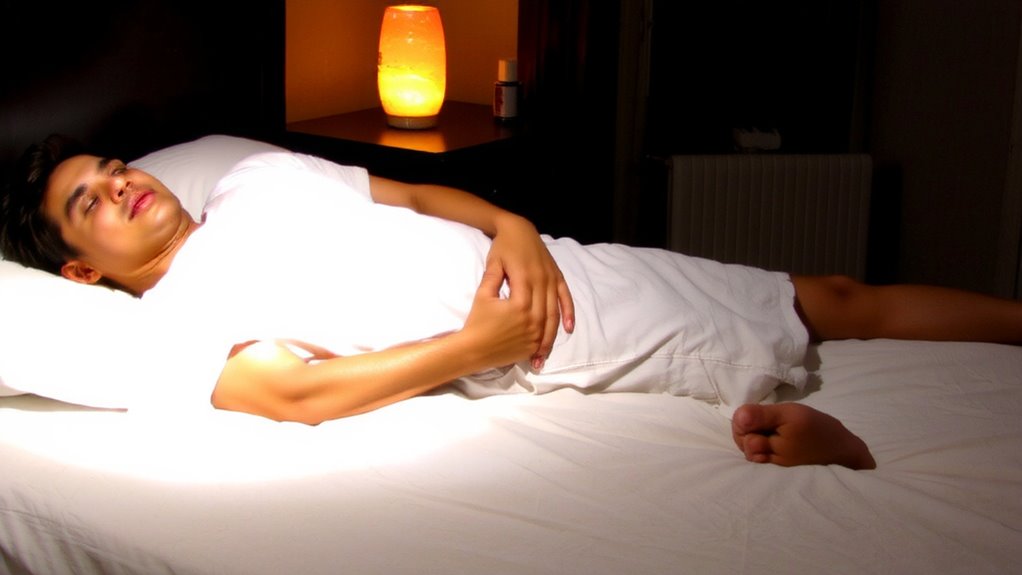
You can build on the muscle relaxation technique by adding deep breathing, which works with your body’s natural rhythm to calm your nervous system. Try diaphragmatic breathing: inhale slowly through your nose, letting your belly rise, then exhale fully through your mouth. This engages the diaphragm and signals safety to your brain. For more structure, use box breathing-inhale for four counts, hold for four, exhale for four, and pause for four before repeating. Both methods slow your heart rate and reduce physical tension. You don’t need special tools, just a quiet space and a few minutes. Practice nightly to improve consistency. Over time, these breathing patterns may help decrease nighttime anxiety and support deeper sleep. They’re safe to try alongside other non-medical sleep strategies and can complement treatments if you’re exploring options for sleep disorders. With regular use, you’ll likely notice better control over stress responses before bed.
Fix Common Progressive Relaxation Mistakes
How often do you rush through your relaxation routine, only to find your mind still racing at bedtime? You’re not alone-many people unknowingly make mistakes that reduce progressive relaxation’s effectiveness. One common issue is muscle over tensing; remember, you’re aiming for gentle contraction, not strain. Overdoing it can increase tension instead of relieving it. Another pitfall is rushing sequences-you’ll get better results by moving slowly, holding each step for 5–7 seconds, and fully releasing before moving on. Skipping or hurrying steps disrupts focus and weakens the calming effect. Try guiding yourself with a calm, recorded script if timing feels off. You don’t need special tools, though some find wearable devices with biofeedback helpful for monitoring tension levels. Most have trial periods, so test features risk-free. With slight adjustments, your routine can become more reliable for managing nighttime anxiety.
Make Progressive Relaxation a Nightly Sleep Habit
Often, building a consistent bedtime routine makes it easier to unwind and prepare for restful sleep. When you practice progressive relaxation nightly, you tap into the consistency benefits that support deeper rest and reduced anxiety over time. This technique works best with regular use, as habit formation helps your body recognize it as a sleep cue. Start by setting a fixed time each night to begin your relaxation sequence-this strengthens your internal rhythm. Pairing progressive muscle relaxation with other calming habits, like dimming lights or avoiding screens, improves results. Even if progress feels slow at first, sticking with it increases effectiveness. Think of it like training a muscle: repetition builds strength. Over weeks, your mind and body learn to shift into relaxation mode more smoothly. There’s no special equipment or cost involved, just your time and willingness to try. With patience, this simple practice can become a reliable part of your sleep routine. Selecting the right Best Sleep Support Systems can further enhance your bedtime environment and complement relaxation techniques.
On a final note
You can try progressive relaxation nightly to ease anxiety and improve sleep onset. This method works by tensing and releasing muscle groups, helping your body recognize calm. Pair it with deep breathing for better results. It’s free, has no side effects, and requires just five minutes. If sleep problems continue, consider speaking with a doctor to review other options, including therapy or sleep aids, based on your needs.