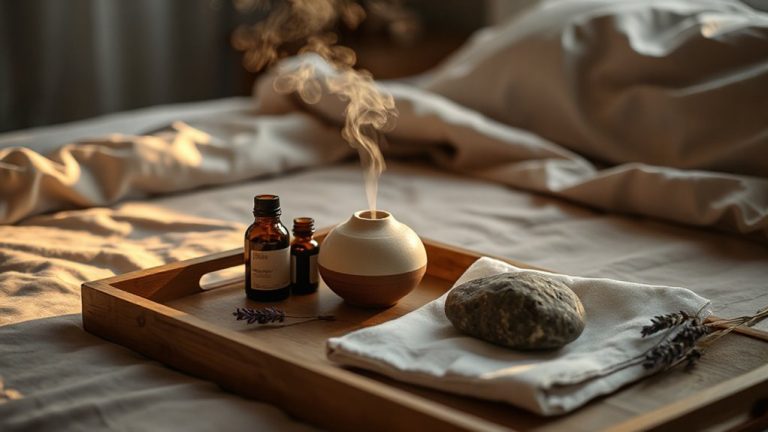
How Sandalwood Oil Can Serve as a Relaxation Aid in Pre-sleep Routines to Improve Overall Sleeping Patterns
You can use sandalwood oil in your nightly routine to help calm your mind and ease tension before bed. Its warm, woody scent gently supports relaxation without causing drowsiness. When diffused for 30–60 minutes at night, it may help quiet overactive thoughts and steady your breathing. While not a fix for sleep disorders, it’s a low-risk option worth trying. Consistent use alongside other healthy habits often works best-there’s more to take into account if you’re exploring how natural aids fit into your sleep wellness plan.
Notable Insights
- Sandalwood oil’s calming aroma helps relax the mind, making it ideal for inclusion in pre-sleep routines.
- Inhaling sandalwood oil may promote slower breathing and reduced heart rate, supporting the body’s transition to rest.
- Its traditional use in meditation and aromatherapy enhances mental relaxation, aiding in sleep preparation.
- Diffusing sandalwood oil 30–60 minutes before bed can signal consistent wind-down cues to improve sleep patterns.
- When used regularly and safely, sandalwood oil offers a non-sedative, low-risk method to support better sleep quality.
Why Sandalwood Oil Helps You Sleep Naturally
What makes sandalwood oil stand out among natural sleep aids? Its deep cultural significance and long historical use set it apart. For centuries, you’ve had access to this oil in traditional medicine systems across Asia, where it’s been valued for calming the mind. People used it in aromatherapy, meditation, and pre-sleep rituals, not because of modern trends, but because experience showed results. The oil’s warm, woody scent naturally supports relaxation without sedation. You can use it in diffusers, apply diluted forms to your skin, or add it to bedtime routines. Unlike synthetic aids, it doesn’t force sleep-it helps ease the shift. There’s no strong warranty or clinical trial backing every bottle, but its consistent role across cultures suggests reliability. You’re not just buying an oil; you’re tapping into generations of practice. Consider it a gentle, time-tested option when choosing natural sleep support. For best results, pair it with other trusted essential oil scents known for promoting relaxation.
What Science Says About Sandalwood Oil and Sleep
While research on sandalwood oil and sleep is still developing, early studies suggest it may support relaxation through its influence on the nervous system. You’ll find that some sleep studies have linked its aroma to calmer brain activity, especially when inhaled before bedtime. These findings show a potential shift in patterns linked to stress and alertness, making it easier for your body to prepare for rest. Though not a treatment for sleep disorders, sandalwood oil may serve as a gentle aid if you’re looking for natural options. It doesn’t replace medical sleep aids but offers a low-risk addition to pre-sleep routines. Most trials use diffused oil over 30 to 60 minutes, with few reported side effects. If you’re considering it, look for pure, steam-distilled oil and check for product testing. Results may vary, but brain activity changes in early trials are worth noting. For a broader perspective, consider exploring the best aromatherapy picks for better sleep.
How Sandalwood Oil Calms Your Mind and Body
Sandalwood oil works by interacting with your nervous system, helping to shift your mind and body into a more relaxed state. You’ll notice its subtle, woody aroma promotes stress reduction, easing tension that can interfere with sleep. This natural oil supports mood enhancement by calming overactive thoughts, making it easier to unwind at night. When inhaled, its compounds help regulate breath and heart rate, signaling your body it’s time to rest. Unlike stronger sedatives, sandalwood offers a gentle effect, ideal for those avoiding drowsiness or dependency. It’s especially helpful if stress or mild anxiety affects your sleep patterns. Used consistently, it can become a reliable part of your evening routine. While not a cure for sleep disorders, its calming properties provide a non-invasive option worth trying. Always patch-test first, and choose pure, therapeutic-grade oil for best results. Among the best essential oils for sleep, sandalwood stands out for its proven ability to support restful nights.
How to Use Sandalwood Oil for Better Sleep
How should you use sandalwood oil for better sleep? Start with diffusion timing-run your diffuser 30 to 60 minutes before bed so the aroma fills your room just as you’re settling in. This gradual exposure helps signal to your body that it’s time to wind down. For more direct results, try pillow application: place one drop of diluted sandalwood oil on your pillowcase, away from your face, to enjoy a steady, light scent throughout the night. Both methods support relaxation without overwhelming your senses. You can also mix a few drops into a carrier oil and apply it to your wrists or neck during your nightly routine. Consistency matters more than intensity, so using either method nightly may improve sleep quality over time. Choose what fits comfortably into your routine for the best results.
What to Look for in a Quality Sleep Sandalwood Oil
Choosing the right sandalwood oil can make a real difference in your sleep routine. Look for oils with ethical sustainability sourcing to support long-term availability and environmental care. Check the aroma intensity-too weak may not be effective, while overly strong scents can be overwhelming before bed. You’ll want a balanced, smooth fragrance that eases your mind without irritation.
| Feature | What to Expect | Why It Matters |
|---|---|---|
| Sustainability sourcing | Responsibly harvested sandalwood | Protects ecosystems and guarantees quality |
| Aroma intensity | Rich, warm, and consistent | Supports relaxation without sharpness |
| Purity | 100% pure, no additives | Maximizes benefits and safety |
Opt for brands offering sample sizes or satisfaction guarantees so you can test effectiveness in your own routine.
Is Sandalwood Oil Safe? Key Risks and Precautions
Could something so calming come with caveats? Yes-while sandalwood oil is generally safe for most people, you should still take precautions. It’s usually well-tolerated when inhaled or properly diluted for skin use, but undiluted oil can cause skin irritation. Always mix it with a carrier oil before applying. If you have sensitive skin or a history of allergic reactions, do a patch test first. Though rare, allergic reactions like redness, itching, or swelling can happen. Don’t ingest sandalwood oil unless under professional supervision. Avoid using it if you’re pregnant or nursing without consulting a healthcare provider. Some oils on the market may be adulterated, so choose high-quality, pure sandalwood oil to reduce risk. When used mindfully, it can remain a safe addition to your routine. Always check labels and consider a trial period to monitor how your body responds.
Pair Sandalwood Oil With These Sleep Habits for Best Results
Why do some people sleep more soundly when using sandalwood oil? It’s often because they pair it with consistent bedtime rituals that signal the body it’s time to wind down. When you combine sandalwood oil with calming habits, its soothing effects deepen. Try using aromatherapy blends in a diffuser 30 minutes before bed, dimming lights, and disconnecting from screens. These steps support natural sleep cycles.
| Habit | Benefit | Tip |
|---|---|---|
| Diffuse sandalwood oil | Promotes relaxation | Use 3–5 drops in water |
| Set a fixed bedtime | Regulates circadian rhythm | Stick to it even on weekends |
| Limit screen time | Reduces mental stimulation | Begin 60 mins before sleep |
Incorporating sandalwood oil into your routine may improve sleep quality when used alongside these proven practices.
On a final note
You can use sandalwood oil as part of a consistent pre-sleep routine to support relaxation and improve sleep quality. When applied properly-such as through diffusers or diluted topical use-it may help calm your nervous system. Look for pure, therapeutic-grade oil, and patch-test first. While not a cure for sleep disorders, it’s a natural option worth trying alongside proven habits like regular bedtime schedules and screen limits.