Using Relaxation Techniques to Combat Stress-Induced Insomnia Episodes
When stress keeps you awake, your racing thoughts and heightened cortisol make sleep feel out of reach. Try deep breathing-like the 4-7-8 method-to calm your nervous system fast. Pair it with progressive muscle relaxation to release tension from toes to head. Mindfulness techniques, such as body scans or guided imagery, shift focus away from worries. These drug-free tools work best with consistent practice and a dim, screen-free bedroom. There’s more to discover about combining strategies effectively.
Notable Insights
- Deep breathing activates the parasympathetic nervous system to reduce stress hormones and prepare the body for sleep.
- Progressive muscle relaxation reduces physical tension by systematically tensing and releasing muscle groups from toes to head.
- Mindfulness practices like body scans or guided imagery redirect focus away from anxious thoughts to the present moment.
- Techniques such as the 4-7-8 method or box breathing help regulate the nervous system and promote sleep onset.
- A consistent 10-minute pre-sleep routine with dimmed lights and relaxation exercises supports long-term sleep improvement.
Why Stress Keeps You Awake at Night
When your mind races with unresolved worries, it’s no surprise that falling asleep feels impossible-stress triggers your body’s alert system, keeping you mentally and physically awake long after you’ve gone to bed. Your racing mind replays the day’s events or jumps ahead to tomorrow’s challenges, making rest feel out of reach. These anxious thoughts activate cortisol and adrenaline, hormones that boost energy instead of easing you into sleep. Over time, this pattern can shift occasional sleeplessness into chronic insomnia. Recognizing the link between stress and sleep disruption helps you choose effective strategies. Sleep aids may offer short-term relief, but they don’t address the root cause. Instead, identifying triggers and adjusting routines can support lasting improvement. Monitoring your mental habits at bedtime lets you decide whether behavioral changes, professional guidance, or other tools might help balance your mind and support healthier sleep patterns.
Use Deep Breathing to Stop Insomnia Fast
You can break the cycle of stress-induced sleeplessness by taking direct control of your body’s relaxation response, and deep breathing offers a simple yet powerful way to start. Diaphragmatic breathing activates the parasympathetic nervous system, slowing your heart rate and signaling safety. Try lying quietly and inhaling deeply through your nose, letting your belly rise, then exhaling slowly. Pair this with breath counting to focus a busy mind and reduce mental clutter.
| Technique | How to Practice |
|---|---|
| Diaphragmatic breathing | Breathe in through nose, expand belly, exhale fully |
| Breath counting | Inhale (count 1), exhale (count 2), up to 10 |
| 4-7-8 method | Inhale 4 sec, hold 7 sec, exhale 8 sec |
| Box breathing | Inhale 4 sec, hold 4 sec, exhale 4 sec, pause 4 sec |
Practicing nightly can improve sleep onset without aids.
Release Muscle Tension in Bed Tonight
Tight muscles can keep you awake long after you’ve climbed into bed, but learning to systematically relax them may be one of the quickest ways to prepare your body for sleep. Try progressive relaxation: start at your toes, tense each muscle group for five seconds, then release. Work your way up slowly, noticing the difference between tension and relaxation. Pair this with a body scan-quietly focus on each part of your body, from feet to head, checking for any leftover tightness. This method doesn’t require tools or apps, though guided recordings can help when you’re learning. Most people see improvements within a few nights, and there’s no cost or risk involved. If muscle tension persists despite regular practice, consider discussing it with a healthcare provider. It’s a gentle, evidence-supported strategy worth trying before turning to sleep aids.
Calm Your Mind With Mindfulness Before Sleep
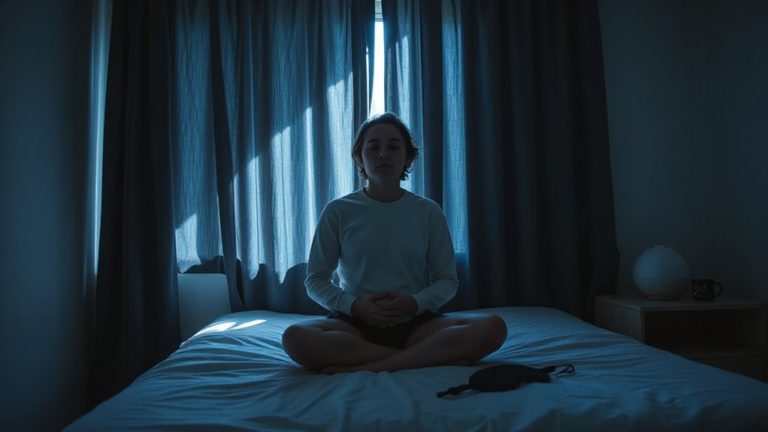
Why does your mind race just when you need it to rest? Mindfulness helps redirect thoughts gently, so sleep can come naturally. Practices like body scan and guided imagery train your brain to focus on the present, not endless worries. A body scan moves attention from toes to head, noticing tension without changing it. Guided imagery lets you picture peaceful scenes, easing mental clutter. Both are drug-free, skill-based tools you can try tonight.
| Technique | How Long to Try | Best For |
|---|---|---|
| Body Scan | 5–10 minutes | Physical awareness |
| Guided Imagery | 5–15 minutes | Calming active thoughts |
| Mindful Breathing | 3–5 minutes | Quick mental resets |
No special gear’s needed-just quiet and practice. These methods work well alone or after releasing muscle tension. Give each a few nights to see what fits your routine.
A 10-Minute Routine to Prevent Sleepless Nights
While your body prepares for rest, a short but consistent routine can make all the difference in quieting the mind and easing into sleep. Start by dimming lights and putting screens away-this supports good sleep hygiene. Spend five minutes doing deep breathing or gentle stretches to release tension. Then, try guided imagery: picture a calm scene, like waves lapping a shore, and let your focus drift with each breath. This technique helps shift thoughts away from stress, making it easier to shift into rest. Keep the room cool and quiet, and stick to the same bedtime each night. Even if sleep doesn’t come right away, staying consistent reinforces your body’s rhythm. Over time, this 10-minute practice can improve sleep onset and reduce nighttime awakenings. It’s a simple, no-cost addition to your night with measurable impact when practiced regularly. A regular better sleep routine enhances long-term relaxation and nighttime recovery.
On a final note
You can manage stress-related sleep troubles by using simple, proven techniques. Deep breathing and muscle relaxation help your body wind down, while mindfulness calms a busy mind. Trying a 10-minute nightly routine may improve sleep without pills. These methods are easy to test, cost nothing, and carry no side effects. If sleep problems continue, consider talking to a doctor to review other options, including sleep aids or therapy.