Best Light Therapy Glasses for Brighter Mornings and Focus
You get effective morning light therapy with glasses like the Luminette 3 or AYO, delivering 500–1500 lux of blue-enriched, UV-free light that’s clinically shown to boost alertness and focus. They’re lightweight, portable, and let you move freely during use. Most run on rechargeable batteries and include timed sessions for safety. Models vary in weight, charge type, and app support, so consider comfort and convenience. You’ll see how different features suit your routine.
We are supported by our audience. When you purchase through links on our site, we may earn an affiliate commission, at no extra cost for you. Learn more. Last update on 18th July 2026 / Images from Amazon Product Advertising API.
Notable Insights
- Lightweight, wearable design allows hands-free use during morning routines, enhancing comfort and convenience.
- Delivers 500–1500 lux of blue-enriched white light to effectively boost alertness and focus at the start of the day.
- Blue light wavelengths (465–495 nm) optimize circadian rhythm regulation, promoting wakefulness and mental clarity.
- Pre-programmed 15–45 minute sessions with gradual brightness ramp-up ensure safe, comfortable, and effective morning use.
- Compatible with prescription glasses and designed for mobility, enabling consistent use to support brighter, more focused mornings.
Light Therapy Glasses 10000 Lux equivalent

If you need effective light therapy but don’t want to sit still by a bulky lamp, these 10000 lux equivalent light therapy glasses are a solid choice, especially if your mornings are busy. I wear mine while checking emails or making coffee, and the 1.9 oz design feels light, even with my glasses. The blue light at 480 nm mimics daylight safely, and I don’t have to stare at it-just wear it. It delivers UV-free, low-intensity light, meeting eye safety standards. I use the 15-minute blue mode on rushed days and 45-minute white light when I want a gentler start. Timer settings shut it off automatically, and the rechargeable battery lasts through my routine.
Best For: Busy individuals seeking effective, portable light therapy that fits seamlessly into morning routines without requiring stationary use.
Pros:
- Lightweight (1.9 oz) and wearable design allows for mobility during use, compatible with glasses or contacts
- Delivers 10,000 lux equivalent therapy with safe, UV-free blue (480 nm) and white light modes
- Includes automatic timer settings (15, 30, 45 min) and gradual brightness start for comfort and convenience
Cons:
- Limited to preset timer durations with no custom session length option
- May not provide the same intensity experience as larger, stationary 10,000 lux lamps
- Battery life not specified beyond general runtime, limiting clarity on long-term usability
Luminette 3 Light Therapy Glasses (Blue)
The Luminette 3 Light Therapy Glasses (Blue) are best for people who need effective light therapy without slowing down their day. I use them every morning while checking emails or making coffee, and they deliver 500 to 1500 lux of blue-enriched light through a slim, lightweight design. Their patented system gives me the same benefits as a 10,000 lux lamp, right where I need it-my eyes-without blocking my vision. I can wear them over my glasses, and the adjustable arms fit comfortably. They’ve helped regulate my sleep and ease winter doldrums. With a micro-USB charge, I get five to ten sessions, and they’re safe, proven, and easy to trust.
Best For: People seeking a portable, effective light therapy solution that fits seamlessly into their daily routine without requiring them to sit still in front of a traditional lamp.
Pros:
- Delivers clinically proven light therapy equivalent to a 10,000 lux lamp with blue-enriched LED light at adjustable intensities (500–1500 lux)
- Lightweight, slim design allows for hands-free use during daily activities and is comfortable enough to wear over glasses
- Safe, certified device with micro-USB charging and enough battery for 5–10 sessions per charge
Cons:
- Limited light intensity compared to some high-end 10,000 lux lamps, which may affect users with severe seasonal affective disorder
- Requires consistent morning use for optimal results, which may be challenging for those with irregular schedules
- Higher upfront cost compared to traditional light therapy boxes, with no option for replacement parts
Light Therapy Glasses 10000 Lux UV-Free

I rely on light therapy to manage my energy and focus, especially during darker months, and these 10000 lux UV-free light therapy glasses stand out for anyone needing flexibility without sacrificing effectiveness. They weigh just 1.9 oz, so I can wear them while making coffee, reading, or working-no sitting still. The blue and white light (480 nm) supports my circadian rhythm without needing direct gaze. They’re UV-free, comply with IEC 62471 safety standards, and ramp up brightness gently. I like the 15-, 30-, and 45-minute auto-off timers and how they work with my glasses.
Best For: Individuals seeking a portable, hands-free light therapy solution to support energy, focus, and circadian rhythm regulation during daily activities.
Pros:
- Lightweight, wearable design allows use during everyday tasks like cooking, reading, or working
- Delivers 10,000 lux equivalent blue and white light (480 nm) for effective circadian rhythm support without UV exposure
- Features auto-off timers (15, 30, 45 min) and gradual brightness ramp-up for convenience and eye comfort
Cons:
- Limited to one included battery, which may require replacement for long-term use
- Plastic construction may feel less durable compared to higher-end models
- Fixed light intensity with no customization options for different sensitivity levels
Luminette 3 Light Therapy Glasses (Green)

You’ll find the Luminette 3 Light Therapy Glasses (Green) especially helpful if you need effective light therapy while juggling a busy schedule, since their portable design lets you fit treatment into your morning routine without slowing down. I wear mine while checking emails or sipping coffee, and they’re light enough-just 0.42 ounces-to forget I’m even using them. They emit blue-enriched white light at 500, 1000, or 1500 lux, and clinical trials show results like those from a 10,000 lux lamp. They’re safe, certified under IEC62471, and over 120,000 people have used them since 2006 for better sleep, jet lag, or low energy.
Best For: Busy individuals seeking convenient, effective light therapy that fits into their daily routine without disrupting work, travel, or morning habits.
Pros:
- Lightweight and portable design (0.42 oz) allows comfortable use during activities like working, traveling, or exercising
- Delivers clinically proven results equivalent to a 10,000 lux lamp with adjustable 500–1500 lux settings
- Certified safe under IEC62471 with over 120,000 users since 2006 for managing SAD, jet lag, and sleep disorders
Cons:
- Battery supports only 5–10 sessions per charge, which may require frequent recharging for daily users
- Uses micro-USB instead of newer USB-C, limiting modern charging compatibility
- Effectiveness depends on consistent morning use, which may be challenging for some routines
GentleGlow MEINNO Light Therapy Glasses

Though compact and unobtrusive, the GentleGlow MEINNO Light Therapy Glasses deliver a full spectrum of daylight-mimicking light that’s especially helpful for anyone managing seasonal fatigue, irregular sleep schedules, or morning grogginess without wanting to sit still in front of a traditional lamp. I use them during my morning routine-reading, brushing my teeth, even making coffee-because they’re lightweight at just over 2 ounces and don’t interfere with my glasses. The 2.5-hour battery life and cordless design make them easy to move around the house. With blue and white light modes that simulate 10,000 lux, they help regulate melatonin and support circadian rhythm. Safety-certified LEDs gradually brighten, protecting my eyes while boosting alertness. I can choose 15, 30, or 45-minute sessions using the included remote, and the device shuts off automatically. They’re not waterproof, so I keep them indoors, but their portability works well for daily use.
Best For: Individuals seeking a portable, hands-free light therapy solution to combat seasonal fatigue, jet lag, or sleep irregularities while maintaining their morning routine.
Pros:
- Lightweight, cordless design allows for hands-free use during daily activities like reading, cooking, or brushing teeth
- Delivers 10,000 lux equivalent with blue and white light modes to effectively support circadian rhythm and mood
- Includes remote control and preset timer options with automatic shut-off for convenient, eye-safe sessions
Cons:
- Not waterproof, limiting use to indoor, dry environments
- Battery-powered with non-rechargeable AAA batteries, increasing long-term operating cost
- May not provide sufficient light intensity for users with severe seasonal affective disorder (SAD)
Light Therapy Glasses, UV-Free, 10000 Lux
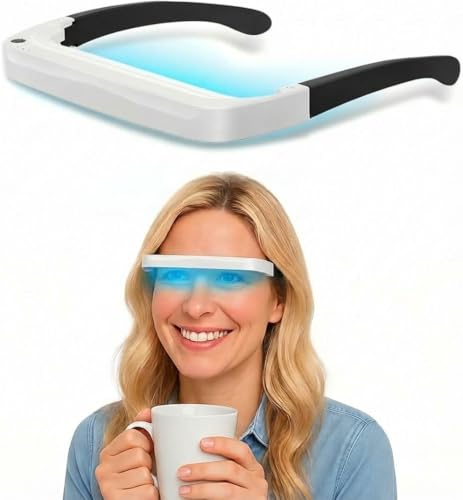
One standout choice for people seeking effective light therapy on the move is this pair of UV-free light therapy glasses delivering a 10,000 lux equivalent output. I wear them during breakfast or while reading, and they weigh just 1.9 oz, so they’re easy to use anywhere. They work with my prescription glasses and let me stay active-no more sitting still by a lamp. The blue light mode at 480 nm helps my circadian rhythm, while white light gives a natural daylight feel. Both are safe, UV-free, and meet IEC 62471 standards. A gentle ramp-up eases brightness, and timer settings (15, 30, 45 minutes) shut off automatically, making daily use simple and consistent.
Best For: Individuals seeking portable, effective light therapy to support circadian rhythm regulation and mood enhancement while maintaining an active daily routine.
Pros:
- Delivers 10,000 lux equivalent output with UV-free, eye-safe blue and white light modes for effective therapy on the go
- Lightweight (1.9 oz) and compatible with prescription glasses and contacts, enabling multitasking during use
- Features programmable timers (15, 30, 45 minutes) and gradual brightness ramp-up for comfortable, consistent sessions
Cons:
- Blue light exposure, even at safe wavelengths, may affect sleep if used late in the day
- Effectiveness depends on proper wearing position and daily consistency
- Higher upfront cost compared to traditional light therapy lamps
Luminette 3 Light Therapy Glasses (Pink)

The Luminette 3 Light Therapy Glasses (Pink) stand out for people seeking flexibility in managing sleep rhythms, seasonal mood shifts, or jet lag without pausing their day. I use them during morning routines or work calls, getting effective light therapy while staying active. They deliver blue-enriched white light at 500 to 1500 lux, and clinical data shows results comparable to a 10,000 lux lamp. Light reaches the eyes safely, thanks to a patented system that doesn’t block vision. At just 1.86 ounces, they’re light and fit comfortably over glasses. A charge lasts 5 to 10 sessions, and safety certification means I use them with confidence.
Best For: People seeking a portable, effective solution for managing sleep issues, seasonal mood changes, or jet lag without disrupting daily activities.
Pros:
- Delivers clinically proven light therapy equivalent to a 10,000 lux lamp with portable, wearable design
- Lightweight (1.86 oz) and comfortable to wear over prescription glasses for extended use
- Safe, certified illumination system with adjustable brightness and battery lasting 5–10 sessions
Cons:
- Blue-enriched light may not be suitable for individuals sensitive to light or with certain eye conditions
- Charging requires a micro-USB cable, which is increasingly outdated compared to USB-C
- One-size-fits-all design may not secure perfectly on all head shapes during active movement
Premium Blue Light Therapy Glasses

If you’re looking for a science-backed way to support your sleep and energy without relying on stimulants, premium blue light therapy glasses like AYO offer a practical solution rooted in circadian rhythm science. I’ve found AYO’s blue-turquoise light helps reset my internal clock, boosting energy and improving mood naturally. It’s lightweight at just 1.1oz, fits comfortably over glasses, and lets me move freely while using it. Clinical studies back its effectiveness for better sleep onset and quality, and it’s certified safe. The free app gives me personalized timing tips, and I can reach support for help with jet lag or shift work-making it a flexible, well-tested choice.
Best For: Individuals seeking a non-invasive, science-backed solution to optimize circadian rhythm, improve sleep quality, boost energy, and manage mood without stimulants.
Pros:
- Clinically validated to improve sleep onset, sleep quality, and energy levels using natural blue-turquoise light
- Lightweight (1.1oz), portable, and ergonomically designed for comfortable wear over prescription glasses
- Includes personalized guidance via the free AYO Circadian Health app and access to dedicated support for jet lag, shift work, and seasonal challenges
Cons:
- Requires consistent daily use at specific times for optimal results, which may be challenging for some routines
- Premium price point may be higher than alternative light therapy options
- Effectiveness depends on correct usage and timing, which may require initial learning and adjustment
PURPLE CANYON Green Therapy Mood Glasses

You’ll find the PURPLE CANYON Green Therapy Mood Glasses especially helpful if chronic migraines, light sensitivity, or Irlen Syndrome disrupt your daily routine. I wear them for 10 to 30 minutes each day, and they’ve helped reduce my migraine intensity over time. The green tinted lenses deliver soothing green light therapy, which studies link to a 60% average drop in migraine severity. They’re lightweight, with a durable PVC frame, stainless steel hinges, and scratch-resistant coating. I appreciate how they fit comfortably during short daily sessions. If you’re exploring non-invasive relief, these support chromotherapy and color lens therapy without harsh lighting.
Best For: Individuals seeking non-invasive relief from chronic migraines, light sensitivity, photophobia, or Irlen Syndrome through daily green light therapy.
Pros:
- Delivers green light therapy shown in studies to reduce migraine intensity by an average of 60%
- Lightweight, durable design with scratch-resistant lenses and stainless steel hinges for comfort and longevity
- Supports chromotherapy and color lens therapy with just 10 to 30 minutes of daily use
Cons:
- Effects are based on preliminary research and may vary between individuals
- Limited to short daily sessions, which may not provide immediate relief during acute episodes
- Green tinted lenses may alter color perception, affecting tasks requiring true color accuracy
Luminette 2 Light Therapy Glasses (2024)

Luminette 2 Light Therapy Glasses (2024) deliver effective, clinical-grade light therapy in a portable design, making them ideal for anyone balancing daily routines with consistent treatment. I wear mine while checking emails or sipping morning coffee, and the blue-enriched white LED light-offered at 500, 1000, or 1500 lux-feels subtle but effective. It’s clinically proven to match a 10,000 lux lamp, helping regulate sleep cycles and support mood. The USB-C charging and long-lasting battery give me 5 to 10 sessions per charge. I keep them in my travel bag, and they fit securely over my prescription glasses. Over 200,000 people have used them safely since 2006, and they’re certified zero-risk under European safety standards.
Best For: Individuals seeking a portable, clinical-grade light therapy solution that fits seamlessly into daily routines at home, work, or while traveling.
Pros:
- Delivers clinically effective light therapy equivalent to a 10,000 lux lamp with portable, wearable convenience
- USB-C charging and long-lasting battery provide 5–10 sessions per charge for on-the-go use
- Patented design allows natural vision during use and is compatible with prescription glasses and contacts
Cons:
- Blue-enriched light may not be suitable for individuals sensitive to blue light
- One-size-fits-all design may not provide a perfect fit for all head shapes
- Higher price point compared to traditional stationary light therapy lamps
Factors to Consider When Choosing Light Therapy Glasses
You’ll want to check the light output and intensity since those affect how well the glasses work for your sleep schedule. Make sure they’re comfortable to wear, fit well, and have safety certifications so you can use them without worry. Also consider portability, battery life, and how easy the controls are when choosing a pair that fits your routine.
Light Output And Intensity
Most effective light therapy glasses deliver between 500 and 1500 lux of blue-enriched white light, a range proven in clinical studies to match the circadian benefits of a 10,000 lux light box while allowing for more portable, hands-free use. You’ll want models emitting light in the 465–495 nm range, with peak effectiveness near 480 nm, since that’s where melatonin suppression and alertness boosts are strongest. Avoid devices using wavelengths below 450 nm, as they may increase retinal risk. Look for UV-free LEDs and IEC 62471 certification to guarantee eye-safe, low-risk exposure. Many glasses offer multi-mode settings, so you can pick shorter, intense blue-light sessions or longer, gentler white-light exposure based on your sensitivity. This flexibility helps you balance effectiveness with comfort, especially if you’re managing sleep timing or circadian disorders.
Wearable Comfort And Fit
A good fit starts with how the glasses feel on your face, and that’s where lightweight construction makes a difference. You’ll want models under 2 ounces-they cut down on strain when wearing them daily. Adjustable temple arms and flexible frames help you get a snug, personalized fit, no matter your head shape. Look for ergonomic designs that follow your facial contours; they prevent pressure on your nose and ears, especially during longer sessions. Slim profiles under 1.5 inches deep keep the glasses from feeling bulky, so you can move freely. If you wear prescription glasses or contacts, choose a pair that works easily with your vision aids-this keeps the fit stable and comfortable. These features let you focus on consistent use, which matters most when supporting better sleep habits and daily alertness.
Safety Certifications And Standards
Comfort matters, but how safe the light therapy glasses are plays just as big a role in making consistent use possible. You should look for glasses certified under IEC 62471, confirming they’re tested and classified as non-hazardous. Always choose UV-free lighting-no shortcuts-because even brief UV exposure can harm your eyes and skin. Pick models that use blue light strictly between 465–495 nm, avoiding wavelengths below 450 nm linked to retinal damage. Make sure the device has a 60-second gradual ramp-up; it eases your eyes into brightness and helps if you’re light-sensitive. Stick to low-intensity illumination unless higher output is paired with solid safety certifications-otherwise, you risk photochemical eye damage. Checking these standards isn’t overkill. It’s how you protect your vision while getting the benefits you want.
Portability And Battery Life
Every ounce and minute counts when you’re balancing light therapy with a busy routine. You’ll want light therapy glasses that weigh less than 2.3 ounces-they’re light enough to wear while working, cooking, or walking without strain. Their compact, portable design means you’re not stuck next to a bulky light box; you can move freely and stay active during sessions. Most models use rechargeable lithium-ion or lithium polymer batteries, giving you 5 to 10 full sessions per charge-perfect for travel or days without easy access to outlets. Some offer up to 2.5 hours of continuous use, so you won’t need to recharge between treatments. This kind of battery life keeps your therapy on track without interruptions, making consistency easier, even on tight schedules.
Ease Of Use And Controls
When picking light therapy glasses, you’ll want controls that make starting and managing sessions simple, so you can stay consistent without confusion. Look for models with intuitive push-button controls that let you quickly choose preset light modes and session lengths. Automatic shut-off timers at 15, 30, or 45 minutes help you avoid overuse and support a steady routine. A gradual brightness ramp-up during the first 60 seconds reduces eye strain, making the experience more comfortable, especially in the morning. Rechargeable batteries with USB-C or micro-USB charging eliminate the hassle of replacing batteries and make daily use more convenient. Combined with lightweight frames under 2.3 ounces, these features simplify long-term wear. Easy-to-use controls mean less fumbling and more focus on building a reliable habit-key for managing sleep patterns effectively.
Therapy Modes And Customization
You’ve got the basics of ease and control down-now it’s time to fine-tune your experience by looking at therapy modes and customization options. You can pick models with dual light modes, like blue light at 480 nm or white light, so you can choose quicker, stronger sessions or longer, softer ones. Blue light, usually between 465–495 nm, helps reset your circadian rhythm by reducing melatonin. Adjustable brightness-from 500 to 1500 lux-lets you tailor intensity to your comfort and goals. Many glasses offer preset timers (15, 30, 45 minutes) with auto shut-off for consistent, hands-free use. A gradual ramp-up feature, easing brightness over 60 seconds, makes waking up with light more comfortable. These features help you stick to a routine, support better sleep hygiene, and adapt therapy to your sensitivity, giving you practical control over how you respond to light.
Frequently Asked Questions
Can I Wear Light Therapy Glasses While Driving?
No, you shouldn’t wear light therapy glasses while driving. They can create glare, distort your vision, or cause eye strain in changing light conditions. Most models aren’t designed for use around moving vehicles or dynamic environments. Their bright LEDs may impair your ability to focus on traffic, signs, or pedestrians. For safety, use them during stationary routines, like breakfast or desk work. Always follow manufacturer guidelines and prioritize clear vision when operating machinery or driving.
Do Light Therapy Glasses Work for Seasonal Depression Only?
No, light therapy glasses don’t just work for seasonal depression. You can use them for non-seasonal depression, circadian rhythm issues, or low energy. They deliver bright light to your eyes, which helps regulate melatonin and boost alertness. Many models are lightweight, portable, and designed for wear during morning routines. Look for ones with clinical testing, adjustable brightness, and a 30-day trial to test effectiveness safely and comfortably.
Are There Side Effects From Long-Term Use?
You might experience mild side effects with long-term use, like eye strain, headaches, or insomnia if used late in the day. These usually fade as your body adjusts. Some users report jitteriness or disrupted sleep patterns, especially with higher intensities. Following the manufacturer’s timing and distance guidelines helps reduce risks. Most brands offer trial periods, so you can test comfort and effects. If issues persist, cutting back usage or consulting a doctor helps guide safe, effective use.
Can I Use Light Therapy Glasses With Contact Lenses?
Yes, you can use light therapy glasses with contact lenses-most models are designed for daily wear and won’t interfere with your contacts. The frames sit securely and allow space between your eyes and the lights, reducing glare and discomfort. Check the manufacturer’s guidelines, but many users safely combine both. Try a session while wearing your lenses to assess comfort. Look for models with adjustable brightness and a trial period so you can test them risk-free.
How Soon Can I Expect Results From Daily Use?
You’ll likely notice improved alertness within 3 to 5 days of consistent morning use, though full effects on sleep timing and focus may take 1 to 2 weeks. Individual responses vary based on light sensitivity and usage habits. For best results, wear the glasses daily at the same time, ideally within an hour of waking. Most models offer 30-minute sessions at 10,000 lux. Check warranty and return policies-many brands provide 30-day trials to assess effectiveness.