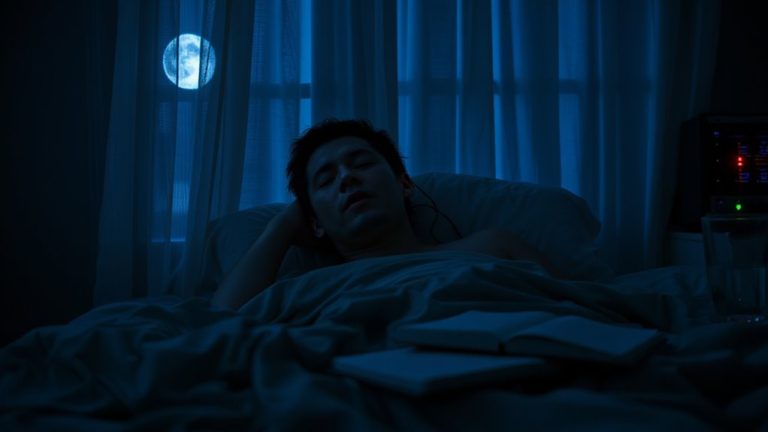
Addressing Sleep-Related Eating Disorder (SRED): Causes, Symptoms & Treatments
You might have sleep-related eating disorder (SRED) if you wake up and eat without full awareness, often consuming strange or unsafe foods with no memory afterward. It’s more than midnight snacking-it’s a parasomnia linked to stress, sleep disruptions, or medications like sedatives. Episodes can lead to weight gain, injuries, or guilt. Doctors use sleep studies and history checks to confirm it. Treatment includes medication, better sleep hygiene, and securing your kitchen. There’s help, and solutions become clearer with deeper understanding.
Notable Insights
- SRED involves involuntary nocturnal eating during partial arousals, classified as a NREM-related parasomnia similar to sleepwalking.
- Symptoms include unremembered consumption of odd or unsafe foods, kitchen messes, weight gain, and injuries from nighttime movements.
- Causes involve genetic predisposition, sedative medications like zolpidem, stress, sleep disorders, and higher prevalence in females.
- Diagnosis relies on sleep history, polysomnography, and home monitoring to capture disordered eating during sleep episodes.
- Treatment includes medications such as topiramate, sleep hygiene, secure environments, and managing underlying conditions like sleep apnea.
What Is Sleep-Related Eating Disorder (SRED)?
A nighttime mystery unfolds when someone with Sleep-Related Eating Disorder (SRED) gets up while still asleep and heads to the kitchen, often eating unusual or even unsafe foods without memory of the event. You might not realize it, but this behavior has a clear definition overview: SRED involves recurrent episodes of involuntary eating during partial arousal from sleep. It’s more than just midnight snacking-it’s a complex sleep disturbance. Medically classified as a parasomnia under the broader category of NREM-related parasomnias, SRED sits alongside sleepwalking and night terrors in diagnostic systems like the ICSD-3. You should understand that these episodes occur during shifts between sleep stages, where conscious awareness is limited. The behavior can lead to health risks, including injury or unwanted weight gain. Recognizing SRED’s medical classification helps guide proper evaluation and care without jumping to quick fixes or over-the-counter sleep aids.
Signs You Might Have SRED (Not Just Midnight Snacking)
How do you know if what you’re experiencing is more than just a late-night craving? If you wake up to find wrappers, spilled food, or meals cooking with no memory of preparing them, you might be dealing with unconscious cravings. Unlike ordinary midnight snacking, SRED involves nocturnal binging-episodes where you eat while still asleep, often consuming odd or unsafe items like raw pasta or frozen foods. You may not recall these events, making it hard to recognize the problem. Common signs include unexplained weight gain, strange food combinations in the kitchen, or injuries from moving around in the dark. Since you’re not fully awake, willpower won’t stop these episodes. Tracking nighttime behaviors or asking a roommate or partner to observe can help identify patterns. If this sounds familiar, consider consulting a sleep specialist to explore underlying causes and evaluate whether further assessment is needed.
How SRED Harms Your Health and Sleep
Waking up to confusion, unfinished meals on the stove, or a stomachache you can’t explain often signals more than poor sleep hygiene-it points to the real physical and mental toll of acting on urges while in a sleep state. SRED doesn’t just interrupt sleep; it harms your health through repeated metabolic disruption and emotional distress. You might consume odd or unsafe food combinations without memory, increasing injury risks and worsening sleep quality.
| Effect | Consequence |
|---|---|
| Metabolic disruption | Irregular insulin response, weight gain |
| Sleep fragmentation | Daytime fatigue, poor focus |
| Emotional distress | Shame, anxiety about episodes |
| Physical danger | Burns, choking, spoiled food ingestion |
Over time, these patterns strain both mind and body, making restorative sleep feel out of reach. Addressing SRED early helps protect your sleep consistency, mental well-being, and long-term health.
What Causes SRED? Triggers and Risk Factors
Why do you find yourself eating in the middle of the night without remembering it later? Sleep-related eating disorder (SRED) often stems from a mix of triggers and risk factors. You may have a genetic predisposition, meaning it runs in your family, increasing your chances. Certain medication side effects, especially from sedatives or sleep aids like zolpidem, can also spark episodes. Stress, irregular sleep schedules, and other sleep disorders like sleep apnea may make things worse. You’re more at risk if you’re female or have a history of eating disorders. While not everyone with these factors develops SRED, they raise the likelihood. Understanding your personal risks helps you make informed choices about sleep habits and treatments. Watching for patterns-and discussing medications with your doctor-can reduce unwanted episodes and support safer, more restful sleep.
How Doctors Diagnose Sleep-Related Eating Disorder
Could it be more than just late-night snacking if you’re finding crumbs in the morning with no memory of eating? Doctors take your reports seriously and start with a detailed sleep history. They’ll ask about nighttime behaviors, diet, and medications to rule out other conditions through differential diagnosis.
| What’s Evaluated | Why It Matters |
|---|---|
| Sleep patterns | Spot unusual nighttime awakenings |
| Eating behaviors | Confirm unconscious episodes |
| Medical history | Identify triggers or risks |
| Medication use | Check drug-related side effects |
| Mental health status | Assess related conditions |
Polysomnography analysis helps observe brain and body activity during sleep, capturing evidence of SRED episodes. You might also complete sleep diaries or video monitoring at home. Accurate diagnosis hinges on combining your input with clinical testing, ensuring other disorders aren’t mistaken for SRED.
Effective SRED Treatments and Lifestyle Changes
How do you gain control when your body acts on its own in the night? Treating Sleep-Related Eating Disorder (SRED) often starts with improving sleep hygiene-keep a regular sleep schedule and reduce nighttime disruptions. Medications like topiramate or dopaminergic agents may be prescribed if your doctor sees a link to other sleep disorders, such as sleepwalking. You should also consider stress management techniques, including mindfulness or relaxation exercises, since high stress can trigger episodes. Practicing mindful eating during the day helps you build awareness around food choices and reduces impulsive behaviors. Secure your kitchen at night-lock cabinets or use alarms-to prevent unconscious eating. Some find success combining therapy with environmental changes, especially cognitive behavioral methods. Always consult a sleep specialist before trying supplements or sleep aids, as their effectiveness and safety vary. Track your progress and report side effects to your provider.
On a final note
You now know SRED involves unconscious eating during sleep, not choice. It can harm health and disrupt rest. Causes range from stress to medications, and diagnosis often needs a sleep study. Treatments include lifestyle changes, therapy, or medication, depending on your case. Consider talking to a sleep specialist if symptoms persist. Many find improvement with targeted care. Review treatment options with your doctor, weigh benefits and risks, and track progress during trials.