Best Heated Sleeping Bags for Warmth All Night Long
You stay warm all night with heated sleeping bags that use multiple carbon fiber zones targeting your back, hips, and feet for even heat distribution. They run on USB power banks (5V/2A or higher) and offer three temperature levels, adjusting from 113°F to 149°F for varying conditions. Waterproof shells and insulated linings retain warmth down to 30°F, while safety features prevent overheating. Choose based on weight, battery life, and washability-details that shape comfort and performance in real use.
We are supported by our audience. When you purchase through links on our site, we may earn an affiliate commission, at no extra cost for you. Learn more. Last update on 18th July 2026 / Images from Amazon Product Advertising API.
Notable Insights
- Heated sleeping bags feature 4 to 5 heating zones for even warmth from head to toe.
- Multiple heat settings (104°F–149°F) allow customization and extended warmth all night.
- USB-powered with 5V/2A or higher power banks for reliable, long-lasting operation.
- Battery life ranges 6–14 hours, depending on heat level and power bank capacity.
- Waterproof, insulated designs with safety protections ensure durability and comfort in cold conditions.
Antarctica Gear Heated Sleeping Bag

If you’re tackling cold-weather adventures where warmth is non-negotiable, the Antarctica Gear Heated Sleeping Bag stands out as a reliable ally, especially for campers who prioritize consistent heat in freezing conditions. I’ve found its five heating zones-across shoulders, back, hips, and feet-deliver targeted warmth fast, hitting desired temps in under five seconds. With three adjustable settings up to 131℉ and a 16,000mAh battery, it lasts through frigid nights. The nylon exterior and brushed lining feel durable yet soft, and at 3.16 kg, it’s better for car camping than backpacking. Waterproofing helps, and safety features like overheat and short-circuit protection give peace of mind.
Best For: Cold-weather campers and outdoor enthusiasts who need reliable, consistent heat in freezing conditions and prioritize warmth over ultralight portability.
Pros:
- Heats up quickly with five targeted zones and three adjustable settings, reaching optimal warmth in under 5 seconds
- Equipped with a high-capacity 16,000mAh battery and multiple safety protections for safe, extended use in extreme cold
- Durable nylon exterior, soft brushed lining, and water-resistant design offer comfort and reliability in harsh environments
Cons:
- Weighs 3.16 kg, making it less ideal for backpacking and better suited for car camping or stationary use
- Requires a separate 12V power source, adding to setup complexity compared to passive insulation sleeping bags
- Limited to users under 6.8 feet tall, which may exclude some taller individuals
Heated Sleeping Bag for Adults (0°)
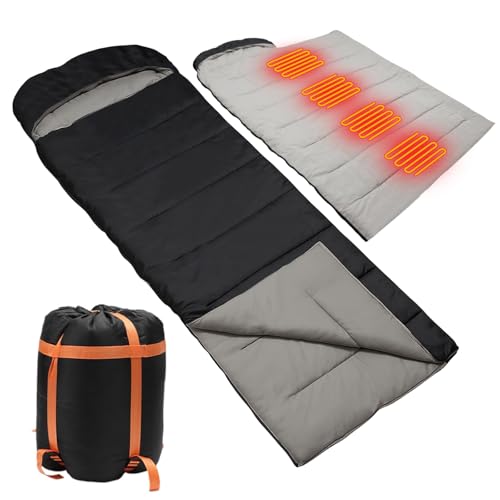
I rely on the Longzhuo heated sleeping bag when facing 0-degree conditions because its 4-piece heating system-built into the shoulder, back, hip, and feet-delivers steady core warmth where I need it most. It heats quickly with any 5V/2A power source, offering three settings: green (104–113°F), blue (113–122°F), and red (122–131°F), letting me adjust based on how cold I feel. The semi-rectangular design fits one or two adults, with an adjustable hood and two-way zipper for comfort. Made from 220T polyester and soft flannel, it’s water-resistant and durable. It weighs 4.6 lbs, compresses small, and stores in a included sack. A 2-year warranty adds peace of mind.
Best For: Outdoor enthusiasts and campers who face extreme cold and need reliable, customizable warmth in 0-degree conditions.
Pros:
- Features a 4-piece heating system with three adjustable settings for precise temperature control from head to toe
- Compatible with any standard USB power source, offering up to 24 hours of warmth on low heat with a 5V2A power bank
- Durable, water-resistant construction with a semi-rectangular design that fits one or two adults comfortably
Cons:
- Power bank not included, which is essential for operation and may require additional purchase
- At 4.6 lbs, it may be heavier than non-heated sleeping bags, affecting ultralight backpacking plans
- Limited heat range-while effective for 0°F, prolonged use in sub-zero temperatures may drain power quickly on high settings
Heated Sleeping Bag Pad (USB Powered)

This heated sleeping bag pad works best for campers who need consistent warmth in cold conditions but want the flexibility to adjust heat without carrying bulky gear. I use it inside my sleeping bag and appreciate the five heating zones-shoulders, back, hips, and feet-that deliver targeted warmth. It runs on any 5V/2A USB power source, and with a 20,000mAh battery, I get 6 to 14 hours of heat across three settings. The pad’s 198 x 61 cm size fits most bags, and at just 2 lbs, it’s light enough for backpacking. Made with waterproof Oxford fabric and soft flannel lining, it’s durable and comfortable. I keep it in the included carry bag when not in use.
Best For: Outdoor enthusiasts and campers who need customizable, reliable warmth in cold conditions without the bulk of extra gear.
Pros:
- Features five targeted heating zones for personalized comfort in key body areas
- Lightweight and portable design with a compact carry bag ideal for backpacking
- Durable waterproof Oxford fabric and soft flannel lining provide warmth and comfort in varied conditions
Cons:
- Requires a separate 5V/2A USB power source, which is not included
- Runtime limited to 6–14 hours depending on heat setting and battery capacity
- Hand wash only, which may be inconvenient for some users
Heated Sleeping Bag with USB Heating Pads
You’ll find the heated sleeping bag with USB heating pads especially useful when facing cold nights during winter camping or power outages at home, since it delivers targeted warmth where you need it most. I rely on its five heating zones-shoulder, back, hips, and feet-to maintain comfort in temperatures as low as 30°F. It runs on any 5V/2A USB power source, like a power bank, and lasts 6–14 hours depending on the setting. The mummy design fits users up to 7 feet and weighs just 3.6 pounds. A waterproof shell and fiber insulation retain heat, while the zipper allows ventilation. I unplug it when not in use and hand-wash it carefully.
Best For: Outdoor enthusiasts and cold-weather campers needing portable, targeted warmth in winter conditions down to 30°F.
Pros:
- Five strategically placed heating zones provide consistent, customizable warmth
- Lightweight and compact design with waterproof exterior for all-season versatility
- Powered by standard USB sources, offering 6–14 hours of heat on a single charge
Cons:
- Requires an external power bank (not included), adding extra cost and weight
- Limited to one user due to mummy-style design
- Hand washing only, which may be inconvenient for frequent use
Heated Sleeping Bag for Cold Weather Camping
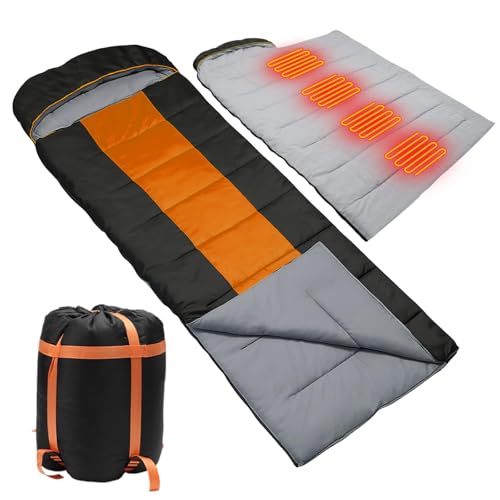
A reliable heated sleeping bag becomes essential when facing freezing nights in the wild, and the Longzhuo model stands out for campers who expect consistent warmth without sacrificing comfort. I’ve found its four heating zones-shoulders, back, hips, and feet-deliver even heat when I connect it to a 5V/2A power bank. With three settings from 104°F to 131°F, I can adjust warmth based on how cold I feel. It’s rated below 0°F, so I trust it for winter camping. The 220T polyester shell resists water, while the flannel interior feels soft. At 4.6 lbs, it’s packable into a compression sack, though the power bank isn’t included.
Best For: Cold-weather campers and outdoor enthusiasts who need reliable, adjustable warmth in freezing conditions without sacrificing comfort.
Pros:
- Features four heating zones with three adjustable temperature settings for personalized comfort in sub-zero temperatures
- Constructed with water-resistant 220T polyester and soft flannel lining, offering durability and skin-friendly warmth
- Lightweight and compressible design makes it portable for hiking, backpacking, and car camping
Cons:
- Power bank not included, which is necessary for operation and may add extra weight and cost
- At 4.6 lbs, it may be heavier than standard sleeping bags, affecting ultralight backpacking goals
- Average customer rating of 3.4 out of 5 stars suggests some users have experienced inconsistencies in quality or performance
5 Pack Heated Sleeping Bag & Cold Weather Gear
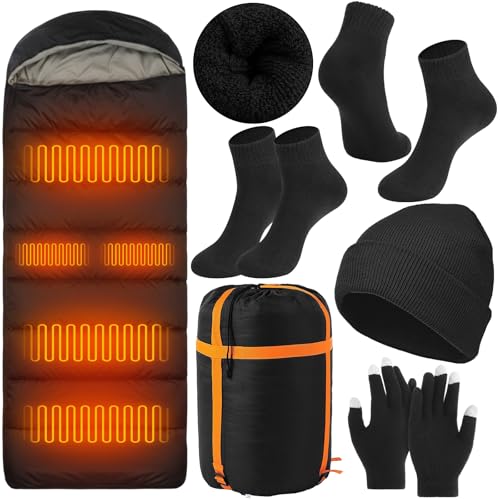
The Grinsvalley heated sleeping bag pack suits outdoor enthusiasts who face cold conditions and value consistent warmth without sacrificing mobility or comfort. I’ve used the 5-piece set-sleeping bag, skull cap, touchscreen gloves, two thermal sock pairs, and storage bag-and found it practical for camping, hiking, or even cold commutes. The sleeping bag heats evenly across five zones, with three settings I can adjust depending on how cold it gets. Made of waterproof polyester, it’s breathable yet warm, and I unzip it to use as a blanket when needed. Everything packs neatly into the included bag. The black accessories fit well and keep my head, hands, and feet warm, while letting me use my phone without exposing my skin.
Best For: Outdoor enthusiasts who need reliable, adjustable warmth during cold-weather activities like camping, hiking, or commuting.
Pros:
- Heated sleeping bag features five heating zones and three temperature settings for customizable comfort in extreme cold
- Complete 5-piece set includes essential cold-weather accessories (cap, gloves, socks) that enable touchscreen use and moisture management
- Versatile design allows the sleeping bag to be unzipped into a blanket, and all components pack into a portable carry bag for easy transport
Cons:
- Requires a separate 12V power bank for heating functionality, which is not included
- Slight variations in measurements and color may occur due to manual sizing and screen display differences
- Limited to users 90.6 inches (7.5 feet) tall or under, which may not accommodate all adults comfortably
Heated Sleeping Bag with USB Heating Pads

Finding warmth in freezing conditions becomes far more manageable when targeted heat delivery meets smart design, making this heated sleeping bag ideal for campers who face cold nights without access to reliable power sources. I rely on its five USB-powered heating pads-placed at the shoulders, back, hips, and feet-to warm key areas quickly. It runs on a 5V/2A power bank, lasting 6–14 hours depending on the setting. Three heat levels adjust easily with a button, defaulting to medium after 10 minutes. At 3.6 lbs and fitting users up to 6.8 ft, it’s portable and roomy. The waterproof polyester shell and soft lining keep me comfortable down to 30°F.
Best For: Cold-weather campers and outdoor enthusiasts who need reliable, portable warmth in freezing conditions without access to traditional power sources.
Pros:
- Strategically placed USB-powered heating pads provide targeted warmth to shoulders, back, hips, and feet
- Compatible with standard 5V/2A power banks for convenient off-grid heating up to 14 hours
- Lightweight and spacious design fits users up to 6.8 feet tall with a durable, waterproof polyester shell
Cons:
- Requires a high-output 5V/2A power bank-lower-rated banks may not support heating function
- Machine washing not recommended, limiting cleaning options for heavy use
- Some material descriptions conflict (polyester vs. nylon shell), raising potential concerns about consistency
Tuphen Heated Sleeping Bag Pad (3 Temp Levels)

When staying warm matters most-whether you’re camping in chilly weather, recovering from a long hike, or trying to relax at home with soothing heat-this heated sleeping bag pad gives you reliable, targeted warmth without needing bulky gear or constant power outlets. I use it inside my sleeping bag or on the couch when my shoulders and feet ache. Five heating zones-shoulders, waist, and feet-warm evenly across 3 settings (113°F to 149°F), adjusted with one button. It runs on any 5V/2A USB source, like a power bank. At 75 inches long and 1.7 lbs, it packs small and fits most bags. First use takes longer to heat-just let it run once. After that, it works efficiently.
Best For: Outdoor enthusiasts, cold-sensitive individuals, and anyone seeking portable heat therapy during camping, travel, or at home.
Pros:
- Delivers full-body warmth with 5 targeted heating zones and 3 adjustable temperature settings for personalized comfort
- USB-powered with 5V/2A compatibility, enabling use with power banks, laptops, and car chargers for true portability
- Lightweight and compact design fits most sleeping bags and packs into a small storage bag for easy transport
Cons:
- Does not include a power bank, so separate purchase is required for mobile use
- Initial heat-up time is longer due to moisture in heating elements, requiring a pre-conditioning run
- Maximum temperature reaches 149°F, which may be too hot for sensitive users on high setting
Heated Sleeping Bag with USB Heating Pads

Though I prioritize comfort and warmth during cold-weather adventures, I still need gear that’s practical and reliable, which is why a heated sleeping bag with USB heating pads stands out for campers, RV travelers, and anyone dealing with chilly nights at home or in transit. It has five heating pads in the shoulder, back, hip, and feet, powered by a 5V/3A USB connection. I use a 20,000mAh power bank for 6–14 hours of heat on low to high settings. The mummy-style bag fits up to 6.8 feet, weighs 3.6 lbs, and packs small. It’s made of durable polyester with hollow fiber insulation, works in temps down to -1°C, and washes by hand.
Best For: Outdoor enthusiasts, RV travelers, and cold-sensitive individuals seeking reliable, portable warmth during winter camping, road trips, or power outages.
Pros:
- Equipped with five targeted heating pads and adjustable heat settings for personalized comfort
- Powered via USB with long battery life (6–14 hours) using a 20000mAh power bank
- Durable, waterproof construction with compact portability and hand-washable design
Cons:
- Requires a high-output power bank (5V/3A) not included with purchase
- Limited temperature rating (down to -1°C) may not suffice for extreme cold
- Mummy shape may feel restrictive for users preferring roomier sleeping bags
2 Pack Heated Sleeping Bag for Camping

If you’re camping in cold weather and need reliable warmth without sacrificing comfort, this two-pack of heated sleeping bags from Fanfanwin is a solid choice, especially for couples or families who want versatility. Each bag fits users up to 6.8 feet tall and features 4-zone carbon fiber heating with three adjustable settings, warming up in seconds via USB. The spacious rectangular design allows room for layers, and the bags unzip fully-doubling as blankets or combining into a double bag. Made with waterproof 210T polyester and insulated with down alternative, they’re durable, warm, and machine washable. At just over 8 pounds total, they pack down small and suit car camping, hunting, or emergencies.
Best For: Couples, families, or outdoor enthusiasts seeking versatile, warm, and electrically heated sleeping bags for cold-weather camping and emergency use.
Pros:
- Features 4-zone carbon fiber heating with three adjustable settings for customized warmth and quick heat-up time
- Spacious rectangular design fits users up to 6.8 feet and converts into a blanket or combines into a double sleeping bag
- Durable, waterproof 210T polyester shell with down alternative insulation and machine-washable construction
Cons:
- At 8.4 pounds per set, it may be too heavy for backpackers prioritizing lightweight gear
- Requires external USB power source, which may limit use in remote areas without access to power
- Not ideal for high-altitude or extreme cold environments where battery performance decreases
Factors to Consider When Choosing a Heated Sleeping Bag
You’ll want to check how many heating zones a heated sleeping bag has and where they’re placed-some warm just the core, while others cover the feet and back for more even heat. Make sure the power source is compatible with portable batteries you already own, and look for a bag with multiple temperature settings so you can adjust based on how cold it gets. Lightweight materials and compact designs make a big difference when hiking, but don’t overlook durability or whether the fabric feels comfortable against your skin.
Heating Zones Coverage
Since heat retention is essential for staying comfortable in cold environments, the placement and number of heating zones in a heated sleeping bag play a key role in how well it maintains your body temperature. Most models include 4 to 5 zones, with heating pads positioned in the shoulders, back, hips, and feet to support core warmth and reduce heat loss. You’ll typically find one pad near the shoulders, two along the back, one at the hips, and one in the foot area, ensuring consistent coverage from head to toe. This setup helps eliminate cold spots and improves overall comfort through even thermal distribution. Some bags let you control heat in specific zones, so you can adjust warmth where your body needs it most. More zones usually mean better performance in sub-zero conditions, especially when maintaining warmth in both torso and extremities.
Power Source Compatibility
When choosing a heated sleeping bag, checking power source compatibility guarantees reliable warmth in the field, as models vary in voltage needs and charging requirements. You’ll find some bags need a 12V DC supply, while others run on 5V/2A USB power banks-common ones often require fast charging to activate heating elements. If your power bank delivers less than 5V/2A, the system might not work or could suffer long-term damage. USB-powered models give you flexibility, letting you use portable chargers, car adapters, or jump starters off-grid. A 16,000mAh battery typically lasts several hours, but 20,000mAh units can extend runtime to 6–14 hours, depending on heat level. Look for built-in battery pockets; they keep power banks secure and maintain steady connections, even in cold weather.
Temperature Settings Range
While some cold nights demand intense warmth, others call for just a light boost, making the temperature settings range a key factor in choosing the right heated sleeping bag. Most models give you three heat levels, letting you adjust from 104°F to 149°F. You’ll use low settings (104–113°F) when it’s just a bit chilly or when you want to save power over long trips. Medium heat (113–122°F) balances warmth and battery life, ideal for most winter camping. When the temperature drops hard, high settings (131–149°F) deliver serious heat to keep your core warm. Some bags even start on high, then automatically drop to medium after a while, so you stay warm without draining the battery fast. Being able to fine-tune the heat means you sleep better, stay comfortable, and manage power with confidence.
Material Durability And Comfort
You’ve got control over how warm you get with adjustable temperature settings, but the materials your heated sleeping bag is built from determine how well it holds up and feels night after night. You’ll want a 210T or 220T polyester outer shell-it resists tears, moisture, and abrasions, so it lasts on rugged terrain. Waterproof fabrics like ripstop or Oxford polyester shield you from damp ground and rain, keeping insulation effective when it’s wet. Inside, brushed pongee or flannel linings feel soft against your skin and reduce irritation during long trips. High-denier materials and reinforced stitching boost durability, especially with frequent packing. The fill, usually hollow fiber polyester or cotton-polyester blends, springs back after compression, maintaining warmth. These features work together to keep you comfortable and supported, trip after trip, without wearing out.
Portability And Weight
A good night’s sleep on the trail starts with how easily you can carry your gear, and portability is key when choosing a heated sleeping bag. Most models weigh between 3.1 and 4.6 pounds-lighter ones favor backpacking, while heavier versions work better for car camping. You’ll find packed sizes range from 12 x 8 inches to 14 x 10 inches, so they fit inside standard backpacks or gear bins. The heating elements and battery needs add some bulk compared to regular sleeping bags, but many compress into carry or compression sacks, cutting volume by up to 50%. That makes hauling them far easier. Some bags also convert into blankets, giving you flexible use without needing extra storage space. Weigh the trade-offs between weight, packed size, and power setup based on how and where you camp.
Water Resistance Performance
When rain rolls in overnight or dew settles heavy on your campsite, a sleeping bag’s water resistance can mean the difference between a warm, dry sleep and a damp, uncomfortable night. You’ll want a waterproof exterior shell, like 210T or 220T polyester, to block moisture from rain and wet ground. Water-resistant coatings and durable fabrics help keep insulation dry, so your bag stays warm in humid or damp conditions. Sealed seams and anti-snag zippers limit entry points for water, especially in high-stress areas. If light moisture gets in, brushed or flannel linings can still feel cozy and retain heat. Pairing a water-resistant shell with hollow fiber polyester fill helps maintain loft and warmth, even when humidity rises. These features work together to keep you dry and insulated when the environment turns wet.
Safety Features Included
While staying warm is a top priority, safety matters just as much with heated sleeping bags, especially since they combine electricity and fabric in close contact with your body. You’ll find over-charging, short-circuit, high-temperature, and surge protection built into most models, all working to prevent electrical hazards. Automatic shut-off systems kick in if temperatures rise too high or after several hours, reducing risk while you sleep. Fire-resistant materials make the outer and inner layers less likely to ignite, even under prolonged heat. Dual-layer circuitry with smart power management keeps voltage steady and lowers the chance of failure. If the bag gets damaged, the heating system stops running to prevent burns or shock from exposed wires. These features give you peace of mind without sacrificing performance, letting you rest easier knowing the tech has your back.
Ease Of Cleaning And Care
Proper cleaning and care keep your heated sleeping bag performing safely and efficiently over time. You should hand wash most models to protect the internal heating elements, unless the manufacturer specifically allows machine washing. Always disconnect and remove batteries or electronic components before cleaning to prevent damage or electrical hazards. Some bags offer removable heating pads or washable insulated liners, making maintenance easier and safer. Avoid harsh detergents and bleach, since they can break down waterproof coatings and harm heat-conductive fabrics. After washing, air dry your sleeping bag completely-tumble drying on high heat might melt wiring or distort insulation. Following these steps preserves both warmth and safety, extending the life of your gear. Care instructions vary by model, so check labels, and consider cleanability when comparing options.
Frequently Asked Questions
Can I Use a Heated Sleeping Bag in Rainy Conditions?
Yes, you can use a heated sleeping bag in rainy conditions, but you must keep the power source and wiring dry. Most models have water-resistant shells, yet zippers and seams aren’t fully waterproof. You’re better off pairing it with a quality tent or bivy sack. Never submerge it or expose the battery to rain. Check the manufacturer’s IP rating for guidance. Use a durable liner and tarp overhead to stay dry. Always follow care instructions to prevent damage.
How Long Does the Battery Last on a Single Charge?
You get 4 to 10 hours of heat on a single charge, depending on the model and heat setting. Lower settings extend battery life, while high heat drains it faster. Most bags use removable lithium-ion batteries you can recharge separately. Some brands include a spare or let you power it with a portable charger. Always check the manufacturer’s runtime tests under real conditions. A few offer trial periods, so you can test warmth and battery performance overnight before committing.
Are Heated Sleeping Bags Safe to Use Indoors?
Yes, you can use heated sleeping bags safely indoors if you follow the manufacturer’s instructions. They’re built with low-voltage systems that reduce fire risk, and most include automatic shut-off features after a few hours. Make sure the bag has safety certifications and inspect wires regularly for damage. Using them on a non-flammable surface and avoiding extension cords helps. Always check warranty details and trial periods so you can test warmth and safety in your own space.
Can Kids Use These Heated Sleeping Bags Safely?
Yes, kids can use heated sleeping bags safely if you pick models with lower heat settings and automatic shut-offs. You should check the manufacturer’s age guidelines and guarantee wiring is well-insulated. Always supervise younger children during use. These bags often have adjustable temperature controls, letting you match warmth to comfort. Try one at home first under supervision, and confirm the warranty covers repairs.
Do Heated Sleeping Bags Work With Power Banks?
Yes, you can use power banks with most heated sleeping bags, as they typically connect via USB. You’ll need a power bank with enough capacity-usually 10,000mAh or higher-for several hours of heat. Check compatibility, since some models require specific voltages. Higher heat settings drain power faster, so consider that when choosing batteries. Many brands design their systems to work safely with standard power banks, and they include auto-shutoff features. Test before relying on it in cold conditions.