Best Organic Sleep Teas That Help You Drift Off Naturally
You’ll find calming support in organic sleep teas like Traditional Medicinals Nighty Night and Numi Sweet Slumber, blending valerian root, chamomile, and passionflower to ease occasional sleeplessness. USDA certified organic and caffeine-free, these teas use compostable, plastic-free bags for cleaner sipping. Steep 8–10 minutes to release full benefits. While effects vary, most notice relaxation within an hour, though mild grogginess can follow. Stronger blends may help more, but consistency matters most-there’s more to discover about matching the right blend to your routine.
We are supported by our audience. When you purchase through links on our site, we may earn an affiliate commission, at no extra cost for you. Learn more. Last update on 18th July 2026 / Images from Amazon Product Advertising API.
Notable Insights
- Choose USDA Certified Organic sleep teas to ensure purity and avoid synthetic pesticides or GMOs.
- Look for calming herbs like valerian root, chamomile, passionflower, and lemon balm to support natural relaxation.
- Opt for teas with sustainable certifications like B Corp or Non-GMO Project Verified for ethical quality.
- Steep organic sleep teas for 8–10 minutes to fully extract soothing botanical compounds.
- Select caffeine-free, compostable tea bags from transparent brands with traceable ingredient sourcing.
Traditional Medicinals Organic Nighty Night Tea (16 Bags)

If you’re dealing with occasional sleeplessness and prefer a clinically backed herbal option, this tea stands out as a strong choice. I rely on its blend of valerian root, passionflower, lemon balm, and peppermint to ease into rest. The earthy, minty flavor feels soothing, not overpowering. Each compostable bag holds USDA Certified Organic, kosher, caffeine-free ingredients, crafted by herbalists for consistency. It’s part of Traditional Medicinals’ “There’s a Tea for That” line, focusing on targeted wellness. While results vary, many report better relaxation within 30–60 minutes. Try it for a few nights to assess. No warranty, but the brand’s reputation supports trust.
Best For: Individuals experiencing occasional sleeplessness who prefer a clinically backed, organic herbal tea to support relaxation and restful sleep.
Pros:
- Contains a well-researched blend of valerian root, passionflower, lemon balm, and peppermint shown to promote relaxation
- USDA Certified Organic, kosher, caffeine-free, and packaged in compostable tea bags for eco-conscious consumers
- Expertly formulated by herbalists and part of a trusted wellness-focused brand with a targeted approach to sleep support
Cons:
- Earthy, minty flavor may not appeal to all palates, especially those sensitive to herbal tastes
- Effects can vary by individual, with some users needing several nights to notice results
- Contains valerian root, which may cause mild grogginess the next morning in some people
Traditional Medicinals Nighty Night Tea (16 Bags)

I find Traditional Medicinals Nighty Night Tea especially helpful if you’re looking for a USDA Certified Organic, caffeine-free option that prioritizes both wellness and environmental care. It blends chamomile, passionflower, valerian root, linden flower, and spearmint, chosen by herbalists to support relaxation and sleep. The compostable bags guarantee less waste, and the non-GMO, kosher formula suits many diets. I notice its earthy, minty taste soothes me each night, while the herbs work together to help me unwind naturally. Though results vary, many users report better rest after a consistent routine. No claims replace medical advice, but this tea offers a gentle, plant-based option worth trying.
Best For: Individuals seeking a natural, organic, and caffeine-free herbal tea to support relaxation and improve sleep quality.
Pros:
- USDA Certified Organic, non-GMO, kosher, and compostable tea bags for ethical and eco-conscious consumers
- Expertly blended by herbalists with chamomile, passionflower, and valerian root to promote calm and restful sleep
- Pleasant earthy, minty flavor enhanced by spearmint and linden flower for a soothing nighttime ritual
Cons:
- Contains valerian root, which some may find has an undesirable earthy or medicinal taste
- Effects may vary and are not a substitute for medical treatment of sleep disorders
- Only 16 tea bags per box, which may be fewer than other brands and less cost-effective
Numi Organic Sweet Slumber Tea (16 Bags)

One of the best organic sleep teas for anyone seeking a gentle, natural way to unwind at night is Numi Organic Sweet Slumber Tea, especially if you value clean ingredients and sustainable packaging. I steep it for 8 to 10 minutes, letting the chamomile, lavender, and valerian root release their calming depth. Lemon balm and passionflower help quiet mental chatter, while the floral, soft flavor makes the ritual easy to enjoy. It’s caffeine-free, so I drink it whenever I need emotional calm. The plant-based, plastic-free bags and recyclable box align with eco-friendly values, making it a thoughtful choice for body and planet.
Best For: Individuals seeking a clean, organic, and sustainably packaged herbal tea to support nighttime relaxation and calm mental states.
Pros:
- Crafted with certified organic, non-GMO herbs and free from caffeine and artificial additives
- Features eco-conscious packaging with plant-based, plastic-free, staple-free tea bags and recyclable cartons
- Expertly blended with traditional calming botanicals like chamomile, lavender, valerian root, lemon balm, and passionflower for soothing relaxation
Cons:
- May not provide strong sedative effects for those with severe sleep difficulties
- Floral herbal flavor may not appeal to those who prefer mild or non-botanical taste profiles
- Higher price point compared to conventional, non-organic sleep teas
Traditional Medicinals Organic Nighty Night Tea (48 Bags)

For those seeking a potent, herb-based option among the best organic sleep teas, Traditional Medicinals Organic Nighty Night Extra Tea stands out with its carefully balanced blend of valerian root, passionflower, lemon balm, and peppermint-specifically formulated to support deep relaxation and restful sleep. I find it’s the strongest blend they offer, delivering an earthy, minty taste that’s calming, not harsh. It’s USDA Organic, Non-GMO, Kosher, and caffeine-free, with compostable bags in recyclable packaging. Made in a solar-powered, zero-waste U.S. factory, this B-Corp brand values sustainability as much as effectiveness.
Best For: Individuals seeking a potent, organic herbal tea to promote deep relaxation and improve sleep quality with a focus on sustainability and clean ingredients.
Pros:
- USDA Organic, Non-GMO Verified, and caffeine-free with a powerful blend of valerian root, passionflower, lemon balm, and peppermint for sleep support
- Sustainably produced in a solar-powered, TRUE Zero Waste certified U.S. factory with compostable tea bags and recyclable packaging
- Certified B-Corp brand committed to environmental, social, and economic responsibility
Cons:
- Strong earthy, herbal flavor may not appeal to those who prefer milder or sweeter teas
- Contains valerian root, which can have a strong odor some find unpleasant
- Higher price point compared to conventional sleep teas due to organic and sustainable sourcing
ORGANIC INDIA Tulsi Sleep Tea (3-Pack)

A calming nighttime blend matters most when stress and restlessness stand between you and deep sleep, making ORGANIC INDIA Tulsi Sleep Tea a strong choice for anyone seeking an organic, caffeine-free way to support relaxation. I rely on its blend of Tulsi, Ashwagandha, and chamomile to ease my mind at night. Each of the 18 individually wrapped tea bags in a pack delivers a light, soothing flavor that helps me unwind without bitterness. The 3-pack guarantees a steady supply for ongoing use. USDA Certified Organic and entirely caffeine-free, it supports mental calmness and immune function. I’ve found it works best as part of a regular bedtime routine.
Best For: Individuals seeking an organic, caffeine-free herbal tea to support restful sleep, reduce stress, and promote nighttime relaxation as part of a consistent bedtime routine.
Pros:
- Combines adaptogenic Ashwagandha, calming Tulsi, and soothing Chamomile to promote mental calmness and deep relaxation
- USDA Certified Organic, caffeine-free, and made with individually wrapped infusion bags for freshness and convenience
- Light, pleasant flavor that makes evening consumption enjoyable while supporting immune function and sleep quality
Cons:
- May not be effective for individuals with severe insomnia or those needing stronger sleep aids
- Limited quantity per pack (18 tea bags), though the 3-pack helps extend supply
- Some users may prefer a more robust flavor profile compared to stronger herbal blends
Traditional Medicinals Chamomile & Lavender Tea (16 Bags)
You’ll find Traditional Medicinals Chamomile & Lavender Tea especially helpful if you’re looking for an organic, caffeine-free option to support relaxation before bed. I rely on this blend when I need gentle nervous system support, and its chamomile, lavender, and lemon balm are sourced from organic farms in Bulgaria and Egypt for peak essential oil content. The floral flavor, with pronounced lavender notes, is calming and aromatic. It’s USDA Organic, non-GMO, and Kosher, plus the bags are compostable. Part of their “There’s a Tea for That” line, it’s designed by herbalists to promote everyday calm.
Best For: Those seeking an organic, caffeine-free herbal tea to support relaxation, stress relief, and calm before bedtime.
Pros:
- USDA Certified Organic, non-GMO, and Kosher, ensuring high-quality, clean ingredients
- Sourced from organic farms in Bulgaria and Egypt for optimal essential oil content and aromatic flavor
- Compostable tea bags support environmental sustainability
Cons:
- Pronounced lavender flavor may be too strong or soapy for some palates
- Limited availability outside of health food stores and select online retailers
- Higher price point compared to conventional tea brands
Luxmi Valerian Dream Organic Sleep Tea

I’ve found Luxmi Valerian Dream Organic Sleep Tea to be a thoughtful choice for anyone seeking a natural way to ease into rest, especially when stress or an overactive mind makes sleep feel out of reach. It blends organic valerian root, chamomile, lavender, rose petals, and peppermint to support relaxation and healthy sleep. Valerian root helps improve sleep quality, while the other herbs calm the nervous system. I steep it for 3–5 minutes in hot water, though cold brewing overnight works well too. Made since 1912, Luxmi sources from 23 estates and donates 1% of online sales to empower tea-growing communities.
Best For: Individuals seeking a natural, herbal solution to support relaxation and improve sleep quality, especially those dealing with stress or occasional insomnia.
Pros:
- Made with organic, carefully selected botanicals like valerian root, chamomile, and lavender known for their calming properties
- Backed by a heritage brand with over a century of tea expertise and ethical sourcing practices
- Offers both hot and cold brewing options for flexible, personalized use
Cons:
- Valerian root has a strong, earthy flavor that may not appeal to all palates
- Contains multiple herbs, which could pose sensitivity or allergy risks for some users
- Only 1% of online sales support social initiatives, which may be seen as limited compared to broader sustainability efforts
Organic Nighty Night Tea 96 Bags

When sleep feels just out of reach, this 96-bag pack of Organic Nighty Night Tea from Traditional Medicinals offers a reliable, plant-based option built for those who want consistent support without caffeine. I rely on its herbal blend-valerian root, passionflower, linden flower, spearmint, and chamomile-because it’s formulated by herbalists to gently encourage relaxation. The taste is earthy and minty, not overly sweet, with a clean herbal finish. It’s USDA Certified Organic, Kosher, and uses compostable bags, so I feel good about daily use. Since it’s caffeine-free, I drink it whenever I need calm, especially during nighttime routines. The large pack means I can test it over weeks, adjusting timing to see what works best.
Best For: Individuals seeking a caffeine-free, organic herbal tea to support relaxation and improve sleep quality with a blend of time-honored botanicals.
Pros:
- USDA Certified Organic and Kosher, ensuring high-quality, ethically sourced ingredients
- Contains a thoughtfully blended mix of valerian root, passionflower, and chamomile to promote calm and restful sleep
- Compostable tea bags and environmentally conscious packaging support sustainable use
Cons:
- Earthy, minty flavor may not appeal to those who prefer sweeter or milder tea tastes
- Valerian root has a strong aroma that some users might find off-putting
- Larger pack size may be overwhelming for those new to herbal sleep teas or wanting to test smaller quantities first
Davidson’s Organics Ayurvedic Sleep Tea

One solid choice for people seeking a natural way to ease into restful sleep is Davidson’s Organics Ayurvedic Sleep Tea, especially if you value full transparency in sourcing and production. I appreciate that it’s USDA certified organic, grown without GMOs or synthetic chemicals on the company’s own farms in India. The blend uses loose leaf herbs with floral, cinnamon, and citrus notes, supporting mental and physical relaxation. Because Davidson’s controls every step-from growing to packaging-I know I’m getting consistent quality. As a third-generation business, they focus on sustainable practices and authentic wellness blends. You can find it in loose leaf, tea bags, or iced versions, letting you choose what fits your routine best. With no added flavors or fillers, it’s a clean option for nightly use. If you’re sensitive to ingredients, this level of oversight helps reduce risk.
Best For: People seeking a clean, organic, and transparently sourced herbal tea to support natural, restful sleep.
Pros:
- USDA certified organic with no GMOs, synthetic chemicals, or pesticides
- Full traceability from farm to cup through vertically integrated production
- Made with pure, flavorful ingredients and no added fillers or artificial flavors
Cons:
- Limited availability of loose leaf format may not suit all brewing preferences
- Herbal taste with floral and citrus notes may not appeal to those preferring milder teas
- Higher price point compared to conventional herbal teas due to premium sourcing
TAZO Organic DREAM Herbal Tea (16 Bags)
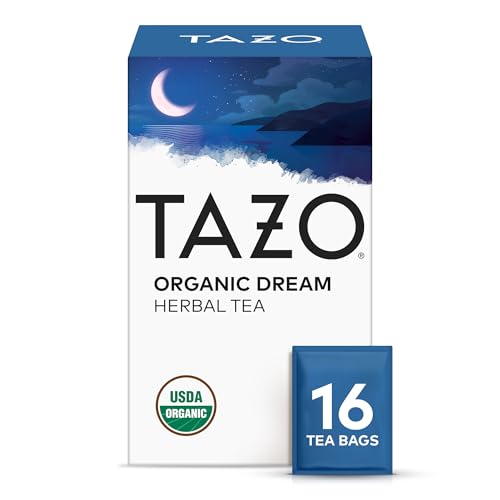
If you’re looking for a simple, caffeine-free way to wind down before bed, TAZO Organic DREAM Herbal Tea (16 Bags) offers a thoughtfully crafted blend that combines calming botanicals with a touch of natural flavor. I find the mix of chamomile, lavender, and valerian root helps ease my mind after a long day, while the subtle notes of sweet almond and vanilla make it enjoyable to sip. It’s organic and best steeped for 5 minutes in hot water-I sometimes add a splash of milk and honey. This tea won’t cure insomnia, but as part of a quiet routine, it supports a smoother shift into rest.
Best For: Individuals seeking a caffeine-free, organic herbal tea to support relaxation and improve bedtime routines.
Pros:
- Features a calming blend of organic chamomile, lavender, and valerian root
- Enhanced with naturally flavored notes of sweet almond and vanilla for a soothing taste
- Easy to prepare with a 5-minute steep time, ideal for an evening ritual
Cons:
- May not be effective for those with severe sleep disorders or insomnia
- Flavor may be too mild or floral for those who prefer stronger tea profiles
- Relatively small quantity with only 16 bags per box
Factors to Consider When Choosing Organic Sleep Tea
You’ll want to check for herbal ingredients like chamomile, valerian root, or passionflower, since they’re known to support relaxation and sleep. Make sure the tea is caffeine-free and certified organic, so you know you’re getting a clean, safe product without hidden stimulants. Think about flavor and how strong the tea feels-some blends taste better and work faster, but your personal preference and consistency matter most over time.
Herbal Ingredients To Seek
A quiet mind often begins with the right blend of nature’s remedies, and knowing which herbal ingredients to seek can make a meaningful difference in your search for restful sleep. You’ll want teas with valerian root, shown in studies to help you fall asleep faster by supporting GABA activity in the brain. Passionflower has proven helpful for mild sleep issues, offering calm without drowsiness the next day. Chamomile’s apigenin binds to brain receptors that reduce insomnia, making it a gentle nightly choice. Lavender brings balance through linalool and linalyl acetate, compounds that ease nervous tension shown in clinical trials. Try lemon balm too, especially combined with other herbs, since it lowers restlessness by boosting calming signals. Look for these ingredients in certified organic blends, where each herb is sourced for potency and purity. You’re not just drinking tea-you’re building a routine grounded in research.
Caffeine Free Assurance
Look for a clear caffeine-free label when choosing an organic sleep tea, since even small stimulant amounts can disrupt your ability to wind down. Caffeine can linger in herbal teas if they’re processed on shared equipment, so a certified caffeine-free status matters. Opt for blends made only from naturally caffeine-free botanicals like chamomile, valerian root, or passionflower. These herbs won’t stimulate your brain’s adenosine receptors, helping maintain your natural sleep drive. Third-party tests often back certifications, verifying no caffeine slipped in during production. Without that check, trace contaminants might delay sleep onset. You’ll want assurance the product was built with sleep quality in mind, not just labeled after the fact. Check packaging for explicit claims and supporting details. A reliable tea performs quietly but effectively-just like your ideal night’s rest. Try samples if available, and monitor how your body responds over a few nights.
Organic Certification Importance
When choosing an organic sleep tea, verifying organic certification is a practical step toward guaranteeing both quality and safety. You can trust that certified teas use herbal ingredients grown without synthetic pesticides, herbicides, or fertilizers, reducing your exposure to harmful chemicals. These products also avoid GMOs, so you know the plants are natural and unmodified. Certified farms must grow herbs in soil free of banned substances for at least three years, supporting cleaner, more sustainable agriculture. Independent third parties monitor every step, from farming to packaging, enforcing strict standards. This oversight guarantees transparency and traceability in the supply chain, so you can see where and how your tea was made. Choosing certified organic means you’re getting a product held to clear, verifiable guidelines-giving you peace of mind with each cup.
Flavor Profile Preferences
Many organic sleep teas deliver distinct flavor profiles that can influence your experience and satisfaction. You’ll often notice earthy, minty notes from valerian root and peppermint, which add grounding and cooling sensations. If you prefer something floral, blends with lavender or chamomile offer a soothing, aromatic taste that feels calming to sip. Some herbs, like valerian, have a strong, pungent flavor you might find intense-many brands balance this with spearmint, lemon balm, or vanilla to smooth out bitterness. Since these teas are caffeine-free, their flavors come entirely from natural plant compounds, which unfold best when steeped 8–10 minutes. A longer steep brings out deeper, more nuanced tones. Choosing a flavor you enjoy makes it easier to stick with your nighttime routine. Pick a profile that suits your taste-it improves consistency and helps make nightly relaxation feel natural.
Potency And Effectiveness
You’ve already thought about how a tea tastes, but now it’s time to contemplate how well it works. Look for blends with valerian root, chamomile, or passionflower-these are backed by research to support sleep quality thanks to their calming effects. Teas with more valerian root tend to help you fall asleep faster and reach deeper sleep stages. Herbs like lavender and lemon balm add potency through essential oils that soothe your nervous system. When combined, these ingredients often work better together than alone, targeting different parts of your sleep cycle. Steep your tea for 8 to 10 minutes so it releases key compounds like apigenin in chamomile. That small step boosts effectiveness. Choosing a potent blend means checking both ingredients and preparation. It’s not just flavor-it’s how the tea performs when your body needs rest.
Tea Bag Material Safety
A good night’s sleep starts with more than just the herbs in your cup-what holds those herbs matters just as much. Many traditional tea bags contain polypropylene, a plastic that can release microplastics into your tea when steeped in hot water. You’re better off choosing plastic-free options sealed with plant-based adhesives and made from oxygen-bleached paper, which avoid chlorine processing and reduce dioxin exposure. Look for compostable bags made from materials like PLA, derived from cornstarch, though remember they break down only in industrial facilities. Staple-free designs also help by eliminating metal components that can degrade into harmful particulates. These construction details affect not just your health but the environment too. When selecting a tea, consider how the bag is built-its materials, seals, and processing-as part of your overall sleep support strategy.
Brand Transparency And Ethics
What goes into your tea is just as important as what you avoid, and that includes not only ingredients but the values behind the brand. You’ll want to choose companies that openly share where their herbs come from and how they’re grown, harvested, and transported. Look for clear sourcing details and farming practices, so you know exactly what’s behind each cup. Prioritize brands with third-party certifications like USDA Organic, Non-GMO Project Verified, or B Corp status, since these back up ethical claims. Check if they publish impact reports or environmental metrics on energy, waste, and packaging. Transparent supply chains mean fewer hidden costs to people and the planet. When you pick brands that are open about their practices, you’re supporting accountability and sustainability-factors that quietly influence not just sleep quality, but your overall peace of mind.
Serving Size And Value
Choosing the right serving size can make a real difference in both cost and convenience over time. If you drink organic sleep tea nightly, larger packages with 48 or 96 tea bags usually offer a lower price per cup than smaller 16-bag boxes. Buying in bulk means fewer trips to restock and steady access when you need it most. Many multi-packs use individually wrapped bags to keep flavor and potency intact, though this can raise the price slightly. Check the cost per ounce or per tea bag to compare value across brands. Keep in mind that big boxes often come in recyclable or multi-layer cartons that protect shelf life but may affect environmental footprint. While larger sizes save money over time, they’re best if you’re committed to regular use. Consider starting with a mid-size pack to test effectiveness before committing to bulk.
Frequently Asked Questions
Can I Drink Sleep Tea Every Night Safely?
You can drink sleep tea every night safely, but it depends on the ingredients and your health. Most herbal blends with chamomile or passionflower are gentle, but some contain strong herbs like valerian, which might cause drowsiness or upset your stomach over time. Check with your doctor if you’re pregnant, on meds, or have liver issues. Try a tea for a week, notice how you feel, and rotate brands or formulas to avoid building tolerance.
Does Organic Sleep Tea Contain Caffeine?
No, organic sleep tea doesn’t contain caffeine if it’s purely herbal. You’ll find blends made from chamomile, valerian root, or passionflower, all naturally caffeine-free. Always check the label, though-some brands mix in green or black tea, which do have caffeine. Look for “caffeine-free” on the packaging and confirm the ingredients list. Trying a sample first helps guarantee it works for your sleep routine without unwanted stimulation.
How Long Before Bed Should I Drink Sleep Tea?
You should drink sleep tea about 30 to 60 minutes before bed. This gives your body enough time to absorb the calming compounds and start feeling drowsy. Drinking it too early might reduce its effect, while too late could mean nighttime bathroom trips. Choose caffeine-free blends to avoid interference. Try different timings over a few nights to see what works best for your sleep routine.
Are There Any Side Effects of Sleep Teas?
You might experience mild side effects from sleep teas, like stomach upset or drowsiness the next morning, especially if you drink too much or take them with medications. Some herbs interact with drugs or affect conditions like pregnancy or liver issues. Always check labels, start with a small amount, and talk to your doctor if you’re unsure. Trying a tea once helps you gauge your body’s response safely.
Can I Re-Steep Organic Sleep Tea Bags?
Yes, you can re-steep organic sleep tea bags, but the second brew will be milder. The first infusion extracts most active compounds like chamomile or valerian, so effectiveness may decrease. If flavor and scent remain noticeable after the first steep, go ahead and reuse it-just don’t expect identical results. Check packaging for guidance, as blends vary. Some brands design bags for single use to guarantee consistent potency.