Best Alarm Clocks for Preschoolers That Make Mornings Easy
You can simplify your preschooler’s morning routine with a color-coded alarm clock that uses red light to signal bedtime and green for wake time, helping reinforce sleep cues without reading a clock. Many models include gradual light shifts, soothing sounds, and night lights in sleep-friendly red or amber. Look for adjustable brightness, a 20–30 minute wake-up countdown in yellow, and a 9-minute snooze. These clocks support circadian rhythm development while offering durable, child-safe designs. Some include battery backup and dual alarms for flexible scheduling. Options with reward charts or storybooks can further strengthen routine consistency. Choosing one with customizable light and sound settings lets you balance effectiveness and comfort. The full list highlights top models that combine these features effectively.
We are supported by our audience. When you purchase through links on our site, we may earn an affiliate commission, at no extra cost for you. Learn more. Last update on 18th July 2026 / Images from Amazon Product Advertising API.
Notable Insights
- Color-coded lights (red, yellow, green) help preschoolers understand sleep and wake times without reading a clock.
- Gentle alarms with nature sounds or lullabies ease children awake without causing stress or confusion.
- Night lights with adjustable brightness and warm red or amber tones support melatonin production for better sleep.
- Fun designs with cartoons, animals, or stars make the clock engaging and reduce morning resistance.
- Dual alarms and child locks support consistent routines while preventing accidental setting changes.
Kids Alarm Clock with Ok to Wake Light

Have you ever wondered how to help your preschooler understand when it’s time to stay in bed and when it’s okay to start the day? I’ve found the Kids Alarm Clock with Ok to Wake Light makes a real difference. It uses red and green lights to clearly signal sleep and wake times, supporting consistent morning routines. The colorful night light offers ten hues and five brightness levels, easing shifts from day to night. Buttons sit right on the face, simple to use, with 12/24-hour formatting and a 9-minute snooze. It stays plugged in, keeps settings after power-offs, and holds up well thanks to sturdy, child-safe materials. It’s a practical choice, often gifted for birthdays or holidays.
Best For: Families with toddlers or preschoolers who need help establishing consistent sleep and wake routines.
Pros:
- Uses intuitive red and green light signals to teach kids when to stay in bed and when it’s okay to wake up
- Offers 10 color options and 5 brightness levels for a customizable, soothing night light experience
- Simple, child-friendly design with easy programming, 12/24-hour format, and 9-minute snooze function
Cons:
- Must remain plugged in during use, limiting placement flexibility
- Lights may be too bright or stimulating for some sensitive sleepers at higher brightness levels
- No built-in battery backup, so power outages could disrupt settings despite retention after normal power cycles
LittleHippo Mella Kids Alarm Clock (Arctic Blue)
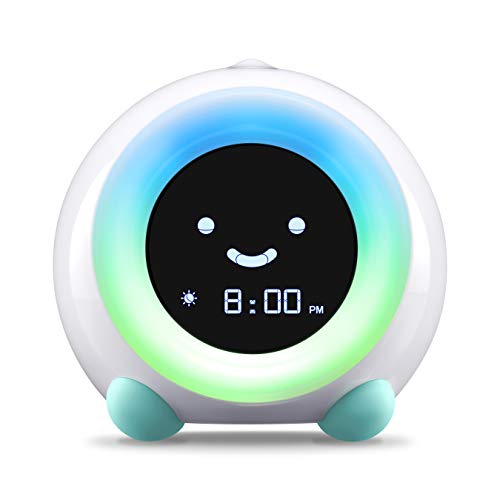
What makes the LittleHippo Mella Kids Alarm Clock (Arctic Blue) stand out for your preschooler? Its patented design uses color cues and facial expressions to guide sleep and wake times-yellow light appears 30 minutes before wake time, then shifts to green when it’s okay to get up. It offers three sleep sounds, five night light colors, and grows with your child through adjustable alarms and a silent countdown mode. Made from child-safe ABS and silicone, it meets FCC, CE, and CPSIA standards. Backed by a 100% satisfaction guarantee, it balances safety, adaptability, and proven sleep training support.
Best For: Preschoolers and young children who need visual and auditory cues to establish consistent sleep and wake routines.
Pros:
- Uses intuitive color cues and facial expressions to teach children when to sleep and when to wake up
- Offers multiple sleep support features including sleep sounds, adjustable night lights, and silent countdown mode
- Made from child-safe materials and meets major international safety standards
Cons:
- Limited color customization for alarm cues beyond preset yellow-to-green transition
- Sound and light features may be too stimulating for highly sensitive children
- Requires consistent charging or power source to maintain settings and functionality
Kids Alarm Clock with Night Light & Sound

When helping preschoolers build a consistent sleep routine, a gentle nudge from the right tool makes all the difference-and this kids alarm clock with night light and sound steps in as a reliable guide. It uses color cues-green for wake-up, red for bedtime-so kids learn timing without reading clocks. Seven soothing sounds and five lighting modes create a calming space, easing separation and supporting sleep onset. I appreciate the dual alarms, letting me set weekday and weekend routines, plus a 9-minute snooze up to three times. The night light turns off automatically, reducing dependency while comforting at night. Made from safe ABS and silicone in a friendly cat shape, it’s durable, simple to clean, and fits small hands.
Best For: Parents seeking a child-friendly, safe, and interactive alarm clock to help preschoolers learn sleep and wake times with soothing sounds and calming lights.
Pros:
- Uses intuitive color cues (green sun for wake-up, red moon for bedtime) to help young children understand routines without needing to read time
- Offers 7 soothing sounds and 5 lighting modes to create a comforting sleep environment and ease nighttime anxiety
- Features dual alarms and a customizable snooze function for flexible weekday and weekend scheduling
Cons:
- Limited to basic light and sound functions without smart features like app connectivity or voice control
- Cat-shaped design may not appeal to all children, especially older kids
- Auto-off night light may turn off too soon for children who need illumination throughout the night
Stay-in-Bed Clock for Kids – Toddler Sleep Trainer, Night Light & Alarm
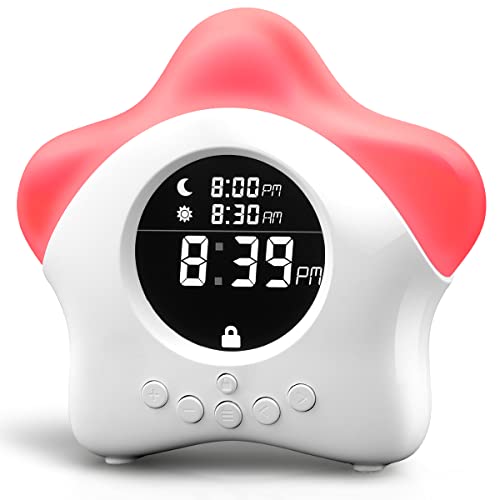
If your toddler struggles with knowing when it’s time to stay in bed or wakes too early, the Stay-in-Bed Clock for Kids offers a clear, visual solution that supports healthy sleep training. I’ve found its color-changing LED light-red for sleep, yellow for almost time, green for wake-up-makes rules easy to follow. It runs on power with a DC adapter and USB cord, plus a battery backup keeps settings safe during outages. The digital display is sharp, and built-in sounds and a nightlight add comfort. I appreciate the included storybook, reward chart, and sleep tips-they make routines stick. Custom timing and proven strategies help build independence, and the 2022 model runs steadily, with helpful materials if you need them.
Best For: Parents of toddlers and young children who need help understanding when to stay in bed and when it’s okay to wake up, especially those establishing consistent sleep routines.
Pros:
- Clear color-coded light system (red, yellow, green) helps toddlers visually understand sleep and wake times
- Includes helpful accessories like a storybook, reward chart, and sleep strategy tips to support long-term routine building
- Reliable power operation with battery backup ensures settings are maintained during outages
Cons:
- Battery backup requires separate purchase of batteries, not included with product
- Limited sound options with only two adjustable volume levels
- Requires AC power to operate, so not ideal for travel without additional adapters
Kids LED Alarm Clock Colorful Display
A Kids LED Alarm Clock with a colorful display works best for preschoolers who respond well to visual cues and interactive learning, especially when establishing consistent sleep routines. I’ve found its 7-inch screen, with bright cartoon fonts and multiple display formats, keeps time easy to read and engaging. It shows time, date, and day clearly, adapts brightness automatically, and saves settings during outages. With 17 alarms-five daily, twelve scene-based-it uses images and voice cues to guide tasks. Multilingual support aids time learning, while the watercolor design fits most rooms. It’s durable, kid-friendly, and helps build independence without hype or excess.
Best For: Young children, especially preschoolers, who benefit from visual, interactive tools to learn time and establish daily routines.
Pros:
- Large, colorful LED display with cartoon fonts and multiple formats makes time easy to read and engaging for kids
- 17 customizable alarms with scene images and voice cues help reinforce daily schedules and task awareness
- Automatic brightness adjustment and battery backup ensure reliable, eye-friendly use in any lighting condition
Cons:
- May be too stimulating for children sensitive to light or sound at night
- Multilingual and scene-based features may require parental setup and guidance for full use
- Larger size might not fit on small nightstands or in compact spaces
MASHI Dinosaur Alarm Clock with Night Light

The MASHI Dinosaur Alarm Clock with Night Light is a solid choice for parents seeking a sleep aid that combines visual cues, soothing sounds, and gentle lighting to support healthy sleep habits in preschoolers. I use sun and moon icons to signal wake and bedtime-green for rising, blue for sleeping-and the light shuts off after an hour, helping kids stay in bed. I offer six calming sounds, like ocean waves and campfire crackles, with a 30-minute auto-off. My dual alarm system includes a deep-sleep wake-up tone, two light modes, and seven color options. I’m small, lightweight, and plug in easily, though I need power for long-term lighting. I’m ideal for gifting and encourage independent sleep without overstimulation.
Best For: Parents of preschoolers looking for a gentle, visual, and auditory sleep-training tool to encourage healthy sleep habits and independent bedtime routines.
Pros:
- Uses intuitive sun and moon lighting (green and blue) to help children understand wake and sleep times
- Offers six soothing ambient sounds with a 30-minute auto-off to support calm sleep onset
- Features dual alarms, seven color options, and two light modes for customizable, non-overstimulating nighttime comfort
Cons:
- Requires a power source for extended lighting use, limiting portability despite included battery
- Light automatically turns off after one hour, which may be too short for children who need longer night light exposure
- Sound and light features may not be sufficient for children with sensory sensitivities or severe sleep disruptions
Ok to Wake Alarm Clock for Kids

This alarm clock works especially well for parents guiding preschoolers through sleep training, thanks to its color-coded OK to Wake system that clearly signals when it’s time to stay in bed or get up. The red light tells my child to stay put from 7–11 PM, the yellow light counts down 20 minutes before wake-up, and green means it’s okay to rise between 6–9 AM. It has dual alarms with weekday, weekend, or daily options and a 5-minute snooze. The LED display offers five brightness levels and night mode, while 11 ambient colors create a calm space. I appreciate the 10 ringtones, touch controls, child lock, and USB power-simple, safe, and effective.
Best For: Parents of preschoolers looking for an intuitive, color-coded sleep-training tool to help establish healthy bedtime and wake-up routines.
Pros:
- Clear OK to Wake system with red, yellow, and green lights effectively communicates sleep and wake times to children
- Dual alarms with flexible scheduling (daily, weekdays, weekends) and 5-minute snooze support consistent routines
- Adjustable brightness, 11 ambient colors, and 10 ringtones create a customizable and calming sleep environment
Cons:
- Requires USB power only, limiting portability without access to an outlet or power bank
- No battery backup, so power outages may disrupt settings despite memory function
- Touch controls may be less intuitive for very young children without parental guidance
Ok to Wake Kids Alarm Clock

When teaching young children to recognize when it’s time to get up and when it’s time to sleep, the Ok to Wake Kids Alarm Clock by DINVEL stands out as a practical tool for families establishing consistent routines. I’ve found its color-coded system-red for rest, green for rise-helps kids understand timing without needing to read clocks. The compact, star-shaped design fits neatly on any nightstand, and though it must stay plugged in, the backup battery keeps settings intact during outages. With ten ambient light colors, adjustable brightness, and gentle wake sounds, it offers useful customization. Its simple button interface and child lock make it easy to manage, and the included wall adapter guarantees ready setup.
Best For: Families with toddlers and young children who are establishing consistent sleep routines and want a visual aid to signal bedtime and wake-up time.
Pros:
- Color-coded lighting (red for bedtime, green for wake-up) helps children understand sleep schedules without reading time
- Customizable ambient lights, sounds, and brightness levels create a soothing sleep environment
- Backup battery retains settings during power outages, and includes child lock for accidental changes
Cons:
- Must remain plugged in for primary operation, limiting placement flexibility
- Plastic construction may feel less durable for rough handling by young kids
- Limited functionality beyond sleep training, with no smart features or app integration
Kids Alarm Clock with Night Light & Sound
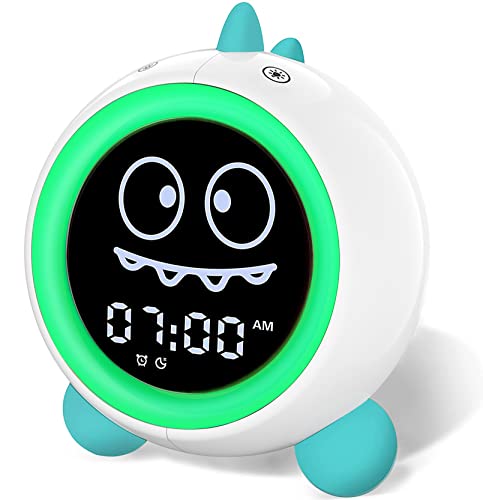
A preschooler struggling with early wake-ups or difficulty settling down at bedtime benefits most from a clock that combines gentle visual cues with soothing sound options, and the Kids Sleep Training Clock delivers exactly that. I appreciate its color-coded alerts and expressive faces, which clearly signal sleep or wake time. The 9 night light colors and 5 white light brightness levels let me customize the mood, while the 17 built-in sounds-like white noise and lullabies-help quiet the room. It’s made of soft silicone and ABS, measures 5 inches wide, and stays plugged in safely. I rely on the child lock and 1-year warranty for peace of mind.
Best For: Toddlers and preschoolers struggling with early wake-ups or bedtime resistance who benefit from visual cues and calming sounds to establish healthy sleep habits.
Pros:
- Color-coded alerts and expressive faces help children understand when to stay in bed and when it’s okay to wake up
- Offers 9 night light colors and 5 brightness levels for customizable sleep-friendly lighting
- Includes 17 soothing sounds like white noise, lullabies, and nature sounds to aid relaxation and mask disruptive background noise
Cons:
- Must remain plugged in at all times, limiting placement flexibility
- Lacks smart features or app connectivity for advanced customization
- Some children may find the dinosaur design less appealing over time
Kids Alarm Clock with Sound Machine
You’ll find the Kids Alarm Clock with Sound Machine especially helpful if your child struggles with moving between bedtime and wake time, as it combines visual cues, soothing audio, and gentle lighting to support consistent sleep habits. I use the color-coded sun and red glow indicators to signal wake and sleep times, which helps my child understand when to stay in bed. The 12 built-in sounds, like rain and lullabies, calm her mind, and I set the timer to turn off after 30 minutes. Ten volume levels let me adjust audio softly. The dimmable night light offers 10 colors, including sleep-friendly red. I appreciate the customizable alarm tones and child lock, which prevent accidental changes.
Best For: Parents of children ages 3–12 who need help establishing consistent sleep routines using visual, audio, and light cues.
Pros:
- Color-coded visual indicators (sun/green for wake time, red glow for bedtime) support healthy sleep training
- 12 soothing sounds with adjustable volume and auto-shutoff timer aid in calming and sleep maintenance
- Dimmable 10-color night light, including sleep-optimized red light, assists nighttime routines without disrupting sleep
Cons:
- Plug-in design limits placement options without access to a nearby outlet
- LCD display, while clear, may be too bright for some children even on dimmest setting
- Limited sound customization-no option to upload or add personal lullabies or audio
Factors to Consider When Choosing an Alarm Clock for Preschoolers
You’ll want to look for visual time cues like color-coded displays or morning icons that help your child understand when it’s time to wake up. Consider sound customization options, brightness settings, and color controls so you can tailor the clock to fit your child’s sleep needs and room environment. Don’t overlook power reliability features or a child-friendly design that’s easy to use and built to last through regular handling.
Visual Time Cues
Since young children often struggle to interpret time, visual cues built into alarm clocks offer a clear, intuitive way to guide their sleep and wake routines. You’ll want a clock that uses color-coded lights-red for bedtime, green for wake time-so your child knows when to stay in bed or get up. Many models add a yellow or amber light 20 to 30 minutes before wake time, gently signaling morning is near. Icons like a sun or moon help non-readers connect visuals with routines. Some clocks ease changes with gradual color shifts or changing facial expressions, offering subtle cues about time changes. These consistent signals support circadian rhythm development by building reliable associations between light and sleep behaviors. Look for models with adjustable brightness and reliable color accuracy to guarantee clarity. Most come with at least a one-year warranty, giving you time to assess effectiveness.
Sound Customization Options
Though some preschoolers respond well to soft melodies, others may need specific sounds to move smoothly between wake and sleep, so choosing a clock with flexible sound customization is key. You’ll find models offering up to 17 sounds, from white noise and lullabies to nature clips, letting you match audio to your child’s preferences. Adjustable volume controls-often with 10 levels-help tailor sound intensity to sensitivity or room size. Many include automatic shutoff timers (15 to 90 minutes) to avoid overnight playback and reduce dependency. Some clocks use voice-based cues or scene-specific alerts to guide routines, supporting consistency. Alarm types vary, too: birdsong, gentle chimes, or soft music work for slow risers, while others may need firmer tones. Test different options to see what supports your child’s natural wake pattern without causing stress.
Brightness And Color Control
A clock’s brightness and color settings play a meaningful role in shaping your child’s sleep and wake patterns. You’ll want adjustable brightness with at least five levels so the display stays visible during the day but dims enough at night to avoid disrupting sleep. Red and amber tones help support melatonin production, making them ideal for bedtime signals, while green or blue hues simulate daylight and gently encourage alertness at wake-up time. Look for models with automatic brightness adjustment-they adapt to room lighting and reduce eye strain. Clocks offering 9 to 11 color options give you more flexibility to match your child’s preferences or room decor, plus reinforce routine cues. These features work together to support consistent sleep habits without overstimulation. Choosing a clock with thoughtful brightness and color control can make shifts smoother and sleep more reliable.
Power Reliability Features
When a power outage hits, you don’t want your child’s sleep routine to fall apart-so look for alarm clocks with built-in backup features that keep time and alarm settings intact. Many models rely on wall power, but without backup, they reset when unplugged. Choose clocks with a CR2032 coin cell or internal battery to maintain memory during outages. These preserve alarm times and settings, so your child wakes on schedule without daily reprogramming. Clocks with automatic restore resume functions right after power returns, supporting consistent sleep training. While they still need plugging in for full operation, the backup guarantees reliability. Some also offer low-power modes and automatic brightness adjustment to handle voltage shifts smoothly. This stability helps maintain predictable routines, especially in areas with frequent power fluctuations. Checking for memory retention and emergency power support gives you a more dependable tool for managing sleep without surprises.
Child Friendly Design
Look for alarm clocks designed with safety and simplicity in mind, especially after ensuring they’ll keep running during outages. Choose models made from non-toxic, BPA-free ABS plastic or food-grade silicone, which are safe for little hands and mouths. Rounded edges reduce injury risks, while lightweight designs-usually under 1 pound-stay stable yet harmless if knocked over. Bright colors and fun shapes like animals or stars engage preschoolers, making sleep routines feel friendly. Touch-sensitive surfaces or large buttons let kids turn off alarms or adjust sounds easily, encouraging independence. Many clocks include child locks to prevent accidental setting changes, preserving consistent wake-up times. These features, combined with durable construction, support long-term use. Check for warranty options or trial periods when available, so you can test performance. A well-designed clock balances safety, usability, and appeal-making mornings smoother for both kids and parents.
Frequently Asked Questions
Can I Use Rechargeable Batteries in These Clocks?
Yes, you can use rechargeable batteries in most of these clocks, and they work well once charged. You’ll save money over time and reduce waste. Just make sure the voltage matches what the clock needs-usually 1.2V per battery. Some models may drain rechargeables faster, so you’ll want to test them. If power stability matters, consider plugging into USB instead. Always check the manual first.
Are These Clocks Safe for Children With Allergies?
Yes, these clocks are safe for kids with allergies since they’re made from non-toxic, BPA-free plastics and don’t emit allergens. You won’t find fabrics or latex in them, reducing exposure risks. Their smooth surfaces let you wipe them down easily, keeping dust and irritants low. Always check product labels for material details, and consider a brief trial if sensitivities are severe. Most brands offer warranties, so you can return them if unexpected reactions occur.
Do Any Models Connect to Smart Home Systems?
Yes, some models connect to smart home systems like Alexa or Google Assistant, letting you control them with voice commands or routines. You’ll want to check compatibility before buying, since not all kids’ clocks support smart features. These often include adjustable light settings, sounds, and timers that sync with your home devices. Look for ones with simple setups and strong privacy protections. Many offer trial periods, so test them to see how well they fit your morning flow.
Can I Turn off Sounds Completely on These Clocks?
You can turn off sounds completely on most preschool alarm clocks-many let you disable audio while keeping visual cues like lights. Some models offer full sound customization, so you control volume or mute alerts. Check product settings to confirm mute options. If silence matters, pick clocks labeled “silent alarm” or “light-only mode.” Test during trial periods, since performance varies. Always review warranty details in case adjustments don’t meet your child’s sleep needs.
Are Replacement Parts Available for Broken Clock Components?
You can usually get replacement parts for broken clock components, but it depends on the brand and model. Some manufacturers offer repair kits, extra cords, or LED modules, while others suggest buying a new unit. Check warranty terms first-you might get free replacements within the coverage period. Durable models often have accessible parts, helping you extend the product’s life without full replacement.