The Role of Pre-Sleep Foam Rolling in Reducing Muscle Soreness and Improving Sleep Onset
You reduce muscle soreness and improve sleep onset by foam rolling before bed, as it releases tension, boosts blood flow, and calms your nervous system. Just 5–10 minutes targeting your calves, hamstrings, quads, and upper back helps clear metabolic waste and eases physical tightness. Slow, steady rolls with controlled breathing signal your body it’s time to rest. This drug-free routine supports recovery and sleep quality over time, especially if done consistently. You’ll find deeper comfort and better next-day mobility with regular use-discover how simple adjustments enhance results.
Notable Insights
- Pre-sleep foam rolling reduces muscle soreness by enhancing blood flow and clearing metabolic waste overnight.
- It decreases delayed onset muscle soreness (DOMS) when performed slowly on major muscle groups like quads and hamstrings.
- Foam rolling before bed activates the parasympathetic nervous system, promoting relaxation and faster sleep onset.
- Gentle, 5–10 minute sessions targeting calves, back, and legs help ease physical tension that disrupts sleep.
- Regular nightly use improves both muscle recovery and sleep quality without medication or significant time investment.
Why Foam Rolling Before Bed Aids Muscle Recovery

Recovery begins the moment you give your muscles a chance to release tension, and foam rolling before bed offers just that. You’re supporting muscle relaxation by gently breaking up tightness in the fascia, allowing your body to shift into a rest-ready state. This simple practice also delivers a circulation boost, helping deliver oxygen and nutrients while clearing metabolic waste. When you roll consistently, you’re not just easing physical strain-you’re signaling your nervous system to wind down. That can make it easier to fall asleep and improve overall sleep quality. It’s low-risk, requires no prescription, and fits easily into most routines. While it won’t replace medical sleep aids for diagnosed disorders, it may reduce reliance on them over time. Try a firm foam roller for deeper pressure or a textured one for targeted relief. Most come with warranties, so test one for a few weeks to see how your body responds. Roll slowly, focus on major muscle groups, and avoid joints.
How Foam Rolling Before Bed Reduces Next-Day Soreness

While you sleep, your body works to repair the day’s muscle strain, and foam rolling before bed can give that process a helpful push. Using targeted release on sore areas like quads, hamstrings, or back breaks up tightness and reduces tension that builds during activity. This self-massage technique signals your muscles to relax, easing stiffness you’d otherwise feel the next morning. You also get a circulatory boost-increased blood flow delivers oxygen and nutrients essential for recovery. Think of it as priming your body’s repair system just before shutdown. For best results, roll slowly for 30 to 60 seconds per muscle group, focusing on tender zones without overpressing. Consistency matters more than intensity. Over time, this nightly habit can lessen delayed onset muscle soreness (DOMS), helping you move easier the next day. It’s low-risk, requires no prescription, and fits easily into most bedtime routines.
How Foam Rolling Before Bed Improves Sleep Quality
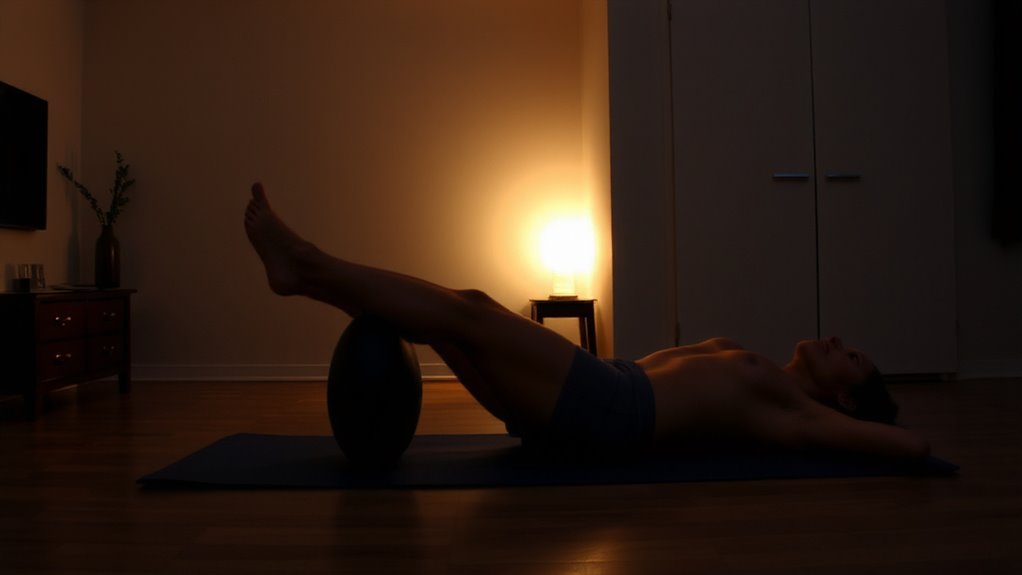
Why do you wake up feeling stiff and groggy some mornings? Tension built up during the day might be keeping your body from fully relaxing at night. Foam rolling before bed helps trigger nervous system relaxation, shifting your body into a calmer state ready for rest. This simple practice supports sleep enhancement by easing muscle tightness and quieting physical stress signals. When your muscles release tension, your mind often follows, making it easier to drift into sleep. You’re not just addressing soreness-you’re creating conditions that support deeper, more consistent rest. Unlike sleep aids, which can carry side effects or dependency risks, foam rolling offers a drug-free option with minimal trade-offs. Give it a few nights to see results, as benefits often build with regular use. It’s a practical, low-cost addition to your routine, especially if you’re looking to improve sleep without supplements or devices.
Simple Foam Rolling Moves to Do Before Bed
You can build on the relaxation you get from evening foam rolling by targeting key muscle groups with simple, effective moves. Focus on target areas like your calves, hamstrings, quads, and upper back-regions that often hold tension. Position the roller under each area and use gentle pressure, rolling slowly for 30 to 60 seconds per muscle group. Keep your movements controlled, pausing briefly on tight spots without pressing too hard. Breathe steadily to help your muscles relax. If discomfort increases, reduce the pressure or shift position. These moves require minimal effort but support muscle recovery and signal your body it’s time to wind down. Over time, consistent use may ease soreness and support better sleep onset. Choose a medium-density roller for balance between support and comfort. With regular use, you’ll learn what works best for your body’s needs.
How Long to Foam Roll Before Bed
How long should you really spend foam rolling before bed? Research and practical trials suggest the ideal duration is 5 to 10 minutes. This short window gives enough time to target major muscle groups without overstimulating your nervous system. Rolling too long may delay sleep onset, while too little might not reduce soreness effectively. Aim for slow, controlled movements-about 30 seconds per muscle group-to enhance blood flow and relaxation. Timing consistency matters just as much as duration. Doing it nightly at the same time trains your body to wind down, reinforcing sleep cues. Think of it like brushing your teeth: quick, consistent, and preventive. You don’t need fancy tools; most standard foam rollers perform well within this timeframe. If you’re using foam rolling to support sleep quality or manage mild soreness, stick to this routine and observe how your body responds over a week or two.
Who Benefits Most From Nighttime Foam Rolling
Spending a few minutes foam rolling before bed fits easily into most nighttime routines, but not everyone gains the same benefits. If you’re an athlete recovering from intense training, pre-sleep foam rolling can reduce muscle soreness and support faster recovery, potentially improving sleep quality. The gentle pressure helps release tension, which may ease the shift into restful sleep. For older adults, it can aid elderly mobility by increasing circulation and reducing stiffness, making nighttime comfort more achievable. While not a fix for chronic sleep disorders, it’s a drug-free option worth trying. Results vary, so consider a two-week trial to assess changes in how quickly you fall asleep or feel in the morning. Most rollers are durable and portable, with warranties covering construction flaws. Though mild discomfort is normal, stop if pain increases. It’s a low-risk addition that complements other sleep aids when used wisely.
On a final note
You might find that rolling before bed helps ease muscle tension, potentially reducing soreness tomorrow. It may also support faster sleep onset by calming your nervous system. Spend 5–10 minutes on major muscle groups, focusing on tight areas. Results vary, so try it consistently for a week or two. While not a treatment for sleep disorders, it’s a low-risk option. Check your roller’s warranty if it’s a foam type, and replace it if it loses shape or support over time.