How Innerspring Mattress Construction Affects Pressure Point Relief
Your innerspring mattress affects pressure relief based on coil type, cushioning, and thickness. Individually wrapped coils conform to your hips and shoulders, reducing pain better than Bonnell coils. A 2–3 inch layer of gel-infused memory foam atop the coils helps distribute weight and eases pressure points. Thicker mattresses (12–14 inches) with high-density foam and reinforced edges prevent sagging and support side sleepers. Look for models with a 100-night trial and 10-year warranty to test long-term comfort. You’ll find further details on optimizing these features for your sleep needs.
Notable Insights
- Pocketed coils provide targeted support, reducing pressure on hips and shoulders through independent movement.
- Thin coils (16–17 gauge) may conform initially but often sag, increasing pressure points over time.
- Memory foam layers above coils enhance pressure relief by evenly distributing body weight and improving contouring.
- Higher coil counts and density improve weight distribution, minimizing pressure for side and combination sleepers.
- Reinforced edge support expands usable sleep area and enhances comfort near the mattress perimeter.
Why Innerspring Mattresses Cause Pressure Pain
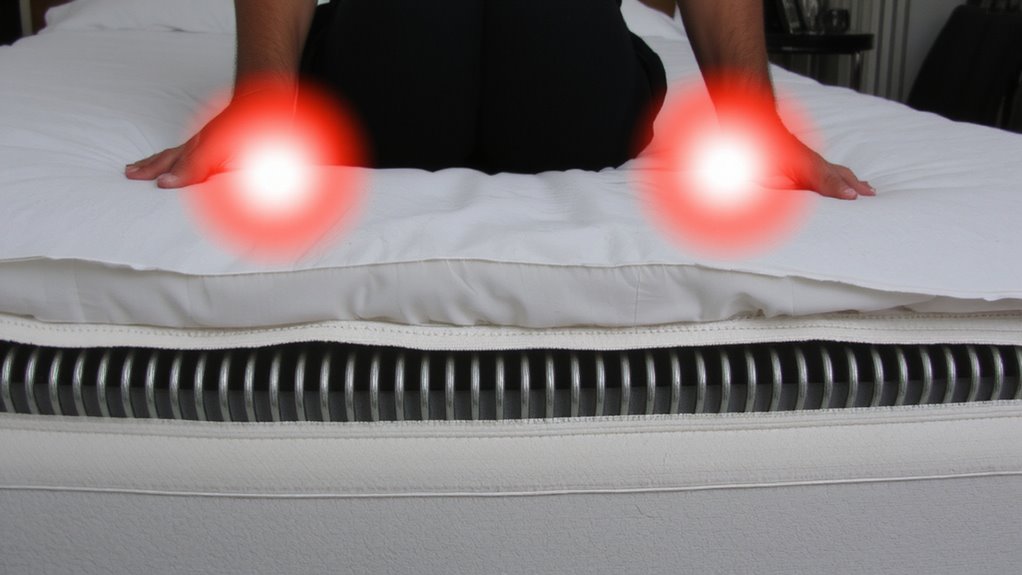
That creaky, bouncy feel you notice when you first lie down? It’s often a sign of why innerspring mattresses can cause pressure pain. The coil system offers firm support, but if the firmness level doesn’t match your body weight or sleep position, pressure builds on hips and shoulders. Without enough conforming comfort layers, your body doesn’t sink slightly where needed, increasing strain. Edge support, while helpful for sitting and durability, often makes the mattress perimeter too stiff, reducing usable sleep surface and contributing to a lack of pressure relief near the sides. This limited cushioning means your pressure points don’t get the give they need, especially if you sleep on your side. A higher firmness level may feel supportive at first, but over time, it can disrupt spinal alignment. Consider models with thicker padding, zoned coils, and strong trial policies to test comfort before committing.
Coil Type: Which One Supports Hips and Shoulders Best?
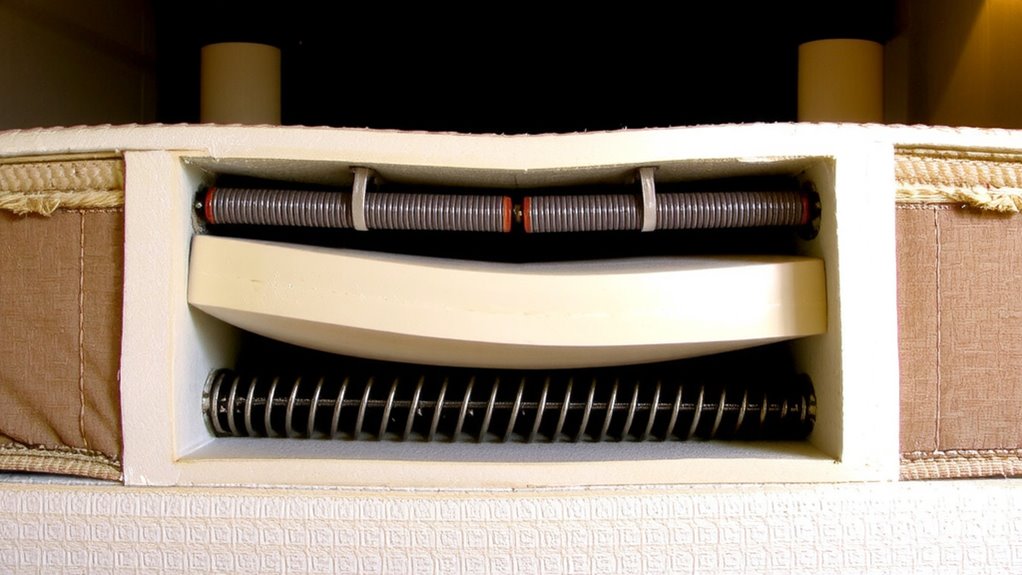
You might already know that mismatched firmness and poor cushioning in innerspring mattresses can leave your hips and shoulders feeling strained, but the type of coil inside plays a big role in how well your body’s pressure points are supported. Bonnell coils are common and affordable, but they offer less contouring and may increase pressure. Pocketed coils, on the other hand, move independently, cradling hips and shoulders more precisely. A higher coil count often means better weight distribution and improved support, especially if you sleep on your side. Look for models with reinforced edge support-this helps you sit or sleep near the edge without sagging, adding usable surface area and durability. While coil type alone won’t eliminate pressure pain, pairing pocketed coils with adequate cushioning layers can make a noticeable difference in comfort and spinal alignment over time. Always check the warranty and trial period to test suitability.
Coil Gauge: Do Thin Coils Increase Pressure Points?
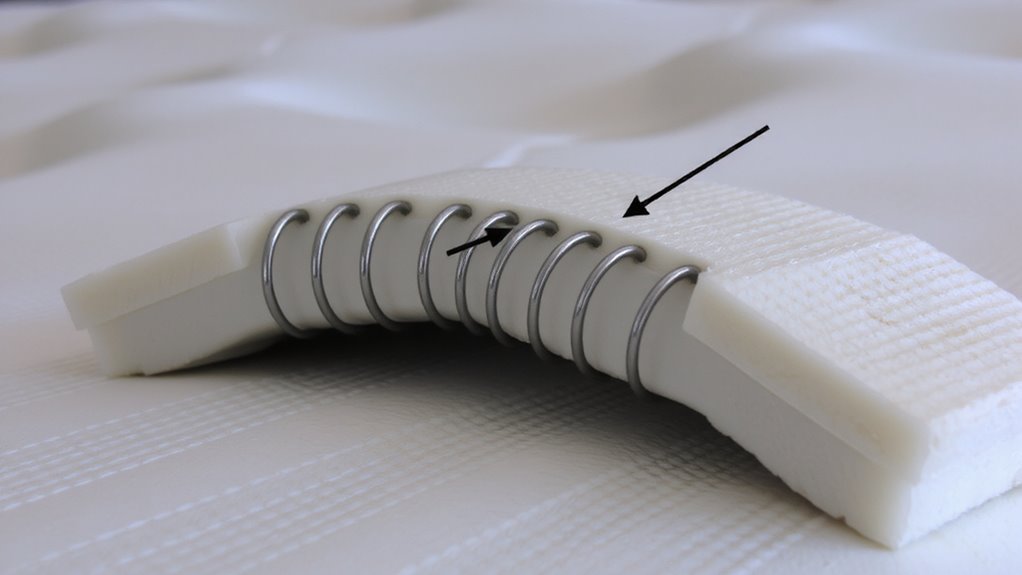
Why do some innerspring mattresses leave you feeling sore, even after a full night’s rest? It could be the coil gauge-thinner coils, usually higher in number (like 16 or 17 gauge), tend to be softer and may sag faster, increasing pressure on hips and shoulders. While they conform more at first, they often lack long-term coil durability. Thicker coils (12 to 14 gauge) offer firmer support and resist wear, helping maintain spinal alignment. Spring density also matters-more coils per square foot improve weight distribution, reducing pressure points. If you weigh more or need motion isolation, higher spring density with a lower gauge (thicker) coil is usually better. Always check warranty length and trial periods; they reflect confidence in coil durability. A mattress might feel plush at first, but without strong coil support, lasting comfort fades. Choose based on your body type and sleep position to support your healthiest sleep.
Cushioning Layers: What Foam or Padding Reduces Pain?
A supportive coil system keeps your spine aligned, but it’s the cushioning layers on top that directly influence how pressure feels on your body. If you’re prone to pain, memory foam helps by conforming closely to your shape, evenly distributing weight and reducing pressure points. Many modern innerspring models include a layer of this foam right above the coils for targeted relief. For those who sleep hot, memory foam with gel infusions can improve comfort by dissipating heat. These gel-enhanced layers maintain support while keeping temperatures balanced. Thicker cushioning offers more give, but firmness matters too - medium feels right for most. Check trial periods and warranties; they let you test comfort risk-free. Look for at least a 100-night trial and a 10-year warranty to guarantee long-term performance.
Mattress Thickness: How Deep Should an Innerspring Be for Relief?
How much does thickness really affect pressure relief in an innerspring mattress? It matters, but only when paired with proper mattress density and support layers. A thicker mattress-usually 10 to 14 inches-often provides more room for cushioning foam and coils, helping distribute your weight evenly. But thickness alone won’t guarantee comfort; a high-density core and responsive coils are key. If the innerspring unit is too shallow, you might feel bottoming out, especially if you’re side sleeping or have broader hips. Better edge support helps maintain a stable sleep surface, making it easier to move and reducing strain. Look for balanced construction: enough depth to support your body’s contours without sacrificing responsiveness. Test with your preferred sleep position in mind, and check trial periods to confirm it works long-term.
Best Innerspring Features for Back and Hip Pain
When it comes to easing back and hip pain, the right innerspring mattress can make a real difference, especially if you focus on features that support spinal alignment and cushion pressure points. Look for coils paired with a responsive comfort layer that contours to your hips without sinking too deeply. A reinforced perimeter gives you solid edge support, so you won’t roll off or feel trapped when sitting or sleeping near the edge. If you share your bed, good motion isolation means your partner’s movements won’t jolt you awake, which helps maintain uninterrupted sleep. Individually wrapped coils tend to offer better motion isolation and targeted support compared to interconnected ones. Mattresses with strong edge support and decent motion isolation often come with longer trial periods and solid warranties, letting you test comfort and durability risk-free. These features combined support restful, pain-reduced sleep over time. For those seeking optimal relief, consider models highlighted in the best mattresses for back pain roundup, which evaluates support, firmness, and material quality specific to spinal health.
On a final note
You’ll find better pressure relief in innerspring mattresses when pocketed coils support your hips and shoulders independently. Thicker, lower-gauge coils offer firmer support, while plush cushioning layers of memory foam or polyfoam help reduce pressure points. A depth of at least 12 inches usually improves comfort and durability. Look for models with trial periods and solid warranties so you can test firmness and support risk-free, adjusting your choice based on how your body responds over time.