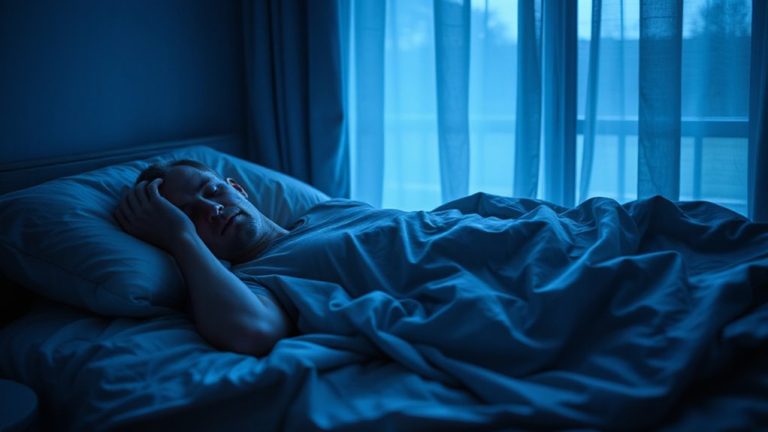
The Importance of Avoiding Evening Light in Delayed Sleep Phase Disorder
Your body’s internal clock already runs late with Delayed Sleep Phase Disorder, and evening light-especially blue light-makes it worse by delaying melatonin release. This keeps you alert when you’re trying to sleep. Avoiding screens and bright lights after sunset helps your rhythm shift earlier. Use dim, warm lighting and consider blue-light-blocking glasses. These steps support a more natural sleep onset, and consistency strengthens results. Small changes like these can gradually reset your schedule.
Notable Insights
- Evening light, especially blue light, delays melatonin release, worsening sleep onset in DSPD.
- Delayed melatonin onset pushes sleep time later, increasing circadian misalignment in DSPD.
- Blue light blocking after sunset can advance melatonin release and help shift sleep earlier.
- Dim, warm lighting in the evening supports natural circadian rhythm alignment for DSPD individuals.
- Avoiding screens and bright lights 90 minutes before bed reduces sleep delay in DSPD.
Why Your Body Clock Runs Late (DSPD Explained)
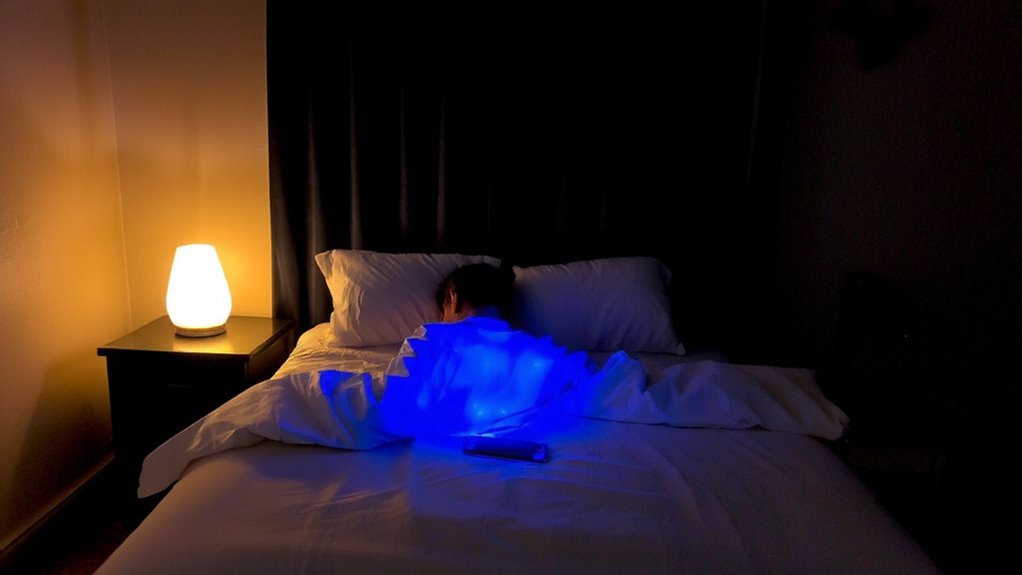
What if your body simply isn’t built for the 9-to-5 world? You might have delayed sleep phase disorder (DSPD), where your internal clock runs on a different schedule. This isn’t just preference-it’s often due to a genetic predisposition that shifts your natural rhythm. Your body’s peak alertness comes late, making early sleep and wake times feel impossible. This circadian misalignment means you’re not truly tired until hours after most people have already slept. Melatonin release starts later, core body temperature drops delay, and sleep onset is pushed further into the night. It’s not laziness; it’s biology. Treatments like morning light therapy and consistent bedtimes can help reset timing. Some explore melatonin supplements under guidance. Understanding DSPD helps you make informed choices about sleep aids, routines, and therapies that work with your body, not against it.
How Evening Light Delays Sleep in DSPD
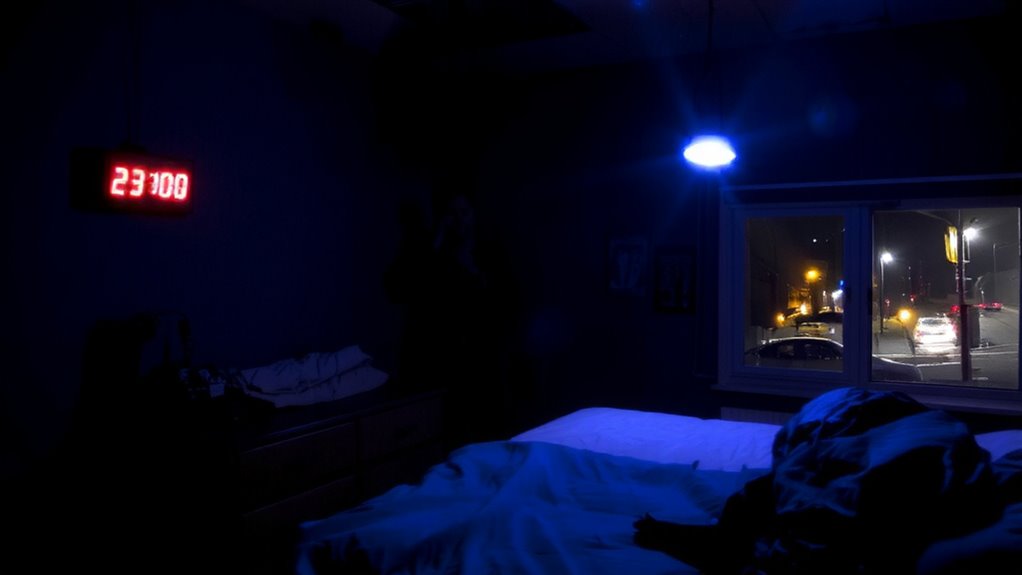
Why does turning off the lights at 10 p.m. feel pointless when your eyes aren’t tired until 2 a.m.? Because evening light-especially blue-rich light-triggers melatonin suppression, delaying your body’s signal to sleep. In DSPD, your internal clock already runs late, and nighttime light worsens circadian misalignment. This shift pushes sleep onset later, making early bedtimes feel impossible. Even dim light from screens or lamps can interfere, reducing melatonin levels and lengthening the time it takes to feel drowsy. Your natural rhythm becomes misaligned with social schedules, leading to chronic sleep loss. Avoiding bright light in the hours before bed helps minimize this delay. It supports earlier melatonin release, encouraging a more typical sleep window. Over time, this adjustment can improve sleep timing without medication. Consistency matters more than perfection-small changes build long-term results. Wearing blue light blocking glasses in the evening can significantly reduce melatonin suppression caused by screen exposure.
Block Blue Light After Sunset to Reset Your Rhythm
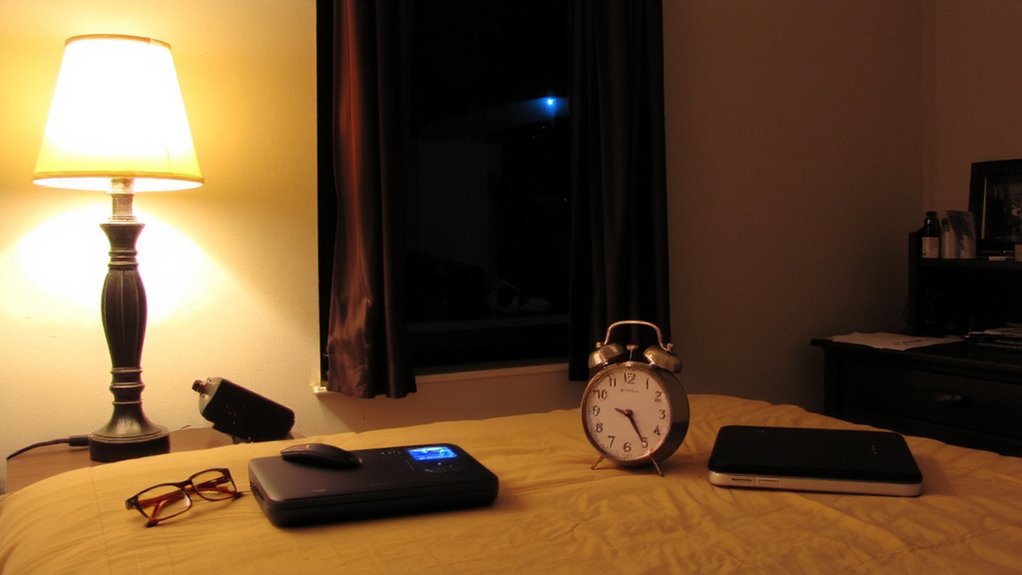
How much of your evening alertness comes from a simple light switch you can control? A lot of it, actually-especially when blue light from screens and bulbs delays melatonin release. This melatonin suppression tricks your brain into thinking it’s still daytime, worsening circadian misalignment common in DSPD. By blocking blue light after sunset, you allow your body’s natural rhythm to realign. Your internal clock responds best when exposed to warm, dim light instead. Consider using blue-light-blocking glasses or enabling built-in device filters-they’re practical tools that reduce stimulation without major lifestyle changes. Studies show consistent use can shift sleep timing earlier over time. It won’t fix everything overnight, but it supports gradual adjustment. Think of it as resetting a misaligned clock with small, sustainable input. Your sleep-wake cycle thrives on routine cues, and controlling light is one of the most direct ways to influence it. A well-chosen bedroom environment, including supportive king bed frames, can further enhance sleep quality by promoting comfort and consistency.
Reduce Artificial Light With a DSPD-Proof Night Routine
You’ve already taken steps to block blue light after sunset, and that’s a solid foundation for resetting your rhythm. Now, reduce artificial light further by shaping a DSPD-proof night routine. Dim indoor lights early, opting for warm, low-wattage bulbs that minimize light pollution in your sleep environment. Avoid overhead lighting; instead, use lamps with shades to direct light downward. Address screen habits by ending device use at least 90 minutes before bed-this includes phones, tablets, and TVs. If you must use screens, enable night modes and reduce brightness to the lowest comfortable level. Blackout curtains and eye masks help block external light sources, improving sleep onset. Consistency matters: repeat this routine nightly to support your body’s shift toward earlier sleep. Small, sustained changes in light exposure can make a measurable difference over time. For added benefit, consider incorporating best sleep-friendly lighting options designed to support circadian health.
Evening Routines That Reset a Delayed Sleep Clock
While your current habits may feel comfortable, shifting your sleep schedule earlier starts with intentional evening routines that signal to your body it’s time to wind down. Aim to finish evening exercise timing at least three hours before your target bedtime-late workouts can elevate core temperature and delay melatonin release. Similarly, meal timing influence matters; eating dinner too late disrupts digestion and circadian cues, so aim to finish meals by 7–8 p.m. Begin winding down with dim lighting, quiet activities, and consistent pre-sleep rituals like reading or light stretching. These behaviors reinforce a stable internal clock. Over time, aligning exercise and meals earlier in the day supports natural sleep onset. Small, consistent adjustments improve sleep quality without immediate reliance on sleep aids. Trial these changes for at least two weeks to assess impact, and consider tracking sleep patterns to monitor progress.
On a final note
You can manage delayed sleep phase disorder by limiting evening light, especially blue wavelengths from screens and bulbs. Dim lights after sunset, use warm-colored bulbs, and consider blue-light-blocking glasses. These steps support natural melatonin release, helping shift your sleep window earlier over time. Consistency matters more than perfection-small changes add up. Try adjustments gradually, track your sleep, and consult a sleep specialist if progress stalls.