How Innerspring Mattress Edge Support Affects Mattress Longevity
Your innerspring mattress’s edge support keeps the perimeter firm, preventing premature sagging and maintaining a stable sleep surface. Without it, coils compress faster and the usable area shrinks, shortening the mattress’s life. Reinforced edges with dense foam or sturdy coils resist wear, especially if you sit or sleep near the sides. Rotating it regularly and using proper foundation support helps too-there’s more you can do to protect your investment over time.
Notable Insights
- Strong edge support prevents perimeter sagging, preserving mattress shape and extending lifespan.
- Reinforced edges reduce structural fatigue by evenly distributing weight across the innerspring system.
- Dense foam rails and firmer coils resist compression, slowing wear on comfort layers and springs.
- Durable edge construction maintains alignment of internal components, preventing premature breakdown.
- Proper edge support increases usable surface area, minimizing strain on high-stress zones over time.
What Is Edge Support (And Why It Matters)?
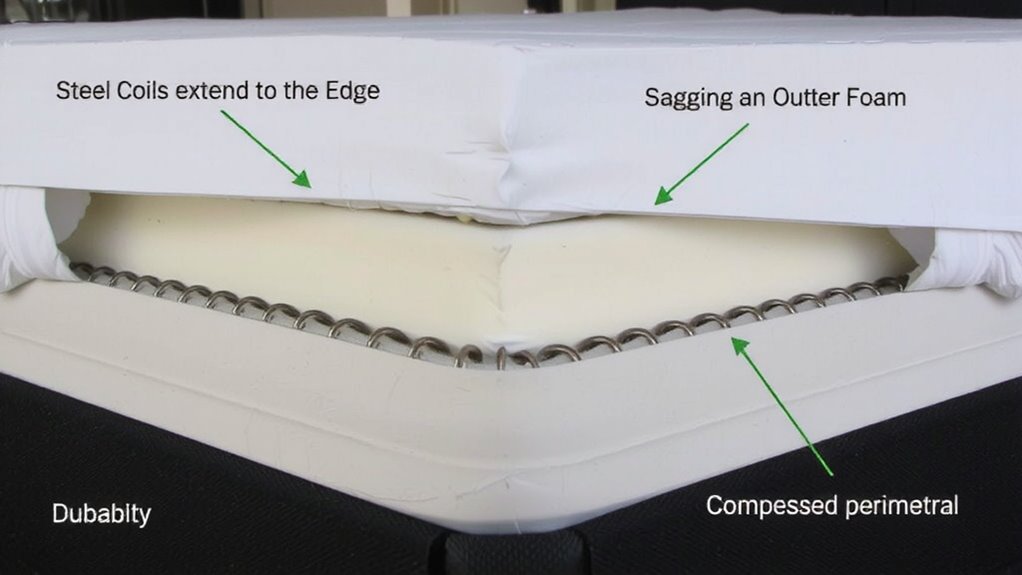
Ever wonder why some mattresses feel like they might collapse when you sit on the edge? That’s where edge support comes in. It’s the reinforced border around a mattress that helps maintain its shape and firmness along the sides. Good edge support boosts edge durability, so the mattress doesn’t sag over time, especially if you often sit or sleep near the edge. It also strengthens the mattress’s structural integrity, keeping layers aligned and preventing premature wear. In innerspring models, this often means firmer coils or a dense foam border. Strong edges give you more usable sleep surface and help with mobility when getting in and out of bed. When shopping, test the edge by sitting on it-minimal compression is ideal. Look for models with solid trial periods and warranties that cover sagging-many offer at least 10 years of protection.
Why Weak Edges Ruin Your Mattress Faster
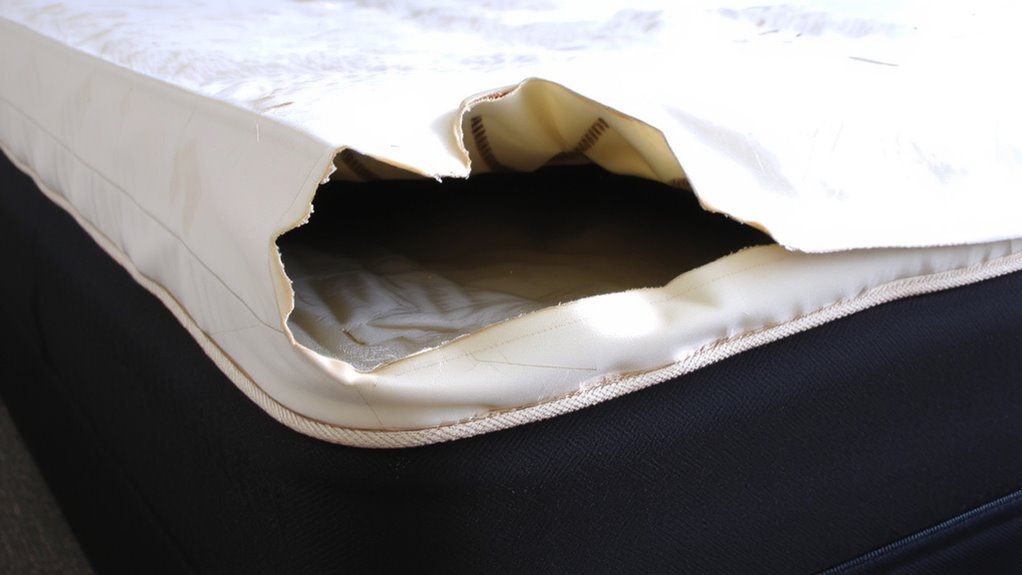
Weak edges don’t just make a mattress feel unstable-they speed up wear and reduce its lifespan. When edge compression occurs, the perimeter sinks under pressure, forcing you to sleep closer to the center. This uneven weight distribution increases structural fatigue over time, weakening coils and foams. As support breaks down, comfort layers degrade faster, shortening overall durability. A weakened edge also makes exiting the bed harder, especially for those with mobility concerns.
| Factor | Effect of Weak Edges | Long-Term Outcome |
|---|---|---|
| Edge Compression | Reduced usable surface | More rolling toward center |
| Support Loss | Uneven weight load | Accelerated wear |
| Structural Fatigue | Sagging perimeter | Shorter mattress life |
| Comfort Layers | Faster breakdown | Less pressure relief |
| Stability | Poor sitting edge | Difficulty getting up |
How to Spot Failing Edge Support
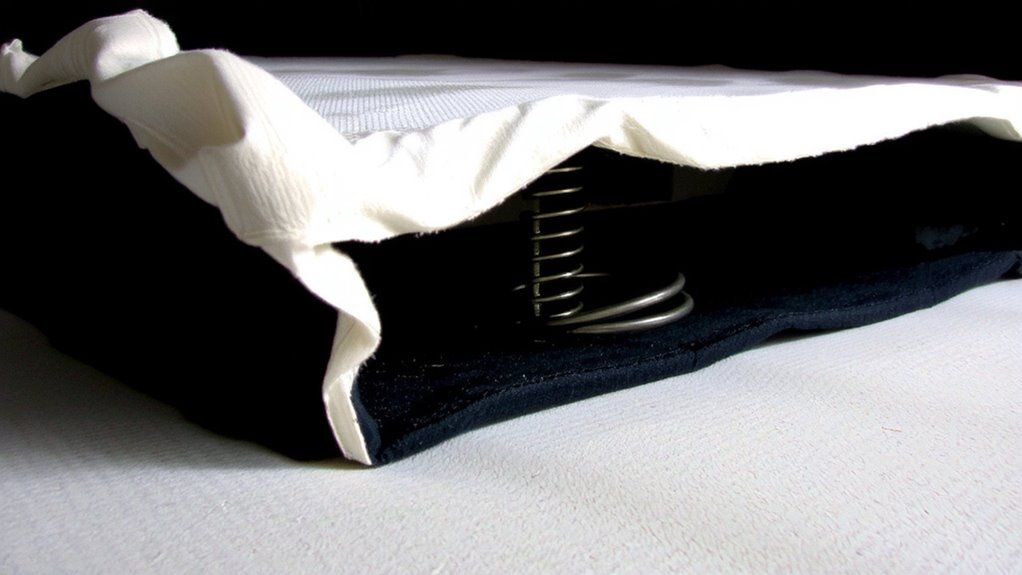
How can you tell when your mattress isn’t holding up the way it should? Look for sagging corners and uneven wear along the edges-these are clear signs of failing edge support. You might notice the perimeter feels soft or collapses when you sit, making it hard to get in and out of bed. Over time, these issues can shift your sleeping surface, leading to discomfort or disrupted rest. Uneven wear often creates a dip near the head or foot, especially on one side, suggesting structural weakness. If you wake up stiff or find yourself avoiding the edge, it’s likely the support system is breaking down. Monitoring these changes helps you decide when to evaluate a replacement. A mattress with good edge integrity usually maintains shape and support for years, but regular inspection lets you act before problems worsen. Choosing a model with reinforced perimeter coils can significantly improve durability and stability, especially in high-quality Spring Coil Mattresses.
Key Parts That Hold Mattress Edges Together
A strong edge begins with the foundation-your innerspring mattress relies on a combination of reinforced coils, high-density foam rails, and a sturdy border rod to keep the perimeter intact. You’ll find that these components work together to resist compression and provide reliable sitting and sleeping space right to the edge. Corner reinforcements add extra durability where stress is highest, especially when moving or lifting the mattress. Mattress stitching along the sides isn’t just decorative; it secures fabric layers and helps maintain structural integrity over time. High-quality stitching prevents fabric sagging and fabric separation, common signs of wear. Together, these elements support consistent performance and help prevent premature breakdown. When evaluating mattresses, check for dense foam rails and solid corner builds-they’re key indicators of long-term edge resilience. Many brands offer trial periods, so you can assess edge support in real-use conditions before committing.
How to Protect Edge Support and Extend Lifespan
You’ve seen how reinforced coils, foam rails, and border rods keep your mattress edges stable, but protecting that structure over time takes consistent care. To preserve edge reinforcement, avoid sitting or standing on the edges-this adds stress that weakens support layers. Rotate your mattress every three to six months to promote even wear, especially in innerspring models where compression can develop over time. Guarantee proper frame alignment; your bed frame should match the mattress size exactly, with no gaps that could cause sagging or misalignment. A solid foundation or slatted frame with supports spaced no more than 3 inches apart helps maintain structural integrity. Using a mattress protector also guards against spills and stains that might compromise internal materials. Most warranties cover manufacturing defects but exclude damage from improper support. Following these steps helps extend lifespan and supports better sleep posture, which can influence overall sleep quality.
On a final note
You’ll notice better mattress longevity when edge support stays strong, as it prevents sagging and extends usable surface area. High-quality coils, reinforced borders, or dense foam edges help maintain structure over time. Check for compression or leaning, especially if sitting on the edge feels unstable. Choosing a model with a solid warranty and trial period lets you test durability risk-free. Supportive edges mean fewer breakdowns, so your mattress performs longer.