How to Use Red Light in the Morning for Advanced Sleep Phase Disorder
Use red light within 10 to 15 minutes of waking, for 20–30 minutes, to help delay your circadian rhythm. Place the device 16–24 inches away, aimed below eye level, with wavelengths between 600–700 nm and verified intensity. Choose a model with adjustable brightness, a timer, and third-party testing. Combine daily use with breakfast and light exercise. Consistency strengthens results-further details reveal how to refine timing and device choice.
Notable Insights
- Use red light within 10–15 minutes of early waking to help reset your advanced circadian rhythm.
- Expose yourself to 600–700 nm wavelength red light for 20–30 minutes daily for optimal circadian signaling.
- Position the red light device 16–24 inches from your face, angled below eye level for safe, effective exposure.
- Choose a third-party tested device with adjustable brightness and timers to ensure consistent daily use.
- Combine red light exposure with morning exercise and a protein-rich breakfast to support circadian entrainment.
What Is Advanced Sleep Phase Disorder?
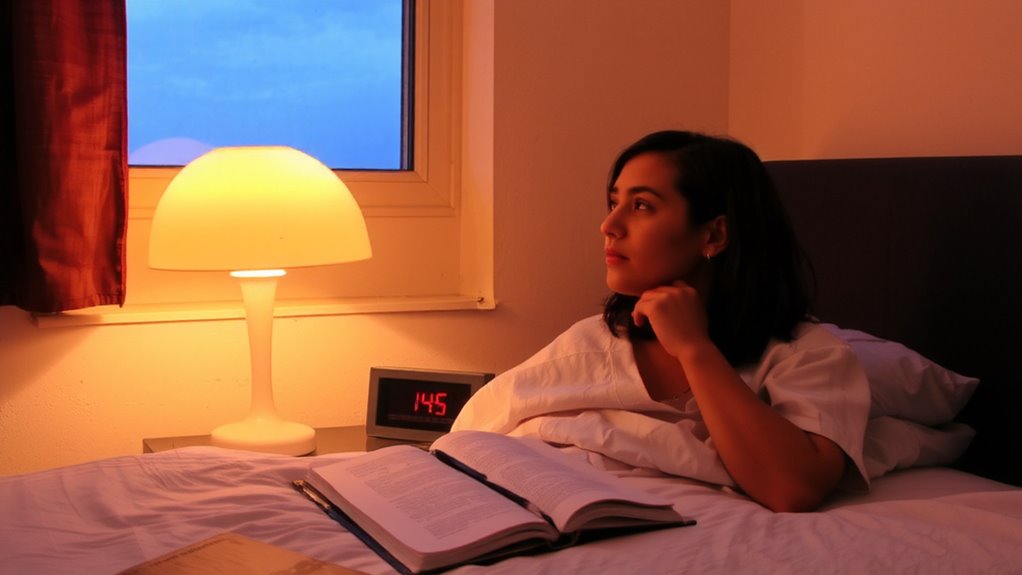
What if you felt sleepy by 7 p.m. and woke up by 3 a.m., no matter how hard you tried to adjust? You might have advanced sleep phase disorder (ASPD), a condition where your circadian rhythm shifts earlier than typical. Your body’s internal clock drives sleep patterns that don’t match social or work demands, making evening wakefulness difficult. ASPD isn’t just preference-it’s a consistent, early timing of sleep and alertness. It often runs in families and becomes more common with age. While it doesn’t harm physical health, it can limit social life and daily functioning. Diagnosis usually involves tracking sleep logs or using actigraphy. Treatment options focus on timing adjustments through light exposure, melatonin, or behavioral changes. Understanding your circadian rhythm helps you weigh solutions wisely. Always consult a sleep specialist to confirm the disorder and explore safe, evidence-based approaches tailored to your lifestyle.
Why Red Light Helps Reset Your Clock
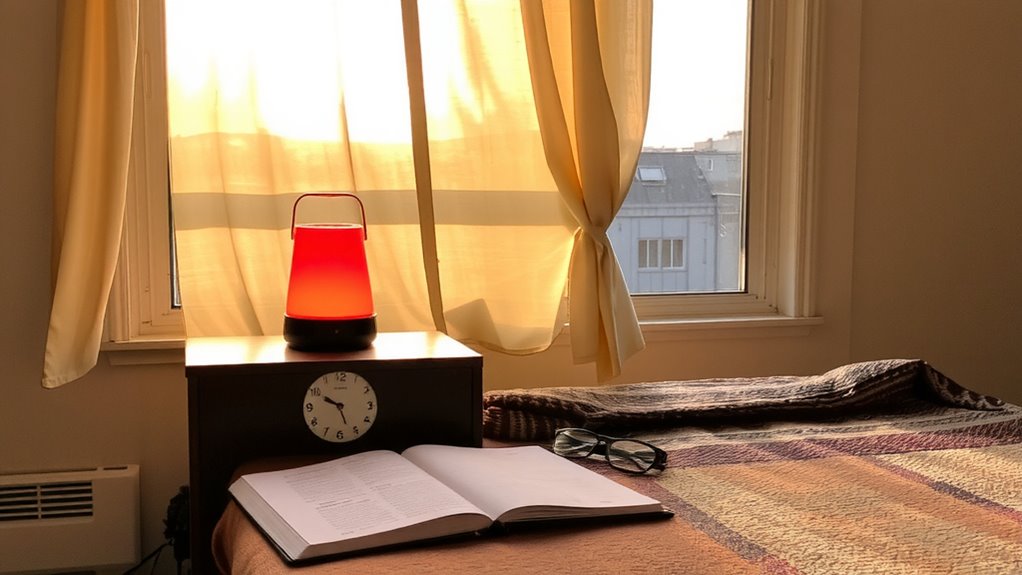
Shifting your sleep schedule earlier, like in advanced sleep phase disorder, means working with your body’s sensitivity to light in a smart way. Red light supports circadian entrainment by providing illumination that minimally disrupts melatonin suppression, unlike blue-rich light. This helps signal wakefulness without tricking your brain into thinking it’s midday. Using red light after early waking can gently guide your internal clock over time.
| Feature | Benefit | Use Case |
|---|---|---|
| Low blue wavelength | Reduces melatonin suppression | Morning use |
| Soft illumination | Supports circadian entrainment | Post-awakening |
| Non-stimulating | Promotes calm alertness | Sleep disorder routines |
| Easy setup | Fits bedtime routines | Home use |
This approach balances alertness and hormonal balance, making it a practical trial option for managing your sleep phase.
When to Use Red Light After Early Waking
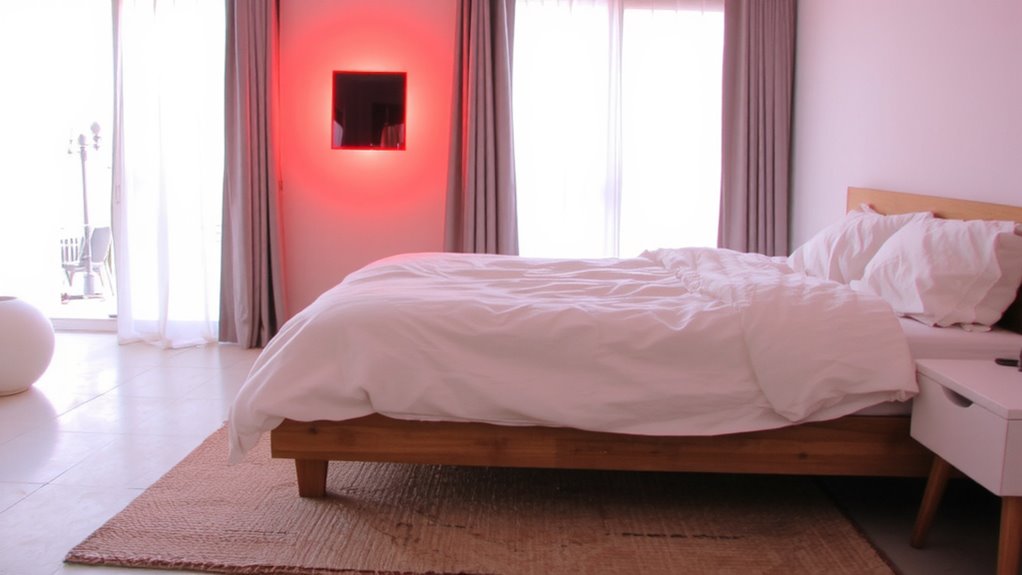
How soon should you reach for red light once you’re up? Right away-ideally within 10 to 15 minutes of waking. Morning red timing matters because early light exposure helps reinforce your body’s natural rhythm. Since you wake earlier than most due to advanced sleep phase disorder (ASPD), using red light immediately supports circadian alignment without overstimulating your system. Stick with sessions lasting 20 to 30 minutes to get the full benefit. Make sure the light device is close enough-about 16 to 24 inches from your face-and aim slightly below eye level to reduce glare. Early light exposure at this intensity and range can gently signal daytime, helping delay sleep onset slightly each night over time. Consistency improves results, so try to do it at the same time daily. This routine is simple, evidence-based, and fits easily into morning habits like drinking tea or reading.
Pick the Best Red Light Device for ASPD
While not all red light devices work equally well for ASPD, you can find a suitable option by focusing on key features that support circadian regulation. Look for device types like panels or lamps that emit wavelengths between 600–700 nm, as these penetrate tissue effectively without disrupting melatonin. Choose models with adjustable brightness and timers so you can ease into sessions. When making brand comparisons, check for third-party testing, intensity output (measured in mW/cm²), and coverage area. Reputable brands often provide clinical data and offer trial periods, letting you test effectiveness. A well-built device should have sturdy construction and even light distribution. Warranty length-often 1 to 3 years-can reflect confidence in performance. Prioritize safety certifications and user support. These factors help balance cost with reliability, letting you make a practical choice based on evidence and design.
Build a Morning Red Light Routine That Works
Why start your day with red light? Because morning consistency helps regulate your circadian rhythm, especially with advanced sleep phase disorder. Using red light early can support natural alertness without harsh blue tones. Key to success is light timing-aim for 10–30 minutes just after waking. Stick to the same window daily to build rhythm. Choose a device that fits easily into your space and routine. Below is a quick guide:
| Feature | Why It Matters |
|---|---|
| Wavelength | 650–850 nm targets circadian cells |
| Brightness | 100–200 lux at 6–12 inches |
| Session Duration | 10–30 minutes for effective exposure |
| Morning Use | Reinforces morning consistency |
Hold the light close, eyes open but not staring. Over days, you’ll notice better timing in your alertness and sleep patterns. Most quality devices offer a trial-test one for two weeks to assess results.
Pair Red Light With Sleep-Boosting Habits
If you’re already using red light in the morning, pairing it with other sleep-supportive habits can strengthen its effect over time. Combine your session with light exposure to support circadian rhythm alignment. Add red light nutrition strategies, like eating a protein-rich breakfast with foods such as eggs and avocado, to fuel alertness and metabolic health. These choices help stabilize energy, supporting better sleep later. Don’t underestimate morning exercise benefits-just 20 minutes of walking or stretching outside boosts cortisol rhythm and enhances nighttime melatonin release. Perform your routine within an hour of waking for best results. You might try using a red light device while doing light stretches or sipping a nutrient-packed smoothie. Over weeks, this combo may improve sleep depth and timing. Track changes in wake time and night sleep quality to assess what works. Consistency increases effectiveness.
On a final note
You can use red light each morning after waking early to help shift your internal clock later. It works by gently signaling your brain that the day has started, without suppressing melatonin like blue light. Choose a device with at least 100 lux, tested for circadian impact, and use it for 30 minutes consistently. Pair it with regular sleep times and dim evening lighting. Most come with warranties, so trial one for several weeks to see results.