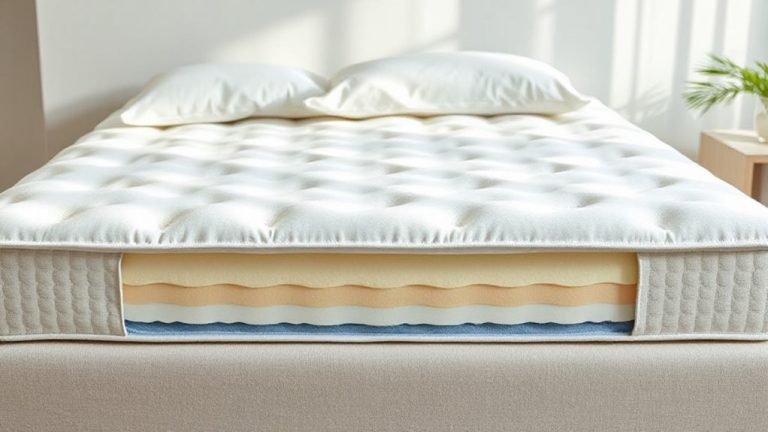
Innerspring Mattress Firmness and Back Pain: Finding the Right Balance
A medium-firm innerspring mattress gives your spine proper support while cushioning pressure points like hips and shoulders. If it’s too firm, you might feel strain from poor contouring; too soft, and your spine can sag overnight. Look for tempered steel coils and reinforced edges to maintain shape and support. Pocketed coils help align your back no matter your sleep position. Most last 7–10 years, but check for dips or stiffness. With trial periods and warranties, you can find the right balance for your comfort-explore your options to discover what truly works for your body.
Notable Insights
- Medium-firm innerspring mattresses provide optimal spinal alignment and reduce pressure points for most back pain sufferers.
- Overly firm mattresses increase hip and lower back pressure, especially for side sleepers, worsening discomfort.
- Excessive softness causes sagging, leading to poor spinal alignment and increased lower back strain.
- Coil durability, edge support, and proper rotation every 3–6 months extend mattress life and maintain back support.
- Sleep position matters: side sleepers need medium firmness, back sleepers medium-firm, and stomach sleepers firmer support.
Why Innerspring Mattress Firmness Affects Back Pain
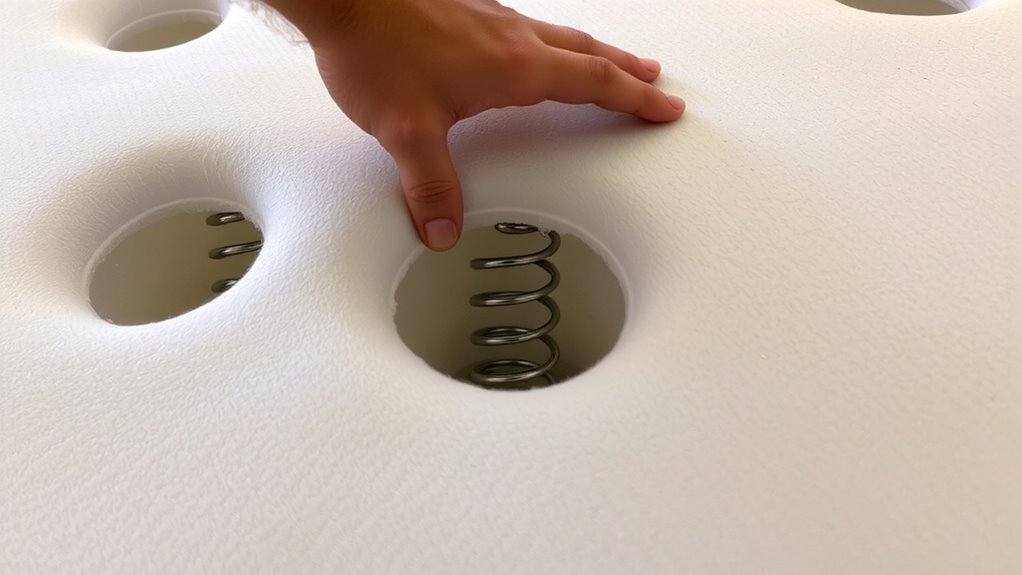
While your back might feel better at first on a very firm mattress, too much hardness can actually increase pressure on your hips and lower back, especially if you sleep on your side. Innerspring mattresses rely on coil support, but over time, coil degradation reduces the mattress’s ability to respond to your body’s shape, leading to uneven support. Firmer isn’t always better-excessive stiffness prevents proper spinal alignment, particularly for side sleepers who need some give. You’ll also notice fabric wear sooner on high-tension surfaces, especially around the edges or sleep zones, which can expose coils or create sagging spots. These changes compromise comfort and support, affecting sleep quality. A balanced firmness level helps maintain alignment while reducing stress on pressure points. When selecting a mattress, check the coil count, gauge, and warranty-many brands offer trial periods so you can test support and durability firsthand. For those seeking top-rated options, consider reviewing the best mattresses for back pain relief.
How a Too-Firm Innerspring Mattress Worsens Back Pain
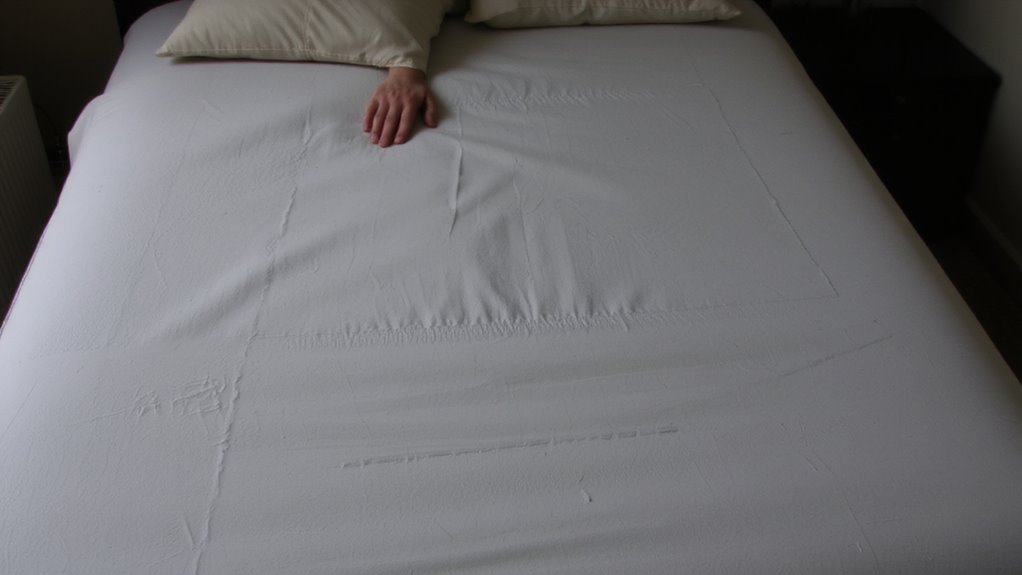
If you’re sleeping on a too-firm innerspring mattress, your body isn’t getting the cushioning it needs to maintain natural spinal alignment, especially at key pressure points like your hips and shoulders. This can increase pressure and lead to back pain over time. Older mattresses often worsen the problem due to material degradation-coils lose resilience and padding compresses, reducing support where you need it most. Mattress age plays a big role; even high-quality models typically last 7–10 years before performance declines. As the layers break down, they can’t adapt to your body’s shape, making an already firm feel uncomfortably rigid. A lack of contouring may restrict blood flow and cause discomfort, disrupting sleep. Consider whether your mattress still supports proper posture. If you’re waking stiff or sore, it might be time to evaluate for wear or consider models with balanced support and cushioning. Check warranty terms and trial periods when comparing replacements. Back sleepers with back pain often benefit most from mattresses offering both support and pressure relief, such as those highlighted in reviews of the best mattresses for back sleepers.
Why a Too-Soft Innerspring Mattress Harms Spinal Alignment
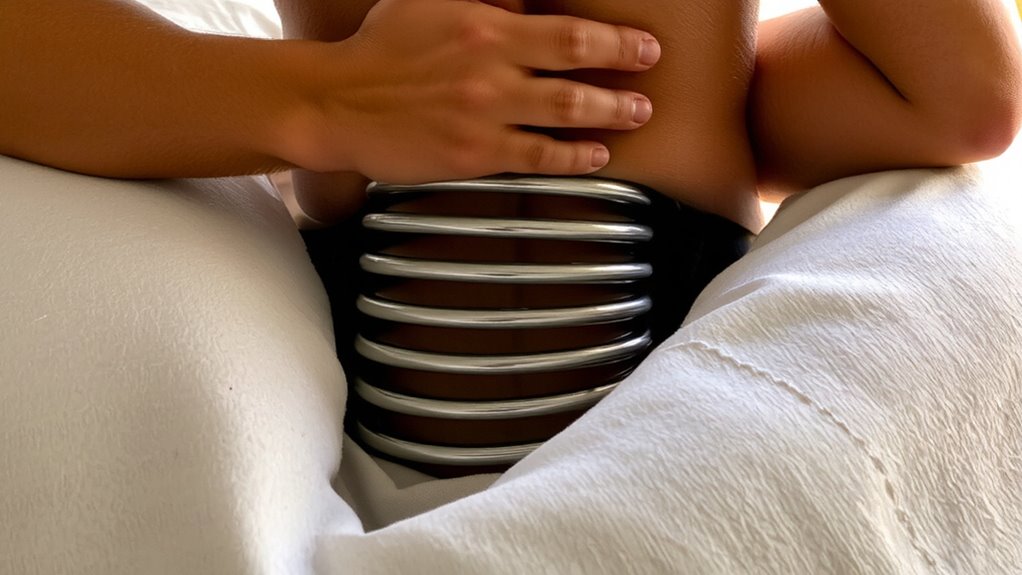
When your innerspring mattress sags too much under your weight, it can’t keep your spine properly aligned, especially if you’re a side or back sleeper. Too-soft models often lack the reinforced coil structure needed to prevent sagging support, causing your hips and shoulders to sink too deeply. This misalignment stresses your lower back and can worsen chronic discomfort over time. As your body sinks, it creates uneven pressure points, particularly along the hips and spine, reducing circulation and increasing the chance of waking stiff or sore. Innerspring units with lower coil counts or thinner gauges tend to degrade faster, accelerating these issues. Look for higher coil counts and dual-layer coil systems, which help maintain support and reduce sinking. A mattress with proper edge support and a tempered steel coil system will better preserve spinal neutrality. Always test mattresses with your usual sleep position to assess alignment and comfort objectively.
The Best Firmness Level for Back Pain Relief
How do you find the right firmness for back pain relief? You’ll want a medium-firm innerspring mattress that supports spinal alignment without pressing too hard on pressure points. This balance helps reduce strain, especially if you pair it with a pillow density that keeps your neck neutral. Too soft or too firm can worsen discomfort over time. Regular mattress rotation, every 3 to 6 months, guarantees even wear and lasting support, which matters for long-term back health. Look for coils with reinforced edges and a supportive comfort layer-these influence how well the mattress maintains its shape and function. Check trial periods and warranties; they let you test the feel safely. While no single firmness works for everyone, medium-firm models often provide the stability and cushioning combo needed. Pay attention to how your back feels after waking-it’s a clear sign of whether your choice is working.
Best Innerspring Firmness by Sleep Position
Why do your sleeping habits matter when choosing an innerspring mattress? Your sleep posture directly affects spinal alignment and how pressure points are supported. If you sleep on your back, a medium-firm innerspring helps maintain natural spinal curves while reducing hip and lower back strain. Side sleepers need a slightly softer feel-around medium-so shoulders and hips can sink just enough to relieve pressure points without sagging. For stomach sleepers, firmer innerspring models keep the spine aligned and prevent the pelvis from sinking too deeply. No matter your position, proper coil support works with your body’s contours. Consider trying models with a solid trial period, so you can test how well the firmness suits your sleep posture long-term. A good warranty also adds peace of mind as you adjust. For undisturbed sleep without missing critical sounds, consider using earplugs designed to block noise while still allowing alarms to be heard, such as best earplugs for sleeping without missing your alarm.
Coil Type and Edge Support: Firmness Enhancers for Back Support
Your sleep position plays a big role in picking the right firmness, but the internal design of an innerspring mattress-especially the coil type and edge support-can make or break how well it supports your back over time. A lower coil gauge means thicker wires, which provide firmer, more durable support-ideal if you need less sink and more stability. Higher gauge coils are thinner and often feel softer, better suited for lighter sleepers or those wanting slight contouring. Pocketed coils offer targeted support, reducing motion transfer while maintaining spinal alignment. Edge reinforcement, like dense foam or extra coils along the perimeter, strengthens the mattress edges so you don’t roll off and can sit or sleep near the edge without collapse. This support helps maintain proper posture and reduces strain. Together, coil gauge and edge reinforcement enhance structural integrity, making the mattress feel firmer and more supportive where you need it most.
When to Replace Your Innerspring Mattress for Back Pain Relief
Even though you might not notice it right away, an aging innerspring mattress can lose its support over time, especially if you’re dealing with back pain. Mattress age plays a big role-most innerspring models last 7 to 10 years before sagging affects spinal alignment. If you’re heavier, your body weight speeds up wear, compressing coils and padding faster than average. That means support breaks down sooner, possibly worsening discomfort. You might start waking up stiff or notice visible dips where you sleep. When that happens, it’s a sign your mattress isn’t holding up. Replacing it can ease pressure and improve sleep quality. Look for models with reinforced coils and high-density foam to match your body weight. Check warranty details too-some cover sagging deeper than 1 inch. A new, properly supportive mattress may help relieve back pain and restore restful sleep.
On a final note
You’ll find relief when your innerspring mattress balances support and cushioning just right. A medium-firm feel often works best, keeping your spine aligned whether you sleep on your back, side, or stomach. Look for pocketed coils and strong edge support to reduce sagging and improve stability. Check the warranty and trial period so you can test comfort risk-free. Replacing a worn mattress may ease chronic back pain-timing matters as much as firmness.