How to Prevent Morning Stiffness With a Pre-Bed Hydration and Stretching Routine
Drink 8 to 12 ounces of water 30 to 60 minutes before bed to stay hydrated overnight, which helps lubricate joints and prevent stiffness. Do gentle stretches like forward bends, figure-four poses, and spinal twists to ease muscle tension. Hold each stretch 30 seconds, 5–7 nights a week. Pair this with a supportive mattress and consistent sleep schedule. If stiffness or sleep issues persist, consider consulting a doctor to explore underlying causes. There’s more to discover about fine-tuning your nightly routine for better mornings.
Notable Insights
- Drink 8–12 ounces of water 30–60 minutes before bed to support overnight joint lubrication and hydration.
- Use a firm, supportive mattress and pillows to maintain alignment and reduce joint stress during sleep.
- Perform pre-sleep stretches like seated forward bend, figure-four, and spinal twist for 30 seconds each.
- Hold each stretch consistently for 30 seconds and repeat 5–7 days weekly to improve flexibility and reduce stiffness.
- Follow a 10-minute routine with foam rolling, joint mobility exercises, and stretching in a cool, quiet environment.
Stop Morning Stiffness Before Bed
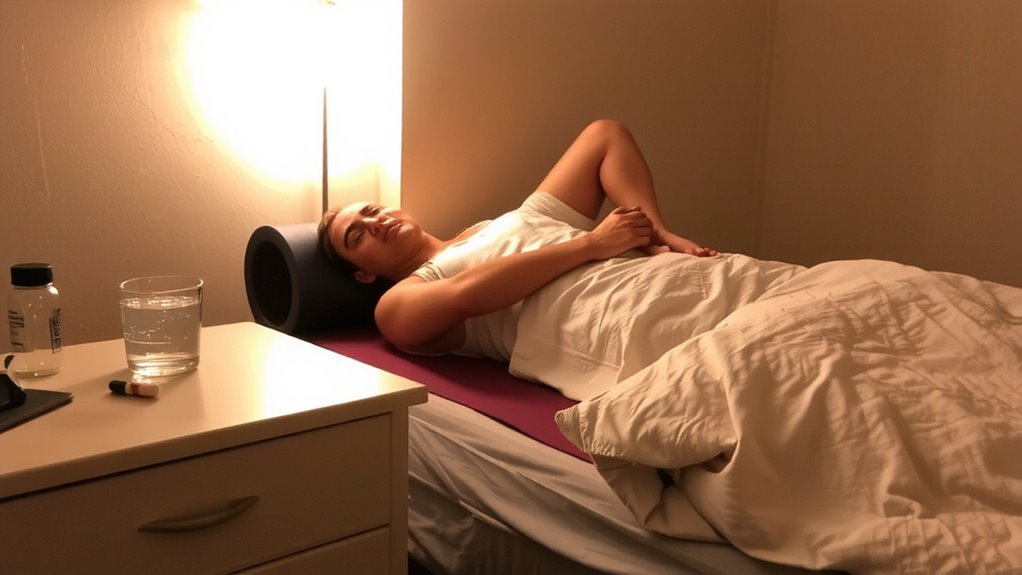
A cool, quiet bedroom might be your first step toward easing morning stiffness. You’ll want to aim for consistent sleep quality, since poor rest can worsen joint health and increase inflammation. Aim for 7–8 hours nightly, as your body repairs tissues during deep sleep. If you struggle with sleep disorders like insomnia or sleep apnea, talk to a doctor-these can reduce sleep quality and affect recovery. Consider breathable, moisture-wicking bedding to prevent overheating, which disrupts sleep cycles. Firm, supportive mattresses and pillows help maintain spinal alignment, easing joint stress. Some find relief using ergonomic sleep aids, like body pillows or adjustable beds, though results vary. Look for products with trial periods so you can test comfort without risk. Good sleep setup doesn’t fix joint issues alone, but it supports long-term joint health. You’re more likely to wake up mobile and less stiff when sleep quality improves. For budget-conscious shoppers, there are excellent options available, including top-rated king mattresses for every budget.
Drink Water the Right Way at Night

Why do you wake up so stiff? Overnight dehydration can make joints less lubricated and muscles more irritable. That’s where proper nighttime hydration helps. You don’t need to drink a lot-just 8 to 12 ounces about 30 to 60 minutes before bed is enough. This timing allows your body to absorb the water while reducing the chance of waking up to use the bathroom. Water timing matters: too early, and you might get dehydrated; too late, and sleep disruptions follow. Nighttime hydration supports circulation and tissue elasticity, which may reduce morning stiffness. Avoid large amounts or sugary drinks, as they can interfere with sleep quality. If you use a sleep aid or manage a sleep disorder, check with your doctor about how fluid intake affects your treatment. Consider trying this routine for a few nights to see how your body responds. Most people notice better comfort without added risk.
Do These 5 Stretches Before Sleep

Five key stretches done before bed can help reduce morning stiffness by improving flexibility and circulation overnight. Start with a seated forward bend to boost hamstring flexibility-reach toward your toes and hold for 30 seconds. Next, try a lying figure-four stretch to release your hips. For shoulder mobility, perform a cross-body arm stretch, gently pulling one arm across your chest. Follow with a shoulder blade squeeze, lying flat and pressing your arms down to open the upper back. Finish with a spinal twist, knees dropped to one side while keeping shoulders grounded. These movements ease tension and support joint function while you rest. They’re simple, need no equipment, and can fit into most nightly routines. Doing them consistently may reduce discomfort by promoting muscle recovery and alignment. You’ll likely notice improved ease in movement over time, especially when paired with proper hydration.
How Long to Stretch (And How Often)
While consistency matters more than perfection, aiming to hold each stretch for about 30 seconds before bed can make a noticeable difference over time. This duration helps muscles relax and improves joint mobility without strain. For best results, maintain daily timing consistency-performing your routine at the same time each night signals your body it’s time to wind down. Frequency matters too; stretching 5–7 days a week supports lasting change.
| Stretch Aspect | Recommendation |
|---|---|
| Duration | 30 seconds per stretch |
| Frequency | Daily |
| Timing | 30–60 mins before bed |
| Consistency | Even on busy nights |
| Progression | Add reps, not time |
Prioritizing this routine fosters better sleep quality and reduces morning stiffness over weeks. Small, steady efforts build effective habits.
Build a 10-Minute Routine to Prevent Morning Stiffness
You’ve already set the foundation by stretching consistently each night, holding each move for about 30 seconds and sticking to a regular bedtime routine. Now, build a 10-minute routine that includes foam rolling and joint mobility work to reduce morning stiffness. Spend 2 minutes foam rolling your back, hips, and legs-this helps release muscle tension and improves circulation. Follow with 5 minutes of dynamic joint mobility exercises like ankle circles, shoulder rolls, and spine twists to keep joints lubricated and flexible. Finish with 3 minutes of gentle stretches you already know. Do this routine in a quiet space, ideally after a warm shower. Keep the room cool and dark to support sleep onset. This practice supports healthy movement patterns and may improve sleep quality, especially if stiffness disrupts rest. Try it consistently for two weeks to assess changes.
On a final note
You can reduce morning stiffness by hydrating well before bed and doing simple stretches. Drink a glass of water an hour before sleep, not right before, so you stay hydrated without disrupting rest. Spend about 10 minutes on gentle stretches that target tight areas. Consistency matters more than intensity. Try this nightly for a few weeks to see results. If stiffness continues, consider consulting a healthcare provider to rule out sleep or joint issues.