The Genetic Basis of Advanced Sleep Phase Disorder in Families
You likely have a genetic form of advanced sleep phase disorder if you and your family fall asleep between 6–8 p.m. and wake by 2–4 a.m. Mutations in genes like *PER2* or *CK1δ* shorten your internal clock, shifting melatonin release earlier. This isn’t poor sleep hygiene-it’s inherited. Light therapy in the evening and timed melatonin may help delay your cycle. Knowing your genetics can guide treatment choices, and understanding the pattern in your family opens doors to more personalized strategies that could improve daily function.
Notable Insights
- Advanced Sleep Phase Disorder (ASPD) often runs in families, indicating a strong hereditary component.
- Mutations in genes like *PER2* and *CK1δ* disrupt circadian rhythm regulation, leading to early sleep times.
- These genetic mutations alter protein function, shortening the body’s internal clock cycle.
- Family studies using sleep logs and DNA analysis have traced ASPD across multiple generations.
- Genetic testing enables personalized treatments, such as timed light or melatonin, based on specific mutations.
What Is Advanced Sleep Phase Disorder?
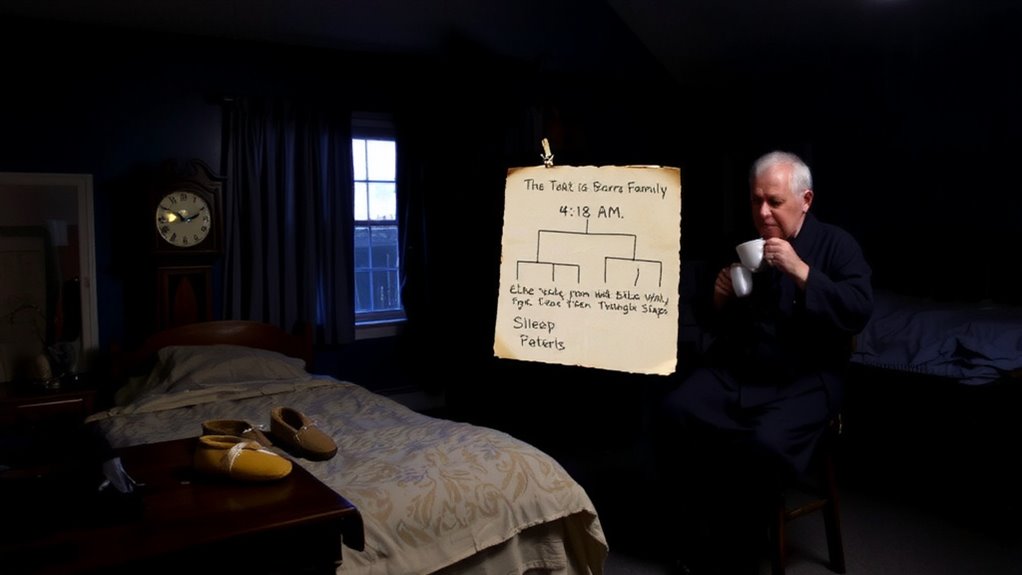
Ever wonder why some people feel sleepy hours before everyone else? You might be experiencing advanced sleep phase disorder (ASPD), a condition where your body clock shifts earlier than typical. You fall asleep early, often around 6–8 p.m., and wake up in the middle of the night, say 2–4 a.m. This shift isn’t just preference-it’s tied to changes in light exposure and melatonin levels. Your body releases melatonin sooner in the evening, signaling sleep earlier than most. Reduced evening light exposure can worsen this pattern, while consistent morning light may help delay melatonin release slightly. Though not dangerous, ASPD can disrupt work, social life, or family routines. Treatments like timed light therapy or melatonin supplements aim to adjust your internal clock. Decisions on using sleep aids should consider timing, lifestyle, and symptom severity.
How Genes Control Sleep Timing in ASPD

Your early bedtime and predawn wake-up aren’t just habits-they may be coded in your DNA. Specific gene mutations directly influence your circadian rhythm, shifting your internal clock forward. These changes alter gene expression in proteins like PER and CRY, which regulate sleep-wake cycles over 24 hours. When these genes mutate, the timing of their expression speeds up, making you feel sleepy earlier and wake earlier. This inherited shift isn’t a lifestyle choice-it’s a biological difference. You can’t reset it with habits alone, but light exposure and timed melatonin may help manage symptoms. Sleep aids might offer short-term relief, but they don’t address the root cause. Understanding this genetic role helps you choose treatments that work with your body’s natural rhythm. Genetic testing may clarify diagnosis, guiding better decisions.
How Families Helped Unlock ASPD’s Genetic Code

A key breakthrough in understanding advanced sleep phase disorder came from studying families with a strong pattern of early sleep and wake times. You begin to notice how family dynamics shape sleep behaviors when multiple members across ages rise and sleep hours earlier than typical. These generational patterns suggested a hereditary link, making it easier for researchers to trace the condition through DNA. By observing how symptoms passed from parents to children, scientists narrowed in on inherited factors without immediately identifying specific genes. Tracking sleep logs across households revealed consistent rhythms, helping distinguish ASPD from poor sleep hygiene. Your awareness of these patterns can guide decisions about evaluation or genetic counseling. Recognizing early sleep trends in your family might prompt earlier consultation, improving management. Family-based research provided the foundation for genetic studies, showing that ASPD isn’t just habit-it’s often inherited, predictable, and biologically rooted.
Key Mutations Behind Early Sleep in ASPD
Researchers tracing family patterns in advanced sleep phase disorder eventually pinpointed specific genetic changes responsible for the early sleep and wake times. You’ll find these mutations often occur in genes like *PER2* and *CK1δ*, which play key roles in regulating your circadian rhythm. These variants shift your internal clock forward, making you feel sleepy earlier in the evening and wake up before dawn. Because this follows a clear pattern of genetic inheritance, it’s common to see multiple family members affected across generations. The altered proteins don’t break down as they should, shortening your daily cycle. While lifestyle adjustments help manage timing, knowing the biological root means you can make informed choices. Treatments aren’t one-size-fits-all, but understanding the mutation’s role gives you a clearer starting point when considering options.
Using ASPD Genes to Guide Treatment
Though genetics play a central role in advanced sleep phase disorder, knowing your specific mutation can help shape more effective treatment choices. If you carry a PER2 or CRY1 variant, your body’s internal clock responds differently to light and melatonin, so treatments can be tailored. For example, chronotherapeutic strategies like timed bright light exposure in the evening or delayed sleep scheduling may shift your rhythm later. You might also benefit from pharmacogenetic interventions, where medication choice and dosage are guided by your genes to improve effectiveness and reduce side effects. Melatonin taken in the morning, not at night, could help reset your cycle based on your genetic profile. Treatments aren’t one-size-fits-all-what works for one mutation may not work for another. Genetic testing offers a roadmap, letting you and your doctor test options with clearer expectations and better timing for results.
On a final note
You now know that advanced sleep phase disorder often runs in families and links to specific gene mutations affecting your body’s internal clock. These genetic insights help explain why you may feel sleepy hours earlier than most. Treatments, including timed light exposure or melatonin, can adjust your rhythm. Talk to a sleep specialist to review options, test for known mutations, and find a plan that fits your lifestyle and biology, often with strong success.