How Innerspring Mattress Toppers Can Extend Lifespan
A topper helps your innerspring mattress last by cushioning worn coils and spreading body weight more evenly. Memory foam or latex models reduce pressure on hips and shoulders, slowing sag. A 2- to 3-inch thickness gives support without misaligning your spine. These materials also resist motion transfer and wear. With a breathable cover and proper rotation, your topper stays fresh. Look for a 10-year warranty and 30-night trial to test comfort. Choosing the right one improves sleep quality over time.
Notable Insights
- A topper evenly distributes body weight, reducing coil compression and delaying sagging.
- It acts as a protective buffer, absorbing movement and minimizing stress on innerspring coils.
- High-quality foam or latex toppers resist material breakdown from heat and moisture exposure.
- Properly maintained toppers reduce wear on the mattress surface and underlying support layers.
- Regular rotation and cleaning of the topper help preserve both its and the mattress’s longevity.
Why Innerspring Mattresses Lose Support Over Time
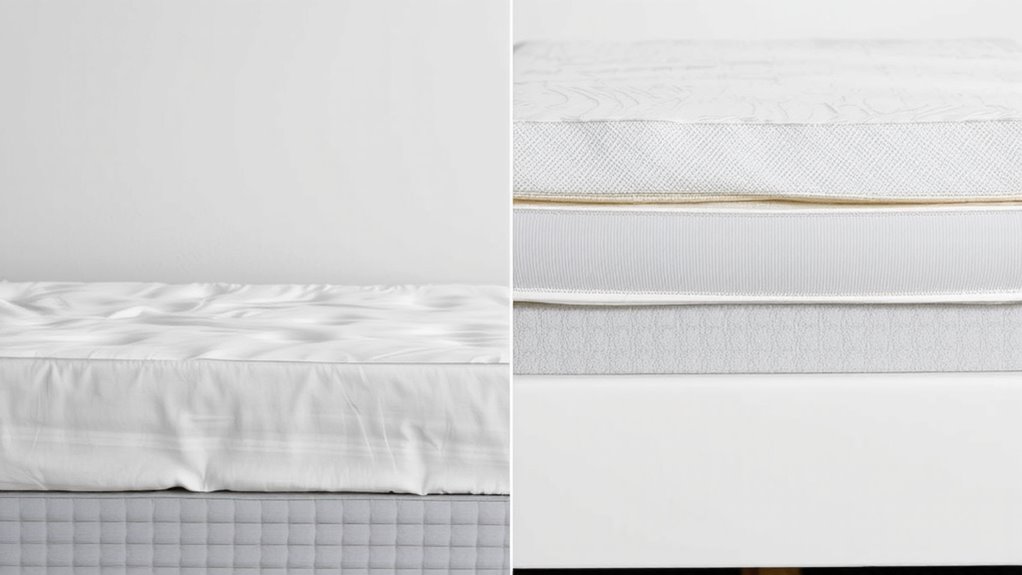
While your innerspring mattress may have felt firm and supportive when you first bought it, over time the constant pressure from your body weight can compress the coils, especially in areas where you sleep most. This repeated stress leads to coil fatigue, reducing the mattress’s ability to rebound properly and support your spine. As the metal weakens, you might notice sagging or uneven firmness, which can disrupt healthy sleep alignment. Alongside coil fatigue, material degradation affects the layers above the springs-foams and fibers break down from body heat, moisture, and everyday use, losing resilience. These changes don’t happen overnight, but over years, they compromise comfort and support. You may start waking with stiffness or notice visible indentations. Recognizing these signs helps you decide when to evaluate solutions. A topper won’t reverse wear, but it can temporarily improve surface comfort while you evaluate replacement options.
Best Topper Materials for Innerspring Mattresses
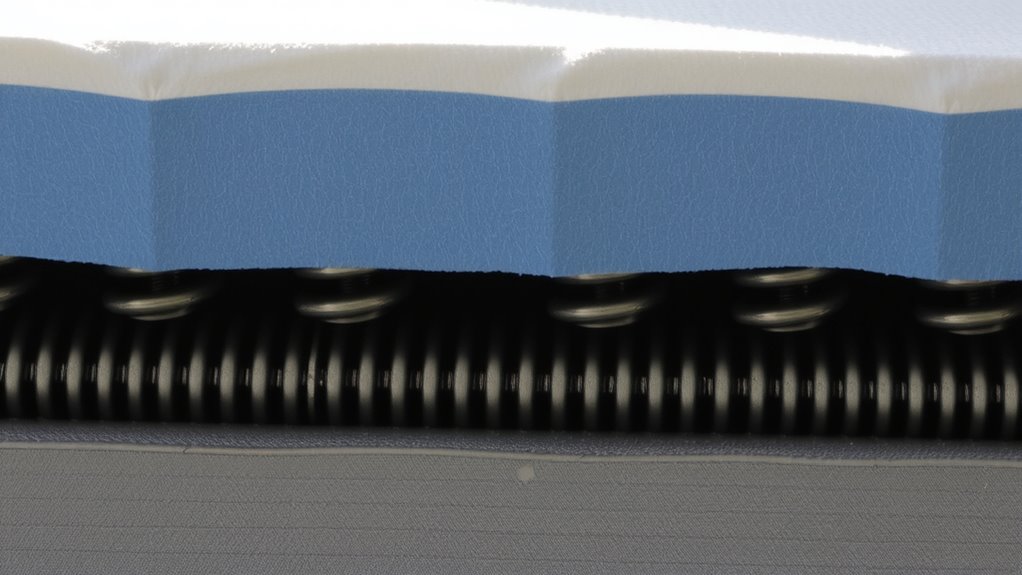
You’ve probably noticed how your innerspring mattress doesn’t feel quite right anymore, and a good topper can help restore comfort without replacing the whole bed. For support and pressure relief, memory foam is a solid choice-it contours closely to your body and reduces motion transfer, which helps if you or a partner moves often at night. However, some find it traps heat, so look for versions with gel infusions or open-cell designs to improve airflow. A latex blend offers a responsive, breathable alternative with a bit more bounce, ideal if you prefer a firmer feel. It resists dust mites and mold, adding durability. Both materials work well over coils, but test them with at least a 30-night trial. Check warranty length-10 years is common-and make certain the cover is removable for easy cleaning. Side sleepers benefit significantly from a firm mattress topper that supports spinal alignment while cushioning pressure points like shoulders and hips.
Best Thickness for Innerspring Mattress Toppers
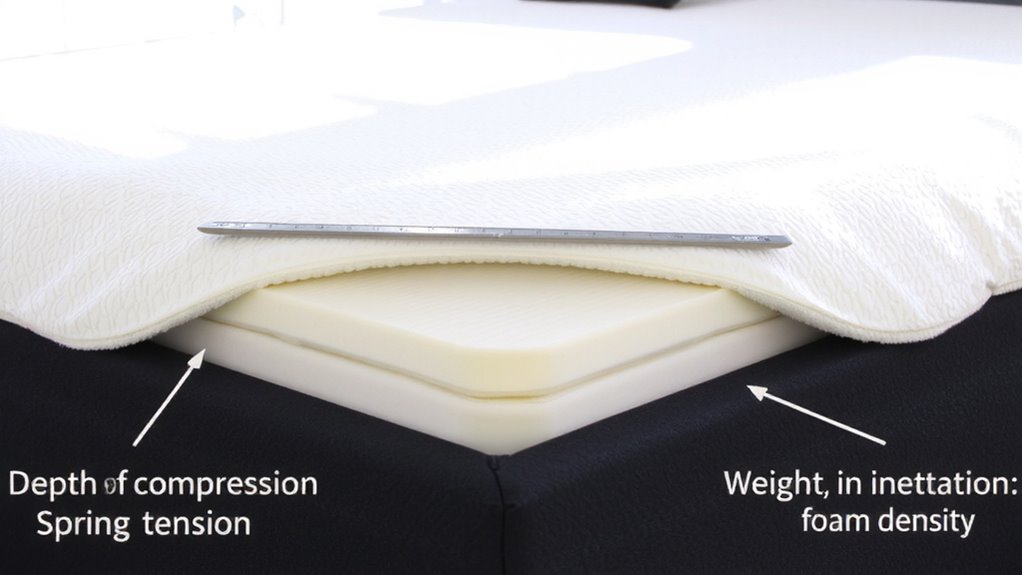
A 2- to 3-inch topper usually works best for innerspring mattresses, offering enough cushioning to soften pressure points without sinking too deeply into the coils. This topper thickness balances support and softness, working well with the responsive bounce of innerspring units. Thinner options may not provide sufficient comfort layers, while ultra-thick toppers can disrupt spinal alignment. Consider your sleep position and body weight when choosing.
| Topper Thickness | Best For | Notes |
|---|---|---|
| 1 inch | Light cushioning | Minimal change to feel |
| 2 inches | Most sleepers | Ideal blend of support and comfort layers |
| 3 inches | Pressure relief | Enhanced softness without sink |
| 4 inches | Plush feel | May affect motion transfer |
| >4 inches | Extra cushioning | Less recommended for innersprings |
Choose based on your comfort needs and existing mattress condition.
How a Topper Shields Your Innerspring From Sagging
Choosing the right thickness helps balance comfort and support, but a topper does more than just feel good-it can also slow down wear on your innerspring mattress. By improving pressure distribution, it reduces the concentrated force your body applies nightly, especially at heavier points like hips and shoulders. This even weight dispersion means the coils underneath don’t sag as quickly from repeated stress. Over time, that minimizes permanent impressions and maintains the mattress’s original shape. A quality topper acts as a buffer, absorbing movement and softening impact so the springs retain resilience longer. Materials like memory foam or latex excel in this role due to their responsive yet supportive nature. You’re not just adding comfort-you’re investing in structural longevity. With better support and reduced wear, your sleep surface stays more consistent, which can aid those sensitive to firmness changes. This subtle protection supports both comfort and durability without altering your mattress’s core feel too much.
How to Maintain Your Topper for Lasting Use
While your topper handles nightly wear, keeping it well-maintained guarantees it continues to protect your innerspring mattress and deliver consistent comfort. Follow a regular cleaning schedule-spot clean spills quickly and use a mild detergent with cold water every few months to prevent buildup. Always air dry completely to avoid mold. If your topper has a removable cover, wash it separately per manufacturer instructions. Rotate it every few months to even out wear and maintain support. For storage tips, keep it in a cool, dry place and avoid folding; instead, roll it loosely if needed. Use a breathable storage bag to prevent moisture and pests. Proper care preserves its construction and performance, helping you get the most from your investment. A well-kept topper supports better sleep and helps maintain spinal alignment night after night.
When to Replace Your Topper Instead of the Mattress
Most toppers last between three to five years, but you’ll know it’s time to replace yours when you start noticing deeper indentations, reduced cushioning, or a shift in comfort that no longer aligns with your sleep needs. These signs point to topper wear and material degradation, which happen naturally over time. If your spine doesn’t stay aligned or you wake up sore, the topper may no longer offer proper support, even if your mattress is still in good shape. Check for lumps, thinning fabric, or sagging-you might not need a new mattress yet. Replacing just the topper is often more affordable and equally effective. Look for models with trial periods or warranties to test comfort and durability. Addressing topper wear early helps maintain healthy sleep without unnecessary cost. You’ll rest better knowing your sleep surface still performs as intended. According to expert reviews, the best mattress toppers provide consistent support and pressure relief over time, making best mattress toppers a smart investment for long-term comfort.
On a final note
You can extend your innerspring mattress’s life by adding a supportive topper, which cushions pressure points and reduces sagging. Memory foam or latex toppers, 2 to 3 inches thick, offer durable comfort and better spine alignment. A quality topper with a breathable cover helps temperature regulation and resists wear. Look for models with trial periods and warranties, so you can test comfort risk-free. This simple upgrade may delay replacement while improving sleep support.