Innerspring Mattress Firmness Scale: Decoding Manufacturer Ratings
When comparing innerspring mattresses, don’t rely on labels like “firm” or “luxury firm”-they’re not standardized and can mean different things across brands. Your best guide is coil gauge, count, and your body needs. Lower gauge coils offer firmer support, while padding layers adjust softness. Heavier sleepers usually need stronger coils to avoid sinkage, while lighter ones may prefer medium firmness. Pocketed coils add contouring without sacrificing support. Check sleep trials and warranties to test comfort safely-details reveal more than marketing ever will.
Notable Insights
- Manufacturer firmness ratings lack standardization, making a “firm” label vary significantly between brands.
- Lower coil gauge (12–15) indicates thicker wires and a firmer support core in innerspring mattresses.
- Padding and comfort layers can soften the feel, even with a firm coil system underneath.
- Pocketed coils enhance support and reduce motion transfer, influencing perceived firmness based on movement.
- Sleep trials and coil specifications are more reliable than marketing labels when assessing true firmness.
What “Firm” Really Means for Innerspring Mattresses
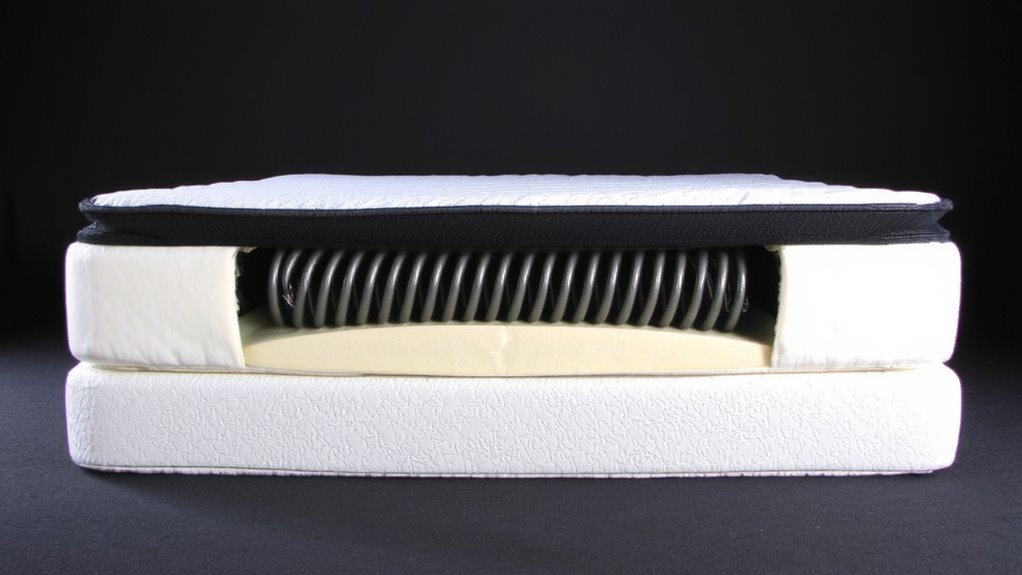
Firmness in an innerspring mattress isn’t just about how hard or soft it feels when you press your hand into it-it’s shaped by the coil system, padding layers, and your body’s needs. You might prefer a firmer feel if you sleep on your back or stomach, since it helps keep your spine aligned. A lower coil gauge means thicker wires and a firmer base, which can offer more durable support over time. If you sit on the edge of your bed often, strong mattress edge support prevents sagging and makes getting in and out easier. Thicker coils and reinforced perimeter coils help there. The padding on top modifies how firm it feels against your skin, so even with a solid coil base, comfort layers matter. Try checking trial periods and warranties before buying, since firmness is personal. Look for at least a 10-year warranty and a 90-night trial to test it safely.
How Coil Type and Count Shape Innerspring Firmness
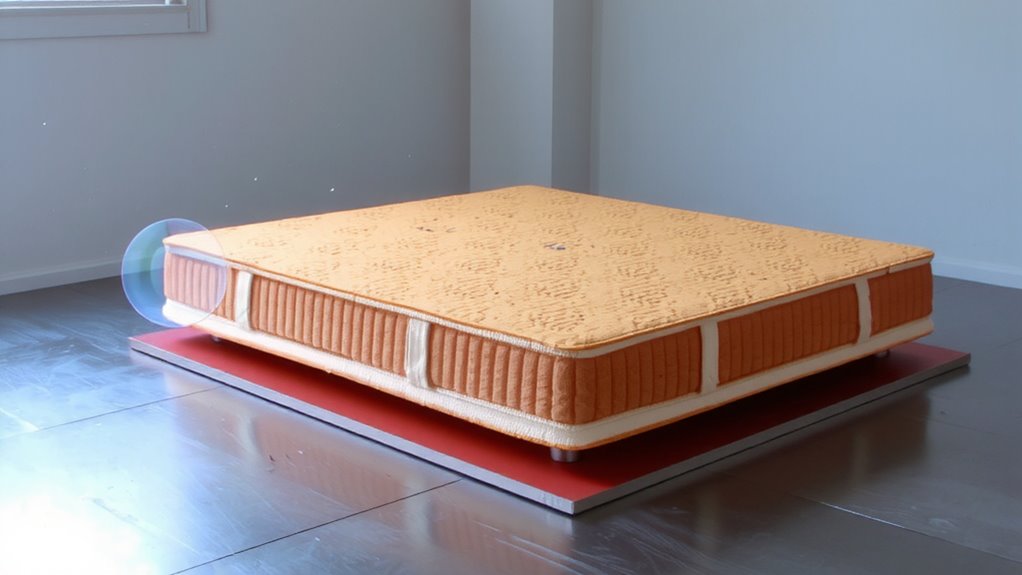
Your sleep comfort starts with the backbone of the mattress-the coils. The type and number of coils directly affect how firm or plush the bed feels. Pocketed coils move independently, so they respond to your body shape while reducing motion transfer-great if you share the bed. A lower coil gauge means thicker wires, which usually deliver firmer support. Most innerspring mattresses range from 12 to 15 gauge; the lower the number, the firmer the feel. Higher coil counts often improve durability and pressure relief, especially for heavier sleepers. But count alone doesn’t guarantee comfort-it’s how the coils work with the foam layers above. Mattresses with strong warranties and sleep trials let you test these features risk-free. This way, you can assess how coil gauge and coil type truly align with your sleep needs over time, helping support healthier rest.
Why Innerspring Firmness Ratings Aren’t Trustworthy

You might think a number on a label gives a clear picture of how firm an innerspring mattress will feel, but those ratings can be misleading. Manufacturers use inconsistent standards, turning firmness into a game of guesswork. Marketing tactics often inflate numbers to make a mattress seem ideal for everyone, even though comfort is personal. Subjective labels like “luxury firm” mean little across brands. One company’s 6 might feel like another’s 8. Below is how ratings can differ:
| Brand | Firmness Rating (1–10) | Actual Feel |
|---|---|---|
| A | 6 | Medium-firm |
| B | 6 | Firm |
| C | 6 | Soft-medium |
Because of this, you’re better relying on trial periods and coil specs than labels. Always check warranty and return policies before deciding.
Best Innerspring Firmness by Sleep Position
How does your sleep position affect the right firmness for an innerspring mattress? If you’re a side sleeper, you’ll need enough cushioning to support shoulder and hip alignment-too firm, and you’ll lose side sleeper comfort. A medium-soft to medium feel helps cradle joints while maintaining spinal alignment. Manufacturers often design innerspring models with thinner comfort layers, so check the coil count and gauge; higher coils with softer tops improve pressure relief. For back sleepers, the right back support level is key. A medium-firm mattress usually offers balanced support, keeping the spine neutral without sinking too deeply. Look for pocketed coils-they reduce motion transfer and adapt better to body contours. Innersprings with foam or pillow tops add cushioning without sacrificing structure. Always choose models with a sleep trial and warranty, so you can test firmness risk-free. Firmness affects sleep quality, so match it to your position for better rest. Side sleepers may also benefit from trying a Tempurpedic mattress, known for its pressure-relieving memory foam tailored to shoulder and hip alignment.
How Your Weight Changes Innerspring Firmness Needs
A person’s weight often plays a key role in choosing the right firmness for an innerspring mattress, since body mass affects how much compression occurs on the coils and comfort layers. If your body weight is higher, you’re likely to sink more into the mattress, which means you’ll need a firmer feel to maintain proper spinal alignment and avoid excessive sagging. Heavier individuals usually benefit from more robust coil systems and denser comfort layers to improve pressure distribution and reduce discomfort. On the other hand, lighter individuals may find a very firm mattress too rigid, since their weight doesn’t compress the coils enough to contour well. For them, a medium or medium-firm option often offers better pressure distribution and comfort. Matching firmness to your body weight helps balance support and softness, improving sleep quality over time.
How to Test Innerspring Firmness When Buying Online
What if you could accurately judge an innerspring mattress’s firmness without lying on it first? You can, by relying on customer reviews that describe real-body experiences-especially from people with similar weight and sleep positions as you. Look for patterns in feedback about sinkage, edge support, and pressure relief. Many mention how the coil count and gauge influence feel, helping you predict firmness. Always check return policies before buying. A generous trial period, like 100 nights, lets you test the mattress at home, which is essential since online photos don’t show performance. Reliable return policies reduce risk, especially if the firmness doesn’t match your needs. Combined, customer reviews and solid return policies give you practical tools to assess firmness confidently, supporting better sleep decisions without guesswork.
On a final note
You now understand how coil type, count, and your weight affect innerspring firmness, plus why manufacturer labels can be misleading. Matching support to your sleep position helps maintain spinal alignment and reduce discomfort. Since real feel varies, always check trial periods and warranties when buying online. A solid return policy lets you test for proper support over time. Focus on construction details-not just firmness numbers-to find a mattress that truly supports restful, consistent sleep.